

You go to open the patio door, and it either grinds like it's full of sand, refuses to lock, or shows a crack that definitely wasn't there yesterday. In Phoenix, that kind of problem gets stressful fast. Heat, dust, and heavy use are hard on sliding doors, and when one starts acting up, most homeowners aren't sure whether they're looking at a simple maintenance job or a real repair.
A broken sliding glass door isn't one single problem. Sometimes the glass is damaged. Sometimes the glass is fine and the main issue is the track, rollers, alignment, or lock. That distinction matters because the right fix for one problem can be the wrong move for another.
Diagnosing Your Sliding Door Problem
Frustration usually starts with the same sentence: “The door is broken.” Fair enough. But before you buy parts or call a contractor, narrow down what failed.
A stuck panel, a dragging noise, a lock that won't engage, and visible glass damage point to different repair paths. That matters even more with sliding doors because the panel itself can weigh up to 150 pounds, which makes damaged hardware a real safety issue if the door shifts unexpectedly, as noted by Ryan's Sliding Door Repair.
Start with the symptom you can see
Don't begin by taking the door apart. Start with a simple inspection while the door is still in place.
Ask these questions:
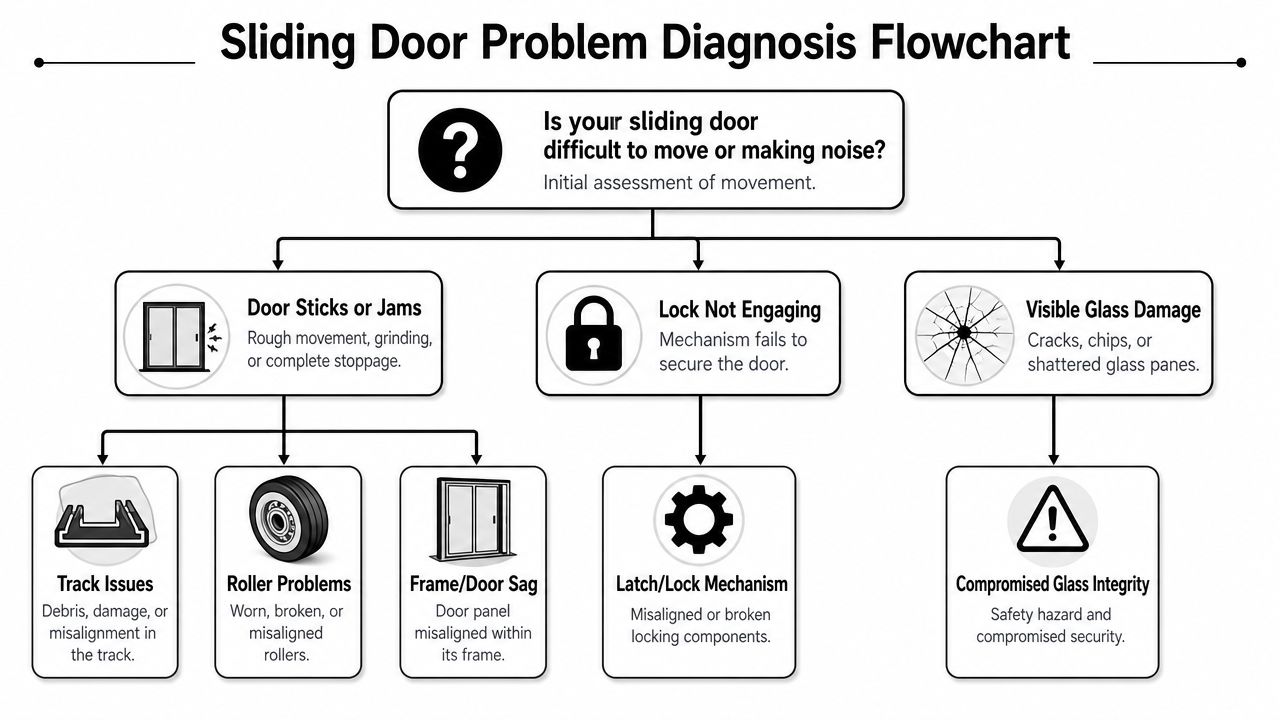
- Does it stick or jam: If the panel drags, scrapes, or stops partway, the common suspects are debris in the track, worn rollers, or frame warping.
- Does it make noise: Grinding usually points to contamination in the track or rollers that aren't turning correctly.
- Does the lock miss the latch: That often suggests alignment trouble rather than broken glass.
- Is there visible damage in the glass: Cracks, chips, shattered sections, or fogging between panes move the problem into a different category.
In Phoenix homes, I'd check the track early. Fine dust, yard debris, and grit collect fast, and that buildup can make a healthy door feel like a failed one.
Practical rule: If the glass looks intact and the problem is mainly movement or latching, inspect the mechanism first.
Separate glass issues from mechanical issues
A lot of homeowners assume that if the door feels “broken,” the glass or frame must be the cause. Often it isn't.
Here's a simple way to sort it out:
- Look at the glass first. If you see cracks, shattered sections, or fogging that suggests seal failure, treat it as a glass problem.
- Test movement next. Open and close the panel slowly. If it binds at one point, tilts, or scrapes, suspect rollers or alignment.
- Check the track. Dirt and hardened debris can block the rollers and mimic more expensive failures.
- Watch the latch line up. If the lock doesn't meet the strike cleanly, the door may have dropped out of adjustment.
Red flags that usually mean professional help
Some conditions are poor candidates for DIY work.
- Broken or cracked glass
- A panel that feels unstable in the frame
- Repeated derailment or off-track movement
- A frame that looks warped
- A panel that still drags badly after basic cleaning
If the door has more than one failure at once, like damaged glass plus dragging rollers, don't assume one repair will solve everything. Mixed symptoms usually mean the door needs a more careful inspection.
Your Guide to DIY Sliding Door Repairs
If your sliding door's problem is mechanical, not glass-related, a homeowner can often make real progress with basic tools and patience. The repair sequence matters. Randomly spraying lubricant into a dirty track doesn't fix much.
The most effective order is to clean the bottom track, inspect and service the rollers, then adjust the door so it runs parallel with the jamb, following guidance from This Old House on sliding door repair.

Clean the track the right way
This is the first job because dirt in the track can make every other diagnosis look worse than it is.
Use a vacuum with a crevice attachment. Then scrape stubborn buildup with a putty knife. Wipe the track down so you're not leaving gritty residue behind. If your sills and tracks are overdue for a deeper cleaning, this guide on cleaning window sills and tracks is useful for the same kind of debris that collects around patio doors.
What doesn't work is spraying lubricant over packed dirt. That turns dust into sludge.
Inspect rollers before you lubricate anything
Once the track is clean, slide the door again. If movement improves, you were likely dealing with contamination. If it still drags or chatters, inspect the rollers as closely as you can.
Look for:
- Flat spots or visible wear: A worn roller won't carry the panel smoothly.
- Wobble at the bottom edge: That can point to uneven roller height.
- One side dragging more than the other: The panel may be out of level.
If the rollers are still serviceable, use silicone spray. Don't use oil-based lubricants. They attract dirt and speed up track mess and wear.
A sticky sliding door usually has a sequence problem, not just a parts problem. Clean first, then lubricate, then adjust.
Adjust the panel so it closes square
Most sliding doors have adjustment screws near the bottom of the frame. These raise or lower each side of the panel. Small turns can make a big difference.
A good adjustment does two things. It helps the door glide with less resistance, and it brings the lock side back into alignment with the jamb. If you skip this step after cleaning and servicing the rollers, the door may still drag or leave sealing gaps.
Try this process:
- Close the door and look at the reveal. Check whether the gap is even from top to bottom.
- Adjust one side at a time. Make small turns, then test.
- Recheck the latch. A door that sits square usually locks better too.
If you want to see the basic movement and hardware layout before working on your own door, this short walkthrough helps:
Small fixes homeowners can usually handle
Not every broken sliding glass door needs major work. These are often manageable:
- Loose handle hardware: Tighten screws and make sure the handle isn't shifting under load.
- Minor latch misalignment: If the panel is now square after adjustment, the latch may start working again without replacing parts.
- Dirty or compressed weatherstripping edges: Clean the contact surfaces and inspect for deterioration.
Sparkle Tech Window Washing LLC also handles related screen service in the Phoenix area, including sliding screen repair, which can matter when a damaged screen is making door operation feel rougher or more awkward than it should.
If the panel still binds after proper cleaning, silicone lubrication, and adjustment, stop there. That usually means worn rollers, a damaged track, or frame distortion that needs more than a tune-up.
Securing a Door with Damaged Glass
When the glass itself is cracked or shattered, stop thinking about repair first. Think about containment and safety.
For most homeowners, the safest move is to secure the area, tape the damaged section if needed, and call a pro. Ryan's guide to broken sliding door glass recommends cut-resistant gloves, eye protection, and suction cups if someone is attempting to remove a large broken section. In practice, many individuals are better off not removing the pane themselves.

What to do right away
Start with the area around the door.
- Move kids and pets away
- Put on gloves and eye protection
- Pick up loose glass carefully
- Keep people from using the door
If the pane is cracked but still largely intact, apply heavy-duty tape across the damaged area to help hold loose fragments in place. If there's an opening, cover it with plastic sheeting as a temporary barrier.
What not to do
Don't lean on the panel to test it. Don't slide the door repeatedly to “see how bad it is.” Don't pull at broken pieces with bare hands. And don't try to muscle out a large damaged pane without the right handling tools.
Broken door glass is one of those jobs where a temporary patch is smart, and a heroic DIY attempt usually isn't.
If the lock side still moves, secure the panel in the closed position as best you can and limit use until replacement glass is installed.
Deciding Between Repair and Full Replacement
The hardest decision usually isn't how to fix the door. It's whether the door is worth fixing at all.
That question gets more serious once glass enters the picture. According to HomeAdvisor's sliding glass door repair cost guide, sliding glass door repair averages about $400, with most jobs falling between $150 and $800. Smaller repairs can start around $50, while complex jobs can reach $2,500. HomeAdvisor also notes that glass replacement typically runs from $250 to $1,000, depending on the glass type.
Repair vs. replacement decision guide
| Symptom | Likely Best Action | Estimated Cost | Key Consideration |
|---|---|---|---|
| Dirty track, minor sticking, no glass damage | Repair | Smaller repairs can start around $50 | Good DIY candidate if the panel is otherwise stable |
| Worn hardware or moderate mechanical trouble | Repair | Typical repairs often fall in the $150 to $800 range | Worth fixing if the frame is sound |
| Cracked or failed glass with otherwise decent door | Compare both options | Glass replacement alone is often $250 to $1,000 | Glass cost can push the job close to replacement territory |
| Multiple issues, including frame trouble or recurring failures | Lean toward replacement | Complex repair projects can reach $2,500 | At that point, replacement may offer better long-term value |
When repair still makes sense
Repair is usually the practical choice when the issue is isolated. A door with a sound frame, intact seals, and one clear mechanical problem is often worth saving.
That's especially true if the door responds to maintenance and the panel sits square after adjustment. In that case, you're fixing a component, not chasing a failing system.
When replacement becomes the smarter move
Replacement deserves a serious look when the door has stacked problems. Think damaged glass plus poor sealing, or repeated dragging plus signs of warping.
If you're weighing comfort, efficiency, and usability as well as repair cost, Superior Home Improvement discusses patio door benefits in a way that helps frame the upgrade decision. For a broader look at how homeowners compare glass and window project costs, this overview of window repair cost considerations gives useful context.
Hiring a Sliding Door Pro in the Phoenix Area
Some jobs cross the line from inconvenient to unsafe. Broken glass does that. So do unstable panels, damaged tracks, and doors that keep dropping out of alignment.
In the Phoenix area, I'd be especially careful with contractors who treat every stuck slider like a quick roller swap. Dust and heat can be part of the story, but they can also hide deeper wear. A good pro should inspect movement, lock alignment, frame condition, and weather sealing before quoting a fix.
Questions worth asking
Use the phone call to filter quickly.
- Ask about experience with sliding glass doors: Not every glass company or handyman works on these regularly.
- Confirm license and insurance: That matters when heavy panels and glass are involved.
- Request a written estimate: It should describe the work, not just give a lump sum.
- Ask whether they repair, replace, or both: A company that only sells new doors may push replacement too soon.
What a solid estimate should include
A good estimate should explain what failed and what they plan to do about it. If the contractor says the rollers are bad, they should also say whether the track and alignment were checked.
One more useful local resource is this page on window and screen repair near me, especially if your project involves adjacent screens or related exterior components that need attention at the same time.
If a contractor can't explain why the door failed, they probably aren't ready to fix it well.
Get more than one quote when the job involves glass replacement or a possible full unit changeout. Big differences in scope usually tell you more than the price does.
Frequently Asked Sliding Door Questions
How do I keep a sliding door from getting rough again
Stay ahead of debris. Vacuum the track, wipe it clean, and keep grit from building up around the bottom channel. If the rollers are serviceable, use silicone spray instead of oil-based products so dirt doesn't collect faster.
Also pay attention to how the door sounds. Grinding and scraping usually show up before total failure.
What does foggy glass mean
Foggy glass usually points to a seal failure inside the insulated glass unit, not a track problem. If your sliding door moves fine but the glass looks hazy between panes, the issue is with the glass assembly itself, not the rollers or latch.
That's one of those problems homeowners often misread because the door still “works.” The panel may slide, but the glass unit has still failed.
Can I upgrade the lock without replacing the whole door
Sometimes, yes. If the door is still square in the opening and the lock area isn't damaged, a hardware upgrade may be possible. But don't start with the lock if panel alignment is the issue.
A lot of “bad locks” are doors that have dropped enough to miss the strike. Fix the alignment first, then decide whether the hardware still needs attention.
If your patio door issue turns out to be part of a bigger window, screen, or exterior maintenance problem, Sparkle Tech Window Washing LLC is a local Phoenix-area option for window cleaning and screen-related service. If you're not sure whether you need cleaning, screen repair, glass work, or a door specialist, start by getting the symptom diagnosed correctly. That saves time, money, and a lot of frustration.