

For Phoenix-area homeowners, a practical starting point is about $15 to $35 per square foot, with many projects landing around $9,000 to $28,000 once size, materials, and design complexity are settled. If you're pricing a simple patio screen-in, you may come in lower. If you're enclosing a pool area or building a custom structure in Scottsdale or Paradise Valley, the final number climbs fast.
For many, the process begins with a similar routine: stepping onto the patio in the morning, enjoying the shade, but disliking the bugs and the dust blowing across outdoor furniture. Then the quotes come in, and the spread between them feels all over the map.
That confusion usually comes from mixing base pricing with real installed pricing. A screen enclosure isn't just mesh and aluminum. In the Valley, the final cost depends on how much structure you're building, how much sun and wind exposure the enclosure has to handle, how the enclosure ties into the house, and whether your city or HOA wants engineering details before work begins.
A good budget starts with the shape of the project, not just the square footage. A clean rectangle over a patio is one conversation. A pool enclosure with doors, taller spans, and a layout that has to preserve views is a different job entirely.
Estimating Your Screen Enclosure Investment
A common Phoenix scenario goes like this. A homeowner in North Scottsdale wants to use the patio more often, but summer sun cuts that time short and monsoon season leaves dust and debris everywhere. Another homeowner in Peoria has a pool and wants to keep the deck more usable without turning the backyard into a full glass-room project.
Both are shopping for the same thing on paper, a screen enclosure. But they aren't buying the same build.
What homeowners usually expect
It's often assumed a screen enclosure is a modest add-on because the material itself looks simple. That assumption usually breaks once they start pricing installed work. National and Florida market benchmarks are useful because they show how quickly cost rises once labor, engineering, and installation are part of the job.
A 2026 Florida market analysis places professionally installed screen enclosures at about $12 to $25 per square foot, with a typical mid-sized pool cage of roughly 1,500 square feet costing about $20,000 to $25,000. That same analysis also notes a much broader market span of about $8,000 to $90,000+ depending on size and complexity, which is a helpful scale reference even though Phoenix isn't Florida (Florida enclosure market analysis).
Practical rule: If your first quote seems low, check whether it includes engineering, permitting, doors, slab attachment details, and finish work. Those items change the real number.
What matters more than the first quote
In Phoenix, the budget conversation should start with three questions:
- What are you enclosing: A small patio, a covered outdoor room, or a pool deck all price differently because the structure changes.
- How simple is the layout: Straight runs and standard openings are cheaper to build than multiple corners, odd rooflines, or oversized spans.
- What do you want the enclosure to do: Keep out insects, cut glare, improve privacy, stand up to pets, or preserve a view. Those choices affect both screen and frame decisions.
That's why screen enclosures cost can't be pinned to one magic number. The square-foot price helps. The scope decides the invoice.
Understanding Typical Price Ranges for Screen Enclosures
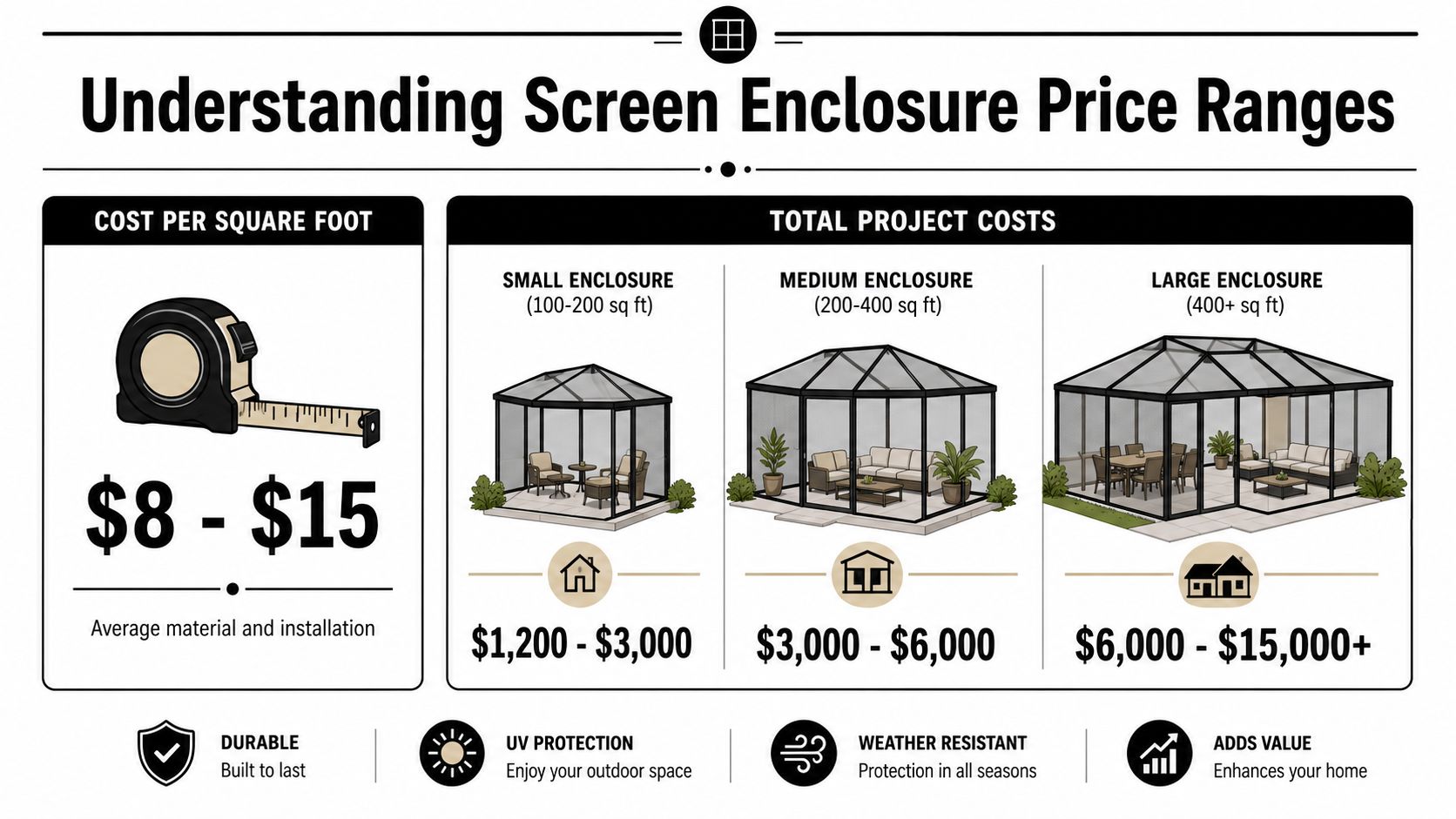
The cleanest way to estimate a project is to look at cost from two angles. First, the per-square-foot range. Second, the total installed project cost. You need both, because one tells you whether a quote is in the right universe, and the other tells you whether the finished project still fits your budget.
A useful national benchmark comes from screened pool enclosure pricing. According to Angi's 2026 guide, screen pool enclosures typically cost about $8 to $15 per square foot, while polycarbonate options average roughly $20 to $200 per square foot and glass pool enclosures run about $30 to $75 per square foot (Angi pool enclosure cost guide). That doesn't mean Phoenix projects will price exactly the same, but it does show the core cost pattern. Screen is the budget reference point. Once you move into more rigid or premium enclosure materials, the cost jumps hard.
Per-square-foot pricing in the Valley
For Phoenix and Scottsdale planning, I'd use your local quote range first, then compare it against broader market benchmarks. That's why the opening range of about $15 to $35 per square foot is more useful for local budgeting than a single national average. The Valley often adds cost through custom shade priorities, attachment details, and neighborhood-specific approval requirements.
The big mistake is treating square footage as if it scales perfectly. It doesn't. A small enclosure can have a higher effective price per foot because fixed costs are spread across fewer square feet. A larger enclosure can also spike because it needs heavier members, more doors, or a more involved layout.
Total project budgets homeowners actually shop against
Most Phoenix-area homeowners usually fall into one of these practical buckets:
- Basic patio screen-in: Best for smaller outdoor living areas where the structure is straightforward and the main goal is comfort and bug control.
- Mid-range patio or poolside enclosure: A common fit for larger patios and family homes where door placement, screen upgrades, and finish quality matter.
- Custom enclosure: Typical in higher-end neighborhoods where the enclosure has to preserve aesthetics, wrap around a larger footprint, or integrate with an existing outdoor kitchen or pool area.
If you're also comparing adjacent outdoor projects, these DFW pergola pricing insights are helpful for understanding how open-air structures differ from screened ones in scope and cost drivers. And if part of your planning involves fixing existing damaged panels instead of rebuilding from scratch, it helps to review typical screen repair cost considerations before you commit to a full replacement.
A quote can be high and still be fair. A quote can be cheap and still be incomplete.
The Key Factors That Drive Your Final Cost
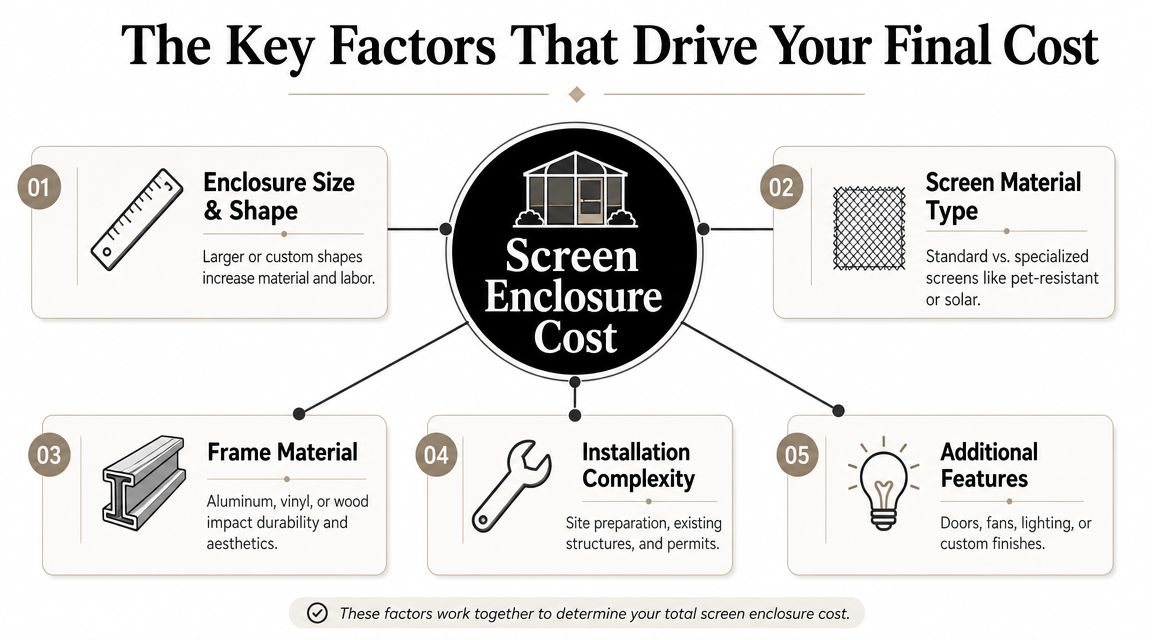
Two enclosures can look similar from the street and price very differently. That usually comes down to structure, not salesmanship. Consider ordering the same truck in two trim levels. The body shape may look close, but the frame, options, and build spec change the final number.
Size and shape change everything
The cheapest enclosure to build is a simple one. Straight lines, standard spans, and a layout that doesn't force the installer to work around existing rooflines or awkward concrete edges will usually keep pricing under control.
Once the design adds corners, long unsupported runs, oversized openings, or unusual roof transitions, the frame has to do more work. That means more fabrication time, more material handling, and more installation hours.
Labor and engineering are often the real cost center
Homeowners often find themselves surprised. Labor and engineering are often the main reason installed prices exceed the raw material cost. A Florida-specific cost guide notes that taller frames and larger spans require stronger aluminum, more anchoring, and more engineering review to satisfy wind-load codes, which is why custom or large enclosures in weather-sensitive markets tend to land in the $21,000 to $30,000+ bracket (Florida pool screen enclosure cost guide).
Phoenix doesn't have Florida's hurricane conditions, but the lesson still applies. As the structure gets taller, wider, or less standard, engineering and installation become a larger share of the bill.
To see enclosure construction details in action, this walkthrough is worth watching before you compare bids:
The five cost drivers to inspect in every quote
- Frame specification: Ask what gauge, finish, and attachment method the contractor is using. A vague line item for “aluminum frame” doesn't tell you enough.
- Screen type: Standard insect mesh costs less than specialty screen. Solar, privacy, and pet-resistant products change the budget and the performance.
- Openings and accessories: Every door, kick plate, hardware upgrade, fan block, or lighting accommodation adds labor.
- Site conditions: Uneven slab edges, pavers, drainage concerns, and tie-ins to existing patio covers all increase complexity.
- Permits and approvals: City review and HOA documentation can slow jobs down and add design work before anyone installs a single panel.
What works and what backfires
What works is keeping the layout clean, sizing doors intentionally, and spending money where replacement is expensive later. Frame strength and attachment details fall into that category.
What backfires is overbuilding features you don't need, then underbuilding the structure you do need. Homeowners sometimes spend on upgraded mesh and decorative touches while accepting vague engineering language in the proposal. That's the wrong trade.
If the quote is detailed on color options but thin on structural details, keep asking questions.
Comparing Materials and Screen Enclosure Types
Material selection is where budget and performance meet. In Phoenix, sun exposure, dust, and daily heat matter more than glossy brochures. The right choice is the one that fits how you'll use the space.
Screen versus harder enclosure materials
If cost control is the goal, screen remains the entry point. As noted earlier, screened enclosures sit in a far lower cost band than polycarbonate or glass. That matters because some homeowners start by wanting a “room-like” outdoor enclosure, then realize they're comparing three very different categories of construction.
For most Valley homes, screen makes sense when you want airflow, bug control, and a lighter visual footprint. Polycarbonate and glass fit homeowners who want a more sealed environment and are prepared for a bigger build and a bigger budget.
Screen Enclosure Material Comparison for Arizona Homes
| Material Type | Average Cost Impact | Durability in AZ Sun | Maintenance Needs | Best For |
|---|---|---|---|---|
| Standard insect screen | Lower | Good if quality mesh is used, but constant UV exposure eventually takes a toll | Regular cleaning and occasional panel replacement | Everyday patios, basic bug control, budget-conscious projects |
| Solar screen | Moderate | Usually a better fit for harsh sun exposure because glare and heat reduction are part of the goal | Needs routine cleaning so dust buildup doesn't dull performance | West-facing patios, strong afternoon sun, comfort-focused enclosures |
| Pet-resistant screen | Moderate to higher | Holds up better against clawing and impact, but still needs UV-conscious product selection | Similar cleaning needs, heavier material can be tougher to work with during repairs | Homes with dogs, active households, lower wall panels |
| Aluminum frame with screen infill | Moderate | A common Arizona choice because it balances weight, corrosion resistance, and appearance | Inspect fasteners, wash dust off, watch attachment points | Most patio and poolside screen structures |
| Steel-supported enclosure components | Higher | Strong, but finish quality matters in outdoor exposure | More attention to coating condition and long-term corrosion risk | Special structural demands, selective applications |
| Polycarbonate panels | Much higher | Strong sun exposure demands the right panel grade and installation detail | Cleaning is more involved because visibility matters | Homeowners who want more weather separation |
| Glass enclosure sections | Higher premium tier | Good with proper specification, but heat gain and cleaning matter | Highest cleaning visibility standard | View-focused, luxury outdoor rooms |
How to choose without overspending
Start with use, not product names.
- If bugs and airflow are the priority, standard screen is usually enough.
- If afternoon heat is the daily complaint, solar screen is worth discussing.
- If pets push against lower panels, reinforce the areas that take abuse instead of upgrading every panel.
- If you're trying to create a true all-weather room, you may be outside standard screen territory entirely.
Homeowners who want a broader sense of how screened rooms can enhance your outdoor living often benefit from looking at room-use first, then choosing materials second. And if you're comparing mesh options for a porch or patio enclosure, this guide to the best screen for porch is a practical place to sort through standard, solar, and specialty screen choices.
Sample Screen Enclosure Estimates for Phoenix Homes
Real budgets make more sense when you attach them to a house, a neighborhood, and a use case. These are the kinds of projects Phoenix-area homeowners commonly ask about.
Compact patio screen-in in Gilbert
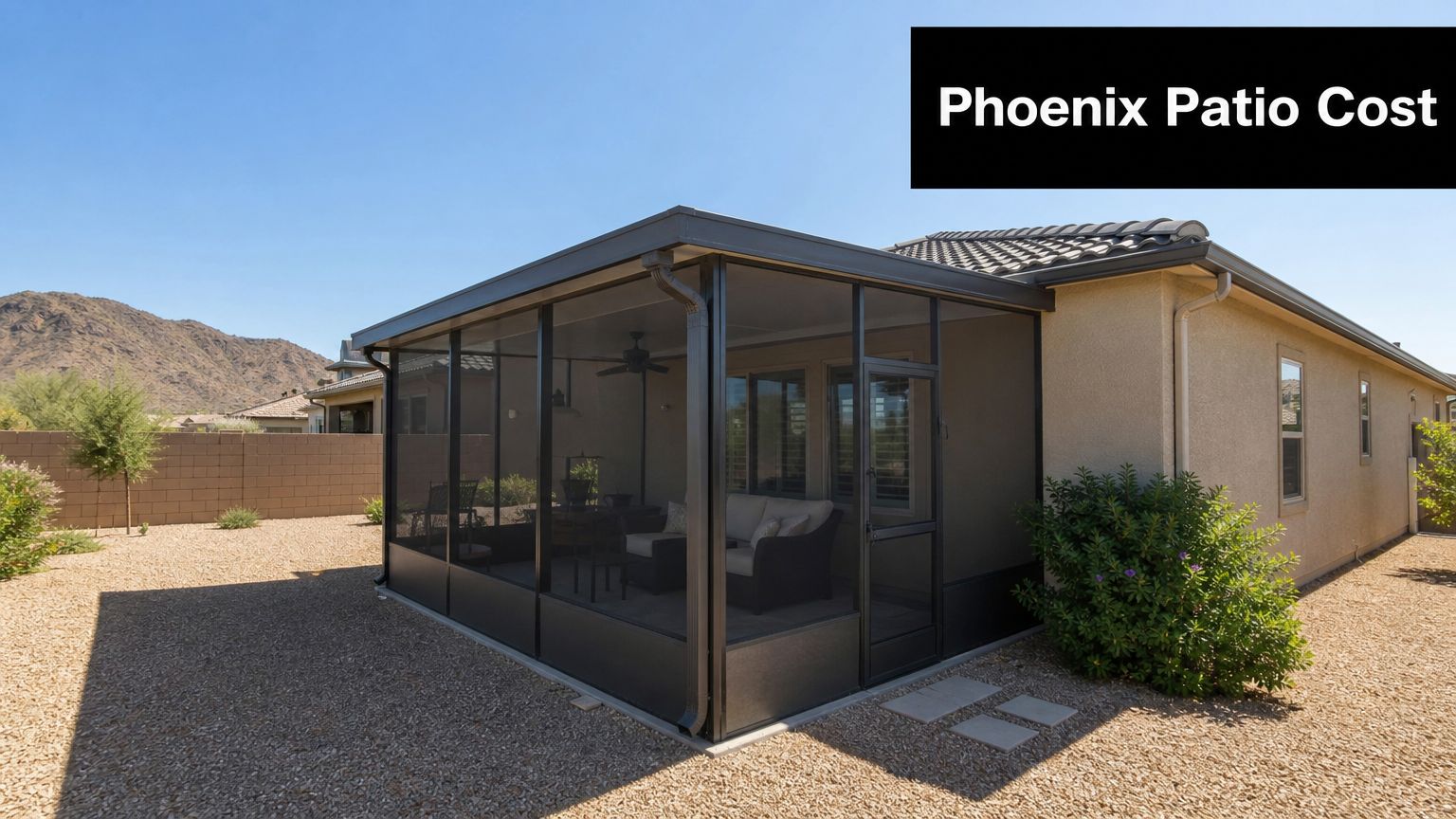
This is the homeowner who has a modest rear patio, wants more time outside, and doesn't need a showpiece. The structure is usually attached to an existing covered area or built over a simple concrete patio with one main door and straightforward lines.
A project like this often stays near the lower end of local budgeting. It's the kind of job where keeping the shape simple matters more than chasing upgrades. Standard mesh and a clean frame package usually deliver the best value.
Mid-sized poolside enclosure in Peoria
Costs start climbing rapidly when a family wants a more usable pool deck, less debris blowing into the seating area, and a better barrier around the outdoor space without turning the yard into a closed room.
Here, the frame has more work to do. Door placement matters. Views matter. The enclosure may need to clear existing roof overhangs, pool equipment paths, or patio furniture circulation. In practical terms, this is the type of project that commonly lands in the center of the local $9,000 to $28,000 planning range if the scope is balanced and the layout isn't highly customized.
Homeowners usually save more by simplifying the design than by choosing the cheapest screen.
Custom luxury lanai in Paradise Valley
This is the project where aesthetics, scale, and finish expectations all rise together. The homeowner wants the enclosure to disappear visually as much as possible, work with a larger outdoor kitchen or lounge area, and avoid blocking mountain or golf-course views.
That usually means custom spans, upgraded screening choices, more coordination with the home's architecture, and tighter approval expectations from the municipality or HOA. These jobs don't price like basic patio screen-ins, even if the material category sounds similar. The labor, fabrication, and review time are just different.
What these examples tell you
The same product label, “screen enclosure,” covers very different jobs. The most reliable budgeting move is to match your home to the right scenario first.
A small patio owner shouldn't compare quotes against a large pool enclosure. A luxury custom build shouldn't expect entry-level framing numbers. Once you sort your project into the right bucket, the quote starts making a lot more sense.
How to Save Money and Evaluate Your Quotes
Saving money on a screen enclosure doesn't mean buying the cheapest version. It means cutting waste, avoiding rework, and making sure the proposal includes the whole job. That's where many homeowners get tripped up.
Many cost guides quote a base install range of $4,000 to $15,000 but don't explain how much permitting, wind-load requirements, or upgraded framing can add to the final invoice. That's why understanding the all-in cost matters before you sign anything (all-in enclosure cost discussion).
Where smart savings usually come from
- Simplify the geometry: A rectangular layout with standard openings is almost always cheaper than a design with extra corners and custom transitions.
- Upgrade selectively: Put stronger or specialty screen where you'll use it. Lower pet-contact areas and hot western exposures are common examples.
- Protect what you install: Regular cleaning and prompt repair keep small tears and dust buildup from turning into larger replacement work.
If your existing enclosure mostly needs maintenance, not replacement, reviewing typical screen enclosure repair options can keep you from overspending on a full rebuild.
How to read a quote like a contractor
A useful quote should answer these questions clearly:
- What is included in the frame package
- What type of mesh is specified
- How many doors and openings are included
- Whether permitting and drawings are included
- What site prep or attachment work is excluded
If those answers aren't clear, you're not comparing apples to apples.
One place homeowners miss long-term value
Maintenance is part of cost control. Clean screens last better, look better, and make it easier to catch damage early. Companies that already work on exterior screens can also be helpful once the enclosure is in service. For example, homeowners looking into pest-free patios in Phoenix often end up comparing enclosure installation with ongoing screen care and repair planning. Sparkle Tech Window Washing LLC is another local option homeowners use for screen cleaning and repair-related service when the goal is extending screen life rather than replacing whole sections prematurely.
Cheap quotes often leave the expensive parts for later.
Frequently Asked Questions About Screen Enclosures
Do you need a permit for a screen enclosure in Phoenix or Scottsdale
Often, yes. The exact requirement depends on the city, the size and type of structure, and how the enclosure attaches to the home. In many neighborhoods, HOA review is a separate step from city approval. Homeowners should ask the contractor who is pulling permits, who is providing drawings if required, and whether HOA submittals are included.
How long does a screen enclosure last in the Arizona sun
That depends on the mesh quality, sun exposure, maintenance, and how well the frame and fasteners were installed. In the Valley, UV exposure and dust are the everyday enemies. Screens on west-facing or full-sun elevations usually age faster than protected areas. Regular washing and prompt repair after small tears help stretch service life.
Is it cheaper to repair an enclosure or re-screen the whole thing
If the frame is sound and the damage is limited, repair is usually the first place to look. If multiple panels are brittle, the spline is failing, or the screen has aged unevenly, a broader re-screen may make more sense. The right decision comes down to whether you're fixing isolated damage or chasing deterioration across the entire enclosure.
What should homeowners ask before signing a contract
Ask for the exact screen type, the frame specification, the door count, the permit responsibility, and any exclusions tied to slab condition or attachment points. Also ask what happens if the city or HOA requires revisions. Those details matter more than a polished sales presentation.
If you're in Scottsdale, Peoria, Phoenix, or the surrounding Valley and need help maintaining the screens you already have, Sparkle Tech Window Washing LLC handles window screen cleaning and repair services that can help homeowners protect their enclosure investment and catch issues before they turn into larger replacement costs.