
If you live in Phoenix, you know the moment. The sun drops, the patio finally stops radiating heat, and you want the front door or Arcadia door open for a little cross-breeze. Then the trade starts. Fresh air comes in, but so do flies, mosquitoes, dust, and every loose bit of yard debris that the evening wind can push through the opening.
That's why door bug screens matter more here than generic home guides usually admit. In the Valley, a screen isn't just about bugs. It has to handle hard sun, regular dust, heavy use, and the occasional monsoon burst that tests every weak corner and loose fastener. A screen that works fine in a mild climate can fail fast here.
People have been trying to solve this problem for a long time. Before modern insect screens became common after 1870, many households kept windows closed or covered openings with cheesecloth, according to this history of insect screens. That old workaround sounds primitive now, but it also makes the point. Good screening changes how a house feels.
If you're deciding between types, figuring out what mesh makes sense, or looking into installing and repairing door screens, the details matter. Phoenix homes need practical choices, not catalog language.
Enjoying the Breeze Without the Bugs in Phoenix
A lot of homeowners start with the same goal. They don't want an elaborate system. They just want to crack open a door in the morning or after sunset without turning the kitchen, family room, or patio entry into an open invitation for insects.
That sounds simple until local conditions get involved. A screen on a shaded doorway with light foot traffic is one thing. A west-facing back door that gets hit with UV, dust, kids, dogs, and frequent opening and closing is something else entirely. In Phoenix, those are two different jobs.
What Phoenix homeowners usually want
Many individuals I encounter are balancing the same few priorities:
- Better airflow: They want ventilation during the hours when outside air is usable.
- Reliable bug control: They don't want to hear a screen “should” work. They want it to close, stay shut, and keep pests out.
- Low maintenance: Nobody wants a screen that needs constant adjustment after every dusty week or windy evening.
- A clean look: Especially on front entries and patio doors, appearance still matters.
A door bug screen only helps if people actually use it. If it sticks, sags, slaps around in the wind, or won't close cleanly, people stop trusting it.
Why generic advice falls short here
A lot of national articles treat all climates the same. They'll tell you to pick a style and move on. That skips the essential questions Phoenix homeowners run into: Will this material dry out and get brittle? Will the mesh trap too much dust? Will the closure still line up after repeated use in summer? Will monsoon wind expose the weak points?
Those are the questions that determine whether a screen lasts or becomes another repair project.
Comparing the Main Types of Door Bug Screens
The right screen type depends less on marketing labels and more on the door opening, traffic pattern, and how much abuse the screen will take.

Sliding screens
Sliding screens are common on patio doors and Arcadia-style openings. They ride on a track and move side to side, which makes them familiar and easy for most households to use.
For Phoenix homes, they work well when the track is kept clean. The weakness is exactly what you'd expect here. Dust and grit build up fast, and once debris sits in the lower track, the screen starts dragging or jumping. Rollers wear, alignment shifts, and people begin forcing the door instead of gliding it.
Best fit: patio sliders and common rear entries.
Works well when: the track is straight and cleaned regularly.
Less ideal when: the opening gets packed with blowing debris or the frame is already out of square.
Retractable screens
Retractable door bug screens roll or slide into a housing when not in use. They're a strong option when homeowners want the screen hidden for part of the year or don't want a permanent panel visible on a front entry or French door setup.
They look cleaner than many fixed options, but they're less forgiving of installation errors. If the frame isn't measured correctly or the housing isn't mounted square, the screen won't track right. In heavy dust, the moving parts also need more attention than people expect.
Retractable screens are usually chosen for appearance first. That's fine, as long as the opening has the clearance and the homeowner understands they need proper setup.
Hinged screens
A hinged screen door swings open like a traditional door. On many single-door entries, this is still one of the most durable and straightforward options.
They're easy to understand, easy to repair, and less fussy than retractables. The trade-off is space and impact. If the door swings into a busy walkway, gets pushed too hard, or slams in the wind, hardware can loosen and frames can rack over time.
A hinged setup often makes sense for:
- Frequent daily use: People are going in and out constantly.
- Simple repairability: Hinges, closers, latches, and mesh are usually straightforward to service.
- Homes that value durability over concealment: You see the screen all the time, but it's not a delicate system.
Magnetic screens
Magnetic screens are usually the fastest and cheapest way to add insect control to a doorway. They attach to the frame and split at the center so people can walk through while magnets pull the opening back together.
They can be useful on secondary doors, rental properties, garages used as flexible spaces, or situations where someone wants an easy trial solution before committing to a framed screen. But they have clear limitations. If sizing is off or frame attachment is weak, they don't close properly. Wind can also expose every flaw in the installation.
Some products advertise very fine openings, including 1 mm mesh intended to block mosquitoes, midges, flies, no-see-ums, and sandflies, as shown in this magnetic bug screen product example. That can help with smaller pests, but mesh alone doesn't solve closure problems.
A quick way to choose
| Screen type | Usually best for | Main strength | Common Phoenix issue |
|---|---|---|---|
| Sliding | Patio and Arcadia doors | Familiar, simple daily use | Dusty tracks and worn rollers |
| Retractable | Front doors, French doors, cleaner look | Hidden when not in use | Needs accurate fit and cleaner hardware |
| Hinged | Single entries, heavy-use doors | Durable and repairable | Wind stress on hinges and closers |
| Magnetic | Budget or temporary setups | Easy install and pass-through use | Weak closure if sizing or attachment is off |
If you want the lowest-maintenance choice, a solid framed screen usually beats a temporary one. If looks matter most, retractable can work well, but only when the opening is suitable and the installation is tight.
Choosing the Right Screen Material and Mesh
The frame gets attention, but the mesh usually determines whether homeowners are happy with the result. In Phoenix, material choice affects airflow, visibility, cleaning, wear, and how often you'll be dealing with tears or sagging.

Mesh is always a trade-off
Screen performance is built around mesh count, wire diameter, and material, and those factors control the balance between insect exclusion, visibility, and airflow. Higher mesh counts can block smaller insects, but they also reduce openness and can make a doorway feel less breathable, as explained in this guide to screen mesh variables.
That matters in Phoenix more than many people realize. If your whole reason for opening the door is ventilation, a screen that cuts airflow too much can feel like a bad compromise.
How the common materials compare
Here's the practical version homeowners usually need:
- Fiberglass: Common, affordable, and easy to rescreen. It works for many standard doors, but it isn't the material I'd trust most on a heavily used opening.
- Aluminum: Stiffer and often cleaner-looking. It can be a good fit where homeowners want a more rigid feel, though it can still get bent or damaged if the frame takes impact.
- Pet-resistant mesh: Better where claws, pushing, or repeated contact are part of daily life. It's often a smart upgrade for homes with dogs using a patio entry.
- Solar screen fabric: More about heat and glare management than pure insect control. It can make sense on certain exposures, but it changes visibility and the feel of the opening.
For a broader breakdown of options used in Arizona homes, this guide to screen mesh types for AZ homes is useful if you're comparing beyond standard bug mesh.
Matching mesh to the doorway
Not every opening deserves the same screen.
A front security door that opens onto a relatively calm entry can use a different mesh than a back patio door that gets opened all day. A screened opening near landscaping may need finer exclusion than one facing a bare yard. A west-facing door that sees intense afternoon exposure may justify a stronger material because replacement gets old fast.
Practical rule: Choose mesh based on how the door is used, not just how the product looks in a sample swatch.
A few examples help:
- For a main family entry: prioritize strength and repairability.
- For a patio slider: prioritize smooth operation and manageable cleaning.
- For smaller pests: lean finer, but accept some airflow loss.
- For high-visibility views: don't overbuild the mesh if visibility matters more than fine-pest exclusion.
The mistake I see most often is buying by one feature only. People chase either “maximum airflow” or “strongest mesh” and ignore the rest. Good door bug screens are balanced systems. In Phoenix, that balance matters more than the label on the package.
DIY Cleaning and Minor Repairs for Longevity
Most screen problems in Phoenix don't start with dramatic damage. They start with neglect. Dust collects, the lower frame holds grit, corners loosen a little, and a tiny tear gets ignored until it spreads.
The good news is that basic upkeep is manageable if you catch issues early.
Cleaning dusty screens without making things worse
For routine cleaning, keep it simple. You don't need aggressive tools, and you don't want to scrub hard enough to stretch or distort the mesh.
Use this order:
- Brush off loose dust first: A soft brush or dry microfiber removes the top layer so you're not grinding grit into the mesh.
- Wash with mild soap and water: A small bucket and a soft sponge usually handle normal buildup.
- Rinse gently: Low-pressure water works better than blasting the screen.
- Let it dry fully: Moisture trapped in dirty tracks or frame channels just creates more mess later.
If the screen sits in a slider track, clean the track too. Otherwise, you're putting a clean panel back into a dirty operating system.
Small repairs that are worth doing
Minor damage is often fixable before full replacement is needed. That includes a corner of mesh pulling loose, a small puncture, or spline working its way out of the channel.
Common homeowner-level tasks include:
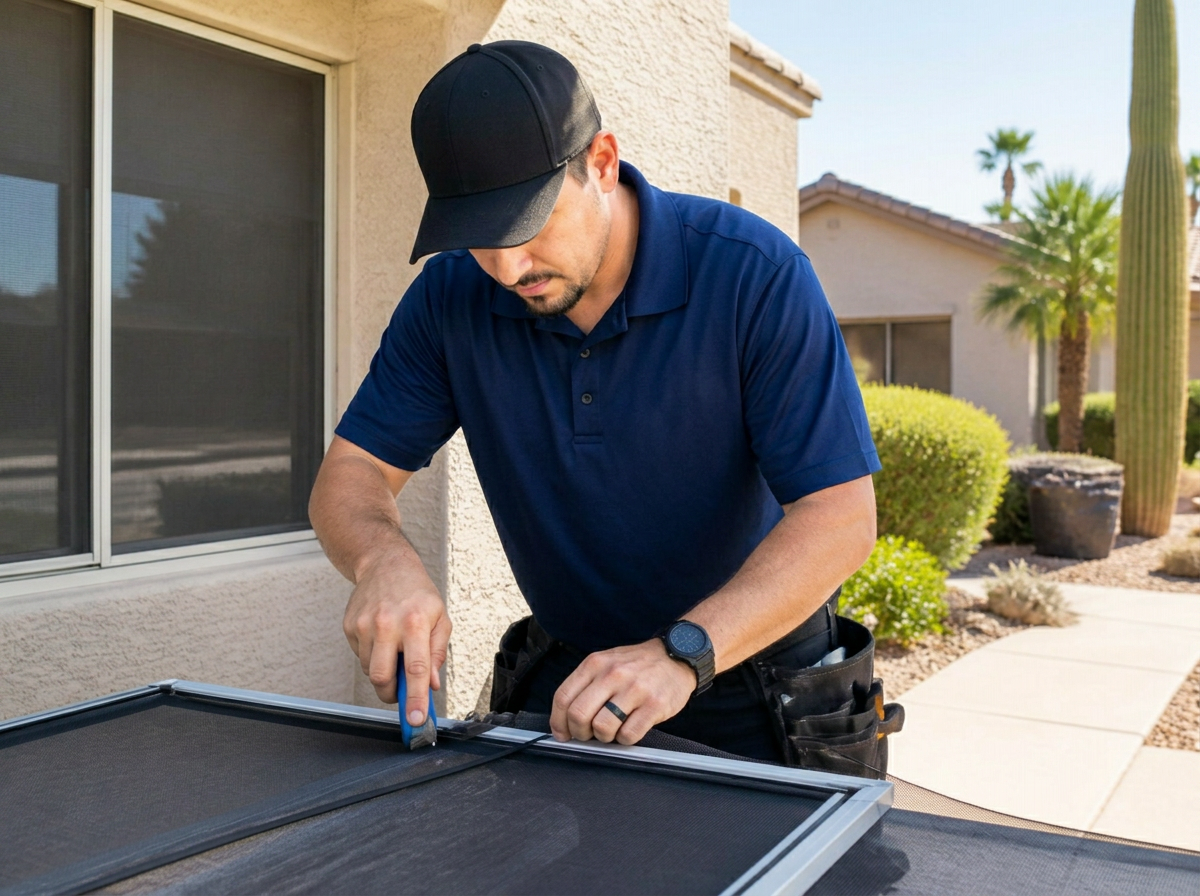
- Re-seating loose spline: If the mesh has popped at one edge but the frame is still square, a spline roller can often put it back in place.
- Patching a tiny hole: Small openings can be patched if appearance isn't critical and the surrounding mesh is still sound.
- Tightening simple hardware: Loose handles, basic latches, and accessible fasteners should be checked before they create larger alignment problems.
If you've never worked with screen mesh before, this step-by-step resource on how to replace window screen mesh gives a useful overview of the process and tools.
What not to do
A lot of damage comes from “fixes” that make the screen worse.
- Don't over-tension the mesh: Tighter isn't always better. Too much tension can warp the frame or create premature pullout at the corners.
- Don't use harsh brushes: Metal or stiff scrub brushes can fray synthetic mesh and scratch finished frames.
- Don't ignore frame condition: New mesh in a bent frame still gives you a bad screen.
- Don't force sticky doors: If a slider drags, fix the cause. Forcing it just damages rollers and corners faster.
Clean screens last longer, but only if the frame, track, and attachment points get attention too.
When a screen is dirty, many homeowners focus only on what they can see in the mesh. In Phoenix, the hidden grit in channels, thresholds, and corners is often what shortens the life of the whole assembly.
A Seasonal Maintenance Plan for Phoenix Screens
Phoenix weather doesn't damage screens in one dramatic event most of the time. It wears them down in cycles. Heat, dust, sun, wind, and sudden storms each attack a different weak point. A seasonal routine works better than waiting until a screen fails.

Spring and pre-monsoon prep
Before storm season, inspect every screen door for loose corners, soft spline, worn closers, and hardware that has started backing out. Screens often look fine until the first strong wind hits.
This is also the time to decide whether a high-exposure doorway needs stronger screening. For high-traffic or high-wind areas, vinyl-coated polyester screening is commonly specified because it's designed to resist tearing and wear better than standard lightweight screening, as shown on Phifer's TuffScreen product page.
Summer use and UV watch
Summer is when screens get used hard and cooked hard. Watch for mesh that starts feeling dry, brittle, or unusually slack. Keep tracks and thresholds clear, especially on patio sliders that are in daily use.
A simple summer checklist helps:
- Check closure behavior: Magnetic and retractable systems need to line up cleanly every time.
- Look at sun-exposed edges: Perimeter wear often shows first where the mesh meets the frame.
- Wipe off dust often: Fine dust buildup adds abrasion when doors move.
After monsoon storms
Monsoon weather tests attachment points, not just mesh. Wind pushes on entire panels. Dust and rain leave residue in tracks, corners, and housings.
After a storm, inspect:
- Bottom tracks and channels: Mud and grit can harden quickly.
- Frame squareness: If the door suddenly drags or won't latch, something may have shifted.
- Tears near corners: Wind stress often exposes weak edges first.
Fall and winter reset
Cooler months are the best time for a deeper cleanup and repair cycle. Use the weather break to handle issues you ignored during peak heat.
That's the season to replace worn spline, correct alignment problems, and service doors that people will want open more often. A screen that barely survived summer won't become more dependable on its own.
Installation Considerations and Estimated Costs
A lot of bad door bug screens come from one problem. People buy for door width and height only, then discover the opening can't support the screen system they chose.
Fit matters more than most homeowners expect
Roll-up and retractable systems need room for housings, guides, and clear movement. On larger professional systems, published fit requirements can be substantial. One commercial roll-up bug screen product specifies about 8.5 inches of headroom, 8.5 inches of jamb depth, and 5 inches on each side of the jamb, which shows why installation compatibility is often a bigger issue than the mesh itself, according to this roll-up bug screen specification page.
You may not be installing a commercial-sized screen, but the lesson still applies. Don't assume a nice-looking product will fit an older Phoenix opening, a security door setup, a recessed entry, or an oversized patio frame.
What to measure before you buy
At minimum, check these items before ordering anything:
- Headroom above the opening: Especially important for retractable housings.
- Jamb depth and side clearance: You need enough mounting surface, not just enough opening width.
- Door swing and handle interference: A screen can fit on paper and still hit existing hardware.
- Frame condition: Out-of-square or damaged openings create ongoing alignment issues.
If you're trying to decide whether repair or replacement makes more financial sense, this overview of window screen repair costs helps frame the budgeting side.
Cost expectations without bad assumptions
Costs vary a lot by style, material, opening size, and whether the frame needs correction before installation. A simple magnetic screen is usually the lowest-cost path. A custom retractable system is usually much more involved because you're paying for fit, hardware, and cleaner integration.
A practical way to think about budget is by tier:
| Budget tier | Typical screen type | What you're usually paying for |
|---|---|---|
| Lower | Magnetic or simple replacement panel | Basic bug control, minimal hardware |
| Mid-range | Standard framed sliding or hinged screen | Better durability and easier daily use |
| Higher | Custom retractable or specialty fit system | Cleaner appearance, custom measurement, more hardware |
If the opening is unusual, old, or heavily used, installation quality matters more than shaving the project cost. A cheaper screen that binds, gaps, or tears early usually costs more in frustration than it saves upfront.
When to Call a Pro for Screen Repair or Replacement
Some screen issues are worth handling yourself. Some aren't. The dividing line is usually whether the problem is limited to the mesh or whether the frame and operating parts are involved too.

Signs the job has gone past DIY
Call a pro when you see any of these:
- The frame is bent or twisted: New mesh won't fix poor fit.
- The screen won't track or latch correctly: That usually points to alignment, roller, or hardware issues.
- Retraction has become uneven or unreliable: Retractable systems are less forgiving than simple fixed frames.
- Tears are large or repeated: One patch is fine. Repeated failure means the material or tension setup is wrong.
- The opening is unusual: Security doors, oversized entries, and older frames often need more than off-the-shelf fixes.
For landlords or property managers trying to decide when to outsource recurring maintenance, this landlord's handyman hiring guide is a practical reference.
Getting the right kind of help locally
For homeowners in Phoenix, Scottsdale, and Peoria, it helps to use someone who already works with local dust, sun exposure, and high-use screen conditions. Sparkle Tech Window Washing LLC handles screen cleaning, repair, rescreening, and fabrication as part of its window screen service work, which is useful when the issue isn't just a dirty panel but a worn or failing screen system.
If your door bug screen still opens smoothly, closes properly, and only needs a light cleanup or tiny patch, DIY is fine. If the screen has become unreliable, the opening needs accurate fitting, or the whole unit feels tired, professional repair or replacement is usually the better move.
If your screens are dirty, torn, loose, or ineffective in Phoenix conditions, Sparkle Tech Window Washing LLC offers screen cleaning, repair, rescreening, and related service for homes across the greater Phoenix area. It's a practical option when you want the opening measured correctly, the mesh replaced cleanly, and the screen put back into reliable daily use.