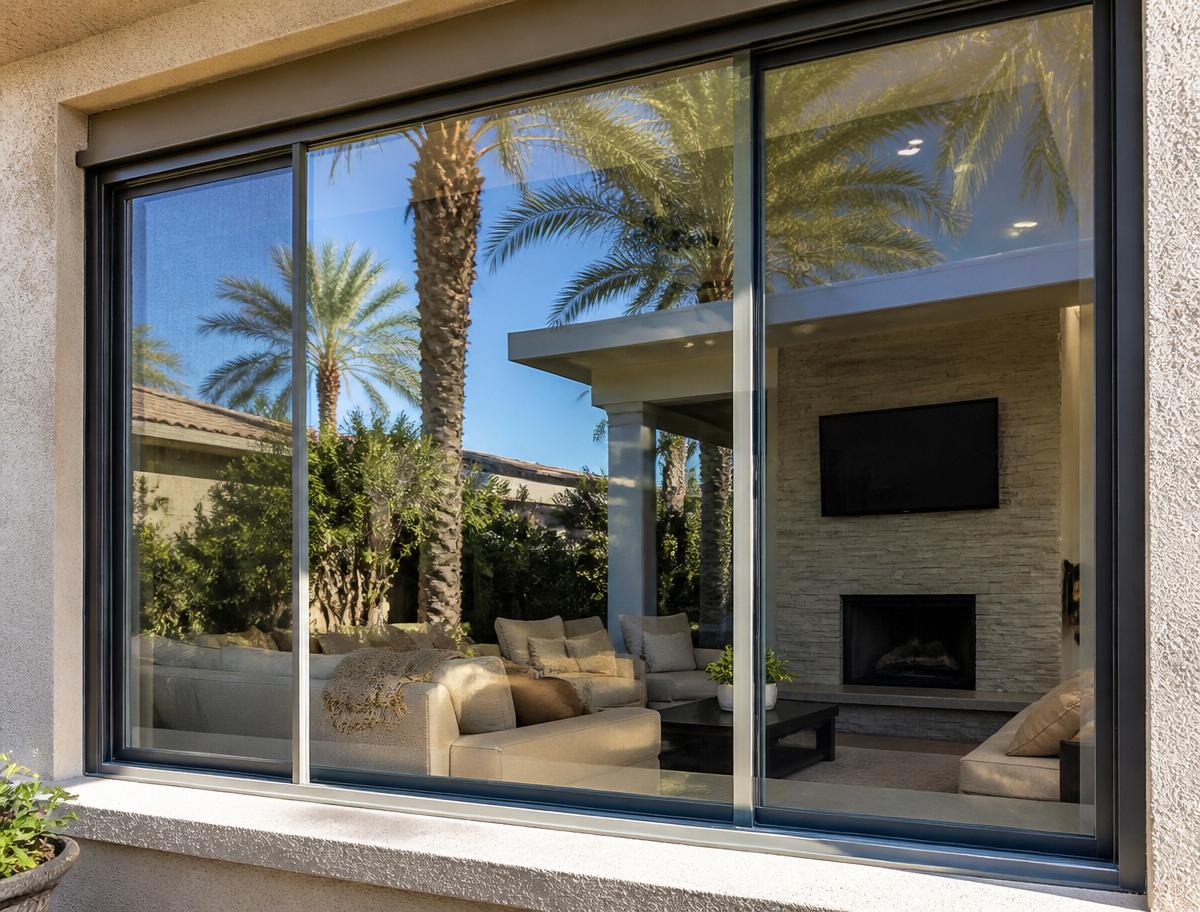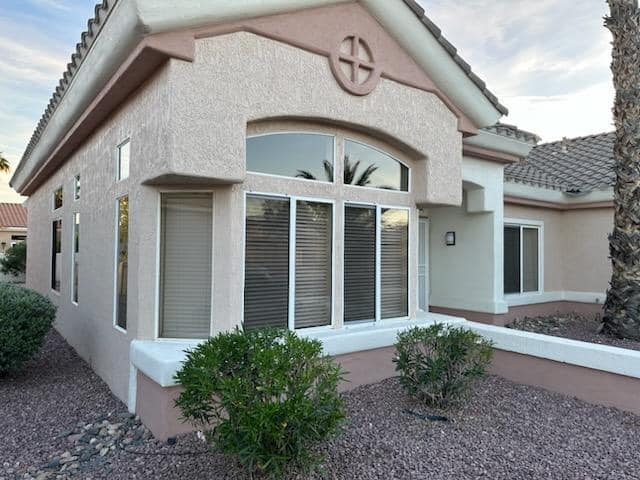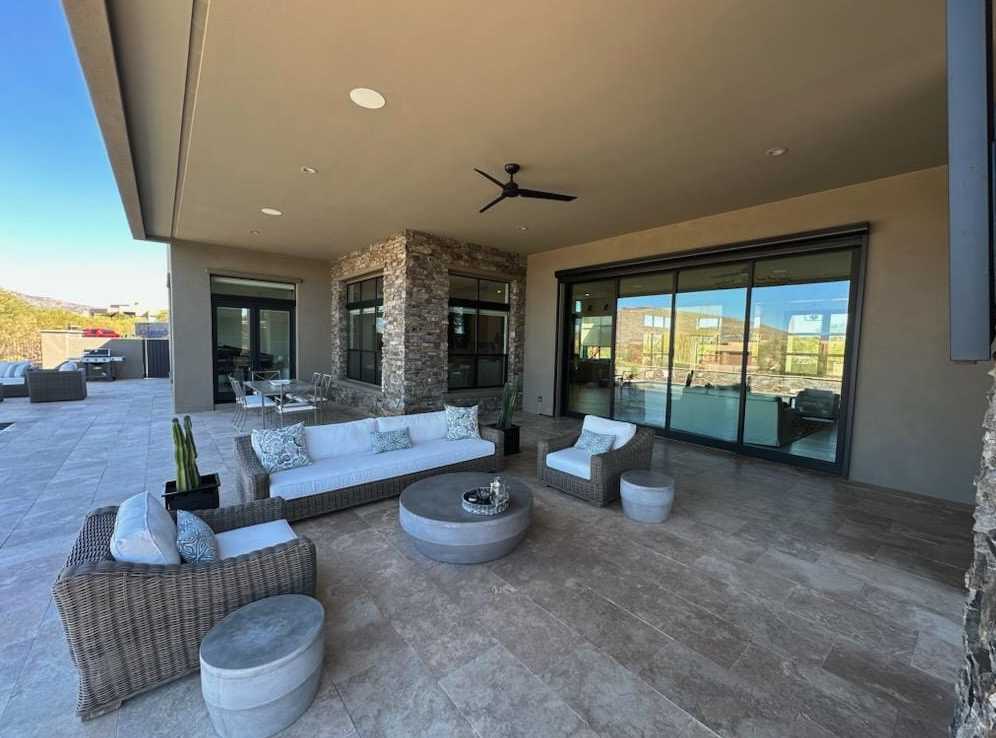

On a Phoenix evening, there's a small window when the house finally feels right. The sun drops, the block walls quit radiating heat, and you want the patio door open for a little air. Then the trade-off shows up fast. Leave the opening bare, and you invite in mosquitoes, flies, and every other winged pest that found moisture somewhere in the neighborhood.
That's why bug screen doors aren't a luxury item here. They're part of how a desert home works when you want airflow without turning the entry into an open gate for insects. In practical terms, a screen door is a mechanical filtration barrier that lets you keep doors open for ventilation while reducing insect entry, which is why screened openings are part of a broader building strategy for airflow, comfort, and pest exclusion in residential settings, as explained in this screened-opening overview.
Phoenix adds its own abuse to the equation. UV cooks cheap mesh until it goes brittle. Fine dust packs into tracks and clogs the weave. Heat punishes plastic hardware, weak corners, and bargain frames. I've seen plenty of doors that looked acceptable in the box and failed once they spent a summer facing west.
A good screen setup can last and work well here. A bad one turns into a sticking, rattling, sagging headache that people stop using. That's usually how bug screens doors fail in real life. Not all at once, but one annoying little problem at a time until the door stays shut.
Enjoying the Breeze Without the Bugs
Most homeowners start looking at bug screens doors after the same moment. You crack the back door in the morning because the air is decent for once, then notice a gnat drifting through the kitchen or hear that familiar buzzing near the light fixture by dusk. Once that happens a few times, the question stops being whether you need a screen door and becomes what kind will hold up in this climate.
In Phoenix, fresh air is seasonal and tactical. You use it when you can. That makes a working bug screen door more valuable than people think, especially on patio doors, side garage entries, and French doors that get regular use.
What Phoenix does to a bad screen door
The desert exposes shortcuts fast.
- Sun exposure: South and west-facing openings punish low-grade mesh and flimsy plastic parts.
- Dust infiltration: Fine grit settles in lower tracks, rollers, latch points, and corners.
- Heat expansion: Frames that weren't installed square start binding when the temperature climbs.
- Daily traffic: Kids, dogs, grocery runs, and backyard use test how well the door closes every single time.
A screen door that doesn't close reliably isn't a screen door for long. It's just an opening with a torn reminder hanging on it.
The biggest mistake I see is treating all screen doors like they live in the same climate. Advice that works in a mild coastal area can leave you with warped vinyl pieces, sun-faded mesh, and corners pulling apart before long. Phoenix homeowners need tighter fitment, better hardware, and materials that don't give up after a season of exposure.
What actually matters
The best bug screens doors for this area do three things well. They seal tight, they move smoothly, and they keep moving smoothly after dust and heat get at them. If one of those pieces is missing, the rest usually follows.
That's also why the right choice depends on the opening. A patio slider, front entry, and double French door don't ask for the same solution. Neither does a shaded north wall compared with a west-facing patio that takes hard afternoon sun.
Choosing Your Ideal Door Bug Screen
A west-facing patio in Phoenix can expose a weak screen door in one summer. Mesh gets brittle, tracks fill with dust, and cheap rollers start dragging right when the door sees the most use. The right choice comes down to how the opening works day to day, how much direct sun it takes, and how much maintenance you are willing to keep up with.

Comparing the main screen door types
Each style has a place. The mistake is picking by looks alone and ignoring heat, dust, and traffic.
| Screen type | Where it works well | What I like in Phoenix | Where it falls short |
|---|---|---|---|
| Retractable | Front doors, French doors, patios where appearance matters | Mesh stays tucked away when the screen is not in use, which helps with sun exposure | Needs accurate installation and regular track cleaning |
| Sliding | Patio doors with an existing slider system | Familiar design, easy to service, good fit for many standard patio openings | Lower tracks collect desert dust and roller wear shows up fast |
| Hinged | Side doors, back doors, utility entries | Strong closure, simple hardware, dependable for daily use | Needs swing clearance and solid mounting points |
| Magnetic | Light-duty use, rentals, temporary setups | Quick to install and inexpensive | Usually wears out fastest under heavy sun, pets, and constant traffic |
Retractable screens
Retractable screens work well where appearance matters and where you do not want a fixed panel in view all year. I recommend them most often on French doors and front entries, especially when homeowners want the opening clear when the screen is not needed.
In Phoenix, the protected housing is a real advantage. The mesh spends less time baking in direct sun. That said, retractables are less forgiving than they look in product photos. If the opening is out of square, the cassette is mounted slightly off, or the side channels collect grit, you get gaps, poor retraction, and premature wear. Good ones perform well. Bad installs do not last.
Sliding screens
Sliding screen doors are still the practical choice for many patio openings. If the glass door already slides, matching that motion keeps the setup familiar and efficient.
Their weak point is the bottom track. Phoenix dust is fine enough to work into rollers, corners, and guide rails, and once that buildup starts, the door begins to drag. I see plenty of sliders replaced when they really just needed new rollers, track cleanup, and a frame check. If you choose a sliding screen, plan on occasional cleaning from the start.
Hinged screens
For single-door openings, hinged screen doors are often the most durable option. They are simple, close firmly, and do not rely on a dirty lower track to operate correctly. On side garage doors, laundry exits, and back doors that get used constantly, that matters.
They are not the right fit for every layout. A tight landing, security door conflict, or patio furniture in the swing path can turn a good door into a daily annoyance. The frame also needs to be mounted solidly. In stucco-heavy openings around Phoenix, loose anchors and sloppy shimming cause sagging faster than homeowners expect.
Magnetic screens
Magnetic screens have their place. They can work for renters, short-term setups, or a secondary door that gets light use.
I would not count on them for a main family entry in Phoenix. Heat weakens cheap edging. Dust reduces how well the magnets meet. Pets and kids test the center seam every day. If you install one, treat it as a temporary solution, not a long-term door system.
Practical rule: For a high-use Phoenix doorway, durability beats convenience every time.
Mesh matters as much as the frame
A lot of homeowners focus on the door style and treat mesh like an afterthought. That usually leads to disappointment. The mesh controls visibility, airflow, insect protection, and how well the screen holds up under sun and daily abuse.
For Phoenix homes, I usually sort the options this way:
- Fiberglass mesh: Common, affordable, and easy to see through. Best for moderate use and shaded openings.
- Aluminum mesh: More rigid and usually longer-wearing than fiberglass, but it can crease if hit or pushed hard.
- Pet-resistant mesh: A smart upgrade for dogs, kids, and any doorway that gets bumped often.
- Solar or denser screen fabric: Useful on hot, bright exposures where glare and heat matter, but it can reduce airflow compared with a standard insect screen.
Homeowners who want a closer look at material trade-offs can review these different types of window screen mesh. The same material strengths and weaknesses show up on door screens, especially in full sun.
What I'd choose by opening
- Single back door: Hinged screen with a metal frame, quality closer, and pet-resistant mesh if the door gets rough use.
- Standard patio slider: Sliding screen, but only if the existing track is in good condition and the frame is still square.
- French doors: Retractable screen with careful measurement and solid side-channel installation.
- Rental or short-term fix: Magnetic screen with realistic expectations about lifespan.
The best screen door for a Phoenix home is the one that matches the opening, survives the exposure, and keeps working after months of dust, heat, and daily traffic. A cheaper option that sticks, sags, or tears early usually costs more in the end.
A Practical Guide to DIY Screen Installation
Some bug screens doors are realistic DIY jobs. Some aren't. If you're installing a simple hinged screen or a magnetic setup on a standard opening, you can get a solid result with patience, a drill, a level, and accurate measurements. If the opening is crooked, the stucco is rough, or the door is custom-sized, DIY gets harder fast.

Start with the opening, not the box
Before you unpackage anything, check the opening itself.
Run your tape measure across the width at the top, middle, and bottom. Then measure height on both sides and in the center. In older Phoenix homes, especially around patios and side entries, openings aren't always perfectly square. Stucco buildup, settling, and old fastener repairs can throw things off enough to create gaps.
A lot of homeowners assume a “standard size” screen will solve everything. That's not always true. Non-standard openings are more common than people think, especially with oversized patios, French doors, or wall-mounted situations with no existing frame. Some retractable systems are built for openings up to 15 feet wide and 12 feet high, which shows that custom fitment is a real category, not a niche one, as shown in this large-opening retractable screen example.
Basic tool kit for a clean install
You don't need a truck full of gear, but you do need the right basics.
- Tape measure: Measure twice before any cut or anchor point.
- Level: If the frame goes in crooked, the gaps will show immediately.
- Power drill: Use the correct bit for your mounting surface.
- Pencil and painter's tape: Mark holes and protect finishes while laying things out.
- Screwdrivers and hex keys: Many kits include specialty fasteners.
- Vacuum or brush: Clear dust before mounting anything.
The cleanest-looking install usually comes from the least rushed layout.
Installing a hinged or magnetic screen door
For a hinged unit, dry-fit first. Hold the frame or slab in place and confirm reveal lines before drilling. On stucco surfaces, be especially careful that fasteners bite into a stable surface and don't crack weak edges.
Then work in this order:
- Set the top alignment first. If the top is off, the whole door will telegraph the mistake.
- Check hinge-side plumb. This controls swing and closure.
- Mount loosely before tightening fully. Minor adjustments are normal.
- Test latch and closer action. A screen that doesn't shut cleanly will leave openings for bugs.
- Inspect all edges in daylight. Tiny gaps show up better with exterior light behind them.
For magnetic screens, surface prep matters more than people expect. Dusty trim, chalky paint, and textured stucco make adhesive strips fail. Wipe the mounting area thoroughly and let it dry before attaching anything. If the center seam doesn't meet evenly from top to bottom, pull it and reset it. Don't tell yourself it'll “settle in.” It won't.
If you're replacing only mesh in an existing frame rather than installing a whole new door, this walkthrough on how to replace window screen mesh helps with the same tensioning basics you'll use on many door screen frames.
Watch a full installation sequence
If you want to see the pacing and tool handling before you start, this video gives a useful visual reference:
Mistakes that cause callbacks
The failures are predictable.
- Cutting before confirming squareness: That's how you end up chasing gaps with weatherstrip and filler.
- Overtightening fasteners into weak trim: It pulls the frame out of line.
- Ignoring threshold slope: On some doors, the bottom gap changes across the opening.
- Skipping a final closure test: If the latch or magnet doesn't catch naturally, the install isn't done.
DIY works when the opening is simple and the installer is detail-oriented. It goes sideways when people force a universal kit into a custom problem.
Screen Maintenance and Repair for the Desert Climate
By late summer in Phoenix, a screen door can look fine from ten feet away and still be halfway to failure. The mesh gets dry and brittle from constant UV exposure. Fine desert dust settles into the weave, packs into the track, and starts grinding on rollers and corners every time the door moves. That wear pattern is different from what you see in wetter climates, and it changes how you should maintain and repair bug screen doors here.

Cleaning dust without damaging the mesh
Start dry.
That one step prevents a lot of avoidable damage. If you scrub wet mud-like dust into the screen first, you grind grit into the mesh and frame instead of removing it. I usually recommend a soft brush attachment on a vacuum, followed by a light wipe-down with mild soap and water on a sponge or microfiber cloth.
A few rules matter in Phoenix:
- Remove loose dust first: Vacuum or brush both sides before adding water.
- Use mild soap only: Harsh cleaners dry out vinyl parts and can discolor some finishes.
- Rinse lightly: A hard spray can stretch mesh and push debris deeper into sliding tracks.
- Dry retractable screens fully: Closing them wet traps dirt and leaves more residue in the housing.
On sliding screen doors, the bottom track is often the underlying problem. Dust mixes with pet hair, lint, and tiny bits of gravel. Then the rollers drag, the frame starts racking slightly, and homeowners assume the whole door is worn out. Sometimes it is. Sometimes it just needs the track cleaned properly.
What Phoenix sun usually damages first
Sun exposure in the Valley attacks the weak parts first, especially on builder-grade doors. I see brittle spline, faded pull handles, dried-out corner keys, and warped plastic parts long before the mesh completely gives out.
Check these areas every so often, especially on west-facing and south-facing doors:
| Part | What to look for | What it means |
|---|---|---|
| Mesh surface | Fuzzing, brittleness, small punctures | UV wear or impact damage |
| Spline channel | Loose edge, wavy mesh, corners lifting | Shrinking or failing spline |
| Rollers or hinges | Dragging, squeaking, misalignment | Dust buildup or worn hardware |
| Latch or magnet | Incomplete closure | Poor seal and bug entry risk |
If the mesh cracks or crinkles when pressed lightly, skip the heavy cleaning. At that point, replacement is usually the smarter repair.
Repairs that are worth doing early
Small failures spread fast in desert conditions. A loose corner lets more dust in. A dragging roller twists the frame a little more each week. A tiny tear turns into a hand-sized rip after one hard pull.
These repairs usually make sense for homeowners to handle:
- Patch minor holes: Good for small punctures in otherwise healthy mesh.
- Replace hardened spline: If the mesh still has life left, new spline can tighten the panel.
- Adjust or replace rollers: Many “sticking door” complaints come from roller wear or packed tracks.
- Tighten handles, hinges, and latch hardware: Heat cycles and daily use loosen fasteners over time.
Mesh replacement takes more judgment than people expect. The new material needs to fit the door style, sun exposure, and airflow needs. If you swap in whatever mesh is on the shelf, the door may close differently, block more air, or fail sooner in direct Phoenix sun. If you want a ballpark before deciding whether to patch, rescreen, or replace hardware, this guide to screen repair cost in Phoenix gives a practical starting point.
For roll-up or retractable systems, repairs get more particular. Spring tension, side retention, and mesh type all have to match the original setup. In those cases, product specs matter more than generic patch advice, especially if the screen has to handle repeated use in a dusty opening.
When cleaning turns into restoration work
Some screen doors are dirty. Others are worn in ways that cleaning alone will not fix. Oxidized frames, sun-cooked spline, bent corners, and roller assemblies full of grit can make a decent door feel shot.
That is usually the point where a proper reset makes sense. Remove the debris. Clean the channels. Replace the failed consumable parts. Rescreen it if the mesh is dry and weak. If the frame is still square, that work can buy the door more useful life.
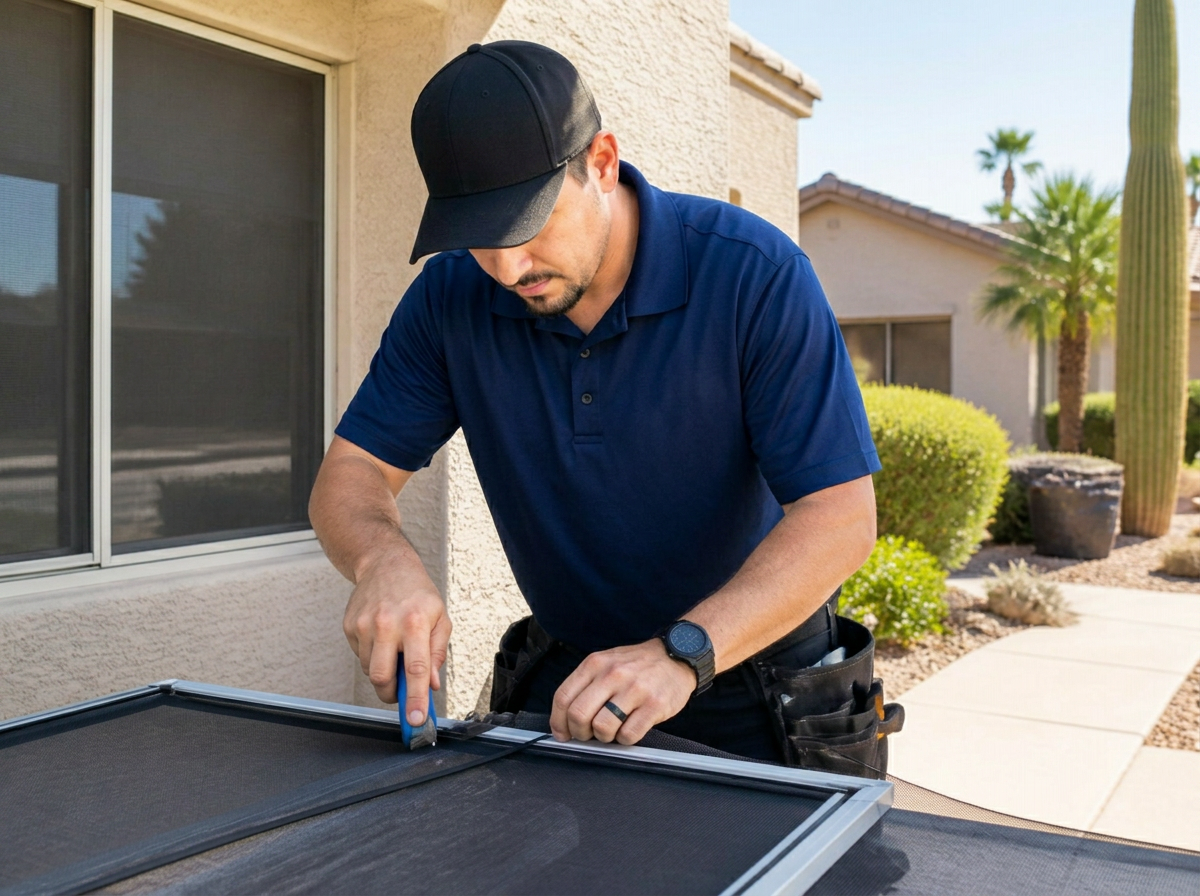
Sparkle Tech Window Washing LLC handles screen cleaning and repair in the Phoenix area, and that kind of service is often useful for homeowners who have several neglected screens at once. The key is timing. Repairing a dusty, loose screen early is routine work. Waiting until the frame is wobbling and the mesh is splitting at multiple corners usually turns it into a replacement job.
Estimating Project Costs and Timelines
Costs for bug screens doors in Phoenix swing mostly on complexity. The opening size, the style of door, the condition of the existing frame, and whether you're doing the work yourself all matter more than the screen label on the package. A basic magnetic screen and a custom retractable setup are not remotely the same project, even though people often compare them as if they are.
For standard residential work, the budget question is simple. Are you replacing mesh, installing a basic new door, or solving a fitment problem on a larger or unusual opening? The farther you move from standard sizes, the more labor and hardware start to matter.
A practical budgeting view
Use this table as a planning guide, not a quote sheet:
| Screen Type | DIY Cost Range | Pro Install Cost Range | Avg. Install Time |
|---|---|---|---|
| Magnetic | Low | Moderate | Short |
| Hinged | Moderate | Moderate to high | Moderate |
| Sliding | Moderate | Moderate to high | Moderate |
| Retractable | Moderate to high | High | Moderate to longer |
| Custom oversized opening | High | High | Longer |
That's the honest picture for most homeowners. DIY saves money when the opening is normal and the install is forgiving. Professional work makes more sense when alignment matters, trim is uneven, or the product has moving parts that need calibration.
Why oversized jobs cost more
Large-format screens are a different class of work. Industrial bug screen doors used at loading bays, warehouses, and similar facilities show the scale of engineering involved. Some are built for openings up to 14 feet wide by 14 feet high and use chain hoists for manual raise and lower operation, according to Blue Giant's loading-dock bug screen door specifications. Homeowners won't need that exact setup, but the principle applies. Bigger openings require more structure, better fitment, and more careful installation.
If you're trying to compare repair versus replacement, this local breakdown of screen repair cost factors helps frame the decision.
Time is part of the cost
A lot of DIY jobs look cheap until they eat your Saturday, then spill into Sunday because one bracket got mounted out of line. If the project involves square-up work, stucco anchors, custom trimming, or retractable tracks, time becomes part of the actual cost. For many homeowners, that's the point where hiring it out starts making sense.
When to Call a Pro for Screen Repair and Cleaning
Some screen problems are worth tackling yourself. Others turn into repeat repairs because the underlying issue isn't the mesh. It's the frame, the alignment, or the opening itself. If the door is bent, if the track is damaged, or if the screen never seals tight no matter what you adjust, that's professional work.
Custom and large openings are another clear handoff point. Retractable systems need accurate measurement and clean alignment, especially on French doors and patio openings where small errors show up immediately. The same goes for old homes with uneven trim or stucco conditions that make mounting tricky.

Signs the job is no longer a DIY repair
- The frame is warped: New mesh won't fix a twisted door.
- The door won't stay on track: Roller or track issues need proper adjustment or parts.
- The opening is non-standard: Custom measurement matters more than guesswork.
- Dust and buildup are heavy: Deep cleaning without damaging the mesh takes a careful hand.
A professional repair is cheaper than buying the wrong replacement twice.
There's also a point where the problem crosses from screen work into door hardware or structural fitment. If the surrounding door system is part of the issue, a commercial and entry-door specialist can be useful. For that kind of crossover problem, Wilcox Door repair solutions are a relevant resource to review.
When homeowners want the screen cleaned, repaired, or rescreened without chasing tools and parts themselves, local service is usually the simpler option.
If your screens are clogged with desert dust, dragging in the track, or ready for repair, Sparkle Tech Window Washing LLC handles window screen cleaning and repair for homeowners across the greater Phoenix area. If you'd rather stop patching the same problem and get the screens working properly again, it's a straightforward place to start.