


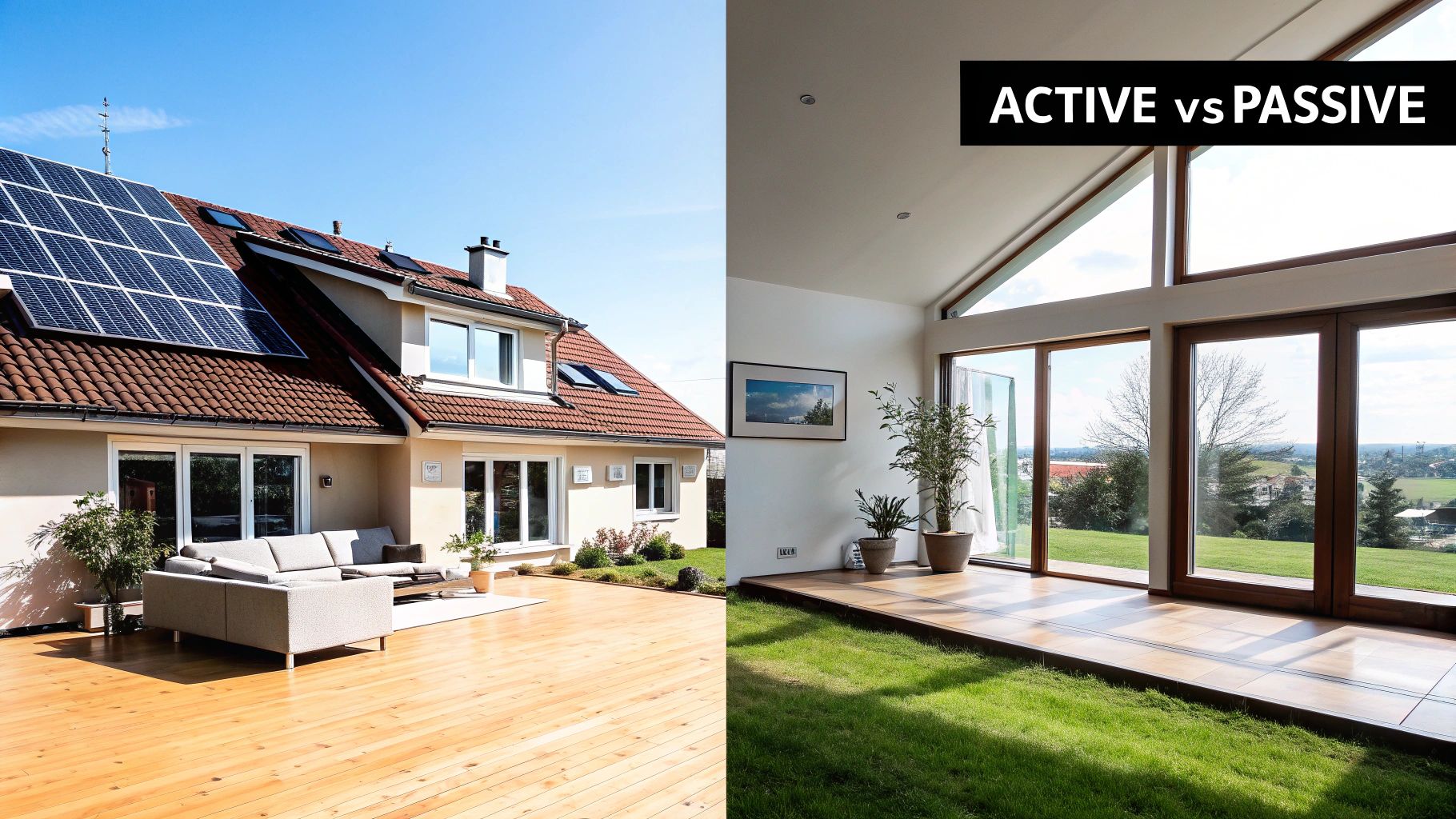
The real difference between active and passive solar energy boils down to one thing: technology versus design.
Active solar is all about hardware. It uses mechanical and electrical systems, like the photovoltaic (PV) panels you see on rooftops, to capture sunlight and actively convert it into usable power. On the other hand, passive solar is an architectural approach. It cleverly uses a building's own structure—its windows, walls, and even its orientation to the sun—to naturally manage heat and light without any moving parts.
Decoding Solar Energy for Your Home
Getting a handle on the active vs. passive solar distinction is the first crucial step for any homeowner, especially in a sun-drenched climate like Scottsdale or Phoenix. While both methods tap into the sun's incredible power, they work on completely different principles to achieve different goals. Active systems are there to generate energy, while passive systems are designed to conserve it by letting the building work in harmony with its environment.
Core Operational Differences
When most people think "solar," they're picturing active solar technology. These are systems you add onto a home, specifically engineered to produce electricity or heat water using a collection of sophisticated components. They're incredibly effective for running everything from your air conditioner and appliances to charging an electric vehicle.
Passive solar is a much more integrated concept. It's woven directly into the architectural fabric of a house from the very beginning. It's about making smart design choices during construction or a major remodel to dramatically reduce the need for mechanical heating and cooling in the first place. The building itself does the work.
Here’s the simplest way to think about it: Active solar is about adding technology to your home. Passive solar is about designing your home to be the technology. One is a product you buy; the other is a philosophy you build with.
To make things even clearer, let's break down the key characteristics side-by-side.
Key Differences Active vs Passive Solar
This table offers a quick snapshot of how these two powerful solar strategies stack up against each other.
| Characteristic | Active Solar Energy | Passive Solar Energy |
|---|---|---|
| Method of Collection | Uses technology like PV panels or solar thermal collectors. | Uses structural elements like windows, walls, and floors. |
| Components | Requires mechanical and electrical parts (pumps, fans, inverters). | Relies on architectural features; no moving parts. |
| Primary Function | Generates electricity or heats fluids (like water). | Provides space heating, cooling, and natural lighting. |
| Ideal Application | Retrofitting existing homes or supplementing energy needs. | Best integrated into new home construction or major renovations. |
| Maintenance | Requires regular cleaning and periodic mechanical checks. | Minimal; primarily involves window cleaning and seasonal adjustments. |
As you can see, the two approaches are designed for very different scenarios and require completely different levels of involvement from the homeowner.
How Active Solar Systems Power Your Home
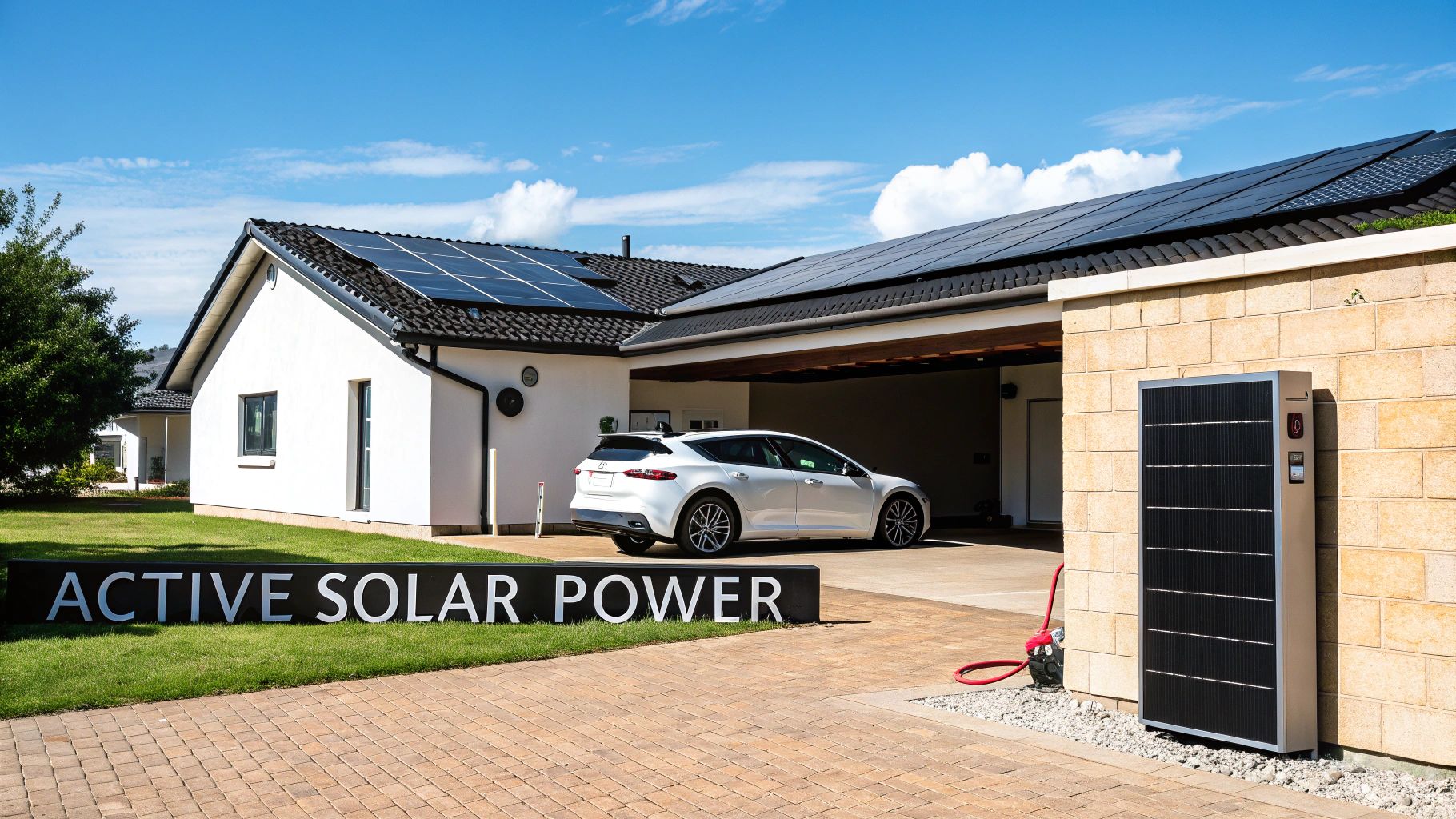
While passive solar is all about smart architectural design, active solar energy is what most people picture when they think of solar power. These are the technological workhorses you install on your property, using specialized equipment to actively capture sunlight and convert it into usable energy. It's an engineered solution, not a design philosophy.
Think of it this way: an active solar setup is like adding a personal power plant to your home. It’s a dynamic system that constantly works to generate electricity or heat, making it a fantastic choice for upgrading an existing house or boosting the energy independence of a new one.
The Core Components of Active Solar
Active solar technology generally falls into two main categories, and knowing the difference helps you understand what's happening on your roof.
1. Photovoltaic (PV) Systems for Electricity
This is by far the most common type of active solar, easily recognized by the panels you see on homes all over Scottsdale and Phoenix. Their one and only job is to turn sunlight directly into electricity.
- Photovoltaic (PV) Panels: These are made with semiconducting materials, most often silicon. When sunlight hits the panels, its photons knock electrons loose, creating a direct current (DC) of electricity.
- Inverter: This is the brains of the operation. It's a critical piece of hardware that takes the DC electricity from the panels and converts it into the alternating current (AC) that all of your home's appliances and outlets use.
- Mounting Equipment: Also known as racking, this is the hardware that physically secures the panels to your roof, holding them at the perfect angle to soak up the most sun throughout the day.
2. Solar Thermal Systems for Heat
While less common for powering an entire home, solar thermal systems are brilliant for specific, high-demand heating tasks like providing hot water.
- Solar Collectors: These might look like PV panels at a glance, but they do something totally different. Instead of generating electricity, they absorb the sun's heat and transfer it to a fluid (often water or an antifreeze solution) that circulates through them.
- Pumps and Fans: This is the "active" part. These mechanical components are needed to move the heated fluid from the collectors on the roof down to a storage tank or heat exchanger inside the home.
- Storage Tank: A well-insulated tank holds the hot water, keeping it ready for you to use for showers, laundry, or even in-floor radiant heating systems.
In essence, both active vs passive solar energy approaches harness the sun, but active systems introduce technology—panels, pumps, and inverters—to actively manage and distribute that energy. This makes them versatile enough to power anything from your air conditioner to an electric vehicle.
The Growing Demand for Active Energy
The sheer effectiveness and flexibility of active solar technology have caused its popularity to explode. In 2023 alone, global renewable energy capacity shot up by an astonishing 50%, and solar PV systems accounted for a full three-quarters of that growth.
Closer to home, the United States saw its total solar capacity hit 139 GW by the end of 2023—a 23% jump in just one year. You can learn more about the growth of solar energy to see why it's becoming such a vital part of our energy future. This isn't just a trend; it's a fundamental shift in how we power our lives.
How Passive Solar Design Works With Your Home
Unlike active solar systems that bolt technology onto your roof, passive solar energy is all about smart architecture. It’s the art of designing a home to work with the sun—capturing and storing its warmth in the winter and deflecting it in the summer. No pumps, no panels, just a home that’s intelligently integrated with its environment.
Think of it as a natural machine, finely tuned to the climate. Every element, from the windows to the flooring, has a specific job. For this to work, especially in a place with intense sun like Scottsdale, all the pieces have to work together perfectly.
Core Principles of Passive Design
A truly effective passive solar home relies on a few foundational principles working in concert. When you get it right, you create a living space that dramatically cuts your need for mechanical heating and cooling.
- Strategic Orientation and Windows: The home's orientation is everything. You need to position the house to get maximum sun exposure in the winter, which means large, south-facing windows are a must. These windows become the home's primary heat collectors.
- High Thermal Mass: Inside, you need materials that can soak up and hold that heat. We’re talking about concrete, brick, tile, or stone floors and walls. These materials have a high thermal mass, allowing them to absorb the solar energy that streams in all day.
- Smart Distribution and Control: As the sun goes down, the heat stored in the thermal mass naturally radiates back out, keeping the home warm through the night. To handle the summer, design features like roof overhangs, awnings, and even strategically planted deciduous trees block the high-angle sun, keeping that same thermal mass cool.
The essence of passive solar is timing. The design ensures your home absorbs heat only when you need it and blocks it when you don’t, creating a self-regulating thermal system.
A Timeless and Proven Strategy
While it might sound like a modern concept, passive solar design has been around for centuries. It saw a huge resurgence after the 1973 oil crisis, and since the first federal Solar Energy Tax Credits were introduced in 1978, an estimated 300,000 U.S. buildings have been built with these features.
These homes have demonstrated incredible results, with some achieving 70%-90% reductions in heating and cooling costs compared to conventional buildings. You can dig into the history of passive solar buildings to see just how long this has been a successful strategy. It's proof that in the active vs passive solar energy debate, thoughtful design is one of the most powerful tools we have.
Comparing Solar Costs, Maintenance, and Performance in Arizona
When you're weighing active vs. passive solar energy in Arizona, the decision usually boils down to three very real-world factors: cost, upkeep, and performance under our relentless desert sun. These aren't just abstract concepts; they dictate your initial investment, long-term value, and the effort needed to keep everything running smoothly.
The financial side of things is where these two approaches really diverge. Active solar, which for most people means installing photovoltaic (PV) panels, comes with a hefty upfront price tag for the equipment. The good news is that federal tax credits and local incentives can take a significant bite out of that initial cost, making it a viable retrofit for just about any existing home.
On the other hand, passive solar's biggest costs are baked into the design and construction of a new home. This is where you're investing in materials like high-thermal-mass flooring or specifying advanced, energy-efficient glazing.
Initial Investment vs. Long-Term Operational Costs
With an active solar system, the price is all about the hardware—the panels, inverters, and maybe a battery backup. While that initial outlay is steep, your return on investment is clear and measurable: your monthly electricity bills shrink dramatically, or even disappear altogether. It becomes a quantifiable financial asset from day one.
Passive solar’s ROI is a bit quieter and more integrated into the home itself. Its value comes from decades of not having to crank up your HVAC system as much. Since there are no moving parts, there are virtually no operational costs. It’s a true "set it and forget it" solution once it's built.
The core financial difference lies here: Active solar is an equipment purchase that generates power, while passive solar is an architectural investment that conserves power. One actively produces savings you can track on a monthly bill, while the other passively prevents expenses you would have otherwise incurred.
This decision tree gives you a great visual of the thought process behind a passive solar design, highlighting how things like orientation, window choice, and material selection all fit together.
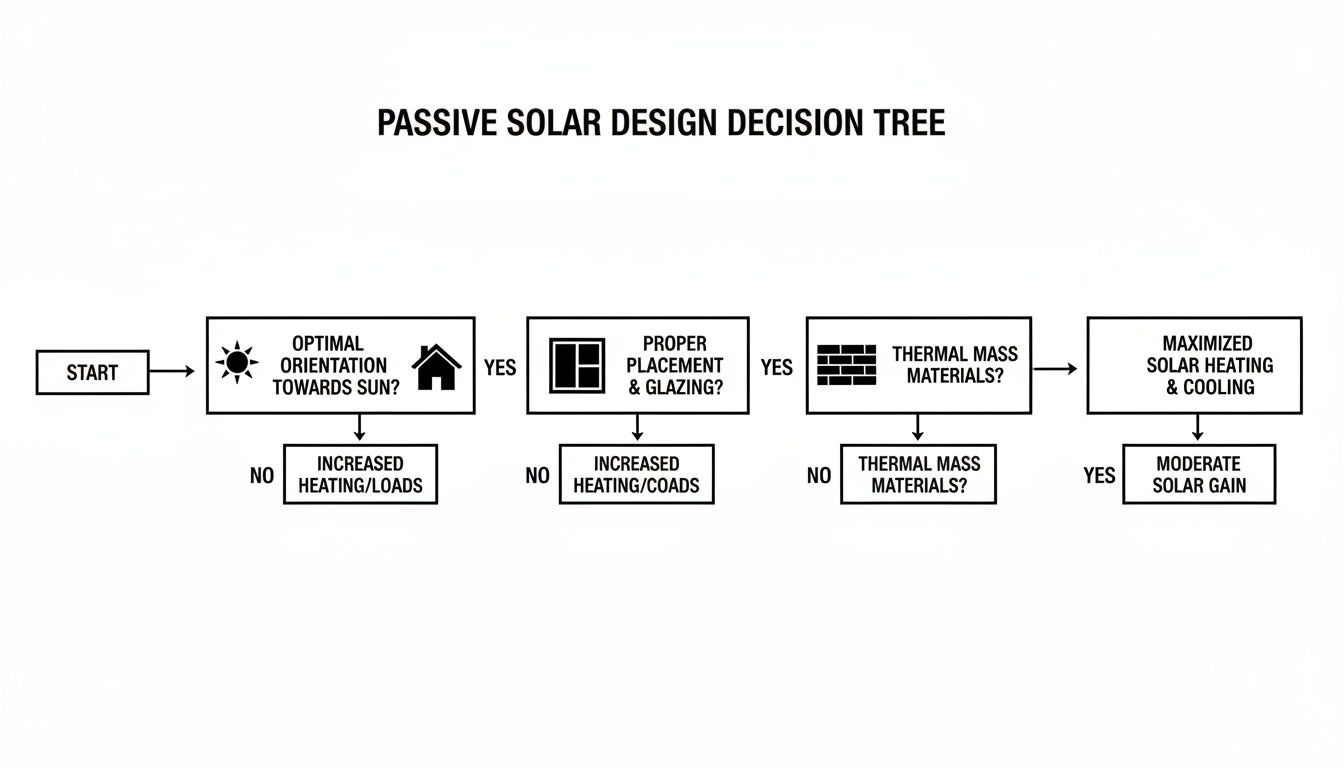
As the graphic shows, a successful passive design isn't one single choice but a series of smart, strategic decisions that build on each other to create a home that’s naturally efficient.
Maintenance Demands in a Dusty Climate
Here in Arizona, maintenance isn't optional—it's essential for getting the performance you paid for. But the demands for active and passive systems are worlds apart.
- Active Solar Maintenance: PV panels need regular, professional cleaning. It's not an exaggeration to say that a buildup of Sonoran Desert dust, local pollen, and monsoon grime can slash your energy production by up to 30%. You'll also need occasional check-ups on the inverters and wiring to ensure everything is mechanically sound.
- Passive Solar Maintenance: The upkeep here is far simpler but no less important. It’s almost entirely about keeping those large, south-facing windows clean to maximize solar gain during the winter. This means regular, thorough window washing is the main task on your to-do list to maintain efficiency.
For anyone with an active system, it's worth understanding how professional cleaning is one of the most effective ways to improve solar panel efficiency and protect your investment.
To make things clearer, let's break down these factors side-by-side for a typical Arizona homeowner.
Cost and Performance Breakdown for Arizona Homes
This table offers a direct comparison of active and passive solar systems, focusing on the key factors that matter most to local residents.
| Decision Factor | Active Solar (PV Panels) | Passive Solar (Architectural Design) |
|---|---|---|
| Initial Cost | High, driven by equipment and installation fees. Often offset by tax credits and incentives. | Highest during new construction; retrofitting is complex and less common. |
| Operational Cost | Minimal. The main potential expense is replacing an inverter every 10-15 years. | Virtually zero. There are no mechanical or electrical parts to wear out or fail. |
| Maintenance Needs | Essential. Requires professional cleaning 1-2 times per year, plus periodic system checks. | Essential but simple. Primarily involves professional window cleaning to maximize light and heat transfer. |
| AZ Performance | Excellent electricity production, though efficiency can dip slightly during extreme summer heat. | Superior for reducing cooling loads by design (e.g., overhangs) and lowering winter heating costs. |
Ultimately, both paths offer a smart way to tap into our state's most abundant resource. The right choice depends on whether you're building from scratch or upgrading an existing home, and whether you prefer an active, power-generating asset or a passive, energy-saving design.
Why Cleaning Is Critical for Solar Performance
Regardless of whether you go with an active or passive solar strategy, the success of your investment here in Arizona hinges on a factor that's easy to overlook: cleanliness. Our unique desert environment—with its fine dust, seasonal pollen, and the heavy grime left behind by monsoon storms—poses a serious challenge. Ignoring this reality means you're just leaving performance and money on the table.
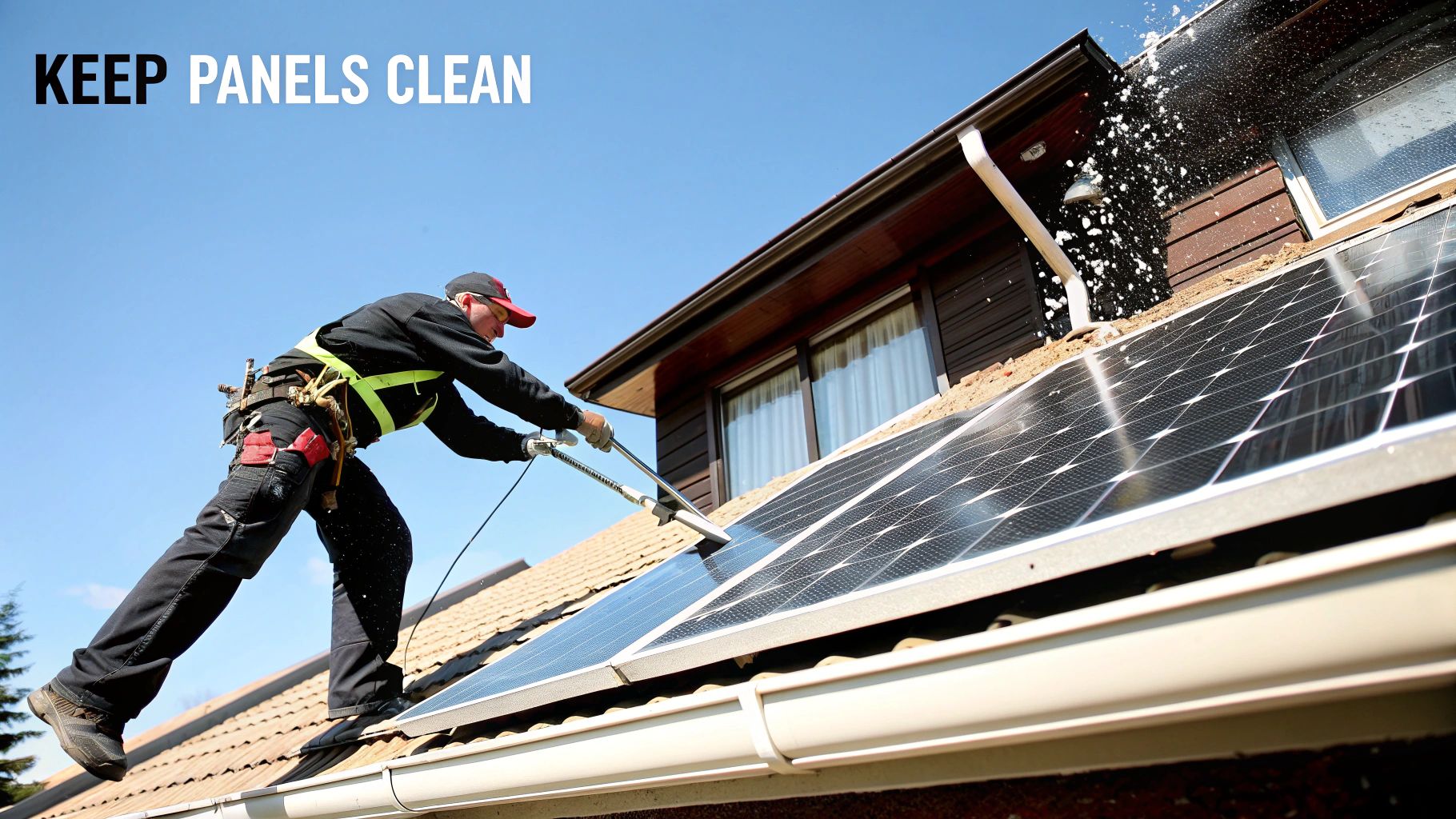
And this isn't just about looks. That layer of dirt is a physical barrier, literally blocking the sunlight both systems absolutely need to do their jobs. For homeowners with active PV systems, this has a direct and immediate impact on energy generation and, ultimately, their financial return.
The Impact on Active Solar Systems
With an active solar array, every single photon matters. The photovoltaic cells inside your panels are engineered to soak up as much sunlight as they possibly can to create electricity. When a film of dust and grime settles on that glass surface, it’s like putting a shade over those cells.
The drop in performance can be truly staggering. Real-world studies have shown that dirty solar panels in dusty climates can lose up to 30% of their efficiency. Think about that—a system designed to save you hundreds on your utility bill might only be delivering a fraction of its potential. This can dramatically extend its payback period and shrink your overall savings. Regular, professional cleaning isn't just an optional expense; it’s essential maintenance to protect your investment's power output.
In the active vs passive solar energy conversation, cleanliness is the great equalizer. No matter how advanced the technology or how perfect the design, a dirty surface will always underperform, turning a powerful asset into a-less-than-efficient fixture.
Why Passive Solar Designs Also Suffer
Passive solar design is all about the clean, unobstructed transfer of the sun's energy through large windows to heat your home's thermal mass. And just like with PV panels, dirty windows completely cripple this process. A grimy film of dust and hard water stains diffuses and reflects the incoming sunlight, stopping it from ever reaching the interior floors and walls.
This severely diminishes your home's natural ability to warm itself during the cooler months, which means you end up relying more on your mechanical HVAC system. That pretty much defeats the whole point of having a passive design in the first place. On top of that, dirty windows obstruct your views and cut down on the natural light entering your home, affecting the comfort and feel of your living space. To get the full benefits of a passive solar design, you have to keep its most critical components—the windows—spotless.
For a closer look at proper maintenance, you can learn more about how to clean solar panels and why professional techniques are so important in our detailed guide. In either solar scenario, routine cleaning is a non-negotiable task for any Arizona homeowner who is serious about maximizing their solar investment.
Choosing the Right Solar Strategy for Your Property
Deciding between active and passive solar energy isn't about which one is "best"—it's about what's right for your home, your goals, and your situation. The age of your house, where it’s located, and what you want to achieve in the long run will ultimately guide you to the smartest choice.
Think about a brand-new custom home going up in Paradise Valley. This is a golden opportunity to weave passive solar design into its very DNA. An architect can orient the building to capture winter sun while blocking the harsh summer heat, strategically place windows for natural light, and choose materials that help regulate indoor temperatures. The result is a home that’s inherently comfortable, slashing future heating and cooling costs from day one.
Retrofitting vs. New Construction Scenarios
Now, picture a homeowner in Gilbert with an existing house and an electric bill that goes through the roof every summer. Trying to retrofit a full passive solar design would be a massive, often impractical, undertaking. For them, the clear, cost-effective solution is an active solar PV system.
Installing solar panels is a direct way to generate electricity and offset those punishing energy demands. It's an addition to the home, not a fundamental redesign of the home, which makes it the go-to choice for the vast majority of existing properties looking to cut costs.
The most powerful strategy? Don't think of it as an either/or choice. A home built with smart passive design principles becomes even more efficient when you add an active PV system, blending deep conservation with clean energy generation.
Making an Informed Decision
At the end of the day, your specific situation dictates the best path forward. Here’s a simple way to look at it:
- Building a New Home? Make passive solar design a top priority. It's the most affordable way to bake a lifetime of energy savings right into the structure by minimizing the energy your home needs in the first place.
- Upgrading an Existing Home? An active solar PV system is almost always your best bet. It directly attacks high electricity bills and delivers a tangible return on investment by generating your own power.
- Aiming for Total Energy Independence? The hybrid approach is king. Use passive design to dramatically lower your home's energy appetite, then install an active PV system perfectly sized to cover that smaller, more manageable demand.
By weighing your needs and budget, you can land on the solar solution that will perform best for you. Just remember that regardless of the system, maintenance is crucial. Keeping up with regular cleaning is essential for maintaining high solar panel efficiency and making sure you get the most out of your investment.
Your Solar Energy Questions, Answered
When you start digging into the differences between active and passive solar, a lot of practical questions pop up. It's only natural. Let's tackle some of the most common ones we hear, especially from homeowners here in sunny Arizona.
Can I Really Mix Active and Passive Solar in My Home?
Yes, you absolutely can—and frankly, it's the smartest way to go. Think of it as a one-two punch for energy efficiency.
You can design or retrofit your home with passive solar features, like positioning large windows to face south and using materials like concrete or tile floors that soak up heat. This design does the heavy lifting, naturally cutting down on how much heating and cooling you need in the first place. Then, you add an active solar system, like rooftop PV panels, to generate the electricity for whatever's left. It's a powerful combination that maximizes every bit of sunlight.
A hybrid approach is the gold standard. Passive design slashes your energy demand, and an active system steps in to power the rest. It’s a beautifully synergistic way to boost savings and sustainability.
In a Place Like Phoenix, How Often Do My Solar Panels Actually Need to Be Cleaned?
Here in dusty climates like Phoenix and Scottsdale, cleaning your panels isn't just a suggestion; it's a necessity for getting the most out of your investment. We strongly recommend a professional cleaning at least twice a year.
A great schedule is to clean them once right before summer hits its peak and then again after the monsoon season wraps up. This keeps them free of the dust and grime that can choke their performance, ensuring you're generating as much power as possible when you need it most.
Is a Passive Solar Design Only an Option for Brand-New Houses?
Not at all. While integrating passive solar principles is certainly easiest when you're building from the ground up, you can still make some incredibly effective upgrades to an existing home.
Even simple changes can make a huge difference. Think about adding awnings over windows, hanging insulated curtains to manage heat gain, or making sure your windows are professionally sealed and spotless. Each of these small retrofits helps your home regulate its temperature more naturally and chips away at your energy bills.
Maximizing your return on any solar strategy comes down to keeping those surfaces clean. Whether it's the PV panels on your roof or the crucial windows in your passive design, Sparkle Tech Window Washing LLC has the expertise to ensure they're performing at their absolute best. Schedule your professional cleaning service online today and see the difference for yourself.