

The average cost of window replacement in the United States in 2026 runs $600 to $850 per window, and most homeowners land around $750 per window installed. In Phoenix, expect that your selections will go beyond that baseline, because glass and frame choices that can survive hard sun and brutal heat often push you toward the upper end of the range.
If you're reading this after another ugly summer utility bill, you're not alone. A lot of Phoenix homeowners start paying attention to their windows only after the house feels hotter near the glass, the frames stay dusty no matter what, and the AC seems to run all afternoon.
That national average is useful, but it doesn't tell you what matters most here. In the Valley, cheap windows can become expensive windows if they struggle with solar heat, dust, and constant expansion and contraction. The right replacement isn't just about the invoice. It's about how long the window holds up, how much maintenance it needs, and whether it still performs after years of desert exposure.
Your Guide to Window Replacement Costs in 2026
Your July power bill lands in the inbox, the west-facing rooms heat up by noon, and the glass feels hot before dinner. That is usually when window replacement stops feeling optional in Phoenix.
The national average gives you a starting point. It does not tell you what a window will cost to own in the desert. Here, sun, dust, and daily temperature swings put constant stress on seals, frames, and glass coatings. A low bid can turn into a bad value if the window struggles after a few summers.
Start with the baseline you saw earlier, then adjust for Phoenix reality. Homes with full afternoon exposure, older openings, or rooms that already run hot usually need better glass and sturdier frame construction. That pushes the price up, but it also cuts down on heat gain, service calls, and early replacement risk.
A few factors decide where your project lands.
- Frame material sets the tone: Cheap frames can warp, fade, or lose rigidity faster under intense sun. Better materials cost more upfront and usually ask less from you over time.
- Glass package affects comfort every day: Strong solar-control glass raises the quote, but it does real work in Phoenix. You feel that difference every afternoon.
- Installation method changes the labor bill: Retrofit can save money if the existing frame is still solid. Full-frame replacement costs more, but it is the right call when the opening, trim, or old frame is part of the problem.
- Project size affects efficiency: Replacing more windows in one job often lowers the per-window cost because the crew can work faster and order more efficiently.
Here is the practical advice. Treat windows like part of your cooling system, not like a cosmetic upgrade.
A realistic budget depends on more than window count. Older homes, oversized units, damaged stucco, wood rot, and premium finishes all raise the final number. So does ignoring maintenance after the install. In Phoenix, dust buildup, failed caulking, and neglected tracks shorten the life of good windows faster than many people expect.
Ask a better question before you sign. What will these windows cost me to own over the next ten to fifteen years? That includes the install price, summer comfort, cleaning and upkeep, repair risk, and how well the window holds up under hard desert exposure. That is how you separate a cheap quote from a smart replacement.
Decoding Your Window Replacement Quote
You get three quotes for the same house. One is far lower than the others. Before you call it a deal, read the scope. In Phoenix, the actual cost often hides in what the estimate leaves out, especially prep work, installation detail, and repairs around the opening.
A window quote should tell you how the contractor plans to solve a specific problem at each opening, not just what window brand they want to sell you. That matters because desert sun, dust, and years of expansion and contraction wear out more than glass. They wear out seals, caulk lines, trim, and sometimes the frame itself. If the quote ignores those conditions, your long-term cost goes up fast.
The four parts of the quote
Most estimates break down into four cost buckets:
| Cost driver | What it means for you |
|---|---|
| Frame material | The frame sets the base price and affects durability, upkeep, and how well the window holds up over time. |
| Glass package | The glass affects heat gain, glare, and comfort. The right spec matters more in Phoenix than in milder climates. |
| Labor | Installation labor covers removal, prep, fitting, sealing, and finish work. Difficult access or damaged surrounding materials raise this cost. |
| Install type | Retrofit keeps the existing frame. Full-frame replacement removes the whole unit and addresses problems in the opening. |
Labor deserves close attention
Labor is a significant cost component, not a side charge.
A quote can look attractive because the window itself is priced aggressively, while the installer assumes an easy swap on every opening. That falls apart when the crew finds brittle caulk, sun-baked trim, failed flashing, stucco damage, or an old frame that should not stay in place. At that point, the "cheap" quote starts collecting change orders.
Ask the contractor to spell out what labor includes. Removal. Disposal. Surface prep. New sealant. Minor finish repair. Hardware adjustment. Cleanup. If those details are missing, the total is incomplete.
A good quote must account for the specific conditions around each window.
What to check before you compare totals
Use the estimate like a checklist, not a sales sheet.
- Installation method is clearly stated: The quote should say retrofit or full-frame for each window group, not bury it in fine print.
- Glass is described in plain language: “Energy-efficient” is weak. You want a clear description of the glass package and why it fits Phoenix heat.
- Exterior and interior repair scope is listed: Stucco edges, trim, drywall touch-up, and repainting do not fix themselves.
- Problem openings are called out: Large units, older openings, and west-facing rooms usually need more planning.
- Sealing details are included: Good sealing work protects comfort now and reduces maintenance problems later.
Where I would push back
I would question any proposal that spends more time on brand names than on installation steps. Product matters. Installation determines whether that product lasts in this climate.
I would also push back on vague allowances. If the estimate says repairs will be priced later, ask what conditions they expect to find and how those charges will be approved. Clear scope protects your budget.
The best quote usually is not the lowest one. It is the one that matches the actual condition of the house, uses materials that can handle Phoenix exposure, and reduces future upkeep instead of postponing it. That is how you control total cost of ownership, not just the number at the bottom of page one.
Comparing Window Materials for the Arizona Climate
Material choice separates a decent replacement project from one that lasts. In Phoenix, this isn't a cosmetic choice. It affects heat resistance, stability, maintenance, and how your windows perform after years of direct sun.
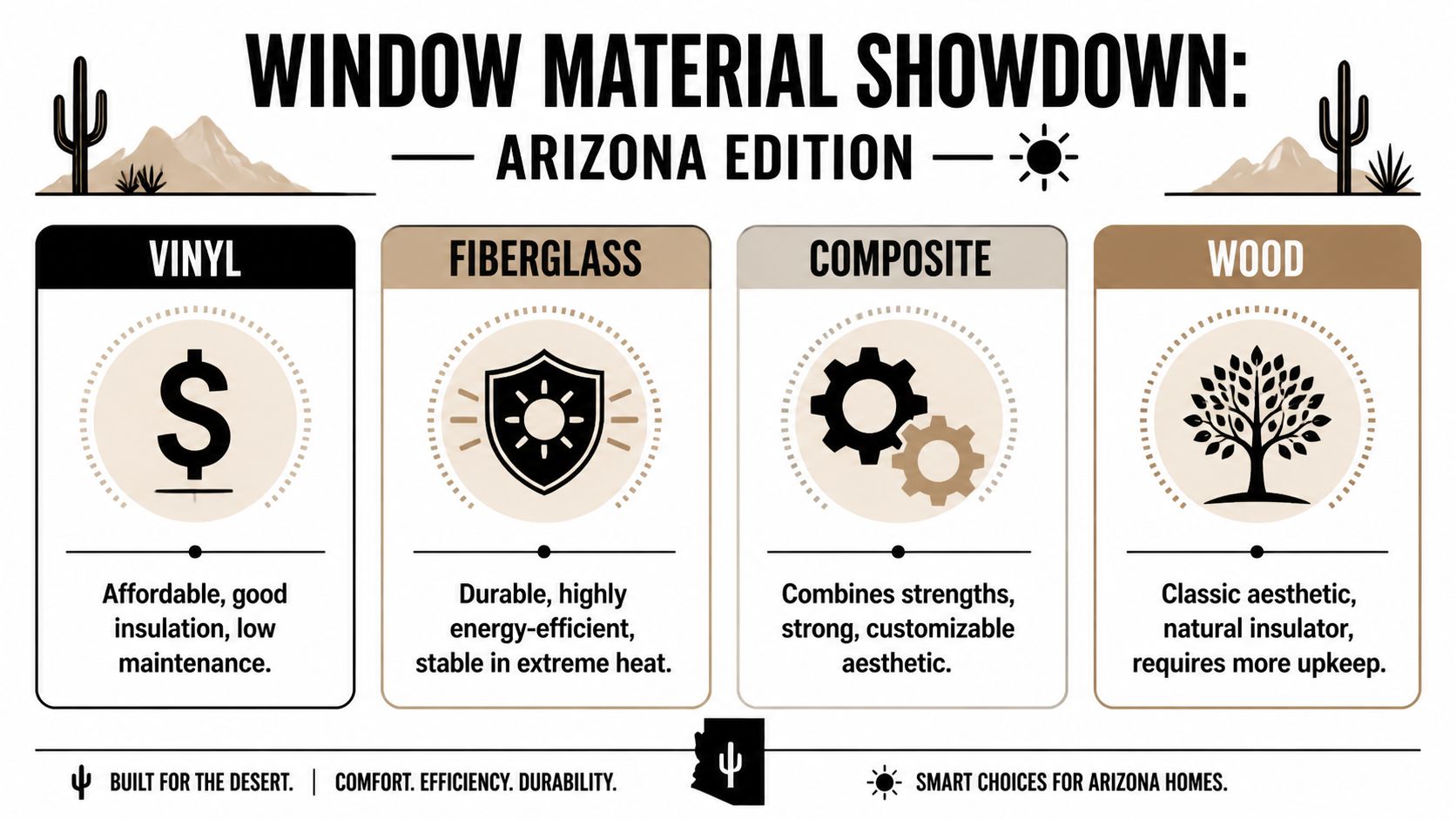
According to USA Superior's window replacement cost estimator, vinyl windows average $400 to $850 per window, fiberglass ranges from $900 to $1,400, and composite runs from $1,000 to $1,800. That same source notes that fiberglass and composite deliver stronger thermal performance than vinyl.
Vinyl is the value pick, not always the best pick
Vinyl is popular for a reason. It keeps the upfront bill in check, it doesn't ask for much maintenance, and it's usually the easiest option when a homeowner needs to replace several windows without blowing up the budget.
That said, Phoenix isn't gentle on materials. If you're trying to squeeze the cheapest possible result out of a west-facing wall, vinyl may not be the choice that feels smartest later.
Fiberglass and composite make more sense for hard exposure
Fiberglass costs more, but it tends to be the material I’d take seriously for desert conditions. Composite also belongs in that conversation. Both are stronger choices when your priorities are stability, energy performance, and longer-term value rather than just the lowest invoice.
Here’s the practical comparison:
- Vinyl: Best when budget leads the decision and the exposure isn't brutal on every elevation.
- Fiberglass: Strong option when you want better resistance to heat stress and better long-term performance.
- Composite: Worth considering when you want premium performance and are willing to pay for it.
- Wood: Attractive, but in Arizona it asks for more attention than most homeowners want to give.
Buy for the side of the house that suffers the most, not the side you look at the most.
My recommendation for Phoenix homes
If you're replacing windows in a starter home or rental, vinyl often makes sense. Just don't expect bargain-bin pricing and top-tier performance in the same product.
If you're staying in the house and the sun is relentless, I'd look hard at fiberglass first, then composite if the budget allows it. In a harsh climate, the wrong material saves money only once. The right one keeps saving it.
How Window Style and Size Impact Your Budget
You see it all the time in Phoenix. Two neighbors replace windows in the same month, on houses that look about the same from the street, and one quote lands thousands higher. The usual reason is not the window count. It is the style, the size, and whether the openings are standard or custom.
Simple windows are cheaper to buy, easier to install, and easier to maintain over time. Large fixed glass, wide picture windows, bay assemblies, arched tops, and oddball dimensions push cost up fast. They also change your long-term ownership cost in a desert climate, because bigger glass areas take more sun, show dust faster, and put more pressure on seals, finishes, and cleaning schedules.
Standard openings save money in more than one way
A standard bedroom or bathroom window is usually the budget-friendly part of the project. The unit is easier to source, replacement labor is more predictable, and future service is less of a headache if hardware, screens, or glass ever need attention.
Custom sizes are different. Once a contractor has to order non-standard dimensions or work around an older opening that is out of square, you are paying for extra measuring, extra fabrication, and a trickier install. That cost does not disappear after installation either. Custom glass and specialty parts are usually slower and pricier to replace later.
Style changes both the quote and the upkeep
Some styles cost more because they are physically larger. Others cost more because they are more complex.
A bay or bow unit is the clearest example. It is not just a single replacement window. It is a multi-part assembly with more framing, more glass, more labor, and more places that need attention over the years. If you are weighing that option, this bay or bow window guide gives a useful breakdown of why these designs sit in a different price tier than a standard opening.
Here are the usual budget drivers:
- Large picture windows: more glass, heavier units, higher handling and installation cost
- Bay and bow windows: more structure, more labor, more exterior exposure
- Arched or specialty shapes: custom manufacturing raises the price
- Oversized sliding or casement units: bigger hardware and more demanding installation
- Older non-standard openings: extra prep work and custom fitting add cost
In Phoenix, bigger glass is not automatically better value
A dramatic wall of glass can look great on day one. On a hard-exposure side of the house, it can also mean more heat gain, more cleaning, and more wear from sun and dust. That matters if you are trying to judge value, not just curb appeal.
This is why I tell homeowners to price windows by room and exposure, not by appearance alone. A large west-facing statement window may cost more upfront and ask for more maintenance later than several smaller, well-chosen units on a shaded side of the house.
If you want to keep the project under control, find the few openings that are inflating the quote. Those are usually the oversized front-room windows, the custom shapes, or the multi-panel feature units. Trim complexity there first. You can also reduce long-term strain on new windows with better sealing and weatherproofing practices. This practical guide to window efficiency is a solid place to start.
The cheapest-looking layout on paper is often the one that stays cheaper to own in Phoenix.
That does not mean every home should be full of small basic windows. It means statement windows should earn their cost. If a style adds heat, cleaning time, and future service expense without solving a real need for light, ventilation, or view, it is a luxury item. Price it that way.
Budgeting Your Project and Finding Smart Savings
Most homeowners don't need a perfect number on day one. They need a realistic budget range and a plan. That's how you keep a window project from turning into a financial mess.

According to Cobex Construction Group's replacement window cost overview, mid-size homes with 10 to 15 windows average $7,000 to $18,000, while large homes with 20+ windows cost $15,000 to $25,000 or more. That same source notes that the per-window average can dip on larger projects because labor gets more efficient when crews replace more windows at once.
Build the budget around scope, not wishful thinking
Start with how many windows you're replacing now, not how many you'd like to replace eventually. Then decide whether you're doing the whole house or phasing it.
Phasing makes sense when cash flow matters, but only if you do it strategically. Replace the worst-performing windows first. Usually that's the glass taking the hardest sun, the rooms that never cool evenly, or the openings already showing wear.
Here are the savings levers I like:
- Tax credits and incentives: ENERGY STAR upgrades can offset cost through tax credits, and some products can also reduce energy use over time.
- Bulk scheduling: If you're replacing several windows anyway, doing them together often improves labor efficiency.
- Repair when replacement isn't justified: Some issues are maintenance or repair problems, not full replacement problems. A realistic window repair cost guide can help you sort that out before you commit to a full project.
- Weatherproof first when appropriate: Before replacing marginal windows, review this practical guide to window efficiency for lower-cost steps that may buy you time.
Financing is useful when it supports a good decision
Financing can help if it lets you buy the right product now instead of the wrong product twice. It becomes a problem when it tempts you into upgrades you don't need.
For homeowners who want a visual overview of how installers and homeowners think about project cost, this short video gives useful context before you start collecting bids.
My advice is simple. Budget for performance first, appearance second, and brand hype last.
Beyond the Quote The Total Cost of Ownership
Most window articles stop at the installed price. That's incomplete advice, especially in Phoenix.
The full cost includes what happens after installation. Dust, sun, heat, screens, tracks, seals, and cleaning frequency all affect how long those windows keep doing their job.

Maintenance protects the investment
Homewyse notes in its discussion of replacement and maintenance considerations that in high-dust areas like Phoenix, regular professional cleaning and screen maintenance can extend window life by 20% to 30% by helping prevent premature seal failure.
That should change how you think about maintenance. Clean windows aren't just about appearance. In this climate, maintenance is part of ownership cost control.
What total ownership really means
A smart homeowner looks at three buckets:
| Ownership factor | Why it matters |
|---|---|
| Upfront purchase and installation | This is the number everyone asks about first. |
| Energy performance over time | Better-performing windows can reduce the strain on cooling systems. |
| Ongoing maintenance | Cleaning, screen care, and early problem detection help protect seals and moving parts. |
Neglect shortens the life of expensive windows just as reliably as cheap materials do.
The practical Phoenix mindset
If you spend real money on new windows and then ignore them, you're undercutting your own investment. Dust packed into tracks, damaged screens, and long stretches without cleaning all work against longevity.
That’s why I’d pair any replacement decision with a simple maintenance routine and occasional performance check. If you want a broader checklist for spotting where your house is losing efficiency, this home energy audit checklist is a useful place to start.
The best window purchase isn't the one with the prettiest brochure. It's the one that still seals, slides, and performs after years of Phoenix weather.
Phoenix Window Replacement FAQs
Should I replace all my windows at once or in phases
Replace them all at once if the budget works and most of the windows are at the same stage of wear. Larger projects often benefit from better labor efficiency, and your home gets more consistent performance across every room.
Phase the job if only a few sides of the house are really failing or if cash flow is tight. If you phase it, start with the hottest rooms and the windows that already show clear wear.
Are full-frame replacements worth it
Yes, when the existing frame condition is questionable. No, if the frame is sound and a retrofit properly fits the opening.
The problem is that some homeowners choose retrofit only because it's cheaper. That can backfire if the old frame is part of the problem.
Do bigger windows always cost more
Usually, yes. Larger units are heavier, more expensive to manufacture, and often more difficult to install. Specialty shapes and bay-style assemblies push the price further because the work is more involved.
What material would I choose in Phoenix
If budget is the top priority, vinyl is usually the practical entry point. If long-term performance in harsh sun matters more and you're planning to stay in the house, fiberglass is often the stronger value choice, with composite in the premium tier.
Can maintenance really make a difference after replacement
Absolutely. In Phoenix, dust and heat aren't minor annoyances. They affect how your windows age. Regular cleaning and screen maintenance help protect the performance you paid for.
Is replacing old windows always the best move
No. Some windows need replacement. Some need repair, weatherproofing, cleaning, or screen work. A smart homeowner separates appearance issues from structural and performance issues before signing a large contract.
If you're in Scottsdale, Peoria, or the greater Phoenix area and want help protecting the windows you already have, Sparkle Tech Window Washing LLC offers professional window cleaning and screen care that supports long-term performance, not just curb appeal. For homeowners who want to get more life out of existing windows or keep new ones working the way they should, that kind of maintenance is money well spent.