


A lot of homeowners around Phoenix start thinking about gutters only when they fail.
It usually happens during one of those hard monsoon bursts. Water jumps the gutter, pours off a corner, hits the ground like a hose, and suddenly you’re looking at splash marks on stucco, muddy garden beds, and pooling near the foundation. If the gutters are old, undersized, loose, or packed with debris, the problem shows up fast.
That’s why the question isn’t only how much do gutters cost. It’s also whether the system you buy will reliably hold up in desert heat and still move water when a storm hits all at once.
Why Budgeting for New Gutters Is a Smart Move
A failing gutter system rarely looks urgent on a clear day.
Then a monsoon rolls through, and the weak points show up immediately. One seam leaks over the garage. One downspout dumps too close to the slab. One sagging run overflows and sends water into rock beds that were never meant to handle that much runoff.
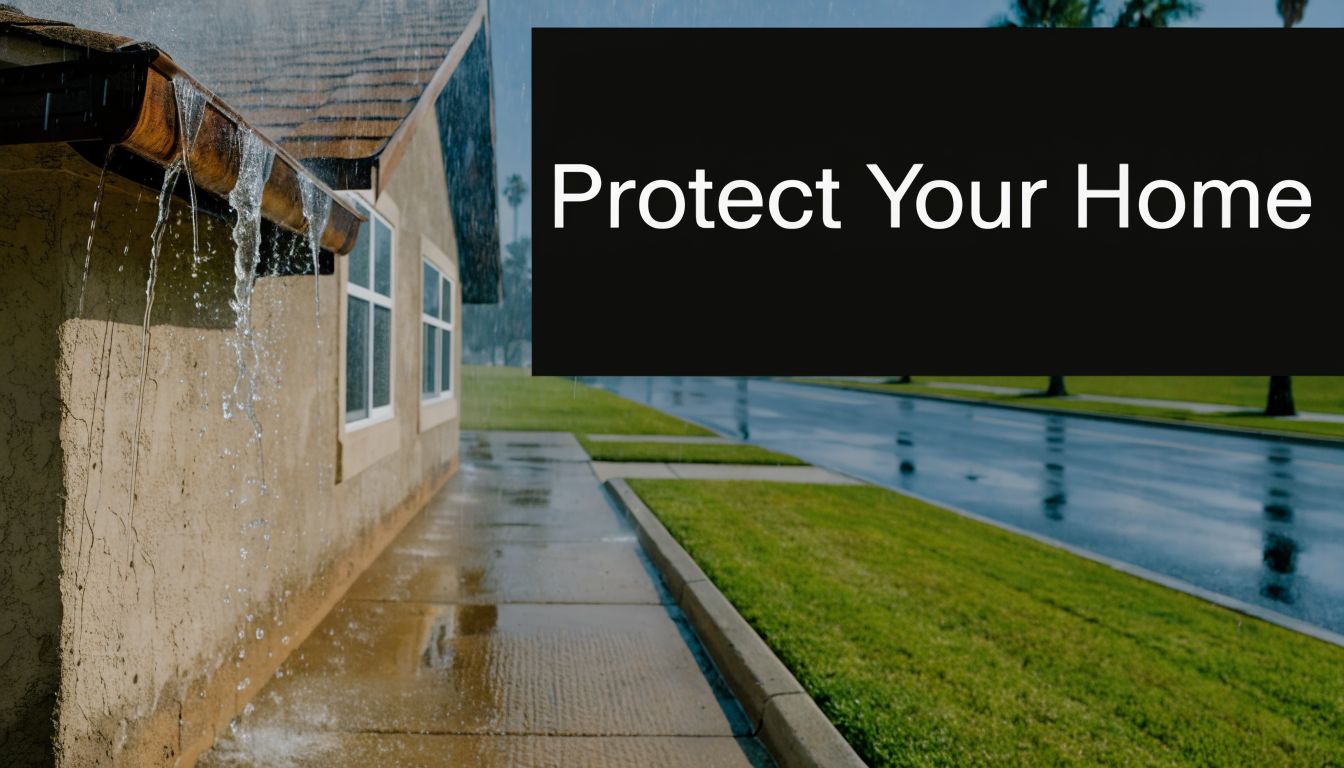
In Phoenix, Scottsdale, Peoria, and nearby areas, that kind of failure isn’t just cosmetic. Water can stain stucco, wash out landscaping, and collect where you don’t want it. On homes with patios, walkways, or lower roof sections, bad drainage also creates a usability problem. You end up with splashback, slippery areas, and repeated cleanup after every storm.
New gutters are easier to budget for when you treat them like protective equipment, not trim. They’re there to control where roof runoff goes. When they’re sized right, pitched right, and fastened right, they help protect the parts of the property that cost far more to fix later.
A good way to think about it is this. Gutters don’t add much value when everything is dry. They prove their value when conditions get rough.
Practical rule: If water is already spilling over edges or running behind the gutter, waiting usually makes the final bill worse, not better.
If you’re reviewing exterior upkeep as a whole, a broader home maintenance checklist for 2026 essentials for a pristine home helps put gutters in context with the rest of the systems that protect the house.
Gutter Costs by Material and Style
The fastest way to understand gutter pricing is to think like you would with tires. You can buy the cheapest option and get by for a while. You can buy the middle option that fits most homes well. Or you can pay for a premium material because you want longer life, a specific look, or both.
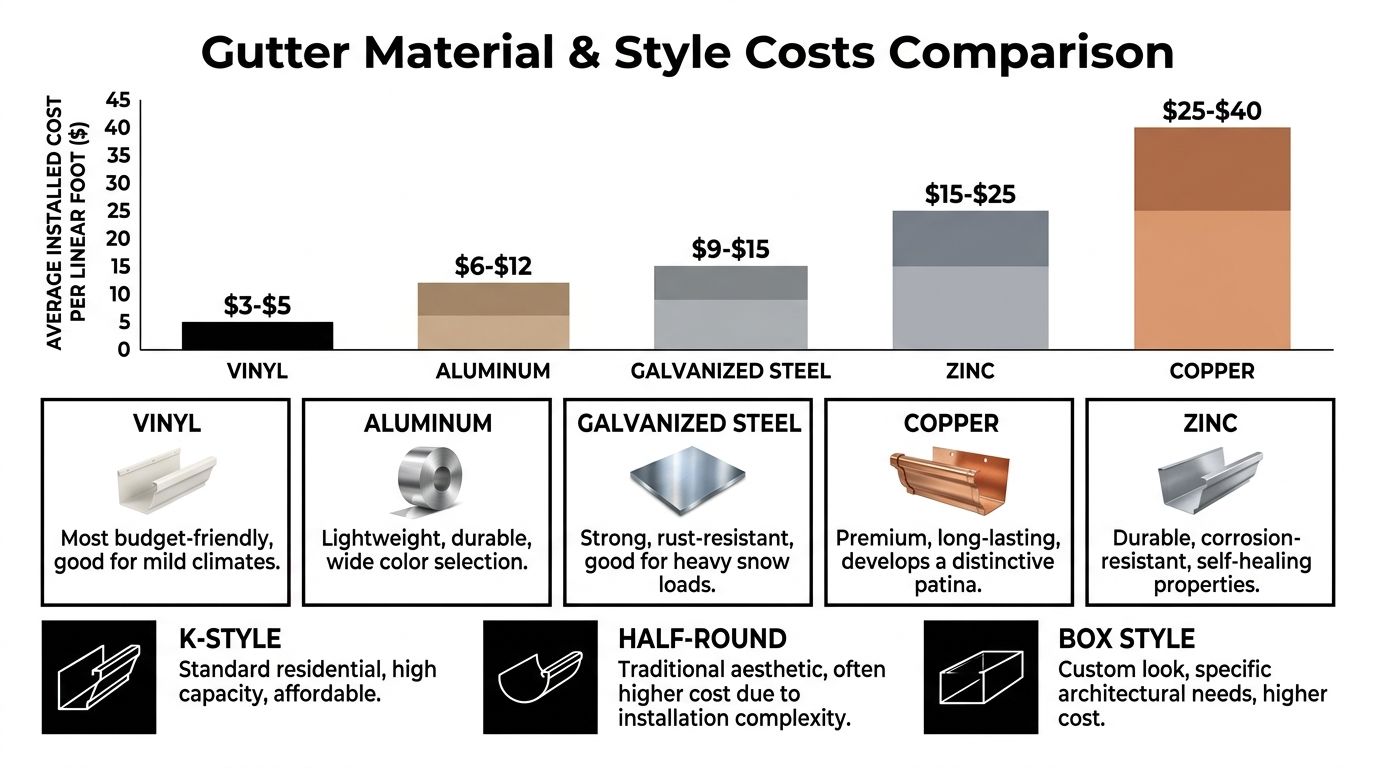
For a typical home, the national average cost for installing new gutters in 2026 ranges from about $2,623.82 to $4,722.87, according to LeafFilter’s 2026 gutter cost guide. That same source notes that material choice drives 40-60% of the cost difference, with aluminum at $3 to $15 per linear foot installed, vinyl at $3 to $7, and copper at $15 to $40. It also notes that vinyl typically lasts 10-20 years, while copper can last 50+ years.
Vinyl, aluminum, steel, copper, and zinc
Here’s the practical view of the main materials.
| Material | Installed cost range | Best fit | Watch out for |
|---|---|---|---|
| Vinyl | $3 to $7 per linear foot | Lowest upfront budget | Shorter service life, not my first choice for harsh sun |
| Aluminum | $3 to $15 per linear foot | Most common residential choice | Thickness matters, especially in desert heat |
| Copper | $15 to $40 per linear foot | Premium homes, long-term ownership, architectural look | High upfront cost |
| Steel | Qualitatively higher than entry-level options | Homes that need a tougher metal system | Heavier, more demanding install |
| Zinc | Qualitatively premium | Long-life, specialty installations | Higher material cost and more limited contractor availability |
If you’re trying to keep the price down, vinyl is the budget entry point. The problem is that low upfront cost can turn into earlier replacement, especially in a climate that punishes plastics and thinner products. I wouldn’t put vinyl at the top of the list for a long-term Phoenix install.
Aluminum is where most homeowners land for good reason. It’s lighter, widely available, and fits a broad middle range. But “aluminum” by itself doesn’t tell you enough. The quality of the coil, the finish, and the installer’s fabrication all matter.
Copper is the premium end. It lasts a long time, develops a distinct patina, and looks right on certain homes. It also pushes the budget up quickly, so it makes the most sense when the appearance and lifespan justify the added cost.
Sectional vs seamless
Material is only part of the story. Style changes cost too.
Sectional gutters come in pieces joined together at multiple seams. They’re cheaper to source and easier to find, but every seam creates another place for leaks, movement, or future maintenance.
One-piece gutters are formed to fit long runs with far fewer joints. That usually means better water control and fewer trouble spots over time. In a climate where thermal movement and sudden storms both matter, this continuous style is usually the better value.
The cheapest gutter system on paper often becomes the expensive one after a few seasons of leaks, resealing, and overflow.
Common gutter profiles
The shape of the gutter also affects both appearance and price.
- K-style gutters are the standard residential choice. They hold a lot of water for their profile and fit most homes well.
- Half-round gutters have a more traditional look. They can cost more because the parts and installation are often less straightforward.
- Box-style gutters tend to be more custom and more architectural. They’re usually chosen for a specific look or drainage need, not because they’re the lowest-cost route.
If you want a rough rule, most homeowners are comparing budget vinyl, mid-range aluminum, and premium copper, then deciding whether the performance gain of a continuous gutter system is worth the bump in price. In Phoenix, that answer is usually yes.
Major Factors That Drive Your Final Gutter Price
Two houses can need the same general material and still receive very different quotes. That’s normal.
The final number comes from labor, access, roof layout, demolition, and how much fabrication the installer needs to do on site. Material gets the attention, but it’s only one piece of the bill.
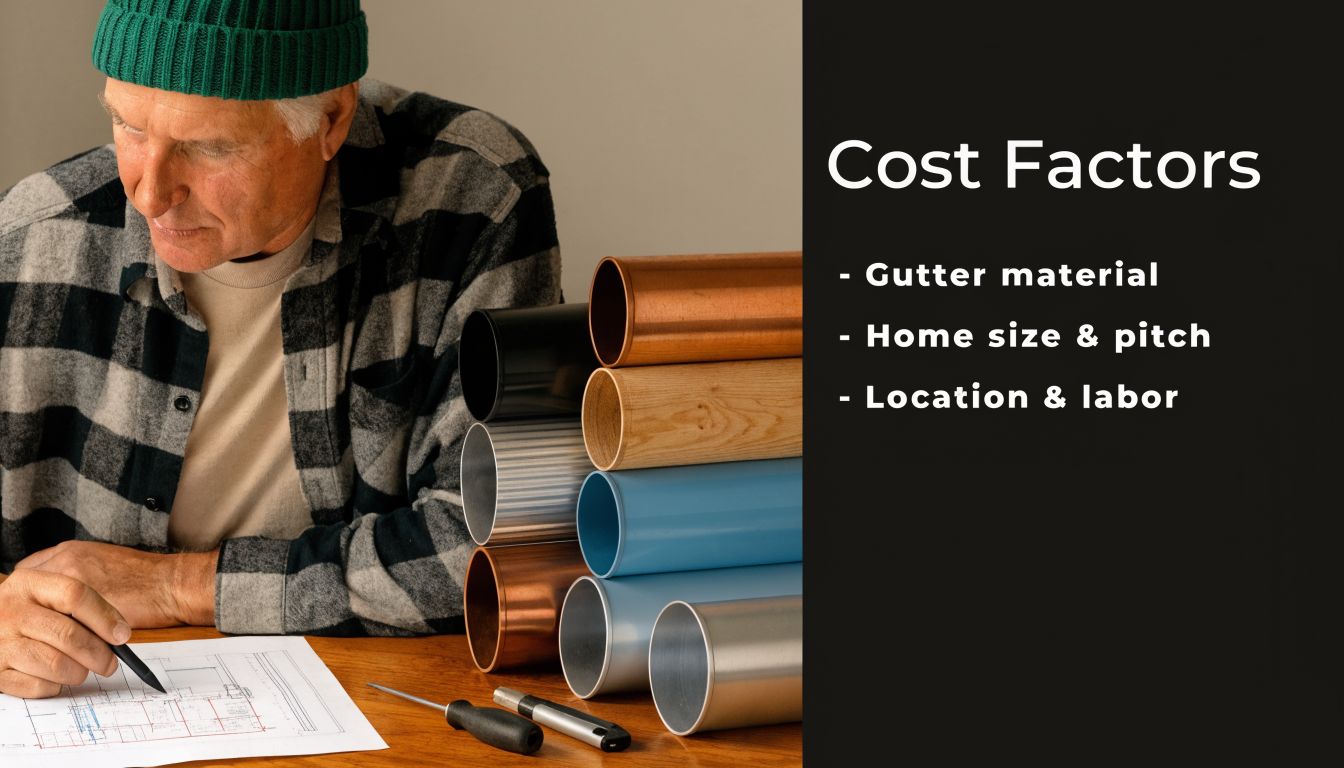
According to This Old House’s gutter installation cost guide, labor makes up 30-40% of a gutter installation project and typically runs $800 to $2,000 for a standard home. The same source says K-style gutters cost $3 to $37 per foot, and that multi-story homes can add 20-50% to the total cost because of extra safety equipment and labor.
Labor and access
Labor goes up when the crew has to work slower and safer.
A one-story house with open access is simpler than a two-story home with tight side yards, delicate landscaping, patio covers, or roof sections that require more ladder moves. Even before the first gutter goes up, setup takes longer.
That’s why two-story homes almost always cost more. The installer isn’t charging extra for the sake of it. They’re accounting for more time, more equipment, and more risk.
Roofline complexity
Roof complexity changes everything.
A long, simple run is straightforward. A roof with multiple corners, short sections, elevation changes, and tricky transitions is not. Every corner means more cutting, more joining, and more chances for drainage problems if the pitch isn’t dialed in correctly.
Here’s where homeowners often get surprised:
- More corners increase fabrication and connection work.
- Steeper roof sections slow installation and raise safety demands.
- More downspout locations add parts, planning, and labor.
- Patio covers and architectural details can limit where water can discharge cleanly.
A good estimate should reflect those details clearly. If one quote is dramatically lower, check whether the contractor measured the full roofline and accounted for downspouts, corners, and access.
Removal and disposal
Replacement costs more than a fresh install because someone has to take down the old system first.
That means removing existing gutters, hauling away debris, checking the fascia for damage, and sometimes correcting what the previous installer got wrong. If old fasteners tore up the fascia or water has been running behind the gutter, that can affect the scope too.
A short visual overview can help homeowners understand what crews evaluate before pricing a job:
Home size still matters
Even with all the detail above, total linear footage still drives a lot of the quote. Bigger homes need more gutter, more hangers, more downspouts, and more labor time.
A reliable quote should tell you what you’re paying for in plain language, not bury the important details inside one lump sum.
If you’re comparing bids, look for line items that show material choice, whether the system is continuous, how many downspouts are included, whether old gutters are being removed, and what happens if the crew finds fascia damage after teardown.
Special Cost Considerations for Phoenix Area Homes
National averages are useful for context. They’re not enough for a Phoenix-area buying decision.
The desert changes the conversation. Long periods of high heat, strong UV exposure, dust, and sudden monsoon runoff put more stress on gutters than many national guides account for. A system that’s acceptable in a milder climate may not be the one you want hanging on your house here.
In the greater Phoenix area, extreme heat can require heat-resistant materials like thicker aluminum, adding 20-30% to costs compared to temperate climates, and local contractor data indicates $15 to $25 per linear foot for continuous aluminum, with labor rates of $75 to $125 per hour helping drive those totals, according to NerdWallet’s gutter cost coverage that highlights Phoenix-area conditions.
Heat changes the material decision
This is one of the biggest mistakes I see homeowners make. They price gutters as if all aluminum systems are equal.
They aren’t. In Phoenix, thinner or lower-grade products can be a false economy. The sun is relentless, and metal movement over time is real. That doesn’t mean every home needs the most expensive system available. It does mean the cheapest version of a material may not hold up the way you expect.
Thicker aluminum and better finishes usually make more sense here than bargain-grade options.
Monsoon storms change the drainage decision
Monsoon rain isn’t steady, gentle rain. It hits hard and fast.
That matters because gutter performance isn’t tested by a light shower. It’s tested when the roof sheds a lot of water in a short window. That’s why local installs often need stronger support, better downspout planning, and reinforcements where runoff hits hardest.
For Phoenix-area homes, the practical upgrades often include:
- Continuous fabrication to reduce leak points on long runs
- Stronger attachment planning where water volume hits hardest
- Better downspout placement so water moves away from the house efficiently
- Material choices that handle heat instead of just checking the low-price box
Why local quotes often surprise homeowners
Homeowners who start with a national article sometimes expect one number, then get a local quote that’s noticeably higher. Usually, the gap comes from climate-ready materials and local labor realities, not price gouging.
If a contractor is building a system for Phoenix conditions, the quote should reflect Phoenix conditions. That’s the right way to price the job. The wrong way is to install a cheaper setup that struggles through the first few storm seasons.
DIY Gutter Installation vs Hiring a Professional
DIY gutter work sounds simple until you’re halfway through it.
On paper, the appeal is obvious. You skip professional labor, buy materials yourself, and handle the install on your own schedule. For a shed, detached garage, or a very simple one-story section, that can make sense if you already know what you’re doing.
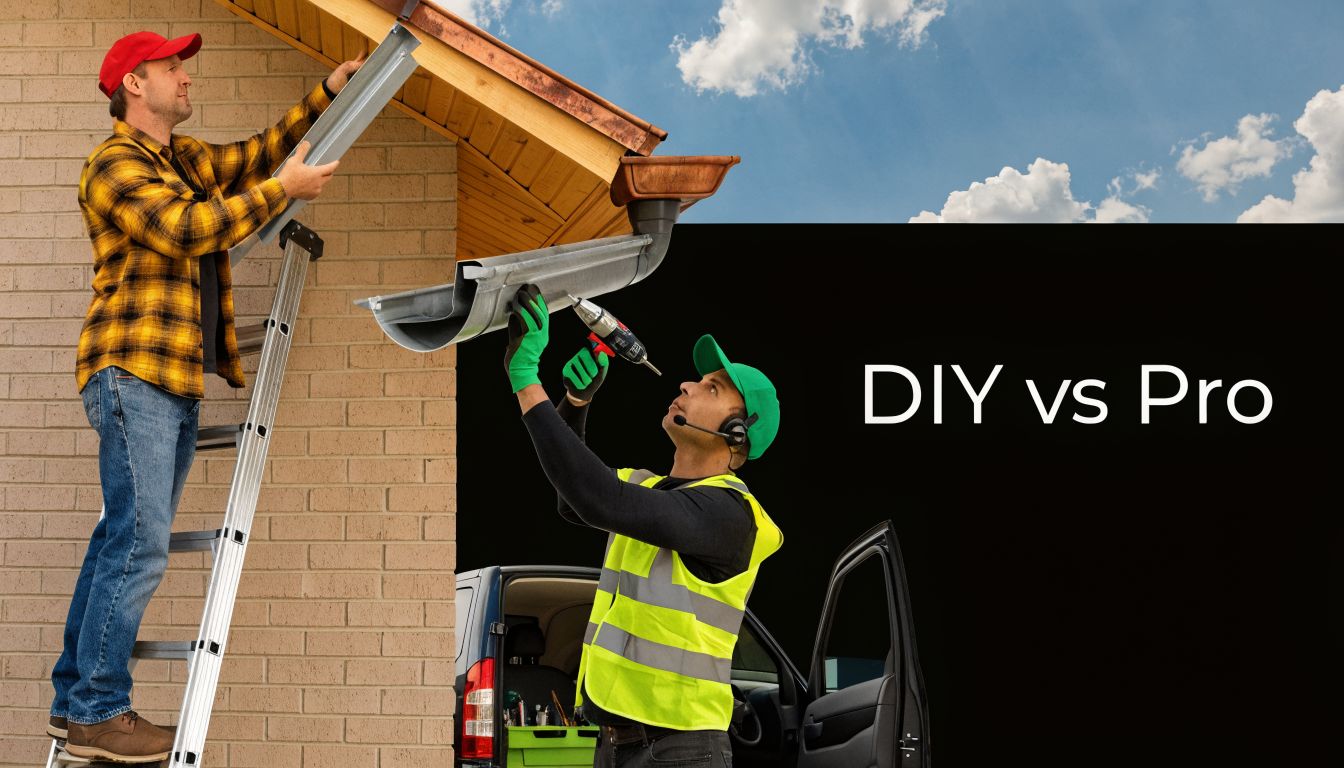
For most full homes, the comparison isn’t just DIY cost versus contractor cost. It’s DIY risk versus professional accountability.
What DIY gets right
DIY works best when the job is small, accessible, and forgiving.
If you have a straight run, easy ladder access, and enough skill to pitch the gutter correctly, install hangers consistently, seal joints properly, and route downspouts where they should go, you can save money on labor. Some homeowners enjoy that type of project and do fine with it.
What DIY often misses
The hard part isn’t hanging a piece of gutter. The hard part is getting the whole system to drain correctly and stay stable through heat, debris, and heavy runoff.
Common DIY problems include:
- Bad pitch that leaves standing water in the trough
- Weak fastening that leads to sagging
- Poor seam sealing that starts leaking early
- Wrong downspout placement that dumps water in the wrong area
- Ladder risk on second-story sections and awkward rooflines
Those mistakes aren’t minor. They can cause the exact overflow, staining, and runoff issues the new gutters were supposed to solve.
If your home has height, complex corners, or expensive stucco and landscaping below, a bad install can erase any DIY savings fast.
What you’re paying a professional for
A professional install should buy you more than labor.
It should buy accurate measurement, proper pitch, cleaner fabrication, safer installation practices, and a system that fits the house instead of being pieced together with compromises. It should also buy accountability if something isn’t right.
That matters in Phoenix. Once monsoon season hits, you don’t want to find out your gutter slope was off by testing it in a real storm.
If you’re deciding between the two, be honest about the house, the height, and your tolerance for rework. Most homeowners are better off hiring a qualified gutter installer and saving their DIY energy for lower-risk exterior projects.
Budgeting for Gutter Guards and Long-Term Maintenance
The upfront price of gutters is only half the decision. The other half is what the system costs you over time.
That’s where gutter guards come into the conversation. In Phoenix, they’re not just about leaves. They also help with dust, seed pods, palm debris, and the general buildup that turns a working gutter into an overflow point.
According to EcoWatch’s gutter installation cost guide, premium gutters with guards cost $7 to $35 per foot installed and can deliver a 5-7 year payback by reducing annual cleaning costs by $300 to $500 and helping prevent water damage claims that average over $10,000. That source also notes that guards are especially effective in Phoenix because of dust and palm debris.
When guards make sense
Guards aren’t magic. Some perform better than others, and no system means zero maintenance forever.
But on the right house, they reduce the amount of debris entering the trough and cut down on the cleaning cycle. That’s especially useful if you have trees close to the roofline, wind-blown debris, or areas where clogged gutters are hard to access safely.
They usually make the most sense when:
- The home has recurring debris problems from palms, trees, or roof grit
- Access is difficult and cleaning is inconvenient or risky
- You’re already investing in continuous gutters and want a lower-maintenance system
- Water control matters because overflow can damage stucco, garden areas, or walkways
Think in total ownership cost
A lot of homeowners focus on the install quote and ignore the maintenance pattern that follows. That’s backwards.
If you buy a basic system that needs frequent attention, clogs easily, and allows repeated overflow, the lower initial number can stop looking attractive pretty quickly. A better-built system with guards often costs more upfront but causes fewer headaches later.
If you want a practical maintenance benchmark, this guide on cost to clean gutters gives a useful frame for thinking about ongoing service versus adding protection up front.
What works and what doesn’t
What works is pairing a solid gutter system with realistic maintenance.
What doesn’t work is assuming guards replace all care forever, or buying the cheapest guard product available and expecting premium performance. Even with guards, someone should still check the system, make sure downspouts are flowing, and clear problem spots when needed.
Good gutter budgeting includes installation, protection, and a realistic maintenance plan. Leave out any one of those, and the numbers stop telling the full story.
Your Checklist for a Smart Gutter Investment
A good gutter purchase usually comes down to a few disciplined decisions.
Choose material that fits the climate, not just the budget. Make sure the installer is solving drainage, not just attaching metal to fascia. And don’t sign a vague estimate because the total looks attractive.
Use this checklist when you’re talking to contractors.
Questions worth asking before you hire
What material are you quoting exactly
Ask whether it’s vinyl, aluminum, copper, or another metal, and whether the quote reflects a system suited to Phoenix heat.Is the system seamless or sectional
Get a clear answer. The performance difference matters.How are downspouts being planned
You want to know where water will discharge and how the layout protects the house and surrounding surfaces.Does the quote include old gutter removal and cleanup
Replacement jobs should spell that out.What could change the final price after work starts
Fascia issues, hidden damage, and access problems should be discussed before the job begins.What warranty is included
Ask separately about material coverage and workmanship coverage.Are you licensed and insured
Don’t skip this one.
What a strong estimate looks like
A strong estimate is specific. It names the material, style, scope, and exclusions.
A weak estimate is short on detail and heavy on assumptions. That kind of quote often leads to change orders, misunderstandings, or corners being cut.
If you’re also keeping up the visible side of the system, this guide on cleaning outside of gutters is useful for maintaining appearance after installation.
The right gutter investment isn’t always the cheapest one. It’s the one that fits your house, handles Phoenix weather, and doesn’t leave you dealing with preventable water problems the next time the sky opens up.
If you want help keeping your home exterior in top shape after your gutter project, Sparkle Tech Window Washing LLC serves Scottsdale, Peoria, and the greater Phoenix area with professional window cleaning, screen cleaning and repair, and solar panel cleaning. If your gutters, windows, and exterior surfaces all need attention, their team offers practical service from a licensed and insured local company.