
When it comes to maintaining your solar panels, it boils down to three key things: strategic cleaning to get the grime off, regular inspections to catch problems early, and keeping an eye on performance through your system's app. This straightforward approach is all it takes to keep your panels running at their best and protect your long-term energy investment.
Keeping Your Solar Investment at Peak Power
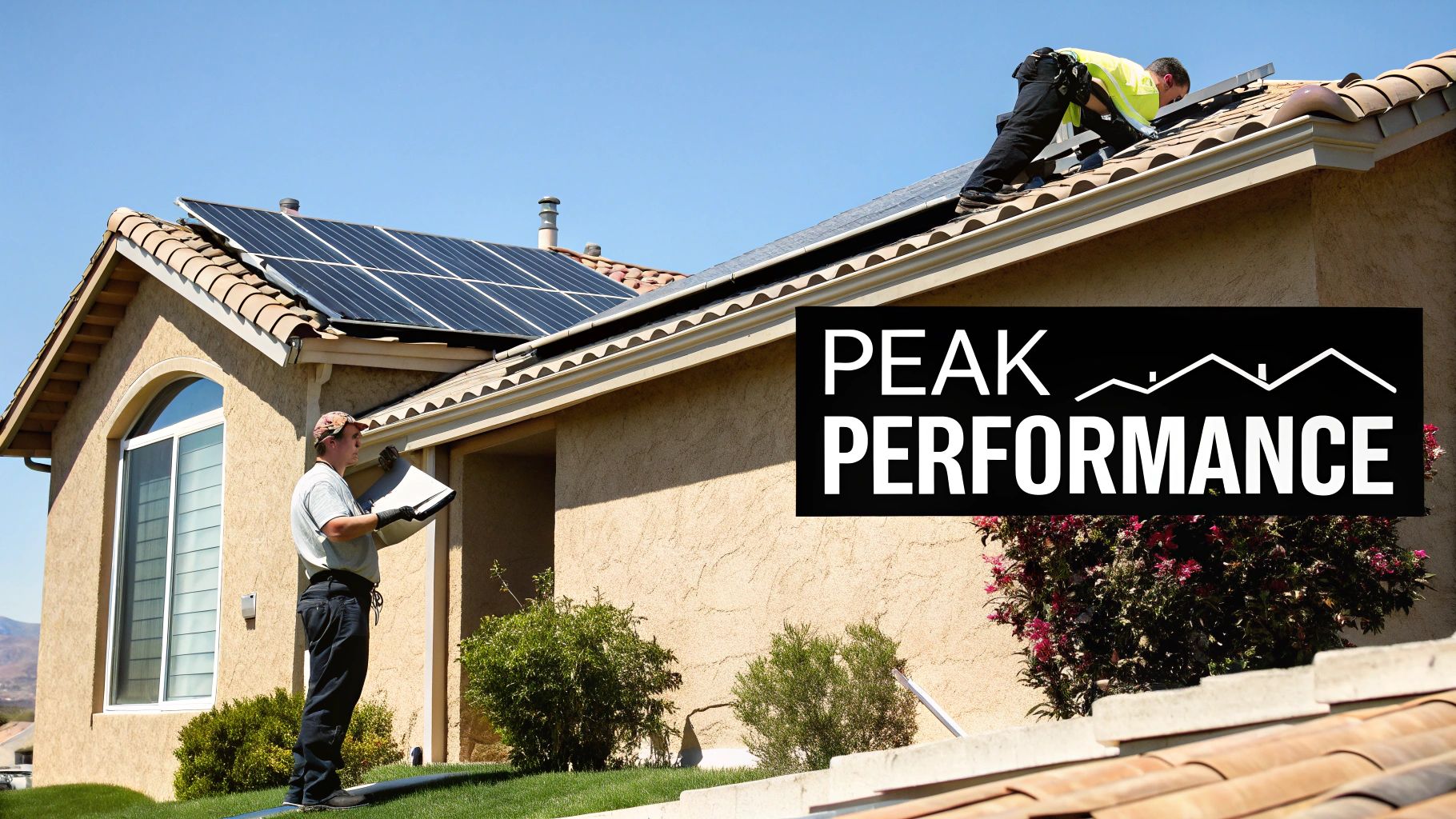
Let's be real—solar panels are a serious investment, especially here in sunny Scottsdale and Phoenix. Getting the most out of that investment isn't just about soaking up the sun; it’s about smart, consistent maintenance. A little upkeep goes a long way in protecting your system and maximizing the power it generates for your home.
Here in our desert climate, panels face some unique challenges that can really tank their efficiency. A single haboob can leave a thick coat of fine dust, stubborn bird droppings can create hotspots that actually damage the cells, and that yellow film of seasonal pollen can block a surprising amount of sunlight.
Why a Maintenance Plan Matters
Did you know that a buildup of dust and debris can slash your solar panel efficiency by up to 30%? For homeowners in sun-drenched places like the greater Phoenix area, this isn't just a hypothetical number—it's a real problem. In fact, studies from sources like GMI Insights show that freshly cleaned panels can see an immediate output boost of 20-30%. Consistent care can even extend the life of your panels by years.
Neglecting your panels is like driving a high-performance car with dirty oil—you're just not getting the power you paid for. A small amount of attention prevents significant performance loss and protects your hardware from premature wear.
Think of this guide as your go-to playbook for a simple but effective maintenance plan. It’s built on three pillars that any homeowner can manage:
- Strategic Cleaning: Knowing the right way (and the right time) to clean your panels to fight off that classic Arizona dust and grime.
- Smart Inspections: Learning what to look for—from the safety of the ground—to spot potential issues before they turn into expensive repairs.
- Proactive Performance Monitoring: Using the data from your solar app to make sure everything is humming along as it should be.
By adopting these habits, you move from just being a solar panel owner to being an active manager of your home's power plant. For an even deeper dive, check out our guide on how to improve solar panel efficiency for more advanced strategies.
The Smart Way to Clean Your Arizona Solar Panels
A clean solar panel is a productive one. Here in Arizona, it doesn't take long for a layer of dust, pollen, and the occasional bird dropping to coat your panels. That grime directly blocks sunlight, and even a thin film can noticeably cut down the energy your system generates.
Cleaning is one of the quickest ways to get that performance back, but how you clean them is what really counts. Let's walk through the right way to do it, whether you're tackling it yourself or calling in a pro.
The Do-It-Yourself Cleaning Approach
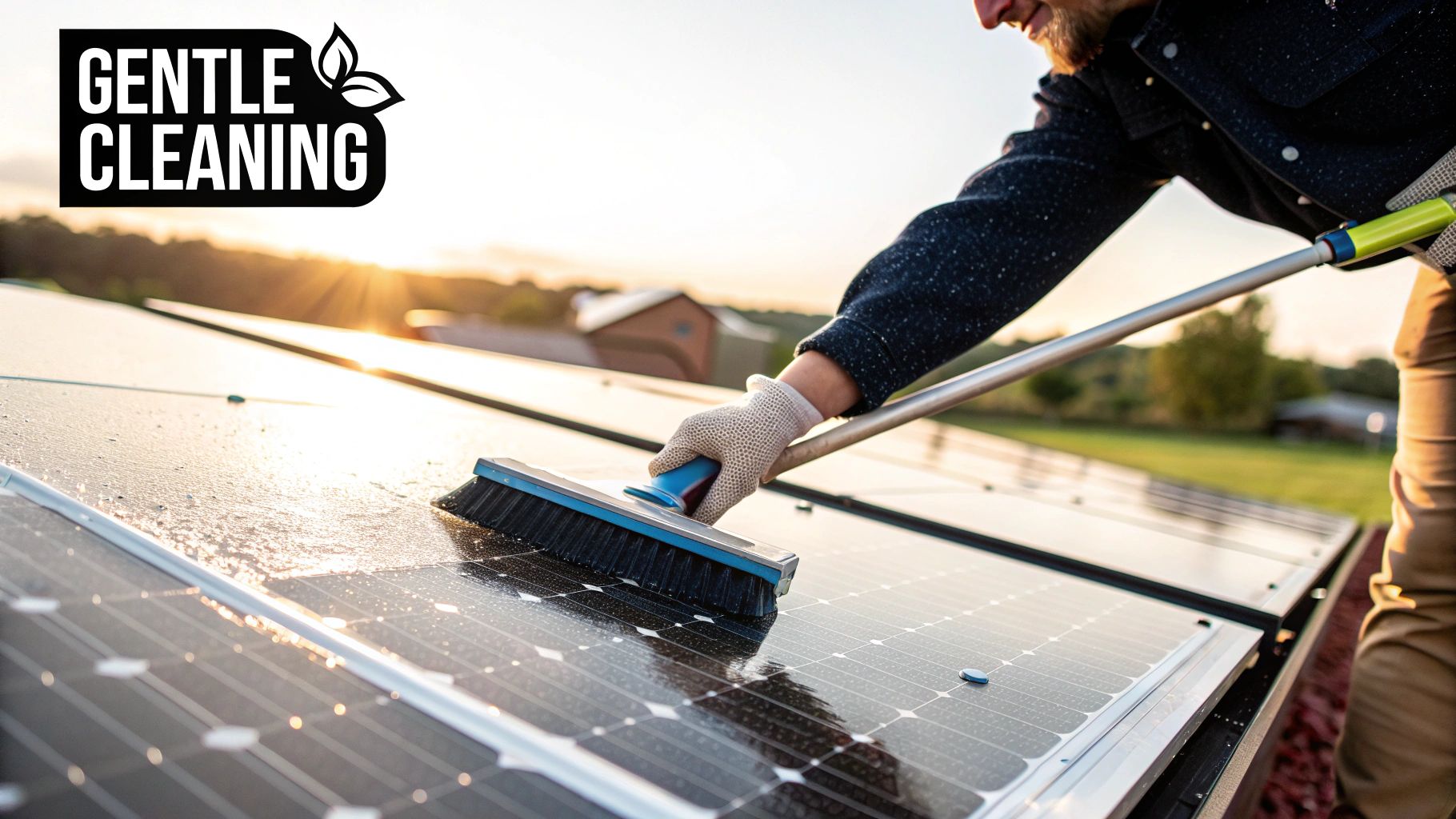
If you're comfortable getting up on a ladder and have a single-story home, a DIY cleaning can work just fine—as long as you do it right. The big thing to remember is to be gentle.
You absolutely must avoid abrasive scrubbers, harsh chemicals, and pressure washers. These can easily scratch the panel's surface or strip away the special anti-reflective coating, which would permanently damage them and likely void your warranty.
Your best bet is a simple, low-tech toolkit:
- A soft-bristle brush on an extension pole is perfect for gently loosening dirt without scratching the glass.
- A good squeegee helps you remove the water without leaving streaks.
- Your everyday garden hose with a standard spray nozzle is all the pressure you need.
Safety is everything here. Before you even think about spraying water, make sure you completely shut down your solar panel system. Follow the shutdown procedure in your owner's manual to eliminate any electrical risk.
Timing is also crucial. Plan to clean in the early morning or on an overcast day when the panels are cool. Hitting hot glass with cold water can cause thermal shock, which could crack a panel. Cleaning when it's cool also keeps the water from evaporating too quickly and leaving behind those chalky mineral spots that our Arizona hard water is famous for.
Why Professional Cleaning Is a Smart Investment
While you can certainly clean your own panels, there are some very good reasons to hand this job over to the pros. It really comes down to safety, specialized equipment, and getting an expert set of eyes on your system.
First off, they're trained to work safely on roofs, which takes a huge personal risk off your plate. They also have the right gear to get a truly deep clean that a hose and brush just can't match.
A professional cleaning isn't just about rinsing off dust; it's about precision. Many pros use deionized water systems that leave a completely spot-free finish, ensuring every bit of sunlight can reach the solar cells. Tap water simply can't do that.
There's another big benefit: inspection. While they're up there, trained technicians can spot small problems you'd never see from the ground—things like a loose bolt on the racking, chewed wiring, or early signs of a failing panel. Catching these things early can save you a fortune in future repairs.
Thinking about the options? Here’s a quick breakdown of how DIY stacks up against calling in a service like Sparkle Tech.
DIY vs Professional Solar Panel Cleaning
| Aspect | DIY Cleaning | Professional Service (Sparkle Tech) |
|---|---|---|
| Tools & Materials | Garden hose, soft brush, squeegee. Requires you to buy and store equipment. | Uses specialized tools like water-fed poles and deionized water systems for a spot-free finish. |
| Cost | Lower upfront cost (just equipment), but your time has value. | A service fee per cleaning, but no equipment costs or storage for you. Often cost-effective in the long run. |
| Safety Risk | High. Involves working at heights and with an electrical system. Risk of falls or system damage. | Low. Technicians are trained, insured, and follow strict safety protocols. |
| Effectiveness | Good for light dust removal. Can be difficult to achieve a streak-free clean with hard tap water. | Excellent. Removes all grime and mineral deposits for maximum energy production. |
| Time Commitment | Can take several hours, depending on the size and accessibility of your system. | Zero time commitment from you. They handle everything. |
| Added Benefits | A sense of accomplishment and direct control over the process. | Professional inspection can identify potential issues (wiring, racking) before they become major problems. |
Ultimately, while the DIY route can save a few dollars, investing in a professional service is an investment in your system's long-term health and your own safety. To see what a professional service involves, you can learn more about expert solar panel cleaning in Phoenix, AZ and how it helps maximize your system's output.
Your Ground-Level Solar Inspection Checklist
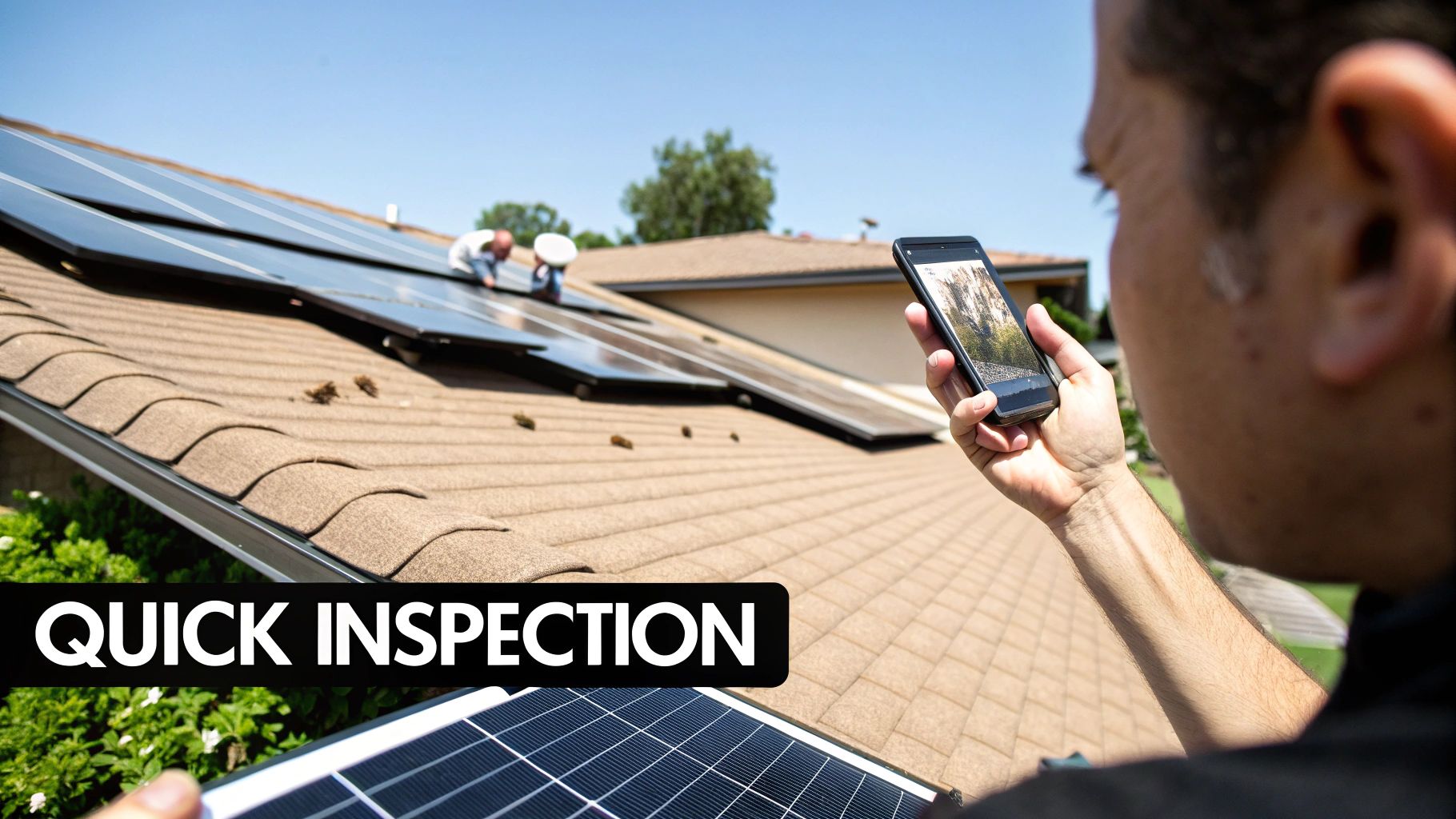
You don’t need to be a rooftop technician with a harness and a hard hat to keep an eye on your solar investment. In fact, some of the most important checks can be done with your feet planted safely on the ground. A quick walk-around every few months is all it takes to spot trouble before it turns into a real headache for your energy bills or your wallet. Think of it as being an observant homeowner, not a solar pro.
This kind of proactive care is becoming more crucial than ever. The solar panel operation and maintenance market was valued at US$ 5.7 billion in 2023 and is expected to rocket to US$ 16.4 billion by 2034. With over 800,000 U.S. homes recently making the switch to solar, that's a lot of systems that need looking after. You can discover more insights about this growing market and why upkeep is so vital.
What to Look For on the Panels
Grab a pair of binoculars for a better view and start by just looking up at the array. You’re scanning for anything that just doesn’t look right on the surface of the glass.
- Big Debris: After a classic Arizona monsoon storm, it’s not uncommon to see leaves, branches, or even the neighbor's stray frisbee up there. Anything large enough to cast a shadow will cut into your production.
- Cracks or Shattering: Solar panels are incredibly tough, but they aren't indestructible. A well-aimed golf ball or unusually large hail can cause visible cracks or chips, which can let moisture in and ruin the panel over time.
- Odd Discoloration: Are any of the panels a different shade than their neighbors? If you notice a cloudy or milky look under the glass, it could be a sign of delamination—a serious issue where moisture has breached the panel’s seal.
- Bird Droppings: A few droppings are inevitable. But if you see thick, caked-on messes, that’s a problem. They don't just block light; they can create damaging "hot spots" on the cells underneath.
Inspecting the Racking and Wiring
Now, shift your focus from the panels themselves to the framework holding them up. This is where you’ll spot the subtle signs of environmental wear and tear—or some unwanted house guests.
Think of this part of your inspection like checking the tires on your car. You're looking for signs that things are secure, properly connected, and free from external damage. It’s a simple check that prevents bigger problems down the road.
Look closely at any wiring you can see. Are the conduits and wires still neatly clipped in place, or have any come loose and started to dangle? A sagging wire is just asking for trouble from high winds or curious critters.
Speaking of critters, pests are a huge issue here in Arizona. Pigeons absolutely love the shade and protection offered by solar panels, and they will quickly turn that space into a nesting ground. Scan the perimeter of your array for any tell-tale signs like nesting materials, feathers, or a build-up of droppings. A pigeon infestation can lead to a corrosive mess and chewed wires. If you spot the beginnings of a bird condo, it's time to call a professional to clear it out and install proper barriers. Catching it early will save you a world of trouble.
How to Monitor Your System and Spot Trouble
Think of your solar monitoring app as the dashboard for your home's power plant. It's not just a cool gadget; it's your single best tool for keeping tabs on your investment. Learning to read it is the most important part of DIY solar panel maintenance. A quick glance now and then is all it takes to catch small issues before they snowball into costly repairs.
Every solar system has a daily rhythm. It wakes up with the sun, hits its peak power output around noon, and then gently winds down as the sun sets. Your app tells this story in kilowatt-hours (kWh). Just checking in for a minute each day will give you a gut feeling for what's normal for your system, whether it's the peak of summer or a mild winter day here in Arizona.
Finding Your System's "Normal"
First things first, you need to establish a baseline. Just watch. For the next week or two, pop open your app at the end of each clear, sunny day and jot down the total kWh your system produced. You'll quickly get a feel for what a "good day" looks like for your panels.
Of course, that number will shift with the seasons. You'll naturally generate more power during our long, intense summer days than you will on a shorter day in December. Getting a handle on these seasonal ebbs and flows is crucial—it's how you'll know if a dip in production is just part of the normal cycle or a genuine red flag.
My Two Cents: I tell all my clients to set a calendar reminder to check their monitoring app twice a month. It takes less than five minutes and is the easiest way to make sure you're getting every bit of power you paid for.
Once you know what's normal, you become the first line of defense. You'll be the one to spot when something's off, long before it shows up on your utility bill.
Spotting the Red Flags in Your Data
So, what exactly are you looking for? The most obvious sign of trouble is a big, sudden drop in energy production on a perfectly sunny day. Let's say your system reliably cranks out 40 kWh on a clear June afternoon, but then one day it only manages 25 kWh under the exact same conditions. That's your cue to investigate.
This is where your maintenance know-how kicks in. That performance drop could be from something as simple as a thick coat of dust after a big haboob blew through. Or, it could point to a more complex technical issue.
Here are a few common scenarios I see all the time:
- Sudden, Sharp Drop: If production falls off a cliff for no reason, walk over to your inverter. It’s the brain of the operation and will often flash an error code if something's wrong. Sometimes, a simple reset (check your user manual for instructions) is all it takes to fix a temporary glitch.
- Gradual Decline Over a Few Weeks: Seeing your output slowly fade day by day, even with plenty of sunshine? This is the classic sign of dirty panels. That slow, steady buildup of dust and grime is literally choking your panels and starving them of sunlight.
- One Panel Is Lagging: Some of the more advanced monitoring systems let you see what each individual panel is doing. If you spot one that's consistently underperforming compared to its neighbors, it could have a very specific problem—maybe a single cell has failed, or a fast-growing tree branch is now casting a shadow.
If you see a drop in production that you can't blame on the weather or a layer of dirt, it’s time to call in a pro. Don't wait and hope it gets better. A technician can quickly diagnose problems with wiring, the inverter, or individual panels that are impossible to see from the ground, getting your system back to 100% and making sure your investment keeps paying for itself.
Building Your Year-Round Maintenance Calendar
When it comes to solar panel maintenance, consistency is everything. You don't need a complicated chore list; you just need a simple, practical rhythm for keeping your system in top shape. Instead of waiting for a problem to pop up, a year-round schedule helps you stay ahead of the dust and grime that are just a fact of life here in the Phoenix area.
Breaking down the work into easy, manageable chunks—a few minutes here and there—ensures nothing gets missed. This small effort protects your big investment, keeping your panels working efficiently and maximizing your energy savings month after month.
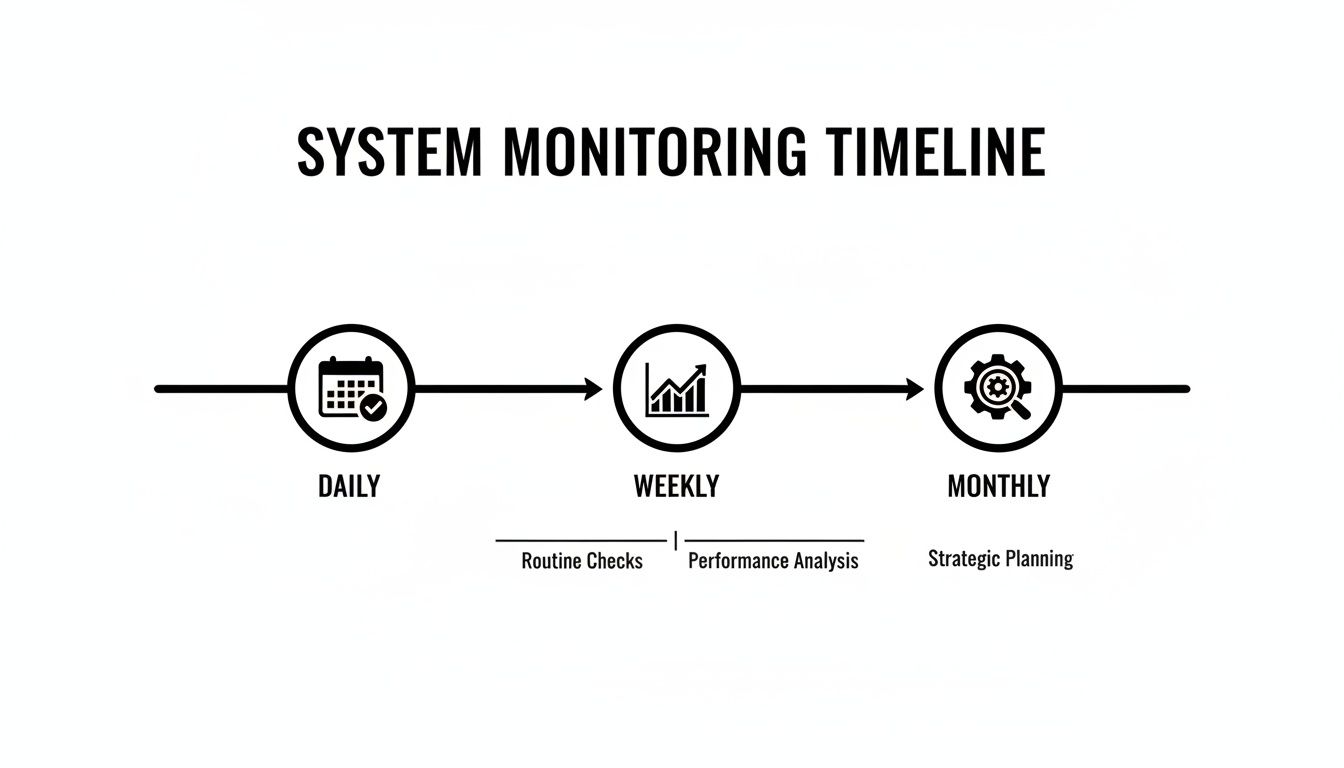
This kind of proactive monitoring is key. A quick, frequent glance at your system's performance data is far more effective than trying to do a deep dive once or twice a year.
Arizona-Specific Timing Is Everything
In the Valley, our unique climate really dictates the maintenance schedule. It's less about a generic calendar and more about timing your efforts to what's happening outside. I always recommend a professional cleaning after the spring pollen season wraps up, usually in late April or May. That thick, yellow coating that blankets every surface can seriously hinder your production.
Your second major cleaning should be right after the summer monsoon season ends, typically around October. This is the perfect time to wash away all the fine dust and caked-on dirt kicked up by those powerful haboobs. If you let that layer bake onto your panels, you’ll see a noticeable dip in efficiency. We go into more detail on this in our guide covering the ideal frequency for cleaning solar panels.
Your Simple Yearly Solar Calendar
Here’s a straightforward schedule you can start using today. It’s designed to be effective, not overwhelming.
- Daily (2-Minute Check): Pop open your solar monitoring app. All you're looking for is a green light and numbers that make sense for the weather. Is the system producing power like it should on a sunny day? Easy.
- Monthly (5-Minute Scan): Take a quick walk around and look up at the panels from the ground. Can you spot any obvious debris? A rogue frisbee, fallen palm fronds, or a buildup of bird droppings can all cast shadows and cut into your output.
- Twice a Year (Professional Service): This is when you call in the pros for a deep, spot-free cleaning and a detailed inspection. We can spot subtle issues with racking, wiring, or sealant that you might not see from the ground.
While large-scale solar farms are increasingly using robotic cleaners, for homeowners, the best approach is pairing your own quick checks with professional service. Making sure your panels are tilted between 10-30 degrees also helps them shed some debris naturally. With global solar installations jumping by 87% in 2023 alone, staying on top of maintenance has never been more important.
A maintenance calendar isn't about perfection; it’s about prevention. A few minutes of your time each month and a professional visit twice a year is the best insurance policy for your solar investment.
Common Questions About Solar Panel Maintenance
When you have a solar system on your roof, especially here in Arizona, a few questions always seem to pop up. We hear them all the time from homeowners in Scottsdale and Phoenix. Getting straight answers is key to feeling confident about your investment and making sure it's actually saving you money.
Let's cut through the noise and tackle the most common questions we get. This is all about real-world advice for your home.
How Often Should I Clean My Solar Panels Here?
For most homes in the greater Phoenix area, we've found that a professional cleaning at least twice a year is the sweet spot. Our desert environment is relentless, constantly coating your panels in a fine layer of dust, not to mention pollen.
The best times to schedule a cleaning are pretty predictable:
- Right after the spring pollen season: Sometime in May is perfect for getting that thick, yellow film off before the summer sun really starts beating down.
- After the monsoon season fizzles out: Usually around October, a good cleaning will wash away all the grime and caked-on dust kicked up by the haboobs.
Now, if you happen to live next to a new construction zone, a busy freeway, or a farm, you might find that quarterly cleanings are necessary to keep your production up. The easiest way to know for sure? Keep an eye on your monitoring app. If you see a noticeable dip in energy production on a perfectly sunny day, that's your panels telling you they're dirty.
Think of it this way: You wouldn't drive around for six months with a dusty windshield, squinting to see the road. Your panels need a clear view of the sun to do their job, too.
Can I Just Use My Garden Hose and Tap Water?
This is a tempting shortcut, but it's one of the worst things you can do for your panels in Arizona. Our tap water is notoriously "hard," which means it's loaded with minerals like calcium and magnesium.
When you spray that water on a hot panel, it evaporates almost instantly, leaving all those minerals behind as a chalky, white residue. These hard water spots are stubborn. They essentially create a new, permanent layer of grime that blocks sunlight and torpedoes your system's efficiency. You'll have gone through all that effort just to make the problem worse.
Professional services get around this by using a multi-stage water purification system. We use deionized water that leaves absolutely nothing behind, giving you a truly spot-free finish for maximum sunlight absorption.
Will the Rain Clean My Solar Panels Enough?
We wish! This is probably the biggest misconception out there. A quick sprinkle of rain might knock off some of the loose dust on the surface, but it won't do a thing for the really baked-on grime, bird droppings, or oily residue from air pollution.
In fact, a light rain often makes things worse. It just turns the thick layer of dust into a muddy film. When the sun comes out and bakes that film dry, it can block even more light than before. There’s really no substitute for a proper cleaning that uses purified water and a soft-bristle brush to restore your panels' performance.
Is It Safe to Get on My Roof to Maintain My Panels?
Honestly, we really advise against it. Without professional training and the right safety gear, climbing onto your roof is incredibly risky.
You need a proper safety harness, slip-resistant footwear, and a securely-placed ladder, for starters. Roof pitches can be deceivingly steep, and tile roofs are notoriously slippery, even when dry. Beyond the personal risk, there's also the risk of damaging your system. Walking on panels can cause micro-fractures, and stepping on the wrong part of a tile can crack it, leading to a roof leak down the road.
Hiring a licensed and insured professional takes all that risk off your shoulders. Our technicians are trained in roof safety protocols and use specialized equipment to get the job done right, giving you total peace of mind.
Ready to see what a professional, spot-free clean can do for your system's output? The team at Sparkle Tech Window Washing LLC has the right tools and expertise to maximize your energy production safely. Schedule your professional solar panel cleaning service today!