


To get those hard water stains off your windows for good, you’ll need an acidic cleaner that can break down and dissolve the tough mineral deposits. For light, recent spots, a simple mix of equal parts white vinegar and distilled water usually does the trick. But for those more stubborn, baked-on stains, you might need to bring in a stronger commercial cleaner or even call in the pros.
Understanding Hard Water Stains on Phoenix Windows
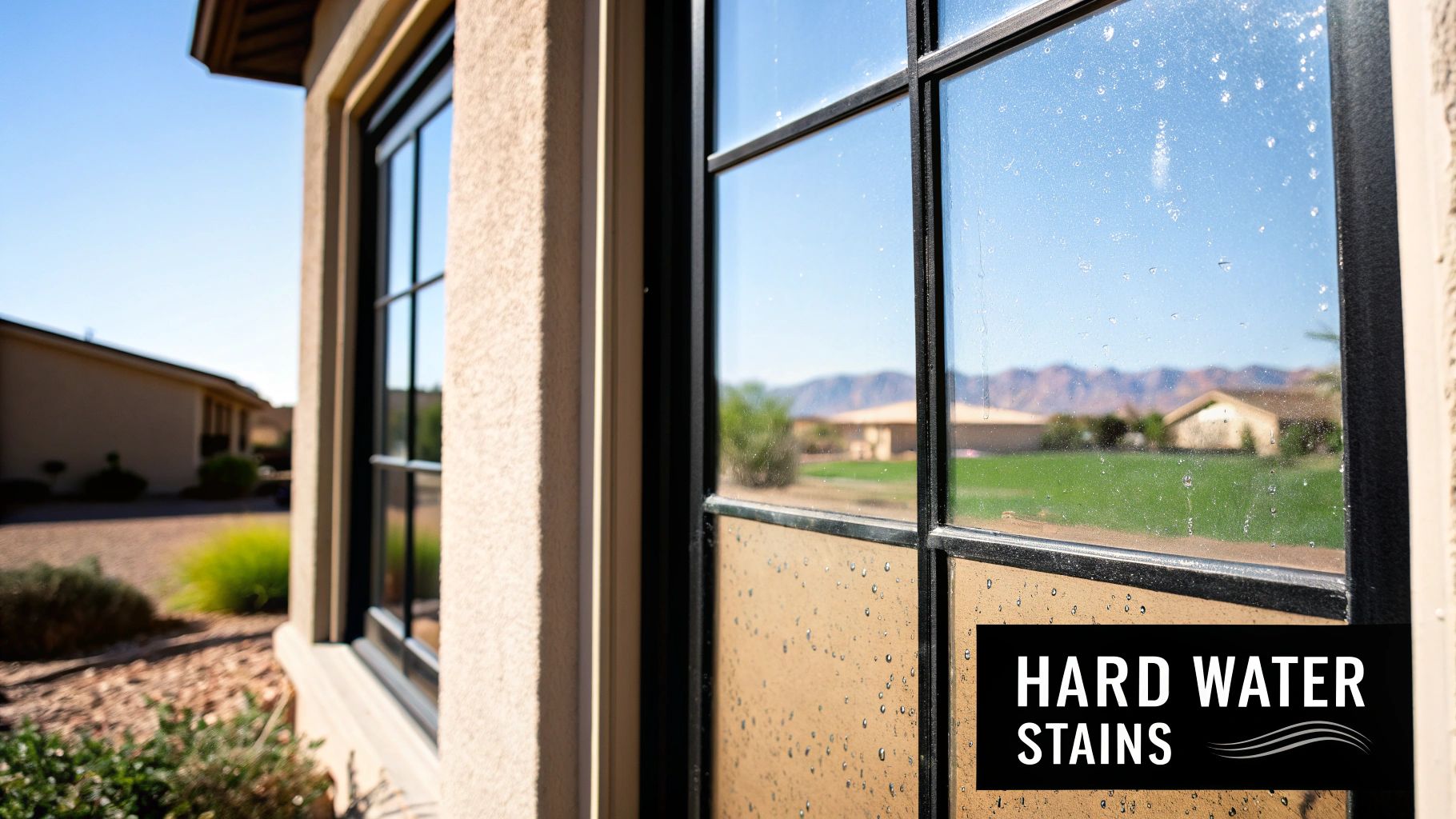
If you've noticed those frustrating, chalky white spots clouding up your view, you're not alone. Here in Phoenix, our water is naturally loaded with dissolved minerals—mostly calcium and magnesium. When water from a sprinkler, a hose, or even a monsoon rainstorm hits your hot windows and evaporates, those minerals are left behind.
At first, they're just faint spots. But over time, they build up layer by layer, creating a cloudy film that regular window cleaners just can't cut through. This isn't just a cosmetic annoyance; it's a progressive problem that can cause real, permanent damage if ignored.
Why These Stains Are a Serious Issue
Hard water stains are much more than an eyesore that ruins your beautiful desert view. If you let them sit, they can cause some surprisingly serious problems that affect your home's value and your comfort.
The mineral deposits, often composed of 85-90% calcium and magnesium, can be incredibly stubborn. As they crystallize on the glass, they start blocking sunlight. It might sound minor, but a severe buildup can actually reduce the natural light coming into your home by up to 40%. This makes your rooms feel darker and can have you flipping on more lights during the day. You can read more about the impact of hard water on glass at gandswindowcleaning.com.
Over time, the alkaline nature of these mineral deposits chemically reacts with the glass, causing permanent etching. This damage appears as a frosted, rough patch that can't be washed away and may require professional glass polishing to restore clarity.
Identifying Stain Severity on Your Windows
Before you start scrubbing, you need to know what you’re dealing with. Correctly identifying how severe the stains are will help you choose the right cleaning method from the start, saving you time and frustration.
Not sure where your windows fall on the spectrum? This quick guide can help you assess the situation.
Hard Water Stain Severity Levels
| Severity Level | Appearance | Recommended Action |
|---|---|---|
| Mild | Fresh, light water spots. You might feel a very slight texture on the glass. | Often removable with basic DIY solutions like vinegar and water. |
| Moderate | A distinct, semi-opaque or cloudy layer. Feels slightly gritty to the touch. | Standard glass cleaners won't work. Needs a stronger acidic cleaner or a fine-grade abrasive. |
| Severe | Glass looks frosted or milky with a very rough, crusty buildup. | The minerals have likely started etching the glass. Professional intervention is usually required to avoid permanent damage. |
Once you've figured out if you're dealing with a mild, moderate, or severe case, you can pick the right tools and techniques for the job. For anything beyond mild spotting, it's often best to proceed with caution to avoid scratching the glass.
Your DIY Toolkit for Tackling Mild Stains
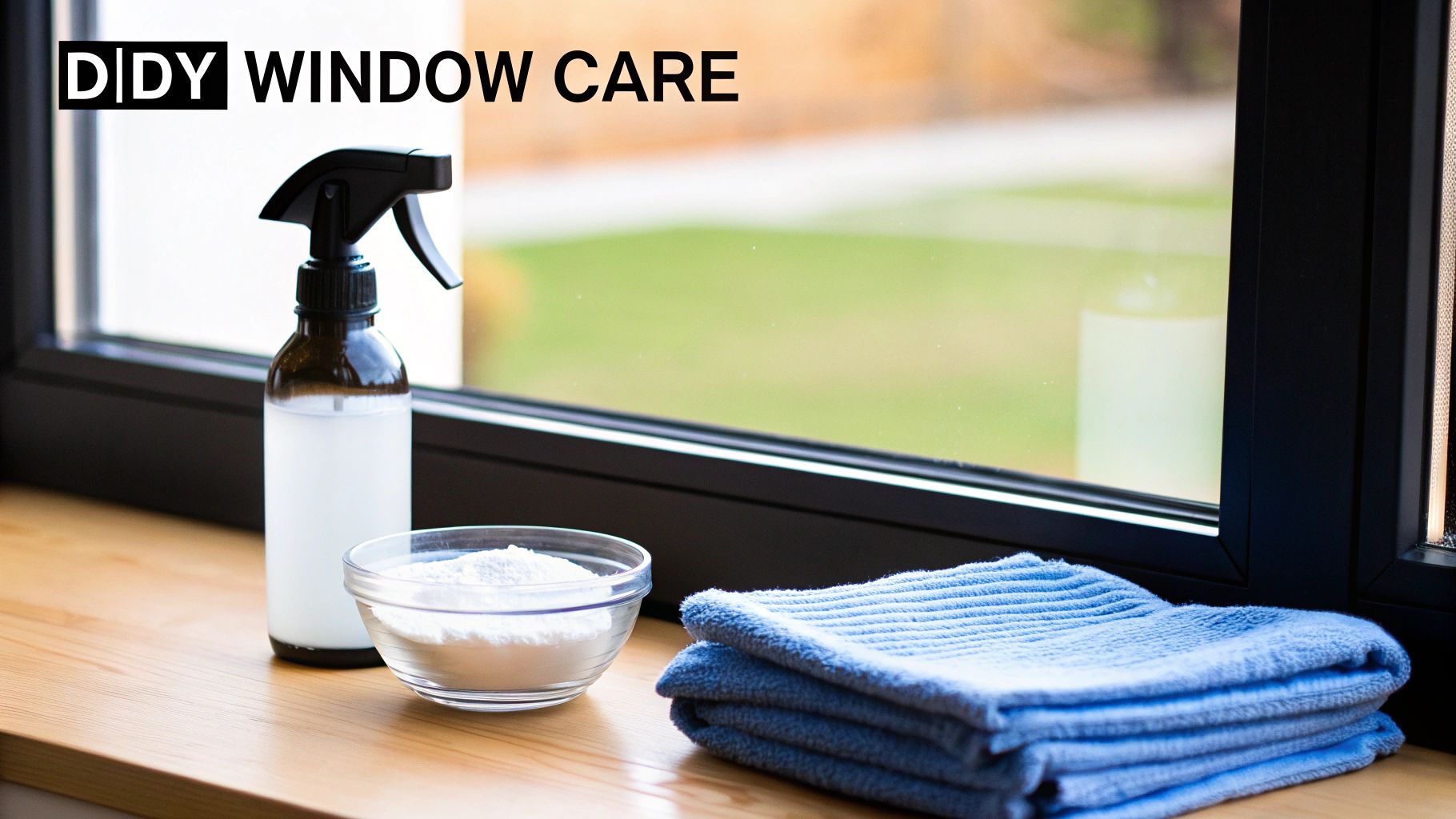
If you've caught those mineral spots early and they look fairly light, you're in luck. You can often handle them yourself without much fuss. Before you even think about reaching for a heavy-duty chemical cleaner, take a look in your kitchen pantry—some of the best solutions are probably already there. The real trick is using the right technique.
With any DIY approach, the goal is simple: dissolve the mineral buildup without hurting the glass. That means you should always start with the gentlest method first and only move on to something stronger if the stains refuse to budge.
The Vinegar and Water Solution
For those fresh, faint spots, your go-to should be a simple mix of equal parts distilled white vinegar and distilled water. You might wonder, why distilled? Because tap water, especially here in Phoenix, is loaded with minerals—the very thing you're trying to remove. Using distilled water ensures you aren't just adding to the problem.
Mix your solution in a spray bottle and don't be shy about applying it to the stained glass. The biggest mistake people make is wiping it off right away. You have to give the acetic acid in the vinegar a chance to work its magic.
Let the solution sit on the glass for a solid 10 to 15 minutes. This "dwell time" is non-negotiable. It’s what breaks down those stubborn calcium and magnesium deposits so you don't have to scrub like crazy. On a window, the solution will run down, so here's a pro tip: soak a few paper towels in the vinegar mix and press them directly against the glass. They'll hold the solution right where it needs to be.
After the wait, grab a clean microfiber cloth and gently work on the spots using a circular motion. Once they lift, rinse the window with fresh distilled water and finish with a squeegee to dry it completely. Nailing that perfect finish is a skill, and you can learn more about how to get streak-free windows in our guide.
The Baking Soda Paste Method
Sometimes vinegar just doesn't have enough muscle for spots that have been sitting a little longer. That’s when a mild abrasive comes in handy, and baking soda is perfect. It’s gentle enough that it won't scratch your glass but has just enough grit to scrub away the mineral film.
You’ll want to create a thick paste by mixing baking soda with a little water. For an extra cleaning boost, you can even use white vinegar instead of water.
- Apply the Paste: Dab the mixture directly onto the hard water spots, making sure they're fully covered.
- Let It Work: Give the paste a few minutes to sit and react with the deposits. You might even see it bubble a bit if you used vinegar.
- Gentle Scrub: With a damp microfiber cloth or a non-abrasive sponge, gently scrub the area. You should feel the fine grit of the baking soda doing its job.
- Rinse and Dry: Thoroughly rinse all the residue from the window with clean water, then squeegee it dry for a clear, sparkling finish.
Before you go all in, always test this paste on a small, out-of-the-way corner of the window. It’s a quick precaution that ensures the method is safe for your specific type of glass and can save you a major headache later.
Advanced Techniques for Stubborn Mineral Buildup
So, the vinegar trick didn't quite cut it. That's not surprising, especially with the kind of sun we get here in Phoenix baking those mineral spots onto the glass. When you're dealing with more moderate, cloudy layers of buildup, you need to bring out the bigger guns.
This means moving beyond pantry staples and into the world of specialized commercial cleaners and, in some cases, pro-level tools.
Store-bought hard water stain removers are designed for exactly this fight. You'll want to look for products with active ingredients like phosphoric or sulfamic acid. These mild acids are the key—they create a chemical reaction that actually dissolves the stubborn calcium and magnesium deposits.
Just be sure to read the label carefully. You'll definitely want protective gear like nitrile gloves and safety glasses. And trust me on this one: ventilation is a must. The fumes from these cleaners can be potent, so get a cross-breeze going by opening a few windows or doors before you start.
Using Commercial Hard Water Removers
Applying these cleaners is pretty straightforward, but you need to be careful. Follow the product's directions, which usually involve applying it with a non-abrasive pad. Work it into the glass with small, circular motions. The trick is to let the chemicals do the work, not brute force.
Once you've scrubbed the area, you have to rinse it completely. Use clean, distilled water to wash away and neutralize any lingering cleaner. Finish with a squeegee to leave a streak-free shine and prevent new spots from forming while it dries.
A quick word of caution: these products are strong. Always test a small, hidden corner of the window first to make sure it won’t damage your specific type of glass.
A Pro-Level Method for Tough Stains
Alright, for those truly stubborn, crusted-on stains, there’s one last thing you can try before calling in a professional: #0000 super-fine steel wool. I have to be clear, this is an aggressive method and requires a huge amount of caution. If you grab the wrong grade of steel wool, you will permanently scratch your windows. No going back.
Crucial Safety Tip: Never, ever use steel wool on dry glass. You absolutely must use a lubricant. Your commercial cleaner or even just some soapy water will create the necessary slip, allowing the steel wool to glide over the surface and shear off the mineral deposits without biting into the glass itself.
This technique is all about a delicate touch. Work in a small area at a time with light, consistent pressure. We see this method used by pros around Phoenix, often pairing #0000 steel wool with specific acidic cleaners. On moderate jobs, they can see an 85-95% stain removal rate when it's done right. Other common professional treatments, like medium-acid solutions, can hit a 70-80% success rate on moderately aged stains. For a deeper dive into what the pros discuss, check out this thread on heavy hard water stain removal at community.windowcleaner.com.
If you're feeling even slightly hesitant, or if the stains just won't budge after all this, stop. It’s a strong sign the minerals have started to etch the glass itself. At that stage, your best and safest bet is to get a professional involved.
A Word of Caution for Specialized Window Coatings and Tints

Before you reach for a heavy-duty cleaner or a scrub pad, hold on. It's incredibly important to know that not all window glass is created equal, especially here in Phoenix. Many modern homes have windows with specialized surfaces that can be surprisingly easy to damage.
We’re talking about things like low-emissivity (low-E) coatings, after-market tints, and UV-blocking films. Those low-E coatings are fantastic for our sunny climate; they have a microscopic metallic layer that reflects heat and makes your home more energy-efficient. The catch? That layer is delicate.
If you hit it with the wrong chemical or something too abrasive, you can strip the coating right off, cause permanent scratches in a tint, or make a film start to peel. Not only does this look terrible, but it completely defeats the purpose of having those energy-saving features in the first place.
How to Spot Specialized Windows
So, how do you know if you're dealing with a special coating or film? It isn't always obvious, but there are a couple of quick checks you can do to save yourself from a costly mistake.
Start by looking in the corners of the glass for a small, sometimes transparent label or etching. Manufacturers often put their brand name or a term like "Low-E" right there on the pane.
If you don't see anything, try the reflection test at night. Grab a lit match or a small flashlight and hold it a few inches from the window.
- On a Standard Dual-Pane Window: You'll see four identical reflections of the light.
- On a Low-E Coated Window: You’ll still see four reflections, but one will be a different color—usually a faint blue or green. That off-color flame is the tell-tale sign of a low-E coating.
For tints and films, the giveaway is often a very slight edge you can feel near the window frame where the material ends. Check the corners closely for any tiny bubbles, peeling, or a visible seam.
When in doubt, play it safe. Always assume your windows have a specialized coating and start with the gentlest method you can—a simple mix of mild dish soap and distilled water is the universal "do no harm" approach.
The "Do Not Use" List: Products and Tools to Avoid
Once you know—or even suspect—that your windows have a coating, you have to be more careful. Some common cleaning tools and products are completely off-limits.
Keep these far away from your coated windows:
- Ammonia-Based Cleaners: That bottle of Windex is a no-go. Ammonia can break down window tints and damage certain coatings over time, causing discoloration.
- Abrasive Powders: Scouring powders like Comet are too harsh. Even something seemingly gentle like baking soda can create micro-scratches if you scrub too hard.
- Steel Wool or Scouring Pads: Never, ever use steel wool on coated or tinted glass. Not even the finest #0000 grade. It will leave a web of scratches instantly.
- Razor Blades: Professionals sometimes use razor blades on plain glass, but a blade will slice right through a tint or coating.
Your windows are a significant investment. If you're at all unsure about what kind of glass you have or how to tackle the stains without causing damage, it might be time to pause. This is often the moment when calling in a professional is the smartest, safest bet.
Keeping Your Windows Spotless: A Proactive Approach
You’ve put in the elbow grease to get those stubborn hard water spots off your windows. Now, how do you keep them from coming right back? Honestly, preventing them is a whole lot easier than removing them. A few smart adjustments can save you from having to do that deep clean all over again.
The whole game is about keeping mineral-heavy water from drying on your glass. It's that simple. Find the source, and stop it in its tracks.
Tweak Your Water Sources
Around here in Phoenix, the biggest offender is almost always the sprinkler system. You'd be surprised how often we see windows caked in mineral deposits just because a sprinkler head is spraying them every morning.
Go run your sprinklers for a few minutes and just watch. If you see water hitting your windows, you've found the problem. A quick twist to adjust the spray pattern is usually all it takes to fix it for good. That tiny fix can save you a world of scrubbing later.
Pools are another big one. Windows near the pool get splashed constantly, and that chlorinated, mineral-rich water is a nightmare for glass. You can't exactly move your pool, but you can change your routine.
Here's a pro tip: Keep a good squeegee handy by the pool. After everyone’s done swimming, a quick once-over on the glass removes the water before the Arizona sun bakes those minerals on. It literally takes 30 seconds and makes a huge difference.
Smart Long-Term Strategies
If you're looking for a more permanent fix, you can go straight to the source: the water itself. A whole-house water softening system is a fantastic investment. It pulls the calcium and magnesium right out of your water, which doesn't just save your windows—it protects your shower doors, plumbing fixtures, and appliances, too.
But the simplest and most effective strategy? Just clean your windows regularly. A little bit of maintenance goes a long way, wiping away any new spots before they have a chance to etch into the glass.
- Set a Cleaning Routine: A quick wipe-down once a month is often enough to stop mineral buildup before it even starts.
- Clean with the Right Stuff: When you do clean, make sure you're using distilled water. Using regular tap water is like trying to put out a fire with gasoline—you're just adding more minerals back onto the glass.
Staying on a consistent schedule is your best defense. If you're wondering what that looks like in our climate, check out our guide on how often you should clean your windows in Scottsdale. Staying ahead of the problem is the real secret to keeping that perfect, streak-free view year-round.
When to Call in the Pros for Window Cleaning
So, you've tried the vinegar solution, scrubbed with a homemade paste, and maybe even experimented with a store-bought cleaner. But those stubborn, chalky stains just won't budge. If this sounds familiar, you've hit the point where the mineral buildup has likely gone beyond a simple DIY fix.
Don't think of it as giving up. Calling a professional is a smart, strategic move to protect one of your home's most important features. Sometimes, the best tool for the job is your phone.
Knowing When You're Outmatched
It's really important to recognize when your best efforts could actually be making things worse. Run your hand over the glass. Does it feel rough and gritty? That's a classic sign of etching, which means the minerals have physically started to damage the glass surface. At this stage, more scrubbing will only lead to permanent scratches.
It's time to bring in an expert if you're facing these situations:
- The Stains Won't Quit: You’ve tried multiple cleaning methods, and the stains are still there, maybe just a little lighter.
- Access is an Issue: Those second-story windows or the ones awkwardly placed over the rose bushes are a major safety hazard. Pros have the ladders, safety gear, and training to handle heights safely.
- You Have Specialty Glass: If your windows are tinted, have a special low-E coating, or are just old and fragile, using the wrong chemical or technique can cause damage that can't be undone.
A professional assessment is priceless. An experienced tech can look at your windows and instantly tell how bad the staining is. They'll know right away if a chemical clean will do the trick or if you need more serious glass polishing to restore the surface.
The Sparkle Tech Advantage
What do we bring to the table that you can't get at the hardware store? It's not just about stronger chemicals; it's a combination of specialized tools, years of experience, and proven techniques. We use professional-grade, acid-based solutions designed to dissolve heavy mineral deposits without harming your glass. For etched windows, we have high-speed polishers that can literally resurface the glass, making it look brand new again.
There’s a real financial angle to consider here, too. The cost of dealing with severe hard water stains can add up quickly. While a standard professional cleaning is pretty affordable, restoring etched glass with polishing can cost 2-3 times more. It's not uncommon for extensive jobs to run anywhere from $600 to $1,200 or more.
The best approach, of course, is prevention. A few proactive steps can save you a ton of hassle and money.
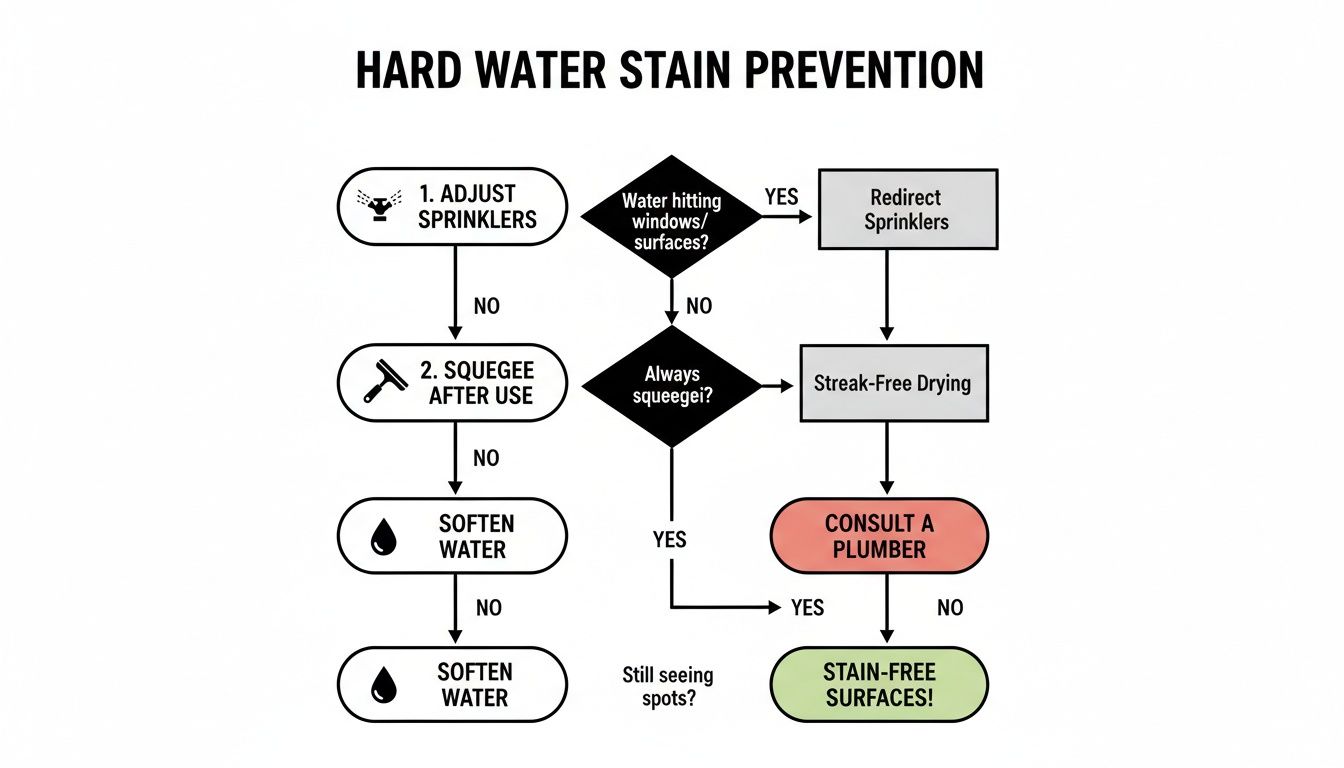
As you can see, simple things like adjusting your sprinklers and wiping down wet windows make a huge difference. In the end, understanding why professional window cleaning in Scottsdale makes all the difference is the key to keeping your home looking its best without breaking the bank.
Common Questions About Hard Water Stains
If you're noticing those stubborn white spots on your Phoenix windows, you're not alone. We get calls about this all the time. Let's tackle some of the most common questions homeowners ask us.
Can Hard Water Stains Actually Damage My Windows for Good?
Absolutely. This is the biggest misconception we see. People think it's just a cosmetic issue, but if you let those mineral deposits sit, they start to chemically bond with and etch into the glass surface itself.
Over time, this etching creates a cloudy, pitted texture that no amount of scrubbing can remove. At that point, you're looking at either expensive professional glass restoration or, in the worst cases, a full window replacement. Tackling it early is key.
Are Those Store-Bought Hard Water Removers Safe to Use?
Be careful with those. While many commercial cleaners are great at dissolving mineral deposits, they often contain mild acids or fine abrasives to get the job done. That’s what makes them effective, but it's also what can make them risky.
These ingredients can wreak havoc on specialty surfaces like low-E coatings, UV films, or window tints, potentially causing irreversible damage.
Our Pro Tip: Always, always test a new product on a small, out-of-the-way spot first. If your windows have any kind of special coating or tint, stick only to products specifically labeled as safe for them. It’s not worth the risk.
How Often Should I Really Be Cleaning My Windows Here in Phoenix?
Given our hard water and dusty environment, we've found that a professional cleaning at least twice a year is the sweet spot for most homes. This is usually enough to stay ahead of any serious mineral buildup.
However, if your windows are constantly getting splashed—say, from a nearby pool or misaligned sprinklers—you should probably bump that up to a quarterly service. That extra frequency makes a huge difference in preventing stains from ever getting a foothold.
When you've tried everything and the stains just aren't budging, that's where we come in. The experienced team at Sparkle Tech Window Washing LLC has the tools and expertise to handle it. Schedule your professional window cleaning service today!