


By 10 a.m. in Phoenix, the glass already tells the truth. A window that looked clean in the early light can show dust, hard-water spotting, and sprinkler mist residue as soon as the sun hits it full-on. In this climate, surface-level cleaning does not hold up.
That is why standard DIY methods fail so often here. Spray cleaner, paper towels, and a quick wipe usually smear fine desert dust, leave lint, and bake residue onto hot glass. The problem gets worse on upper-story exteriors, skylights, divided panes, and windows facing irrigation or pool areas.
Good window cleaning in Phoenix is part technique, part timing, and part understanding what the glass is up against. Clean panes improve the look of the property, but they also help expose early trouble, such as frame oxidation, failing seals, screen damage, and mineral deposits before they turn into etching. Solar panel owners run into the same issue. The dust loading that dulls nearby windows also cuts panel performance, which is why many crews pair glass service with panel care and use the right tools for cleaning high windows on hard-to-reach elevations.
Results come from process, not miracle chemicals. The methods below focus on what works in Phoenix neighborhoods, from dust-heavy lots to hard-water-prone irrigation zones, including when a perfect deionized water system makes the difference between clear glass and fresh spotting.
1. Water-Fed Pole System Technology
By 9 a.m. in Phoenix, west-facing glass can already be hot enough to punish slow work. A water-fed pole solves two problems at once. It keeps the cleaner on the ground and lets purified water do the rinsing, so upper-story exterior glass dries without the mineral haze that tap water leaves behind.
This system earns its keep on stucco-heavy homes, deep-set second-story windows, clerestory glass, and solar-adjacent elevations where dust settles fast. On that kind of exterior buildup, the goal is to lift grit off the pane and flush it away cleanly. Dragging a mop or towel across sun-warmed glass usually spreads fine desert soil and creates more detailing work.
Sparkle Tech’s guide to the best squeegee for washing windows is aimed at hand work, but it also helps clarify when pole cleaning stops being the right tool and traditional detailing takes over.
Why purified water matters
Phoenix tap water is hard. If rinse water carries dissolved minerals, the glass can dry with fresh spotting even after a careful scrub. That is why professional pole setups use filtration, usually DI, RO, or a hybrid system, so the final rinse can dry clear without soap.
A good perfect deionized water system matters more than the pole brand. Once resin is spent or filtration slips, the glass shows it immediately. The cleaner may think the technique failed, but water quality is the problem.
Water-fed poles are not a cure-all. They shine on maintenance cleaning and on loose to moderate exterior soil. They are slower and less reliable on paint specks, adhesive, heavy bug debris, oxidized runoff, and baked-on hard-water crust. On those panes, pros usually restore the surface first, then come back with purified water for the final exterior maintenance cycle.
Brush selection matters in Phoenix because dust acts like an abrasive. Soft bristles are the safer choice on coated glass and solar panel surfaces near window lines. Stiff brushes have their place on tougher frames and heavier neglect, but used carelessly, they can grind grit across the surface.
Good pole work is methodical:
- Clean the frames and top edges first: If you leave them dirty, runoff will drip onto the glass during the final rinse.
- Scrub with movement: A parked brush can smear suspended soil instead of breaking it loose.
- Rinse longer than you think you need to: Fine dust and loosened debris like to hang at the edges and lower seals.
- Watch your water, not just your brush: If filtration drops, the pane will dry with spots no matter how careful the pass was.
For larger Phoenix homes, storefront routes, HOA properties, and repeat exterior service, water-fed poles usually produce safer, more consistent results than ladder-heavy cleaning. They also make more sense in the heat, where speed and controlled rinsing matter.
A quick visual helps if you haven’t used one in the field yet.
2. Squeegee and Microfiber Technique Mastery
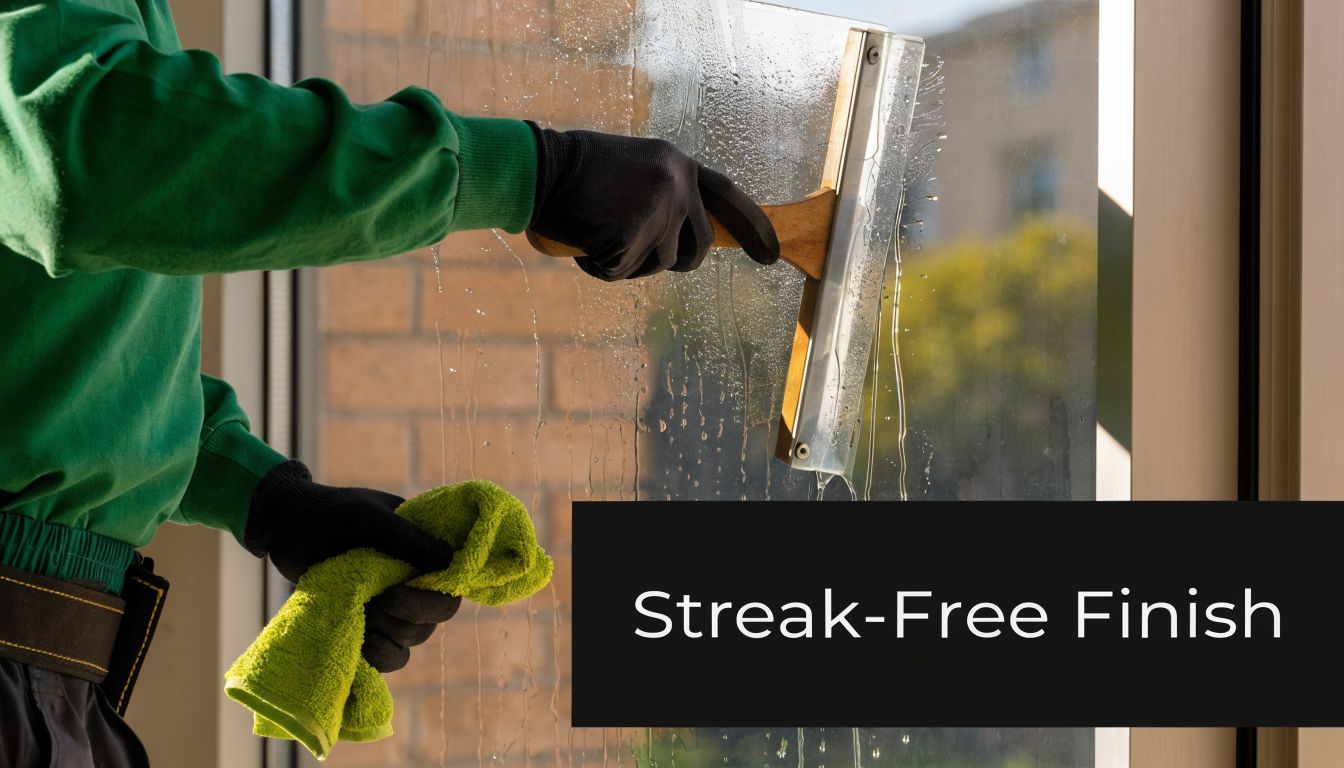
A water-fed pole is great outside, but inside work still lives and dies by hand technique. On interior panes, cut-up windows, and glass with fingerprints, dog nose prints, cooking film, or HVAC dust, a squeegee and microfiber setup still gives the cleanest finish. The trick isn't owning a squeegee. The trick is using it like a pro instead of like a windshield scraper.
A lot of streaks come from two mistakes. The first is too much solution. The second is a dirty or nicked blade. Once the rubber edge starts dragging, skipping, or leaving thin lines, the window tells on you immediately.
Sparkle Tech’s write-up on choosing the best squeegee for washing windows gets into equipment differences that matter more than brand marketing.
The stroke pattern that actually works
On most residential interiors, consistency beats speed. Pros usually work top to bottom or in controlled horizontal passes with slight overlap. The exact pattern matters less than keeping even pressure and never letting dirty solution pool along the edges.
Microfiber closes the gap between good and excellent. It catches detail moisture at the frame, lower corners, and sill line where drips love to hide. It also outperforms paper towels because it doesn’t shed lint into direct sunlight.
Use a simple workflow:
- Wash evenly: Apply solution with a sleeve or microfiber washer so the pane is fully wet, not dripping.
- Pull with overlap: Overlap each stroke slightly so you don’t leave narrow ribbons of water behind.
- Wipe the blade often: One grain of trapped grit can mark the whole pane.
- Detail the edges last: Dry cloth too early and you’ll just chase moisture around.
Clean windows don't come from more soap. They come from better control of water.
Phoenix interiors create one extra challenge. Dust gets inside too, especially near entry doors, patios, and homes with frequent in-and-out traffic. That means your detailing cloth can load up faster than you expect. Separate cloths for frame cleanup and final glass touch-up make a real difference. If you use the same damp rag for everything, you’re smearing residue right back onto the pane.
For real estate prep, office interiors, and occupied homes, this method stays king because it’s precise. It also lets a cleaner handle divided light windows, decorative panes, and tight corners that a pure-water setup can't finish neatly.
3. Eco-Friendly and Non-Toxic Cleaning Solutions
By 9 a.m. in Phoenix, glass can already be hot enough to punish sloppy chemistry. Strong soap dries fast, leaves residue, and turns a simple maintenance clean into streak chasing. For homes with pets, kids, desert plants, and solar equipment nearby, low-toxicity products are usually the better call.
Professional cleaning solution should do one job. It should loosen soil without creating a second problem on the glass, frame, sill, or surrounding surfaces. On routine work, harsh chemical smell usually signals overdosing, not better cleaning.
That matters around entry doors, patios, pool fencing, and irrigated planters where runoff lands on surfaces people touch every day. It matters even more in Phoenix, where any residue left behind becomes a magnet for dust after the next dry afternoon.
Where gentle products earn their keep
Interior glass is the easy example, but exterior panes benefit too, especially on regular service routes. Mild cleaners leave less film, and less film means less dust sticking between visits. That helps the glass stay cleaner longer in a city where airborne grit is constant.
Sparkle Tech’s guide to eco-friendly cleaning products for window work is a practical reference if you want to compare product types that rinse clean and stay safer around common residential surfaces.
A good non-toxic setup should handle three things:
- Release common soil: dust, pollen, fingerprints, bug marks, and light traffic film
- Rinse without drag: leftover soap flashes in direct sun and shows up fast
- Stay surface-safe: tinted film, coated glass, anodized frames, painted trim, and nearby stone all react differently
There is a trade-off. Eco-friendlier chemistry often needs more mechanical work on neglected panes, especially in Phoenix where hard-water spotting, baked-on dust, and sprinkler overspray can bond to the surface. Good cleaners know when to scrub longer and when to stop and shift to restoration chemistry. Trying to force every problem with one “green” soap wastes time and can still leave the glass looking rough.
Field note: Match the cleaner to the soil. Dust and light film call for maintenance chemistry. Mineral deposits and adhesive residue need a separate correction step.
Solar-adjacent homes add another layer. Owners who care about panel output usually care about runoff too. They do not want heavy detergent near roof drains, stucco, landscaping, or panel edges where residue can collect dust and leave ugly lines. A controlled, low-residue process fits that job better.
Eco-friendly products are not a compromise on standard window maintenance. In Phoenix, they often produce the cleaner result because they leave less behind.
4. Safety Protocols and Fall Prevention Systems
Professional window cleaning tips that ignore safety aren't professional. They’re gambling. In Phoenix, heat adds another layer of risk because fatigue, glare, and hot surfaces make bad decisions easier and recovery slower.
That matters on everything from a two-story stucco home to a commercial building with awkward access. A ladder on uneven decorative rock, wet concrete, or irrigation-softened soil is already a problem before the first tool comes off the belt.

What solid crews do before they start
The safest jobs are planned before the brush touches glass. Good crews assess access, glass height, ground conditions, overhead hazards, heat exposure, and where runoff will go. If a cleaner can't explain the plan, that’s a warning sign.
The broader trade has moved this direction for a reason. Industry guidance tied to HSE recommendations notes that alternatives to working at height, including telescopic water-fed poles, are strongly recommended where possible, and many pros now use pole systems for exterior work under moderate heights instead of defaulting to ladders. The point isn't to avoid effort. It's to avoid unnecessary exposure.
A real safety process includes:
- Written job planning: Multi-story and unusual-access work should never rely on memory alone.
- Equipment inspection: Ladders, standoffs, pole clamps, harness hardware, and footwear all need regular checks.
- Heat management: Early scheduling and hydration aren't optional in summer.
- Spotter awareness: Someone should always know where the active worker is and what risk they’re managing.
A lot of homeowners assume “insured” means “safe.” It doesn't. Insurance matters, but method matters first. If a company sends one person to free-climb a tricky side yard with no stabilization and no fallback plan, the paperwork doesn't make that professional.
If the window is hard to reach, the answer isn't bravery. It's a better access method.
On residential work, the best safety upgrade is often refusing the wrong technique. Cleaning from inside, from a balcony, or from a safe roofline is better than stretching a ladder into a bad angle. That’s especially true around skylights, angled glass, or narrow side yards common in higher-end Phoenix-area homes.
The cleanest result in the world isn't worth a preventable fall.
5. Water Reclamation and Runoff Management
In Phoenix, people notice waste. They should. When you're cleaning exterior glass in a desert climate, runoff isn't just a mess issue. It’s a professionalism issue.
A sloppy job leaves muddy splash marks on stucco, pushes dirty water into planters, and creates drip trails across patios and entry walks. A good job manages water from the start. That means thinking about where the rinse goes, how much water the job really needs, and what surfaces need protection before work begins.
This is especially important on homes with decorative stone, painted concrete, premium landscaping, or solar equipment nearby. Dirty runoff can stain porous surfaces and carry loosened debris into places the client never expected window cleaning to affect.
Control the water before it controls the job
Most residential jobs don't need a complex recovery rig, but they do need disciplined water use. Ground protection, smart hose placement, targeted rinsing, and careful sequencing do more for cleanliness than dumping more water onto the problem.
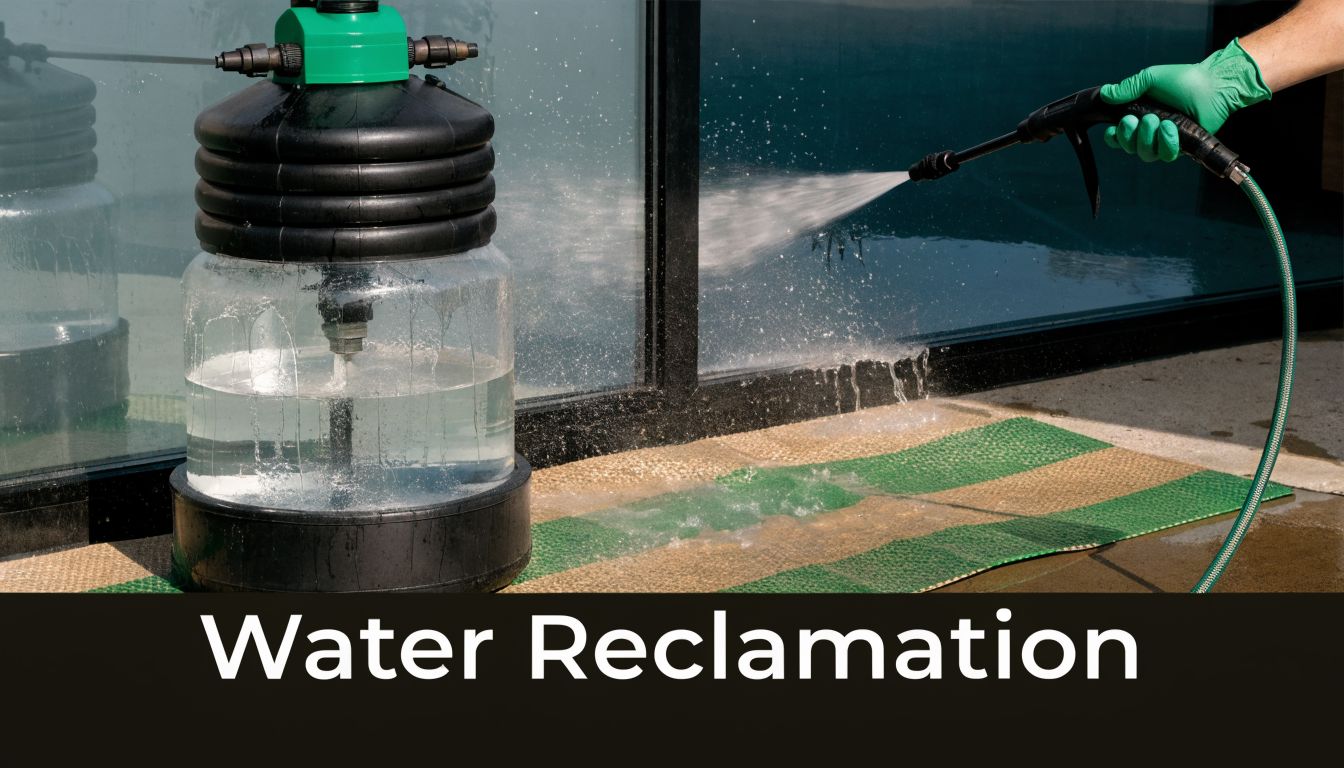
The strongest operators treat runoff management as part of quality control:
- Protect the base area: Use towels, mats, or other barriers where runoff could hit delicate finishes or track into interiors.
- Work top down: If you clean lower glass first, upper runoff can force rework.
- Watch sprinkler zones: Existing hard-water spotting usually tells you exactly where future problems will return.
- Avoid indoor seepage: On interior-exterior combo jobs, control volume near frames, tracks, and aging seals.
One of the biggest complaints clients have is the “half-clean” effect, where one side gets attention and the overall window still looks dirty. Unger’s guidance on cleaning both sides of every window properly speaks directly to that problem. In practice, runoff management is part of solving it. If you clean the outside aggressively and let water bleed around seals or down dirty frames, the whole window still reads as unfinished.
This is also where professional discipline beats speed. The fastest cleaner on site can still lose time if they have to go back and fix dirty sills, water spots on adjacent glass, or splash marks on hardscape.
Phoenix conditions reward the crews that use enough water to clean well, but not so much that they create a second mess.
6. Professional Schedule and Service Guarantees
A Phoenix window can look fine on Monday and rough by Friday if a dust storm rolls through, the irrigation hits the lower panes, and the sun bakes everything in place. That is why scheduling matters. The right service interval keeps glass in maintenance condition instead of pushing it into restoration work.
For homes, a twice-yearly visit can be enough on protected elevations with light dust exposure. Many properties in Phoenix need more than that, especially near active construction, desert lots, busy roads, or sprinkler-heavy landscaping. Solar panel owners should think the same way. Waiting too long lets dust and mineral spotting sit under intense heat, which makes the next cleaning slower and more aggressive than it needs to be.
Commercial work follows visibility, not a generic calendar. Storefront glass near foot traffic usually needs tighter scheduling because every fingerprint, dust film, and water spot shows at eye level. Office buildings, medical suites, and low-traffic properties can often stretch the interval if the location stays relatively clean. The schedule should match the building’s exposure, customer-facing standards, and irrigation patterns.
Good companies build routes around those realities. They also keep records. If a property has tinted sections, aging seals, screens that fit tight, or a recurring hard-water line on the west side, those notes should be attached to the account so the crew is not starting from zero every visit. The same caution that applies to how to clean tinted windows applies to maintenance planning. Method and frequency both change when the glass surface is more sensitive.
A service guarantee matters for the same reason. It shows whether a company is organized enough to stand behind the result after the truck leaves.
Look for these specifics:
- Clear scheduling windows: A serious crew gives a real arrival range and communicates if the route shifts.
- Written callback terms: Spot misses, runoff marks, or other service issues should have a simple correction process.
- Property-specific notes: Gate codes, pets, alarm instructions, access limits, and problem windows should stay on file.
- Defined scope: Clients should know whether screens, tracks, frames, and solar panels are included or separate.
- Maintenance recommendations: A pro should tell you if the current interval is too long for Phoenix conditions.
The trade-off is simple. Frequent service costs more on the calendar, but neglected glass costs more in labor, spotting removal, and risk. In Phoenix, the cheapest visit is usually the one that happens before heat, dust, and hard water have weeks to bond to the surface.
Consistency has value on its own. Property managers get fewer complaints. Homeowners stop chasing the problem after every monsoon burst or sprinkler adjustment. Clean glass stays easier to keep clean, and the service guarantee gives both sides a clear standard to work from.
7. Specialized Training in Window Types and Coatings
A cleaner finishes one side of a Phoenix home in full morning sun, and the glass still looks wrong. The problem is not always technique. It is often the surface itself.
One property can have low-E panes on the south wall, tempered sliders by the patio, aftermarket tint in a bonus room, decorative glass at the entry, and older replacement windows in an addition. Each one reacts differently to heat, friction, moisture, and chemistry. In Phoenix, that matters more because intense sun exposes residue fast, hard water can bite into the surface, and desert dust turns aggressive if it gets dragged across the pane.
Training in window cleaning has to cover glass identification, coating awareness, and tool restraint. A technician who cannot tell the difference between standard glass and film-coated glass is guessing on your property. Guessing is how scratches, haze, and edge lift happen.
The safest crews start by identifying what they are touching before they start trying to remove soil. That means checking for labels, looking for distortion that suggests film, asking about past tint installation, and testing a small corner before using more pressure. I have seen plenty of windows that looked durable until a scraper found a coating the hard way.
Tinted glass is the most common trap. Guidance on how to clean tinted windows lines up with what seasoned cleaners already practice. Avoid ammonia-heavy products, avoid aggressive pads, and keep detailing pressure under control near edges where film failure usually starts.
A trained cleaner adjusts method for surfaces like these:
- Low-E and other coated glass: Use compatible soap and light contact so the coating is not marked.
- Tinted windows: Use soft microfiber, controlled moisture, and no aggressive scraping.
- Aged glass: Reduce pressure and expect existing fabricating debris, scratches, or seal issues.
- Decorative or textured panes: Clean for clarity without forcing residue deeper into the pattern.
- Glass near solar equipment: Keep runoff and residue controlled so surrounding surfaces stay clean.
Phoenix hard water changes the stakes. Mineral spots that sit through heat cycles can stop being removable soil and start acting like surface damage. At that point, stronger chemistry or more scraping usually makes the problem worse, not better.
That is why real skill shows up before the final wipe. The best cleaners know when to slow down, when to test, and when to tell the client that a mark is etched into the glass rather than sitting on top of it. Clean windows matter. Preserved glass matters more.
8. Strategic Bundling and Upselling Service Combinations
A Phoenix homeowner books window cleaning after a dust storm. The glass gets cleaned, but the screens stay loaded with grit, the tracks still hold mud from monsoon runoff, and the solar panels keep wearing a film of dust. The invoice says "window cleaning." The property still looks half-finished.
That is why smart bundling works. It matches services that solve the same maintenance problem on the same visit.
In this market, the strongest package is usually exterior glass, interior glass, screens, and track detailing. Add solar panel cleaning when the home has panels and the soil load justifies it. The crew is already on site. Ladders, hoses, pure water, and access are already handled. That cuts repeat setup time and gives the client a cleaner result they can see from the curb and from inside the room.
The key is to bundle around cause, not price.
Phoenix dust does not land on one surface. It coats glass, mesh, frames, sills, and panels at the same time. Irrigation overspray creates another cluster of problems. Windows may need spot treatment or prevention planning, while nearby panels and frames need a rinse that does not leave mineral residue behind. A good cleaner groups those needs into one clear scope instead of handing the client a pile of disconnected add-ons.
Solar is the easiest example. On many Phoenix homes, panel cleaning belongs in the same conversation as exterior window service because the same dry dust, pollen, and windblown debris hit both surfaces. It is not a random upsell. It is related maintenance.
Interior and exterior glass also sell better together for a simple reason. Homeowners judge the finished job by the whole view, not by which side was cleaned. If only the outside gets done, fingerprints, pet nose prints, cooking film, and interior dust still flatten the light. The client sees "still dirty," even when the exterior work was done right.
Good bundle options usually fall into a few practical groups:
- Windows and screens: Dirty screens shed dust back onto freshly cleaned glass, especially during windy afternoons.
- Windows and tracks: Clean panes stand out more when the tracks are not holding dead bugs, grit, and black runoff lines.
- Exterior glass and solar panels: The same service conditions, access setup, and dust load often affect both.
- Recurring service plans: Regular visits make more sense than one-off rescue jobs for homes near construction, busy roads, or heavy desert landscaping.
The sales conversation should stay plain. Explain what gets dirty together, what can be handled in one visit, and what can wait. Clients in Arcadia, Scottsdale, and the West Valley do not all need the same package. A listing appointment may call for full interior and exterior work with screens. A storefront may only need recurring exterior glass and entry doors. A home with chronic hard water exposure may benefit more from scheduled prevention and selective detail work than from piling on extra services.
Bundle for results. Skip the fluff. If the combination saves time, reduces repeat dusting, improves the final appearance, or protects equipment the client already paid for, it earns its place on the estimate.
8-Point Professional Window Cleaning Comparison
| Item | 🔄 Implementation Complexity | ⚡ Resource Requirements & Speed | ⭐ Key Advantages | 📊 Expected Outcomes & Ideal Use Cases | 💡 Practical Tips |
|---|---|---|---|---|---|
| Water-Fed Pole System Technology | Moderate–high: specialized poles, filtration and operator training | High initial equipment cost; low consumables; very fast for large/multi‑story jobs | Streak‑free results; safer ground‑level access; environmentally friendly | Consistent streak‑free windows; ideal for commercial storefronts, multi‑story residential, solar panels | Invest in quality DI/RO filters; use soft‑bristle brushes; combine with manual pre‑cleaning for heavy soils |
| Squeegee and Microfiber Technique Mastery | Low–moderate: technique‑driven, minimal equipment complexity | Low cost; labor‑intensive; slower on large commercial projects | Precise control; excellent for interiors and specialty glass | High‑quality streak‑free finish when performed by skilled technicians; best for interiors, textured/specialty glass, small jobs | Replace blades regularly; use 100% microfiber; maintain consistent overlapping strokes |
| Eco-Friendly and Non-Toxic Cleaning Solutions | Low: product substitution and proper dilution practices | Slightly higher per‑gallon cost; safe handling; may require longer dwell time | Safer for people, pets and environment; reduces liability; matches eco demand | Effective on common soils; ideal for eco‑conscious clients, solar panels, water‑sensitive areas | Choose certified products; verify compatibility with coatings; educate clients on performance expectations |
| Safety Protocols and Fall Prevention Systems | High: regulatory compliance, inspections and certified training | Significant upfront and ongoing costs; safety checks can slow operations | Reduces injuries and liability; meets OSHA standards; builds client trust | Essential for high‑rise/commercial and multi‑story residential work; improves safety metrics | Require annual training; maintain inspection logs; use ladder stabilizers and secure anchors |
| Water Reclamation and Runoff Management | Moderate–high: adds setup, filtration stages and handling procedures | Equipment and maintenance costs; may increase job time but saves water long‑term | Reduces water waste and contamination; protects landscaping; shows environmental stewardship | Prevents runoff damage; ideal in drought regions, HOAs, commercial sites and solar panel work | Use ground protection mats; position tanks to avoid overflow; filter multi‑stage for reuse |
| Professional Schedule and Service Guarantees | Moderate: needs booking systems, policies and staffing discipline | Technology and staff training costs; improves route efficiency and predictability | Builds trust and loyalty; differentiates service; encourages repeat business | Higher retention and referrals; ideal for subscription services, real estate prep and commercial contracts | Implement online booking; set realistic time windows; document visits with photos |
| Specialized Training in Window Types and Coatings | Moderate: ongoing education and tailored handling procedures | Training investment; may require alternative techniques/equipment | Prevents coating damage; enables service of high‑value windows; reduces liability | Optimal results on low‑E, tinted and specialty coatings; essential for high‑end residential and commercial properties | Create identification guides; test solutions on inconspicuous areas; avoid ammonia on sensitive coatings |
| Strategic Bundling and Upselling Service Combinations | Moderate: pricing complexity and cross‑training required | Requires additional equipment and staff skills; increases per‑visit revenue | Increases average ticket; improves convenience and retention | Higher revenue per visit; ideal for HOAs, real estate staging, seasonal maintenance and routine clients | Offer genuine discounts (5–15%); create tiered packages; train technicians to suggest relevant add‑ons |
When to Call in the Pros for a Perfect Shine
By 10 a.m. in Phoenix, the glass is already hot, dust has started settling again, and yesterday’s hose rinse shows up as fresh mineral spotting in full sun. Conditions like that separate light maintenance from work that needs professional equipment and judgment.
Homeowners can handle a fair amount on their own if the windows are reachable, the glass is cleaned on a steady schedule, and there is no heavy hard-water buildup. Good tools help. So does working early, keeping applicators clean, and avoiding tap water on exterior glass when spotting is a constant problem.
The line gets clear once access, staining, or glass sensitivity changes. Second-story exteriors, skylights, tight side yards, French panes, post-construction debris, and baked-on mineral deposits all take more than basic effort. The cost of getting it wrong is real. Scratched glass, damaged screens, water pushed into bad seals, torn tint film, and ladder falls all happen during jobs that looked simple from the ground.
I see the same pattern across the Valley. People wait until the windows look dull, then find out the issue is no longer loose soil. It is bonded residue. On Phoenix glass, hard water and dust can sit long enough to leave marks that standard cleaning will not fully remove, which is why routine service usually costs less than trying to recover neglected panes later.
Solar owners have another reason to stop guessing. The same dust and mineral exposure hitting the windows is also collecting on the panels. Cleaning both on the same visit saves setup time, keeps the exterior maintenance cycle consistent, and avoids the common mistake of washing windows while leaving performance-robbing buildup on the array.
Professional crews bring more than labor. They bring purified water, poles that reach safely from the ground, detailing tools for interiors, and enough experience to change methods before the glass gets damaged. Low-E coatings, tempered glass, older seals, fabricated debris, and aftermarket tint all call for different handling. A trained cleaner knows when to scrub, when to rinse, when to hand detail, and when to leave a stain-removal attempt alone because the risk is higher than the gain.
Safety matters just as much as finish quality.
Upper-story windows and awkward access points are jobs for a trained, insured team with the right ladders, stabilizers, and fall-prevention habits. In Phoenix neighborhoods with uneven pavers, decorative rock, pool decks, and narrow side setbacks, setup is often harder than the cleaning itself.
The short version is simple. Handle easy glass yourself if you have safe access, the right tools, and realistic expectations. Call in the pros when the sun exposes every flaw, the water leaves deposits, the windows sit too high, or the glass has coatings and stains that punish trial and error.
For homeowners and property managers in Scottsdale, Peoria, and nearby Phoenix-area communities, Sparkle Tech Window Washing LLC is one relevant option. The company provides residential and commercial window cleaning, screen service, and solar panel cleaning, and it offers a 10-day rain and service guarantee. When the job calls for safer access, better water, and less guesswork, that kind of setup saves time and usually produces a cleaner finish.
If your windows are fighting dust, hard water spots, sun-baked residue, or hard-to-reach upper glass, Sparkle Tech Window Washing LLC can help with residential and commercial window cleaning across the greater Phoenix area. You can review services, explore recent work, and schedule a visit for interior and exterior windows, screen cleaning and repair, or solar panel cleaning.