

Managing a commercial property is a complex, year-round commitment that extends far beyond reacting to problems as they arise. A proactive maintenance strategy is essential for enhancing asset value, ensuring tenant safety, and optimizing operational efficiency. This comprehensive commercial building maintenance checklist is designed to move beyond generic advice, offering a structured, prioritized, and actionable framework specifically tailored for property managers and business owners. It provides a printable, detailed roadmap to keep your facility in peak condition, transforming your maintenance routine from a reactive chore into a strategic advantage.
We will break down essential tasks by both frequency and operational area. You'll find clear, organized sections covering everything from daily and weekly walkthroughs to in-depth annual inspections. This guide organizes critical tasks into key categories:
- Building Envelope: Exterior, Interior, and especially critical components like windows and solar panels.
- Core Systems: HVAC, plumbing, and electrical.
- Safety & Aesthetics: Life-safety equipment, landscaping, and pest control.
- Compliance: Documentation and record-keeping.
Each item in this checklist includes practical details such as the responsible party, estimated time commitment, and seasonal considerations relevant to the unique climate of the greater Phoenix area. By implementing this system, you can effectively prevent minor issues from escalating into costly repairs, improve your property's performance, and maintain a safe, welcoming environment for tenants and customers. Let's begin building a more resilient and efficient maintenance plan for your commercial property.
1. Exterior Window Glass Inspection and Cleaning
A crucial component of any commercial building maintenance checklist, exterior window inspection and cleaning is about more than just aesthetics. This task involves a systematic evaluation of all glass surfaces for dirt, grime, dust storm residue, and hard water deposits, followed by a professional cleaning process. For commercial properties in the Phoenix area, where intense sun, mineral-rich water, and frequent dust storms are the norm, this routine maintenance is essential to prevent permanent glass degradation and maintain a professional image.
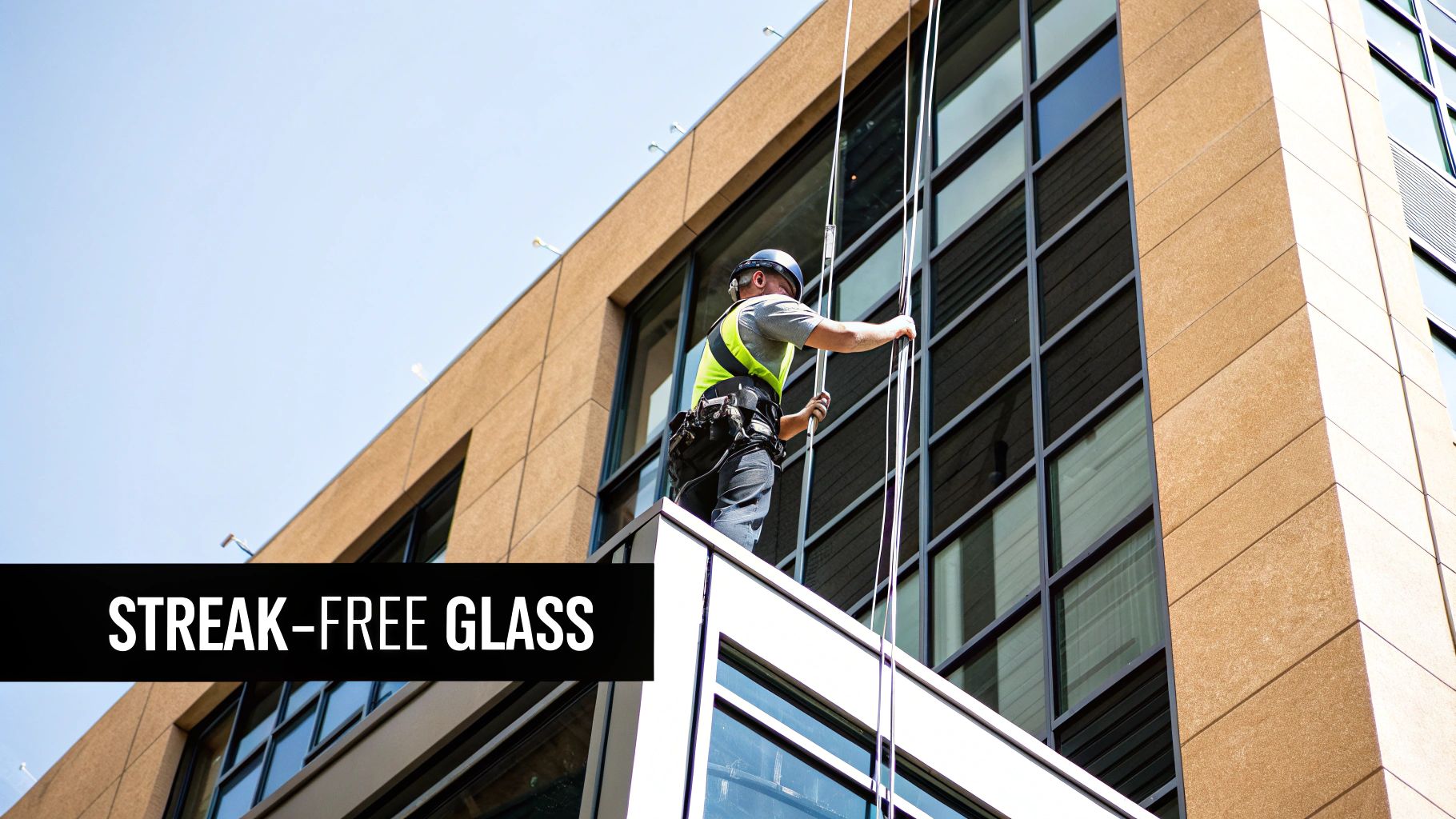
Neglecting windows allows mineral buildup to etch into the glass, causing irreversible damage and costly replacements. Regular cleaning preserves the structural integrity of the glass, enhances natural light indoors, and significantly boosts curb appeal, directly impacting tenant satisfaction and client perception.
Why This Task is Critical
Clean windows reflect the overall health and management quality of your property. For example, high-rise office towers in Scottsdale rely on monthly cleanings to project a premium image, while retail storefronts in downtown Phoenix require pristine glass to attract customers. Similarly, medical facilities understand that a spotless exterior conveys a commitment to hygiene and professional standards.
Actionable Implementation Tips
To effectively manage window maintenance, property managers should integrate these practices into their schedule:
- Seasonal Scheduling: Implement a more frequent cleaning schedule, such as monthly, during Arizona's dust-heavy seasons (spring and late summer). A quarterly schedule is often sufficient for the rest of the year.
- Optimal Timing: Schedule professional cleanings for the early morning or late afternoon. This prevents cleaning solutions from evaporating too quickly under the intense desert sun, which can cause streaks and spots.
- Immediate Damage Reporting: Train on-site staff to identify and report chips, cracks, or seal failures immediately. Early detection can prevent minor issues from escalating into major expenses.
- Documentation: Maintain a visual log by taking before-and-after photos of window cleanings. This record is valuable for property management reports, tenant communications, and potential insurance claims.
Pro Tip: When hiring a service, verify they follow standards set by the IICRC (Institute of Inspection, Cleaning and Restoration Certification). Reputable local experts like Sparkle Tech Window Washing LLC specialize in techniques suited for the desert climate, ensuring a streak-free, luminous finish that protects your investment.
2. Interior Window Frame and Sill Cleaning and Inspection
An often-overlooked yet vital part of a commercial building maintenance checklist, interior window frame and sill maintenance goes beyond the glass. This task involves the detailed cleaning and inspection of frames, sills, tracks, and muntins for accumulated dust, moisture damage, signs of pests, and structural decay. For commercial properties, this interior focus is critical for protecting indoor air quality, identifying early signs of water infiltration, and preventing pest infestations.
Neglecting interior frames allows dust, allergens, and moisture to accumulate, creating an environment for mold growth and attracting pests. Regular inspection and cleaning preserve the window assembly's integrity, contribute to a healthier indoor environment, and prevent small, hidden issues from becoming significant repair projects. This proactive step directly supports tenant well-being and property value.
Why This Task is Critical
The condition of your interior window frames speaks volumes about your property's overall maintenance standards. For example, medical facilities in Phoenix must maintain sterile environments, making routine frame sanitation non-negotiable. Corporate offices in Scottsdale prevent "sick building syndrome" and improve air quality through regular sill cleaning, while retail stores in Peoria can discover and seal pest entry points during these inspections, protecting their inventory and reputation.
Actionable Implementation Tips
To effectively manage interior window frame and sill maintenance, property managers should implement these strategies:
- Establish a Documentation System: Use a checklist to track the condition of each frame and sill over time. Take photos of any moisture stains, pest evidence, or physical damage to include in maintenance records.
- Use Proper Tools: Equip cleaning staff with soft brushes, microfiber cloths, and non-abrasive, pH-neutral cleaners to avoid damaging frame materials like vinyl, wood, or aluminum.
- Check Seals and Gaskets: During cleaning, instruct staff to test the integrity of weatherstripping and caulking. Look for brittleness, gaps, or shrinking that could compromise the building's envelope.
- Coordinate Cleaning Schedules: Plan interior window cleaning to occur immediately after exterior work is completed. This logical sequencing minimizes the re-contamination of freshly cleaned interior surfaces.
Pro Tip: Pay special attention to condensation and moisture, as it can lead to serious issues. If you notice persistent dampness or discoloration, it's crucial to act fast. You can learn more about how to identify and address black mold on window sills to protect your property and tenants.
3. Window Screen Inspection, Repair, and Cleaning
An often-overlooked yet vital part of a commercial building maintenance checklist, window screen maintenance involves the regular inspection of mesh condition, frame integrity, and fastening hardware, followed by cleaning and necessary repairs. For commercial properties across the Valley, from Goodyear to Gilbert, functional screens are the first line of defense against pests, dust, and debris. This proactive task is essential for maintaining a secure, clean, and energy-efficient building envelope.
Neglecting window screens allows pests easy entry, compromises indoor air quality with unfiltered dust, and can even impact energy efficiency by hindering natural ventilation. Intact screens enhance tenant comfort and safety, contribute to lower pest control costs, and uphold the property’s overall professional appearance.
Why This Task is Critical
Well-maintained screens are a sign of meticulous property management. For example, medical facilities in Phoenix rely on perfectly sealed screens to maintain sterile, pest-free environments critical for patient care. Likewise, office buildings in Paradise Valley implement quarterly screen checks to ensure a comfortable work environment, while retail complexes in Gilbert extend screen lifespan through preventative cleaning, avoiding costly large-scale replacements.
Actionable Implementation Tips
To effectively manage window screen maintenance, property managers should incorporate these steps into their operational plans:
- Seasonal Inspection Schedule: Establish a bi-annual inspection routine, focusing on pre-monsoon (May) and post-monsoon (October) checks to address storm-related damage promptly.
- On-Hand Repair Kits: Keep a stock of replacement mesh, spline, and frame materials on-site. This allows maintenance staff to perform immediate, minor repairs, preventing small tears from becoming major problems.
- Proper Cleaning Techniques: Clean screens using gentle, non-toxic solutions that effectively remove desert dust without damaging the mesh or frame material. Avoid high-pressure washing, which can stretch or tear the screen.
- Prioritize Critical Areas: Focus initial repair efforts on screens in high-traffic areas, food service spaces, and ground-floor offices, as these are most vulnerable to damage and pest intrusion.
Pro Tip: Train maintenance staff on basic repair procedures, but for widespread damage or specialized screen types, partner with a professional service. Experts like Sparkle Tech Window Washing LLC offer specialized window screen repair and cleaning, ensuring a perfect fit and durable installation that meets Arizona's demanding environmental conditions.
4. Water Infiltration and Weatherstripping Assessment
An essential part of any commercial building maintenance checklist, this assessment involves a detailed examination of window weatherstripping, caulking, and seals. The goal is to detect and prevent water infiltration, air leaks, and thermal inefficiencies. For properties across the Phoenix area, where intense UV exposure degrades materials and monsoon downpours are a yearly threat, maintaining proper seals is critical for protecting building interiors, optimizing HVAC efficiency, and averting costly structural damage.
Neglected seals lead to drafts that force HVAC systems to work harder, increasing utility costs. Worse, failed caulking can allow water to seep into wall cavities, promoting mold growth and causing unseen structural rot. Proactive inspections and timely repairs preserve the building envelope, reduce energy consumption, and enhance tenant comfort.
Why This Task is Critical
Failing to maintain a building's seals can have significant financial consequences. For instance, post-monsoon inspections often reveal hidden water damage in Phoenix office buildings due to compromised caulking. Similarly, commercial properties in Surprise have discovered massive energy waste from deteriorating weatherstripping, prompting them to implement comprehensive replacement programs. These inspections are not just preventative; they are a core component of asset protection.
Actionable Implementation Tips
To effectively manage your building's sealing and weatherstripping, integrate these proactive steps into your maintenance plan:
- Pre-Monsoon Priority: Schedule a thorough inspection of all window and door seals before the monsoon season begins (typically May-September) to address vulnerabilities before the heavy rains arrive.
- Targeted Replacement Schedule: Plan to replace caulking every 5 to 7 years, or as soon as you notice visible signs of cracking, shrinking, or pulling away from the frame.
- Use Climate-Appropriate Materials: Opt for high-grade, silicone-based caulks specifically rated for the extreme temperature fluctuations common in Arizona's climate.
- Train and Document: Teach on-site staff to recognize early signs of water penetration, such as staining, musty odors, or softened window frames. Document all seal failures with dated photographs and location notes for a clear maintenance record.
Pro Tip: During routine window cleaning appointments, a professional service can often spot early signs of seal degradation. Experts like Sparkle Tech Window Washing LLC are trained to identify these issues, providing you with a crucial second set of eyes and helping you address problems before they escalate.
5. Solar Panel and Window Surface Inspection for Efficiency Loss
A pivotal task for any modern commercial building maintenance checklist, this specialized inspection is focused on preserving your renewable energy assets. The process involves a detailed evaluation of all solar panels and associated glass surfaces for dust, bird droppings, mineral deposits, and other contaminants that directly obstruct sunlight. In the Phoenix metropolitan area, where abundant sunshine is a key asset, this routine maintenance is non-negotiable for maximizing solar energy capture and achieving the expected return on investment (ROI).
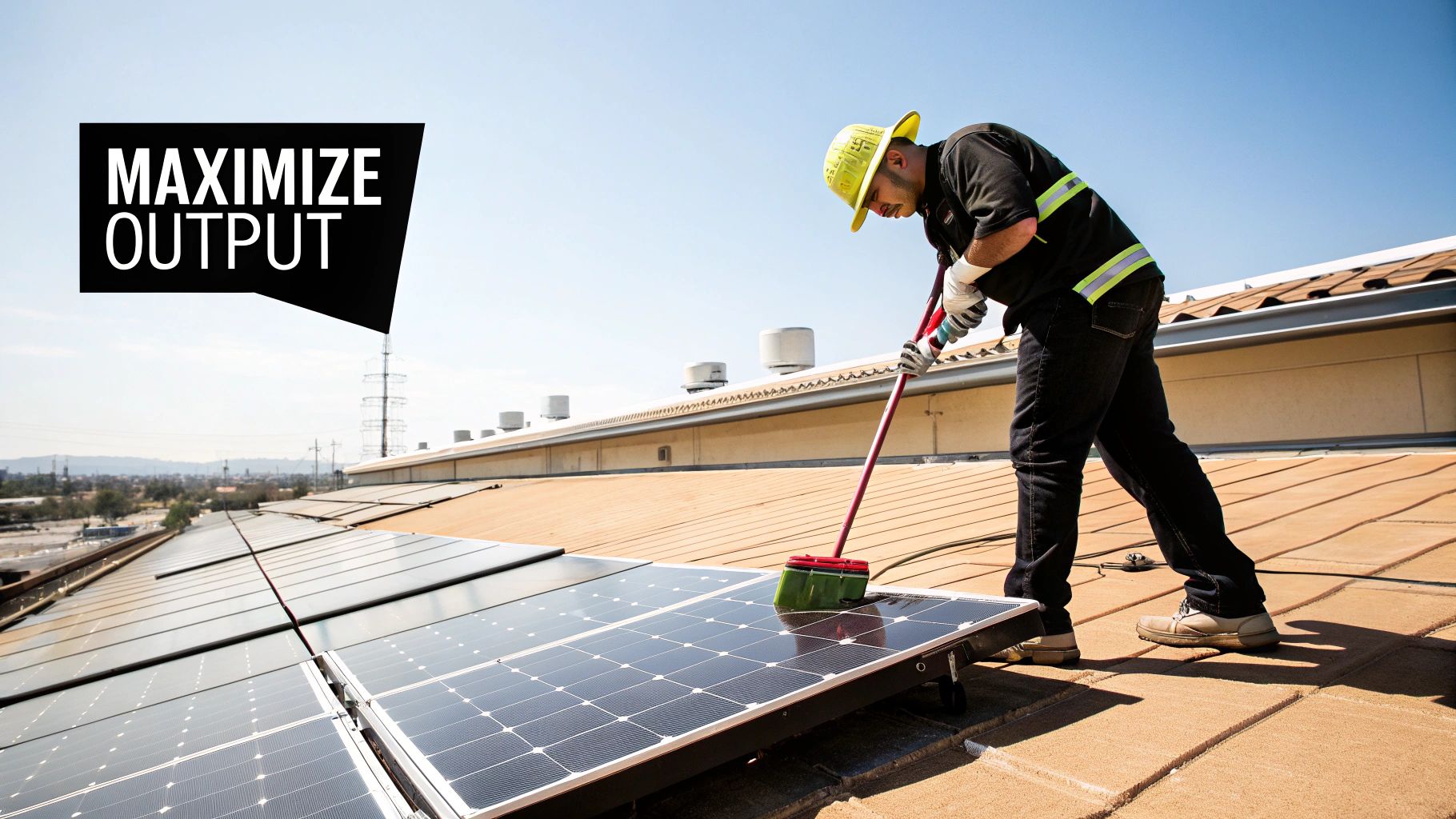
Allowing a layer of desert dust to settle on panels can severely reduce their efficiency, negating the financial and environmental benefits of the system. Regular cleaning not only restores energy production but also extends the operational lifespan of the panels by preventing corrosive materials from damaging their protective coatings.
Why This Task is Critical
Optimal solar panel performance is directly tied to surface cleanliness. For instance, commercial office buildings in Scottsdale have recovered over 20% in energy efficiency through consistent panel cleaning. Likewise, industrial facilities in Phoenix protect their significant capital investment and extend panel longevity with preventative care, ensuring their systems perform as designed for decades. This proactive approach turns a maintenance task into a profit-generating activity.
Actionable Implementation Tips
To effectively manage solar panel maintenance and ensure peak performance, property managers should integrate these practices into their operational schedule:
- Dust Season Frequency: Implement a more frequent cleaning schedule, such as monthly, during Arizona's dust-heavy season from May to September. A quarterly schedule is typically sufficient for the cooler months.
- Safe Cleaning Practices: Schedule professional cleanings for the early morning before panels get extremely hot. This prevents thermal shock and ensures cleaning solutions work effectively without rapid evaporation.
- Use Proper Equipment: Always use deionized water and non-abrasive, soft-bristle brushes designed for solar panels. This avoids scratching the anti-reflective coating, which is crucial for light absorption.
- Track Performance: Document efficiency improvements by comparing energy output metrics before and after cleanings. This data validates the maintenance expenditure and demonstrates ROI to stakeholders.
Pro Tip: Partner with a specialized service that understands the nuances of photovoltaic maintenance. Professionals like Sparkle Tech Window Washing LLC use techniques that align with guidelines from the Solar Energy Industries Association (SEIA), ensuring your system is cleaned safely and effectively. You can learn more about how to improve solar panel efficiency with their expert guidance.
6. Hard Water Deposit and Mineral Stain Prevention and Removal
A critical task for any Phoenix-area commercial building maintenance checklist, this process involves proactively managing and removing stubborn mineral deposits from glass surfaces. Due to Arizona's notoriously hard water, minerals like calcium and magnesium leave behind unsightly white spots, streaks, and a hazy film known as efflorescence. This maintenance is essential not just for appearance, but to prevent these deposits from permanently etching into and ruining the glass.
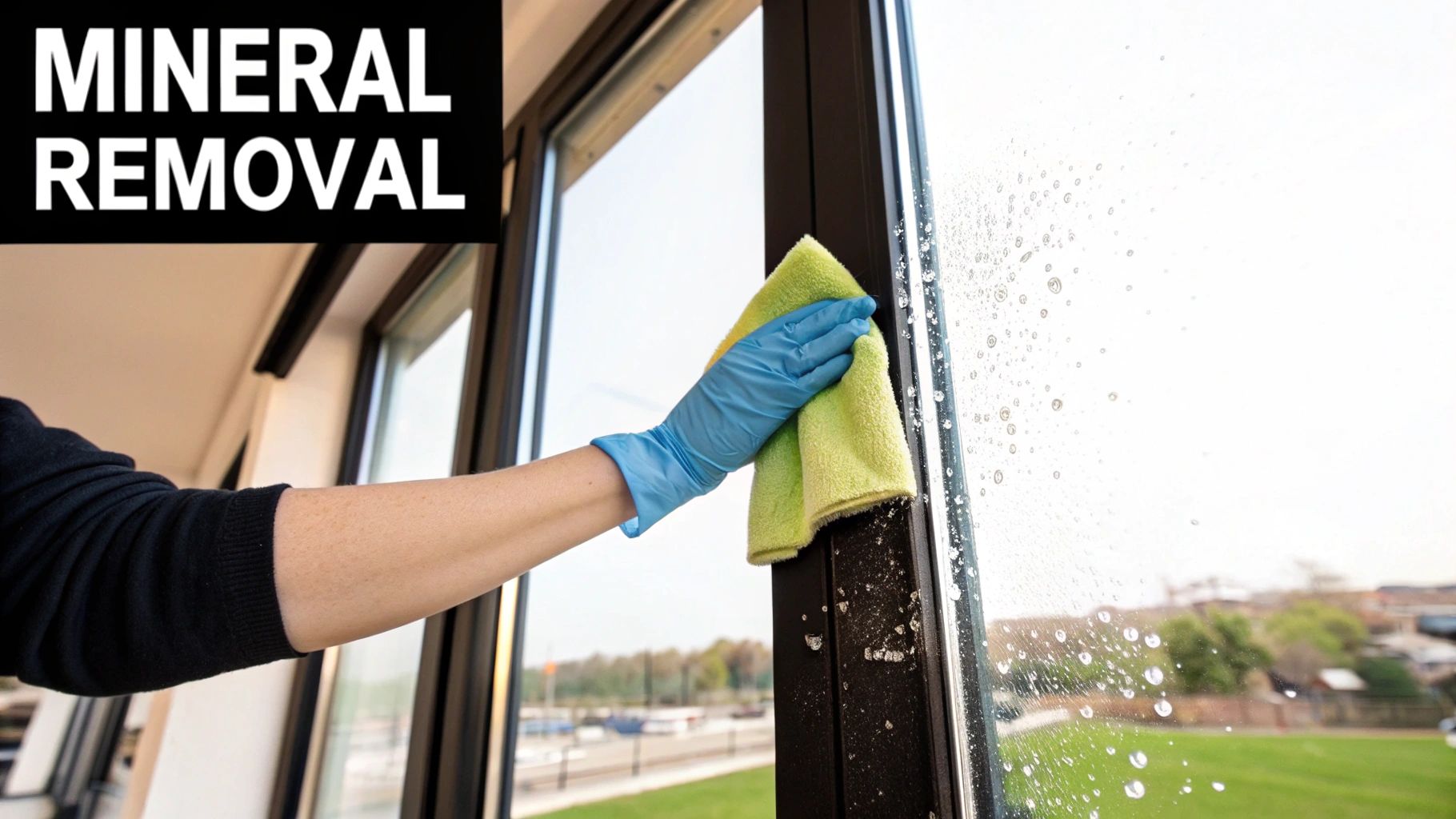
When left unaddressed, hard water stains can chemically bond with the glass, causing irreversible damage that requires full window replacement. Regular, professional removal protects your property's value, ensures windows remain transparent, and upholds a pristine image, which is vital for tenant retention and customer confidence.
Why This Task is Critical
Mineral buildup is a persistent problem for commercial properties. For instance, Scottsdale office buildings often see heavy deposits from misaligned sprinkler systems hitting windows, while retail storefronts in Phoenix can develop stains from runoff after cleaning sidewalks. Proactive treatment is the only way to combat this environmental reality and avoid costly consequences. By addressing these issues early, property managers can extend the life of their windows significantly.
Actionable Implementation Tips
To effectively prevent and remove hard water stains, property managers should implement the following strategies:
- Identify Water Sources: Regularly inspect the property to find the cause of the water exposure. Adjust sprinkler heads, repair leaking faucets, or reroute drainage to minimize contact with glass.
- Use Purified Water: During routine cleanings, use a water-fed pole system with deionized or filtered water. This method prevents new mineral deposits from forming during the cleaning process itself.
- Schedule Pre-emptive Removal: Do not wait for stains to become severe. Schedule professional mineral removal services at the first sign of buildup, especially in high-exposure areas like ground-floor windows near landscaping.
- Train Staff: Educate maintenance staff to distinguish between fresh, removable deposits and permanent etching. This ensures they can report issues promptly before the damage becomes irreversible. For an in-depth guide, property managers can learn more about how to remove hard water stains from windows and determine when professional help is needed.
Pro Tip: For stubborn, baked-on mineral deposits, standard cleaners are ineffective. Professionals like Sparkle Tech Window Washing LLC use specialized, pH-neutral compounds and techniques to dissolve minerals safely without scratching or damaging the glass, restoring its clarity and shine.
7. Safety and Accessibility Inspection of Window Systems
A non-negotiable part of any commercial building maintenance checklist, the safety and accessibility inspection of window systems goes far beyond a simple visual check. This task involves a methodical evaluation of all window safety mechanisms, locks, emergency egress compliance, and accessibility features. For commercial properties throughout Arizona, adhering to standards like the ADA Accessibility Guidelines and NFPA fire codes is not just best practice; it is a legal requirement to ensure occupant safety.
Neglecting this duty can lead to severe consequences, including hefty fines for non-compliance, increased liability in case of an accident, and potentially tragic outcomes during an emergency. Regular inspections protect tenants, limit legal exposure, and ensure the building provides a safe environment for everyone, including individuals with disabilities.
Why This Task is Critical
Properly functioning window systems are integral to a building's life-safety plan. For instance, medical facilities in Phoenix must ensure windows in patient areas are secure yet accessible for emergency personnel. Office buildings in Scottsdale must verify that egress windows meet ADA requirements for quick and unobstructed exit, while schools in Gilbert conduct these checks to guarantee student safety.
Actionable Implementation Tips
To ensure your property meets all safety and accessibility standards, integrate these inspection steps into your maintenance routine:
- Code Cross-Reference: Before any inspection, review the current Arizona Building Code and local municipal ordinances. This ensures your checklist is comprehensive and compliant.
- Monthly Functionality Tests: Mandate that on-site staff test all window locks, latches, and opening mechanisms on a monthly basis. This simple check ensures they operate smoothly and reliably.
- Clear Egress Paths: Regularly verify that all emergency egress windows are completely unobstructed inside and out. Furniture, equipment, or overgrown landscaping can block critical escape routes.
- Detailed Documentation: Create and maintain a detailed log of each inspection, noting the condition of all safety mechanisms, any repairs made, and the date of the check. This documentation is vital for compliance audits.
Pro Tip: Train key personnel on the proper operation of all window safety features and emergency egress procedures. Annual professional inspections by a certified building inspector can help identify subtle issues that internal staff might miss, ensuring your property remains fully compliant and safe.
8. Dust Storm and Environmental Contamination Assessment
A vital and often overlooked part of a commercial building maintenance checklist in Arizona is the post-dust storm assessment. This task involves a specialized inspection of the building's envelope, windows, and HVAC intakes for damage and contamination from haboobs, pollen, and airborne pollutants. For commercial properties across the Phoenix metro, where intense dust storms can deposit layers of abrasive dirt and grime in minutes, this proactive evaluation is critical for mitigating long-term operational and structural issues.
Failing to address storm residue allows abrasive dust to damage glass, clog filters, and infiltrate interior spaces, impacting air quality and tenant health. A systematic assessment and cleanup protocol preserves building assets, ensures operational continuity, and upholds a clean, professional environment despite the harsh desert climate.
Why This Task is Critical
The aftermath of a haboob directly impacts a property's function and appeal. For instance, retail properties in Phoenix require immediate post-storm cleaning to maintain a welcoming appearance and prevent dust from being tracked indoors. Similarly, commercial office buildings in Scottsdale must clear window and entryway contamination quickly to project a premium, well-managed image. Industrial facilities in Peoria often use these assessments to justify HVAC filtration upgrades, protecting sensitive equipment and employee well-being.
Actionable Implementation Tips
To effectively manage dust storm impacts, property managers should incorporate these specific protocols:
- Proactive Monitoring: Closely monitor National Weather Service dust storm warnings to schedule pre-storm preparations, such as ensuring all windows and vents are sealed.
- Post-Storm Triage: After a storm, conduct an immediate visual assessment to gauge the severity of contamination. This helps prioritize cleaning efforts, focusing on high-traffic entrances and critical air intakes first.
- Peak Season Scheduling: Increase the frequency of building envelope inspections during Arizona’s peak dust season, which typically runs from May through September.
- Visual Documentation: Document the impact of each major dust storm with time-stamped photographs. This creates a valuable record for insurance claims, maintenance budgeting, and tenant communications.
Pro Tip: Establish an emergency cleaning protocol with a trusted vendor before dust season begins. Local experts like Sparkle Tech Window Washing LLC have experience with Phoenix's unique environmental challenges and can mobilize quickly to restore your property's appearance and function after a major haboob.
9. Window Damage Assessment and Documentation for Insurance
A vital yet often overlooked part of any commercial building maintenance checklist, this task involves the systematic inspection and documentation of window damage. This process goes beyond routine checks, creating a detailed evidentiary record of weather-related harm, vandalism, or structural deterioration specifically for insurance claims, liability management, and capital expenditure planning. For Arizona property managers, where monsoon storms can cause significant wind and debris damage, this documentation is indispensable for securing timely and fair insurance reimbursements.
Without meticulous records, insurance claims can be delayed, disputed, or denied, forcing property owners to cover costly repairs out-of-pocket. Proper documentation provides undeniable proof of the window's condition before and after an incident, streamlining the claims process and safeguarding the property's financial health.
Why This Task is Critical
Thorough documentation acts as your property's legal and financial shield. For instance, after a severe dust storm in Phoenix, a retail complex can use timestamped photos to file a claim for shattered storefront glass. Similarly, a Scottsdale office building can provide a complete damage inventory following a break-in, expediting the replacement process and minimizing business disruption. This proactive approach turns a reactive crisis into a manageable, documented event.
Actionable Implementation Tips
To create a robust documentation system for your window assets, integrate these practices:
- Standardize Reporting: Use standardized digital inspection forms to ensure every staff member captures the same critical information consistently, from damage type to location.
- Comprehensive Photography: Photograph damage from multiple angles (close-up, medium, and wide shots) and include a reference object like a ruler for scale.
- Timestamp Everything: Ensure all digital photos and videos have accurate, unedited timestamp metadata to validate when the damage was recorded.
- Establish a Baseline: During routine inspections, take photos of windows in good condition. These baseline images are invaluable for demonstrating the extent of new damage.
- Secure Digital Storage: Store all documentation, including written reports and photos, in a secure, cloud-based system with redundant backups to prevent data loss.
Pro Tip: Involve your insurance adjuster early in the assessment process after a significant event. Sharing your detailed, organized documentation from the start builds credibility and can significantly accelerate the approval of your claim. This aligns with best practices recommended by the Insurance Institute for Business & Home Safety (IBHS).
10. Frame and Sill Structural Integrity and Deterioration Assessment
A vital but often overlooked part of a commercial building maintenance checklist, this assessment focuses on the structural health of window frames and sills. The process involves a detailed inspection for signs of rot, corrosion, warping, and material fatigue. For properties across Arizona, where materials endure intense UV radiation, extreme heat, and monsoon moisture, this check is critical for preventing frame failure, water intrusion, and costly, large-scale replacements.
Ignoring frame and sill deterioration allows minor issues to escalate into major structural problems, compromising the building's envelope and leading to safety hazards. Proactive inspections preserve the window system's integrity, ensure occupant safety, and prevent small repairs from turning into complete window replacements.
Why This Task is Critical
The condition of your window frames directly impacts energy efficiency, weather resistance, and building safety. For instance, Scottsdale office buildings with older wood frames have avoided extensive structural damage by identifying and replacing rotted sections early. Likewise, commercial properties in Phoenix can prevent widespread corrosion on metal frames by performing diligent post-monsoon inspections and addressing any breaches in protective coatings.
Actionable Implementation Tips
To effectively manage window frame and sill integrity, property managers should incorporate the following practices:
- Targeted Inspections: Schedule comprehensive frame inspections annually, with a supplemental check immediately before and after the monsoon season to catch new vulnerabilities.
- Utilize Moisture Meters: Equip your maintenance team with moisture meters to detect hidden rot in wood or composite frames before it becomes visually apparent. Early detection is key to limiting the scope of repairs.
- Visual Reference Guide: Create a simple photographic guide showing different stages of deterioration (e.g., initial paint bubbling, minor corrosion, advanced wood rot) to help staff accurately report issues.
- Prioritize Repairs: Classify findings based on severity and safety risk. A warped vinyl frame on an upper floor may be a lower priority than a corroded sill that threatens to compromise glass stability.
Pro Tip: During routine window cleanings, ask your service provider to report any visible frame or sill issues. Experts like Sparkle Tech Window Washing LLC are trained to spot early signs of degradation, providing an extra layer of defense that aligns with maintenance guidelines from the Window Manufacturers Association (WMA).
10-Point Window Maintenance Comparison
| Task | 🔄 Implementation Complexity | ⚡ Resource Requirements | ⭐ Expected Effectiveness | 📊 Expected Outcomes | 💡 Ideal use cases / Key advantages |
|---|---|---|---|---|---|
| Exterior Window Glass Inspection and Cleaning | High — high-rise safety and specialized techniques | Medium‑High — water-fed systems, harnesses, trained crews | ⭐⭐⭐⭐ — very effective at preventing long‑term glass damage | Improved visibility, curb appeal, extended glass life | Best for commercial facades in UV/dust climates; schedule early/late to avoid heat |
| Interior Window Frame and Sill Cleaning and Inspection | Medium — detailed crevice work and tenant access | Low‑Medium — soft tools, cleaning agents, access coordination | ⭐⭐⭐⭐ — effective for IAQ and early moisture detection | Reduces allergens, prevents mold/pest entry, extends frame life | Offices, medical spaces; use non‑abrasive tools and photo documentation |
| Window Screen Inspection, Repair, and Cleaning | Medium — many individual components to inspect/repair | Medium — replacement mesh, fasteners, labor for repairs | ⭐⭐⭐ — effective at preventing pests and preserving seals | Improves HVAC performance, tenant safety, and reduces pest remediation | Ideal pre/post‑monsoon and for dust‑prone sites; keep spare parts on hand |
| Water Infiltration and Weatherstripping Assessment | High — requires diagnostic testing and seal expertise | Medium — testers, caulking materials, trained technicians | ⭐⭐⭐⭐ — highly effective at preventing water damage and energy loss | Lowers HVAC costs, prevents mold, documents insurance‑relevant issues | Prioritize before monsoon season; use silicone caulks rated for extremes |
| Solar Panel and Window Surface Inspection for Efficiency Loss | High — roof access, safety training, panel‑safe methods | Medium‑High — deionized water, soft brushes, safety gear | ⭐⭐⭐⭐ — very effective; can restore 15–25% panel output | Increased energy yield, longer panel life, improved ROI | Rooftop PV on sunny/dusty sites; clean mornings and coordinate with monitoring |
| Hard Water Deposit and Mineral Stain Prevention and Removal | Medium — chemical and mechanical treatment knowledge needed | Medium — specialty cleaners, deionized rinse systems | ⭐⭐⭐ — effective if treated before etching becomes permanent | Maintains clarity, prevents irreversible etching, reduces replacements | Areas with sprinkler/runoff; use deionized final rinse and monthly prevention |
| Safety and Accessibility Inspection of Window Systems | High — code knowledge (ADA, NFPA) and functional testing | Low‑Medium — inspection tools, documentation, occasional repairs | ⭐⭐⭐⭐ — critical for compliance and occupant safety | Reduces liability, ensures egress/accessibility, supports insurance | Medical, educational, and public buildings; annual professional testing recommended |
| Dust Storm and Environmental Contamination Assessment | Medium — monitoring, sampling, post‑storm response | Medium — filtration/cleanup equipment, reactive crews | ⭐⭐⭐ — effective at identifying contamination vectors and mitigation | Protects IAQ, optimizes maintenance scheduling, reduces HVAC burden | Phoenix area/commercial sites prone to haboobs; monitor forecasts and document impacts |
| Window Damage Assessment and Documentation for Insurance | Medium — systematic photo + report workflows | Low‑Medium — cameras, standardized forms, digital storage | ⭐⭐⭐⭐ — highly effective for claim support and liability defense | Enables insurance claims, prioritizes repairs, creates historical records | Post‑storm, vandalism, or routine audits; use timestamps and standardized templates |
| Frame and Sill Structural Integrity and Deterioration Assessment | High — structural diagnostics and moisture testing | Medium‑High — moisture meters, probes, specialist inspection | ⭐⭐⭐⭐ — very effective at preventing system failure when done early | Prevents catastrophic replacement, informs maintenance budgeting | Older buildings and monsoon‑exposed frames; use moisture meters and annual checks |
Implementing Your Strategic Maintenance Plan
Navigating the complexities of commercial property upkeep can seem daunting, but as this comprehensive guide has demonstrated, a structured and proactive approach transforms the challenge into a manageable, strategic process. Moving from a reactive, "fix-it-when-it-breaks" model to a proactive maintenance schedule is the single most impactful shift a property manager or owner can make. This isn't just about cleaning and repairs; it's about asset preservation, risk mitigation, and enhancing the long-term value of your investment.
The detailed checklists provided in this article serve as your foundational blueprint. They break down the monumental task of building care into digestible, actionable steps organized by frequency and area of responsibility. We've covered everything from the daily walkthroughs that catch minor issues before they escalate to the critical annual inspections of your life-safety and HVAC systems. The true power of a commercial building maintenance checklist lies not in the document itself, but in its consistent and diligent implementation.
From Checklist to Action: Key Takeaways for Success
Mastering your maintenance strategy hinges on a few core principles that elevate a simple list into a dynamic operational plan:
- Consistency is Non-Negotiable: The difference between a well-maintained building and one that slowly deteriorates is consistency. Daily, weekly, and monthly tasks are the bedrock of your program. They prevent the accumulation of small problems that lead to costly, large-scale failures.
- Documentation is Your Best Defense: A detailed maintenance log is more than just a record; it's a strategic tool. It provides a history of repairs, helps in budget forecasting, proves due diligence for compliance and insurance purposes, and offers invaluable data for troubleshooting recurring issues.
- Empower Your Team: Clearly define roles and responsibilities. When your in-house team or designated vendors know exactly what is expected of them and by when, accountability and efficiency skyrocket. This eliminates confusion and ensures no critical task is overlooked.
- Leverage Professional Expertise: Recognizing the limits of an in-house team is a strength, not a weakness. Specialized systems like HVAC, fire suppression, electrical grids, and even exterior elements like high-rise windows and solar panels require certified professionals. Partnering with trusted local vendors ensures tasks are done correctly, safely, and in compliance with local regulations.
The Tangible Benefits of a Proactive Approach
Adopting this structured approach delivers tangible returns that go far beyond a clean and functional property. A meticulously maintained building commands higher lease rates, attracts and retains high-quality tenants, and experiences lower tenant turnover. Proactive maintenance is also a powerful budgeting tool, smoothing out expenditures and preventing the shock of unexpected, catastrophic repair bills. Furthermore, it creates a safer environment for occupants and visitors, reducing liability and ensuring you meet all regulatory and insurance requirements. Your building isn't just a structure; it's a living, breathing environment and a significant financial asset. Treating its upkeep with this level of strategic importance is the key to unlocking its full potential and ensuring its longevity and profitability for years to come.
For specialized tasks that protect your building’s curb appeal and operational efficiency, partnering with an expert is crucial. For professional window cleaning, solar panel maintenance, and screen repair services designed to withstand the unique challenges of the Arizona climate, contact Sparkle Tech Window Washing LLC. We provide the reliable, high-quality service you need to check those critical items off your commercial building maintenance checklist with confidence.