


When you spot those dark, speckled stains creeping along your window sill, it's more than just an ugly mess. It's a red flag for excess moisture, and it could be anything from simple mildew to potentially harmful black mold. The trick is figuring out exactly what you're dealing with, because while mildew is mostly a surface-level nuisance, certain types of black mold can cause health issues if you let them hang around.
Identifying Black Mold on Window Sills
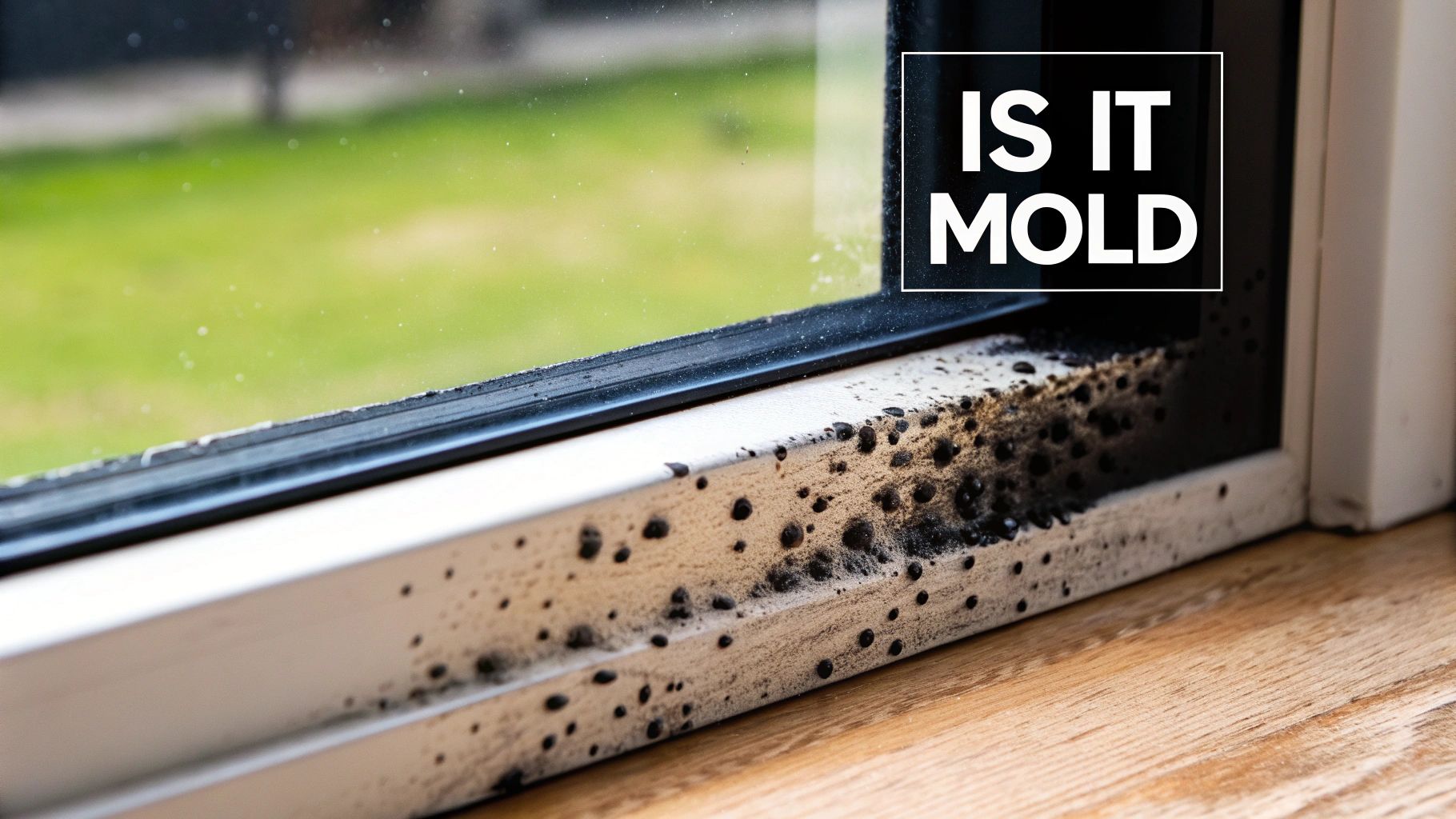
Before you jump to conclusions, remember that not every dark-colored mold is the toxic kind you hear about, Stachybotrys chartarum. Plenty of common household molds are black but aren't nearly as concerning. The real challenge is telling the difference between everyday mildew and a more serious mold problem. This is especially true in climates like ours in Phoenix, where the constant battle between a cold A/C indoors and the blistering desert heat outside creates the perfect recipe for window condensation.
Condensation on your window panes and sills is the number one cause. It happens when cool, air-conditioned air hits a window that's being baked by the Arizona sun, causing moisture to form. If that moisture sits for too long, it turns your window sills into a five-star resort for mold spores that are already floating around in the air.
Key Signs to Look For
You can get a pretty good idea of what's growing on your window sill with a quick visual and sensory check. Just paying attention to a few specific details will give you some valuable clues.
- Appearance: Mildew usually looks powdery or downy and starts out white or gray, though it can get darker over time. Black mold, on the other hand, often looks slimy or even a bit fuzzy. It tends to show up in distinct patches or spots that are dark green or black.
- Smell: If you notice a faint, musty smell, you're probably dealing with mildew. But if the odor is stronger and more persistent—think damp soil or rotting leaves—that's a classic sign of a more established mold colony.
- Texture: Mildew is a surface-level problem. If you were to wipe it (with gloves on, of course!), it would come right off. Mold is a different story. It often signals a deeper issue because it can grow its roots into porous materials like wood, grout, or the drywall around the window.
Mildew vs Mold A Quick Identification Guide
Knowing the subtle differences is the first step to taking the right action. Use this quick guide to help you figure out if you've got a simple surface problem or something that needs a bit more muscle to handle.
| Characteristic | Mildew | Black Mold |
|---|---|---|
| Appearance | Powdery or downy texture, flat growth | Slimy or fuzzy texture, often in patches |
| Color | Typically gray, white, or light brown | Dark green, dark gray, or deep black |
| Smell | Mild, musty odor | Strong, earthy, or pungent smell |
| Location | Grows on the surface of damp areas | Can penetrate deeper into materials |
Think of this table as your initial field guide. If what you see on your sill lines up more with the "Black Mold" column, it's a good sign that you'll need to be more thorough in your cleanup approach.
The Health Risks Hiding on Your Window Sills
That dark, creeping stain on your window sill? It’s a lot more than just an ugly spot. Think of it as a tiny, unwelcome factory producing indoor air pollution that can quietly affect your family’s well-being. Many people just wipe it away and forget it, but the presence of mold—especially black mold—releases a whole host of allergens and potentially toxic compounds right into your home.
These microscopic spores are incredibly light and become airborne with the slightest disturbance. Once you and your family breathe them in, they can set off a whole range of problems. It often starts with what feels like a simple case of allergies: sneezing, itchy eyes, a runny nose. But for anyone with a sensitivity, the reaction can be far more serious.
From Allergies to Chronic Conditions
If you've noticed your respiratory issues getting worse, mold could be the culprit. It's a major trigger for people with asthma, often leading to more frequent and intense attacks. Even if you've never had breathing problems before, long-term exposure can leave you with a nagging cough, wheezing, or a constant feeling of being short of breath.
What's really concerning, though, is that certain types of mold produce something called mycotoxins. These are nasty little compounds linked to more significant health issues. The effects aren't just confined to your lungs; they can be behind chronic sinus infections, relentless fatigue, and persistent headaches.
It’s a staggering statistic, but a study from the Mayo Clinic found that a whopping 93% of chronic sinus infections were actually caused by mold. This really drives home how a small patch of mold on a window sill can snowball into a long-term health battle.
The Real Impact on Indoor Air Quality
The numbers connecting indoor mold to health problems are pretty alarming and really shouldn't be ignored. According to the World Health Organization, 7 million deaths each year are linked to indoor air pollution, a category where mold is a key player. Digging deeper, about 40% of asthma episodes can be traced back to common household triggers like mold and dust mites.
These aren't just abstract figures, especially for us here in Phoenix, a city known for its high mold sensitization rates. If you want to dive into the data yourself, you can find more in-depth reports on mold statistics that break down how it all works.
This is exactly why dealing with black mold on window sills is less about housekeeping and more about protecting the air you breathe every day. Getting rid of the growth quickly and, more importantly, fixing the moisture problem that caused it is one of the most critical things you can do to keep your home healthy for everyone inside, from Gilbert to Paradise Valley.
Safely Removing Mold from Your Window Sills
If you've spotted a small patch of black mold on window sills, you can often handle it yourself, but you have to do it the right way. Before you touch a single thing, your safety is paramount. Mold spores go airborne the second you disturb them, so proper protection is not optional.
First things first, gear up. Grab a pair of heavy-duty rubber gloves, some safety goggles to protect your eyes, and an N-95 respirator mask. Don't just use a flimsy dust mask; an N-95 is what you need to filter out those microscopic spores. It's also a good idea to get some air moving. Open a window in a different room or turn on an exhaust fan, but try not to blow air directly at the mold—that will just send spores flying.
Getting Your Workspace and Solution Ready
You don’t need to reach for heavy-duty chemicals to kill surface mold. In my experience, one of the most effective and non-toxic solutions is something you probably already have in your kitchen.
Just mix one part white vinegar with one part water in a spray bottle. The acetic acid in vinegar is fantastic at killing off mold and mildew.
Before you start spraying, clear the deck. Take down any curtains or blinds. If they're washable, get them in the laundry. If not, just move them to another room so they don't get contaminated. A little prep work here makes the actual cleaning process much smoother.
A Word of Caution on Bleach: Whatever you do, don't use bleach on porous surfaces like painted wood sills. Bleach only kills the mold on the surface, failing to reach the roots embedded in the material. Worse yet, the water in the bleach can soak into the wood and actually feed the mold that's left behind, creating a bigger problem down the road.
This is why dealing with mold promptly is so important. The health risks are real and can escalate over time, as this chart shows.
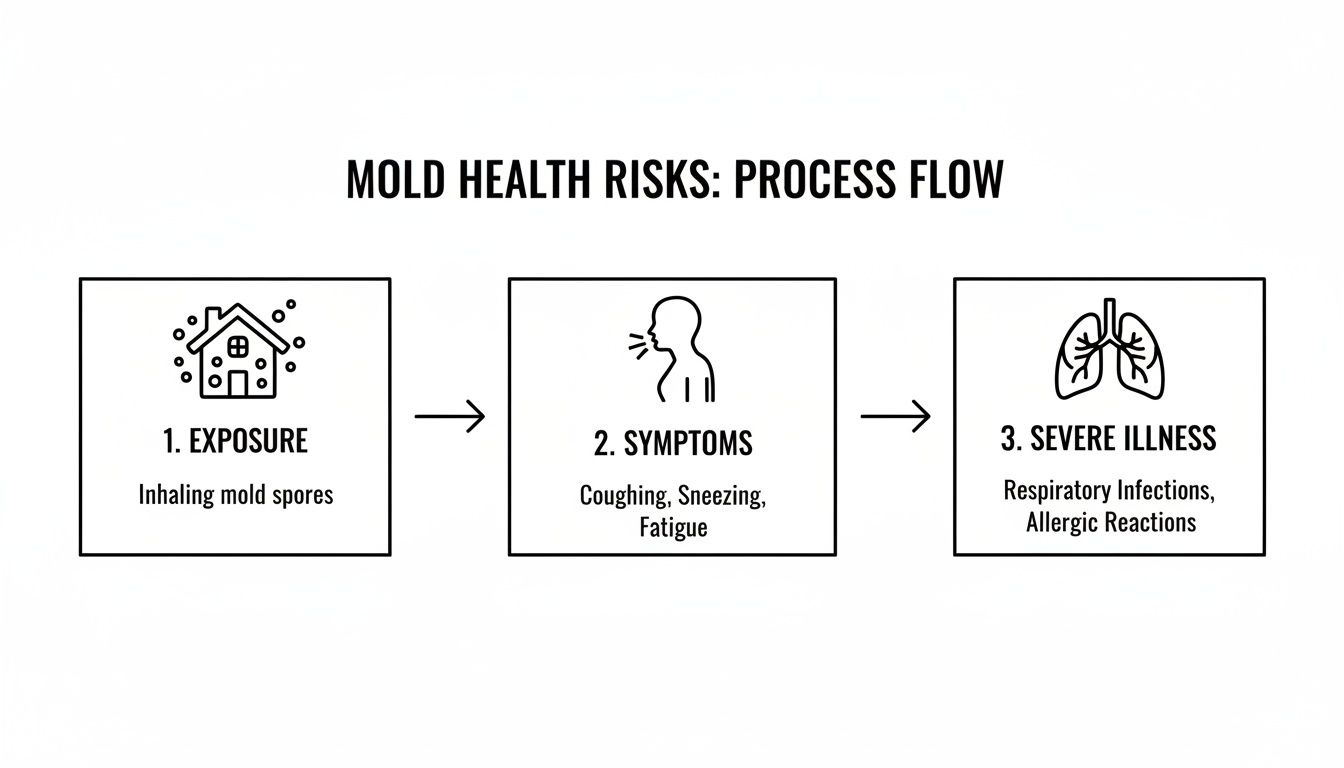
What starts as minor exposure can lead to persistent symptoms and, in some cases, serious respiratory issues if the source isn't eliminated.
The Right Way to Remove the Mold
With your gear on and the area prepped, you're ready to go.
Spray the vinegar solution generously over the entire moldy area. Now, walk away. You need to let it sit for at least an hour—no less. This gives the vinegar enough time to work its way in and kill the mold at its roots.
Once the hour is up, grab a medium-bristle brush or a scrubbing sponge and get to work. After scrubbing, wipe all the gunk away with a damp cloth. If you have some stubborn spots, you may need a second round of spraying and scrubbing. A good rule of thumb is to clean about six inches beyond the visible mold patch to make sure you get any spores that have started to spread.
For other tough cleaning jobs around your windows, our guide on how to remove hard water stains from windows has some great tips that might help.
The final step is arguably the most important: getting the sill bone dry. Any leftover moisture is an open invitation for the mold to come right back. Towel dry it thoroughly, then aim a small fan at the area or use a hairdryer on a low setting to ensure every last bit of moisture is gone.
Knowing your limits is key. This DIY approach works for small, isolated spots of mold. However, it's time to call in the professionals if you see any of these red flags:
- The moldy patch is larger than 10 square feet.
- A musty, damp smell lingers even after you've cleaned.
- The mold grows back quickly after removal.
- The window frame, sill, or the surrounding wall feels soft, is crumbling, or shows signs of water damage.
Your Proactive Plan for Preventing Mold Growth
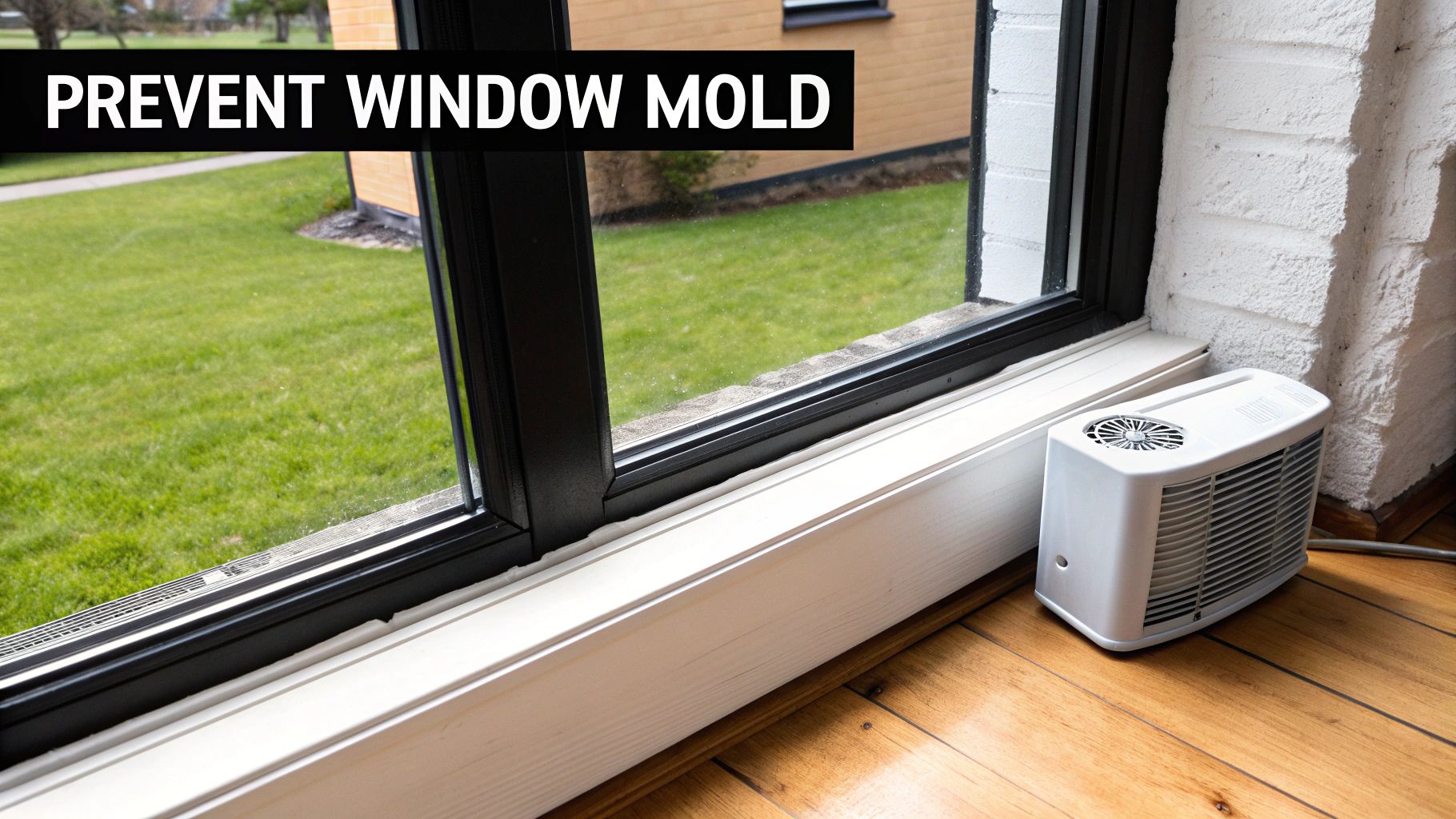
Getting rid of mold is only half the job; making sure it never comes back is the real win. The best way to deal with black mold on window sills is to create an environment where it just can't get a foothold.
Here in the Phoenix area, that almost always means getting control of moisture from condensation. The extreme temperature difference between your cool, air-conditioned interior and the blazing desert heat turns your windows into prime real estate for water droplets. A good prevention plan is all about managing that moisture before it can feed a new mold colony.
Control Your Indoor Climate
Your first and most effective defense is managing the humidity inside your home. Mold absolutely needs water to grow, so if you take that away, you've already won most of the battle.
A dehumidifier is a fantastic investment, especially during our humid monsoon season. The goal is to keep your indoor humidity below 50%. This one simple change makes your home a much less inviting place for mold spores to land and start growing.
You also need good ventilation. Use your kitchen and bathroom exhaust fans religiously—they are designed to pull all that steamy, moisture-heavy air right out of the house. Even just cracking a window open for about 15 minutes a day can dramatically improve air circulation and keep humidity in check.
Maintain Your Windows Diligently
Your windows are the front line in the battle between your indoor climate and the outside world, so their condition is critical. A window that isn't properly sealed is just asking for moisture problems that lead straight to black mold.
Take a few minutes every so often to inspect the seals and caulk around your window frames. If you see any cracks, gaps, or spots where the sealant is peeling away, fix them. Resealing is a cheap and easy DIY project that stops moisture from seeping into the window frame and the wall around it.
One tell-tale sign of a bigger issue is a "foggy" look between the panes of a double-pane window that you can't wipe away. This means the seal has failed, wrecking the window's insulating ability and leading to way more condensation.
Adopt Routine Cleaning Habits
Finally, a consistent cleaning routine can stop mold in its tracks before you can even see it. Mold spores love to feed on the dust, dirt, and organic grime that builds up on window sills and in the tracks. By regularly removing their food source, you make the area far less hospitable.
- Weekly Wipe-Down: Once a week, grab a dry microfiber cloth and give your window sills and tracks a quick wipe. This gets rid of fresh dust and debris.
- Monthly Deep Clean: At least once a month, do a more thorough cleaning with a mild detergent or your vinegar solution to tackle any stubborn grime and kill lingering spores.
- Immediate Action: The moment you see condensation, wipe it up. Don't let it sit. Mold only needs 24-48 hours of moisture to start growing.
Staying on top of this is key. To get a better idea of how often you should be cleaning your windows in our unique climate, take a look at our guide on professional window cleaning schedules in Scottsdale, AZ. By making these small habits part of your routine, you move from reacting to mold problems to actively preventing them, keeping your home healthy and your windows clear.
When to Call in the Pros for Mold Removal
Tackling a small spot of mold on a window sill is one thing, but it's critical to know when you're out of your depth. Some mold situations are simply too risky or complex for a DIY fix, and that's when you need to bring in a professional mold remediation service. Recognizing the signs early can protect your health and save you a ton of money on repairs later on.
The first and most obvious red flag is the size of the mold patch. If you're looking at an area larger than 10 square feet (think a 3-foot by 3-foot section), it’s time to put down the spray bottle and pick up the phone. A large-scale infestation like that almost always points to a bigger, hidden moisture problem that only a pro can properly diagnose.
Another clear sign is that stubborn, musty odor that hangs in the air even after you’ve cleaned away the visible mold. That smell is a dead giveaway that mold is thriving somewhere out of sight—perhaps inside the wall, under the flooring, or deep within the window assembly itself.
Deeper Signs of Trouble
Sometimes, the real story isn't the mold you see, but the damage it's causing. Gently press on the drywall and wood around the window sill. Does it feel soft, spongy, or even crumble a bit? That’s a tell-tale sign of water damage and potential wood rot, which is a structural issue, not just a cleaning one.
It’s also a bad sign if you clean the mold and it comes roaring back in a few weeks. This means the underlying moisture source was never fixed. Professionals use tools like moisture meters and thermal imaging to find exactly where that water is coming from, ensuring the problem is solved for good.
A professional visual mold inspection can identify about 80% of problem areas, but it's the hidden 20%—lurking behind walls or inside window frames—that often causes the most damage. This is where expert diagnostics become invaluable.
I know what you're thinking—professional help costs money. Remediation can run anywhere from $500 to $6,000, and sometimes more for major issues. But think of it as an investment. Paying an expert now is far cheaper than paying for major structural repairs or dealing with chronic health problems down the road. With millions of asthma cases in the U.S. linked to moldy homes, getting it handled correctly is non-negotiable for your family's well-being. You can learn more about the health implications of mold in damp homes from this study.
Calling an expert means they'll use proper containment to stop spores from spreading and have access to professional-grade solutions that get the job done right. For more on the benefits, check out our post on why professional window cleaning in Scottsdale makes all the difference.
Still Have Questions About Mold on Your Window Sills?
It's completely normal to have a few more questions, even after you've tackled a mold problem. Getting a handle on the specifics of black mold on window sills is the best way to prevent a repeat performance and keep your home healthy. Let's dig into some of the most common things people ask after they’ve finished a cleanup.
"Can I Just Paint Over a Small Mold Stain?"
I hear this one all the time, and the answer is always a firm "no." Trying to paint over mold is just a temporary, cosmetic fix that hides a much bigger issue. Think of it this way: the mold is still living and growing under that fresh coat of paint.
Worse yet, the paint can actually trap moisture against the window sill, creating an even better environment for the mold to thrive. You're essentially feeding the problem. The only real solution is to kill and remove every last trace of the mold first. Once the area is completely dry, then you can think about painting.
"I Have Metal Window Frames. Can They Still Get Moldy?"
This is a great question, and it's a common myth that mold can't grow on metal. While mold doesn't eat the aluminum or steel itself, it absolutely thrives on the thin layer of dust, skin cells, and organic grime that settles on the frame's surface.
Metal frames are also notorious for "sweating." Because metal is a poor insulator, it gets cold easily, and warm, moist indoor air condenses on it—especially here in Phoenix when the A/C is blasting. That moisture plus the built-up gunk creates a perfect breeding ground. So yes, that black stuff on your metal frames is almost certainly mold.
"How Often Should I Be Checking My Windows for Mold?"
Getting into a regular inspection habit is your best defense. For most homes in the Valley, a quick look at your window sills once a month is a smart move, particularly given our monsoon season humidity and heavy air conditioner use.
You’ll want to be extra vigilant with windows in bathrooms, kitchens, and laundry rooms. If you have older windows that you know are prone to condensation, it's a good idea to check them every couple of weeks during the summer months.
A professional window cleaning is more than just about getting a good view; it's a great biannual health check for your windows. A trained pro often spots the subtle, early signs of a moisture problem—like a failing seal or a bit of mold in a hard-to-see corner—that homeowners might miss.
Here’s a simple schedule to keep you on track.
| Frequency | Task | Key Focus Areas |
|---|---|---|
| Weekly | Quick Wipe-Down | Get rid of any dust and visible condensation. |
| Monthly | Visual Inspection | Look for any new dark spots or musty smells. |
| Seasonally | Deeper Check | Examine the caulking and seals for any cracks or gaps. |
Staying on top of it like this means you'll catch small issues before they blow up into major headaches. A few minutes of prevention really does save you from hours of cleanup later.
Sometimes, you just need a professional eye to spot trouble before it starts. At Sparkle Tech Window Washing LLC, our experienced team does more than just leave a streak-free shine; we help you monitor the health of your windows. Schedule your service today and get peace of mind.