


For Phoenix homeowners, let's cut to the chase: the best screen for your porch is almost always a high-performance solar screen with an 80% to 90% blockage rating. This isn't just a screen; it's a shield designed to block our intense UV rays, cut down on heat, and survive the desert climate in a way standard screens simply can't.
Choosing Your Ideal Porch Screen in the Arizona Sun
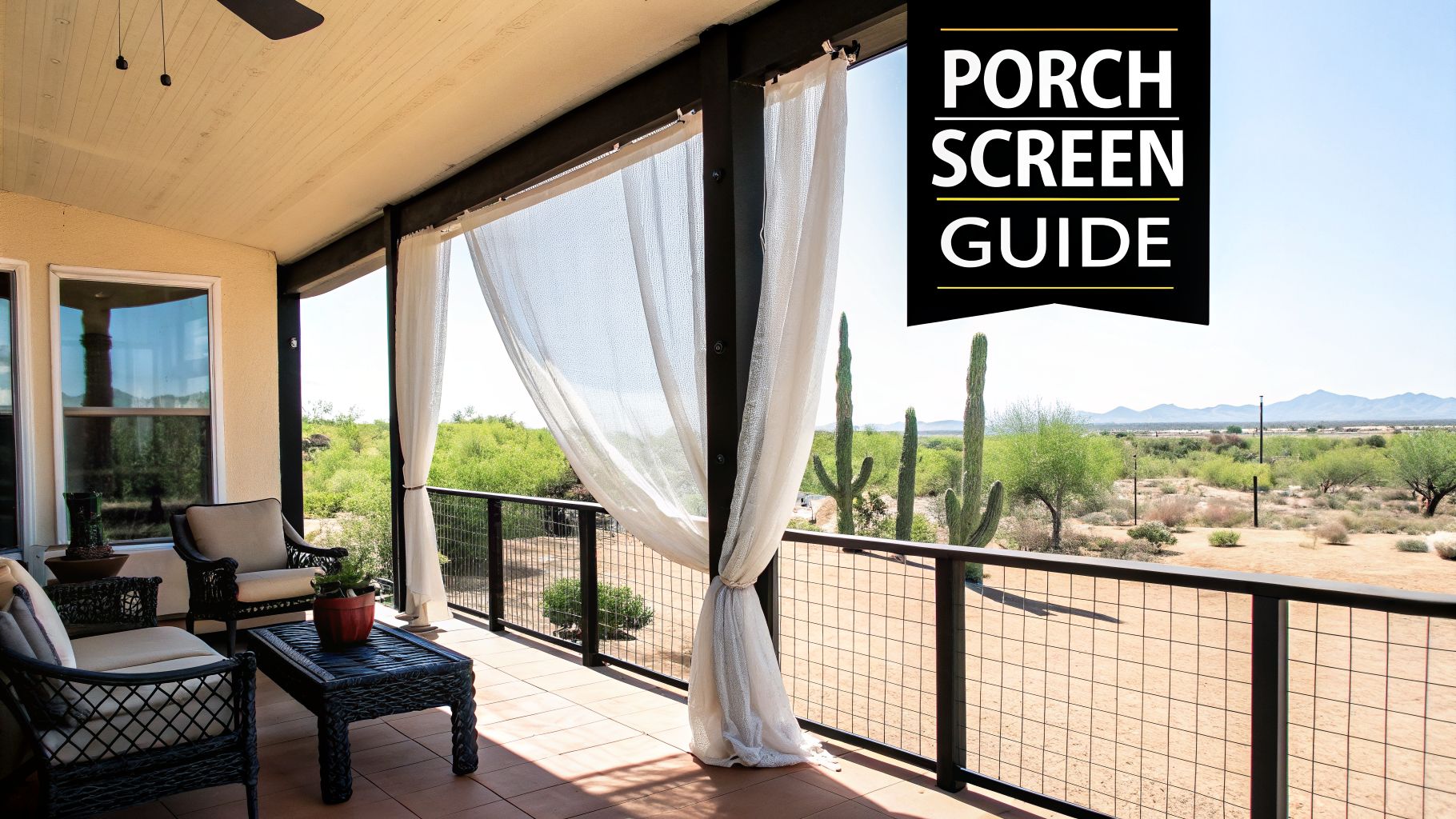
Screening a porch here in the Valley of the Sun isn't just about keeping the mosquitos out. It’s about making your outdoor space livable. You're fighting back against relentless sun, a constant layer of fine dust, and heat that can feel suffocating. This guide will help you navigate the trade-offs to find the right material for your home.
Getting this choice right means the difference between a porch you actually use and one you avoid all summer. We’ll break down the main contenders, focusing on what truly matters for any Arizona homeowner—from sun protection and airflow to durability and how much you can actually see through it.
Key Factors for Arizona Porches
When you're picking out a screen, our climate forces you to prioritize. What works in a milder, shadier part of the country will quickly become brittle and fail here. The wrong screen isn't just a waste of money; it ruins the comfort you were trying to create.
Before you buy, think about these critical factors:
- UV Protection: How much will this screen protect your skin and stop your patio furniture from fading into oblivion?
- Durability: Can it handle years of direct sun without cracking? Will it hold up when a haboob rolls through?
- Airflow and Visibility: It's a balance. You need to block the sun, but you also want to feel the breeze and see your beautiful backyard.
- Maintenance: Every screen out here gets dusty. The real question is, how much of a headache is it to clean?
Porch Screen Material Options
Every screen material offers a different set of compromises. Your perfect match depends entirely on your home's specific needs, your budget, and which direction your porch faces.
| Material | Best For | UV Protection | Durability |
|---|---|---|---|
| Fiberglass | Basic bug screening on a tight budget. | Low | Moderate |
| Aluminum | Crisp views and long-term strength. | Low | High |
| Solar Screen | Maximum heat and sun blockage. | Very High | Very High |
| Pet-Resistant | Homes with dogs or cats that claw. | Moderate | Excellent |
Ultimately, the best screen is the one that solves your biggest problem. For a blistering, west-facing patio, that's a solar screen. For a family with an energetic dog, it's pet-resistant mesh. Choose the material that fits how you live.
Comparing Porch Screen Materials for the Phoenix Climate
Choosing the right screen for a porch in the Phoenix area is a completely different ballgame. Around here, your screen isn't just for keeping bugs out. It's a critical line of defense against intense UV radiation, constant dust, and oppressive heat, all while you're trying to keep a decent view and maybe catch a breeze.
To pick the right one, you have to understand the real-world trade-offs. We’re going to look at each option based on how it actually holds up under the brutal conditions of the Arizona desert.
Standard Fiberglass Screen
Fiberglass is what you’ll find on most homes. It's the standard, budget-friendly option, and for good reason—it’s affordable, flexible, and does a great job of basic insect protection.
The problem is, its limits show up fast under the relentless Phoenix sun. That vinyl coating on the fiberglass threads gets cooked year after year, eventually becoming brittle. This makes the screen way more likely to tear or get punctured, especially when the monsoon winds kick up. While the visibility and airflow are good at first, its weak spot is durability in our climate. You'll likely be replacing it every 5-8 years.
For a shaded, low-traffic porch where budget is the top priority, standard fiberglass gets the job done. Just know that it offers almost no UV protection and won't last long in direct Arizona sun.
Aluminum Screen
If you're more concerned with a crisp, clear view and don't want to deal with sagging screens, aluminum screen is a fantastic choice. It's made from thin aluminum wire that’s coated to prevent corrosion. The result is a much more rigid and durable screen that stays taut and clean-looking for years.
Honestly, the visibility through aluminum is outstanding—often much clearer than fiberglass because the thin metal wires seem to disappear. This makes it perfect for a porch that overlooks a pool or a nice backyard landscape. Because it's metal, it stands up to sun damage far better than fiberglass, easily lasting 10 years or more. The main drawback? It can get dented from an impact, and if you’re not careful during installation, it can crease permanently.
Advanced Solar Screen
Now we’re talking. Solar screens are the true workhorses for Arizona porches and are often the single best upgrade for any patio that gets blasted with sun. They are specifically engineered for climates like ours, made from a dense weave of PVC-coated polyester built to block heat and UV rays before they ever hit your porch.
Solar screens are rated by how much sun they block, usually from 80% to 90%.
- 80% Blockage: This is the sweet spot for most people. It provides a huge reduction in heat and glare while still allowing for good airflow and visibility. It’s basically like putting a high-quality pair of sunglasses on your porch.
- 90% Blockage: For those west-facing or south-facing porches with zero shade, this is your answer. It offers maximum sun protection, which can dramatically lower the temperature and protect your patio furniture from fading. The trade-off for this extra protection is slightly less airflow and a darker view out.
Yes, the initial cost is higher, but the payoff is real. A good solar screen can make your porch feel up to 15 degrees cooler and even help lower your home's cooling bills by shading windows and glass doors. Plus, their heavy-duty construction makes them incredibly durable.
Heavy-Duty Pet-Resistant Screen
For anyone with dogs, cats, or even small kids who like to push on things, pet-resistant screen is an absolute lifesaver. This stuff is made from an incredibly tough vinyl-coated polyester that is about seven times stronger than standard fiberglass. It’s specifically designed to resist scratching, clawing, and tearing.
This durability saves you so much frustration and the money you’d spend on constant screen repairs. While pet screen is noticeably thicker and the weave is more visible, it still provides decent airflow. The main sacrifice is outward visibility, which isn't as clear as aluminum or fiberglass. Think of it as an investment in peace of mind—your screen enclosure will finally stay intact, no matter what your furry friends throw at it.
Porch Screen Material Comparison for Arizona Homes
Making the right call means weighing your personal priorities. A Scottsdale home with a west-facing porch that gets hammered by the sun has totally different needs than a Peoria home with a shaded patio and two big dogs. This table breaks down what really matters.
| Screen Material | Best For | UV Protection | Airflow | Visibility | Durability | Phoenix-Specific Notes |
|---|---|---|---|---|---|---|
| Fiberglass | Budget-conscious projects and shaded areas. | Low | Excellent | Good | Moderate | Becomes brittle and needs replacing sooner in direct sun. |
| Aluminum | Crisp, clear views and long-term strength. | Low | Excellent | Excellent | High | Resists sun damage but can dent from impacts. |
| Solar Screen | Maximum heat reduction and sun protection. | Very High | Good | Moderate | Very High | An energy-saving upgrade; ideal for south/west-facing porches. |
| Pet Screen | Homes with pets or high-traffic areas. | Moderate | Good | Fair | Excellent | Resists claws and tears, saving on costly repairs. |
At the end of the day, the best screen is the one that solves your biggest problem. If your porch is basically unusable in the afternoon heat, a solar screen is a no-brainer. If you're sick of patching holes from your dog, investing in pet screen will bring immediate relief. By matching the material's strengths to what your home actually needs, you can ensure your screened-in porch becomes a comfortable, usable space for years to come.
How Solar Screens Provide Ultimate Sun Control
If you live in a place like Phoenix or Goodyear, you know that standard porch screens barely make a dent in the summer sun. They’re fine for keeping bugs out, but they do next to nothing for the blistering heat. Solar screens are a different beast entirely—they’re specifically designed to tackle intense sunlight, turning a scorching patio into a space you can actually enjoy.
Unlike the basic fiberglass or aluminum mesh focused on bugs and airflow, solar screens are all about thermal performance. They're made from a very dense weave of PVC-coated polyester or fiberglass. This tough material is fantastic at absorbing and deflecting solar heat before it ever gets a chance to bake your porch or radiate through your windows.
Understanding Weave Density and Blockage
The secret to a solar screen's power is its weave density. This determines the "blockage percentage," which tells you exactly how much of the sun's energy it stops. This number typically falls between 80% and 90%, and picking the right one is key to getting the results you want.
So, which one is right for your porch?
For most homes in the Phoenix area, an 80% solar screen hits the sweet spot. It dramatically cuts heat and glare, making your porch feel much cooler, but it doesn't sacrifice too much visibility or airflow. It's like putting a good pair of sunglasses on your house—it takes the edge off the harsh light without making you feel like you're in a cave.
A 90% solar screen is for maximum, no-compromises sun protection. If your porch gets hammered by direct sun, especially a west or south-facing wall with no shade, this is your best bet. It offers the most powerful heat and UV reduction, but you'll notice a bigger trade-off in visibility and airflow.
The real-world impact is significant. A quality solar screen can lower the ambient temperature on your porch by up to 15 degrees, making it a viable relaxation spot even during the peak heat of an Arizona summer.
This flowchart can help you visualize that first big decision: are you fighting the sun or something else?
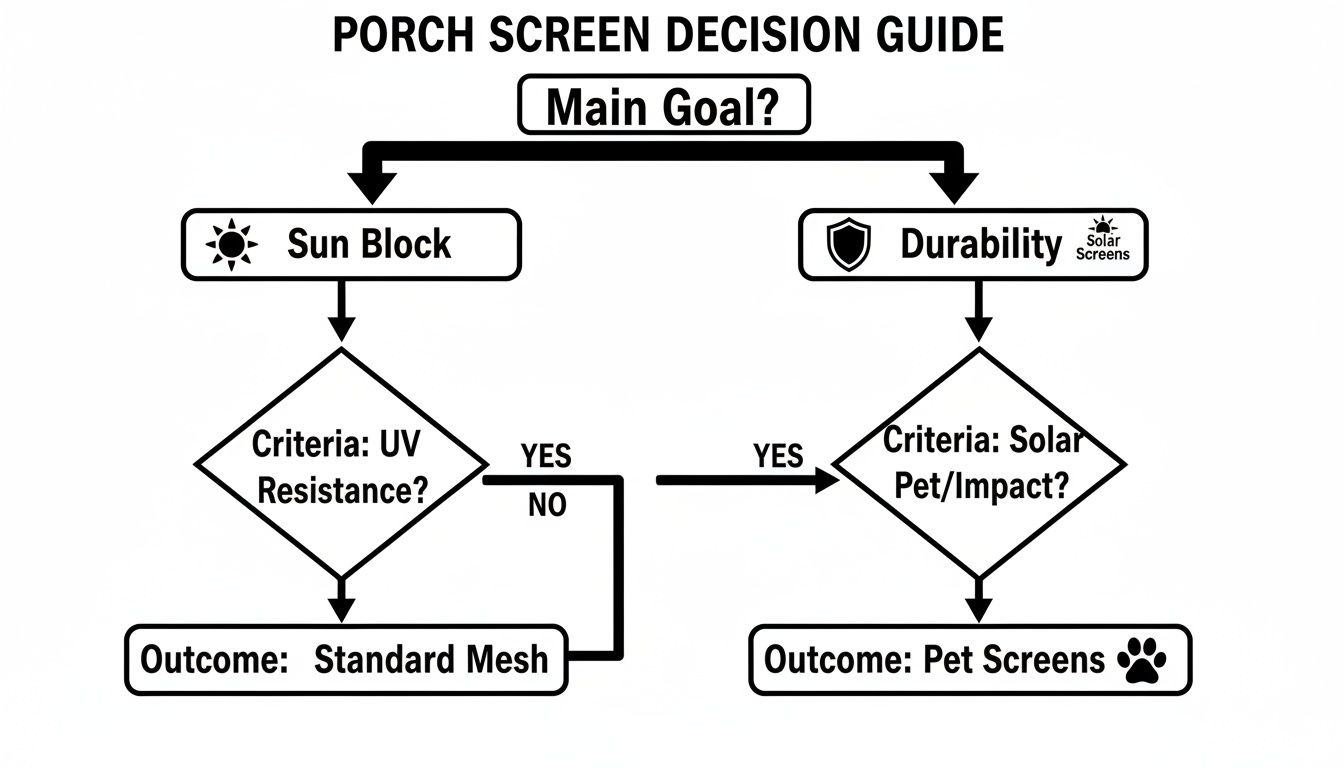
As you can see, if the sun is your main enemy, solar screens are the obvious starting point.
Beyond the Technical Specs
The benefits go far beyond just feeling a little cooler. Solar screens are a smart investment for any desert homeowner, and the advantages show up in some very tangible ways.
- Lower Energy Bills: By stopping heat before it hits the glass on your windows and sliding doors, these screens ease the strain on your air conditioner. That means real, measurable savings on your monthly power bill.
- Reduced Glare: You know that blinding glare that makes it impossible to read, work on a laptop, or even just sit without squinting? Solar screens get rid of it, creating a soft, easy-on-the-eyes light.
- Protection for Furnishings: The same UV rays that burn your skin will fade and destroy your outdoor furniture, rugs, and pillows. Solar screens act as a powerful shield, protecting your patio investments and keeping them looking new for much longer.
A common worry I hear from homeowners is that solar screens will make their house feel dark and gloomy. In reality, they mostly just cut the harsh glare, not the pleasant natural light. Most people find the softly filtered light is a welcome change, creating a much more comfortable feel inside the rooms adjacent to the porch. It's a tiny trade-off for a huge gain in comfort and usability.
Solving Specific Problems with Specialty Screens
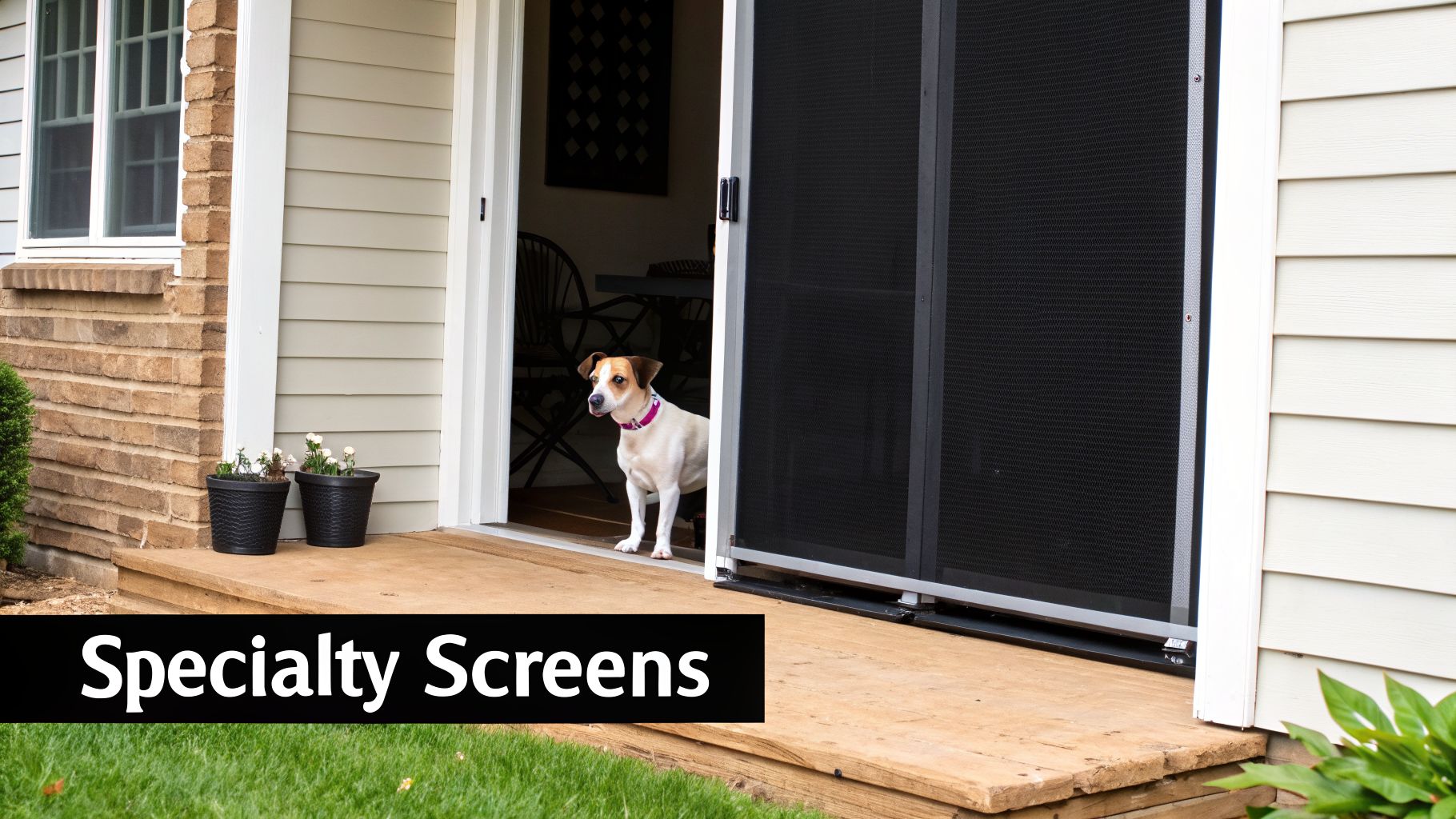
While fiberglass and solar screens handle the big stuff like bugs and heat, they don't solve every problem. Sometimes, the biggest frustration isn't the sun or mosquitos—it's something much closer to home.
That’s where specialty screens come in. Think of them less as general-purpose barriers and more as targeted solutions for specific annoyances. Two of the most common lifesavers are pet-resistant screens and privacy screens, each designed to tackle a unique challenge that can completely change how you enjoy your porch.
Pet-Resistant Screens for Peace of Mind
If you have dogs or cats, you already know the struggle. A standard fiberglass screen just doesn't stand a chance against an excited pet. One playful scratch or a determined push, and you’re left with a tear that lets in every bug you were trying to keep out. It's a cycle of constant, frustrating repairs.
This is exactly why pet-resistant screen was invented. It's not a luxury; for pet owners, it's often a necessity.
Made from a vinyl-coated polyester, this incredibly durable material is about seven times stronger than the fiberglass mesh found on most porches. It’s built to take a beating from claws and paws without ripping, shredding, or fraying.
You can think of a pet-resistant screen as a one-and-done upgrade. Instead of patching tears every few months, you install a screen that’s built for real life with pets. It gives you the peace of mind that your enclosure is secure, saving you a lot of time and money down the road.
The tradeoff is a slightly thicker mesh, which means the view looking out isn't quite as sharp as with standard aluminum. However, you still get great airflow and bug protection, and the durability is more than worth it. For tears or damage beyond a simple patch job, this guide on how to replace window screen mesh offers a deeper look at the replacement process.
Privacy Screens for a Secluded Oasis
In many Phoenix neighborhoods, houses are built close together, and a porch can feel less like a private retreat and more like you're on display. If you've ever felt like your neighbors have a front-row seat to your morning coffee, a privacy screen is the answer.
These screens are cleverly designed to block the view from the outside while still letting you see out. The darker, specially angled weave makes it tough for prying eyes to see in, especially during the day when the light difference is greatest. It instantly transforms your porch into a true outdoor room where you can relax without feeling exposed. They're an ideal fit for homes facing a busy sidewalk or another house.
Homeowners are increasingly focused on creating these kinds of comfortable, private outdoor spaces. It’s a huge market—spending on outdoor privacy screens hit $3.46 billion in 2024, and the market for retractable screen doors added another $2.14 billion. That level of investment makes it clear how much we value having a secluded spot to unwind. For the best of both worlds, many people choose retractable or roll-up privacy screens, which you can pull down when you want seclusion and roll up when you want an unobstructed view.
Budgeting for Your Porch Screen Installation and Maintenance
Let's talk numbers. Creating that perfect screened-in oasis involves more than just picking the right material—you need a solid budget that covers both the upfront installation and the long-term care. Thinking through the full cost from day one ensures your porch remains a beautiful, functional part of your home for years, not just a short-term fix.
The initial price really comes down to two things: the type of screen you select and the size of your porch. Each material has its own price point, which reflects how well it stands up to the intense Arizona sun and how long you can expect it to last.
Typical Cost Ranges for Porch Screens
So, what should you expect to spend? Here’s a realistic look at professionally installed screen costs, which typically include both the materials and the labor needed for a perfect, tight fit.
- Fiberglass Screen: Plan on $4 to $6 per square foot. This is your go-to budget-friendly choice, perfect for porches that are already well-shaded and just need basic bug protection.
- Aluminum Screen: This usually runs between $5 to $7 per square foot. For that small bump in price, you get much clearer views and better resistance to sun damage.
- Pet-Resistant Screen: At $7 to $9 per square foot, this heavy-duty screen is an investment. But for anyone with dogs or cats, that upfront cost is easily worth it when you don't have to pay for constant repairs.
- Solar Screen: As the top-tier option for our climate, solar screens cost anywhere from $8 to $12 per square foot. It's the highest initial price, but it pays you back with real energy savings and a noticeably cooler porch.
To put that in perspective, screening an average 200-square-foot patio might cost around $1,000 with basic fiberglass, while the same project using high-performance solar screens could land closer to $2,000 or more.
DIY vs. Professional Installation
It's always tempting to save a few bucks and try a DIY installation, but this is one area where you need to be honest about your skills and tools. While patching a tiny hole is one thing, properly installing large screen panels is a whole different ballgame.
The secret to a long-lasting screen is tension. A professional will pull the screen drum-tight, which keeps it from sagging and gives it the strength to handle a monsoon wind gust. An improperly tensioned screen looks sloppy and is far more likely to get damaged or pull out of the frame. Especially with premium materials like solar screens, going with a pro is the only way to protect your investment.
Choosing professional installation ensures your porch screen is perfectly tensioned and sealed. This not only maximizes its lifespan and durability against desert weather but also enhances its appearance, providing a clean, wrinkle-free look that DIY projects often struggle to achieve.
Protecting Your Investment with Proper Maintenance
Once your beautiful new screens are up, the game shifts to protecting them from the realities of living in the Phoenix area. That fine, abrasive desert dust and the relentless UV rays are constantly working against you, but a simple cleaning routine makes a world of difference. Regularly washing your screens prevents that grime from embedding itself in the mesh and breaking down the material over time.
It’s no surprise that homeowners are investing more in these spaces; the global screen enclosure market hit $2.5 billion in 2023. This growth shows that people see screens as a valuable asset, not a temporary fix. Here in Phoenix, where the sun is just as big a threat as pests are elsewhere, this means professional care from services like Sparkle Tech Window Washing is a smart move to protect that asset.
Even with your best efforts, sometimes you need a deeper clean or a small repair. Calling in a professional can be the most cost-effective choice. They have the right tools to safely remove stubborn dirt without harming the fabric and can patch small tears before they turn into major headaches. A little professional upkeep now can save you from a full replacement down the road. You can learn the best way to keep them looking great with our guide on how to clean window screens.
Frequently Asked Questions About Porch Screens
Choosing the right porch screen can feel overwhelming, especially here in the Valley where the sun and dust are relentless. As experts who've seen it all, we've put together answers to the questions we hear most often from Phoenix homeowners. Our goal is to give you the practical, straightforward advice you need to make a great decision.
How Long Do Porch Screens Last in the Phoenix Sun?
This is a big one, and the answer really comes down to the material you choose and how much direct sun it faces every day. The lifespan can vary dramatically.
- Standard Fiberglass: This is your baseline, but it's the most vulnerable to our intense UV rays. On a sun-drenched, west-facing patio, you might only get 5-8 years before it becomes brittle and starts to tear easily. If it's in a more shaded spot, you could stretch that a bit longer.
- Aluminum: As a metal, aluminum laughs at UV rays. It won't get brittle like fiberglass and can easily last 10-15 years. Its weakness? Dents and dings from impacts.
- Solar & Pet-Resistant Screens: These are the heavyweights. Engineered from tough, coated polyester, they’re built specifically for harsh climates. It’s not uncommon for them to last well over a decade, even with constant sun exposure, making them a fantastic long-term investment.
Don't underestimate the power of proper maintenance. Regular, professional cleaning that removes that fine, gritty dust is crucial—it acts like sandpaper, slowly breaking down the screen material and shortening its life.
Will Solar Screens Make My House Too Dark?
This is probably the biggest myth we have to bust. The short answer is no. While a screen designed to block up to 90% of the sun's heat will naturally reduce some light, it's not about making your home dark. It's about cutting the harsh, blinding glare.
The effect isn't darkness; it's a soft, comfortable, filtered light. Think of it like putting on a high-quality pair of sunglasses. Suddenly, the view is clearer, the glare is gone, and the space feels instantly more usable. Most people are amazed by how much more pleasant it makes the rooms right inside the house, too.
An 80% screen, for instance, hits a sweet spot for most homes, blocking the worst of the heat while keeping everything bright and the views crisp.
Should I Repair or Replace My Damaged Porch Screen?
Knowing when to patch a hole versus replacing a whole panel can save you a lot of headaches down the road. It really depends on the screen's overall condition.
A simple repair is the right move for:
- A single small tear or puncture.
- A section where the screen has just popped out of its track (the spline).
- Minor damage on an otherwise healthy and flexible screen.
It’s time for a full replacement when:
- The material feels stiff and brittle, or crumbles when you touch it. This means the UV damage is done.
- You're looking at multiple large rips or widespread tearing.
- The screen is badly faded, discolored, or sagging across the panel.
- The damage covers more than 30% of the screen panel.
If you're dealing with widespread damage or aren't sure which way to go, professional screen enclosure repair services are usually the most reliable and cost-effective choice in the long run.
Is DIY Porch Screen Installation a Good Idea?
Fixing a small screen on a window frame is one thing. But installing a large porch screen panel is a whole different ball game. While it’s tempting to save a few bucks, it’s a project that can go wrong in a hurry.
The single most important factor is tension. It's what gives a screen that clean, drum-tight, professional look. We use specialized tools to stretch the screen perfectly evenly, ensuring a wrinkle-free finish that won’t flap or pull out in a monsoon wind. Without that proper tension, screens sag, look sloppy, and are much more likely to fail.
For big panels and especially for premium materials like solar screens, we strongly recommend a professional installation. It protects your investment and guarantees the screen looks and performs exactly as it should.
Ready to get your screens looking like new or need an expert eye on a potential repair? The team at Sparkle Tech Window Washing LLC brings over 15 years of experience to homes across the greater Phoenix area with professional screen cleaning and repair. Get a free quote online and see what a difference our expertise can make.