

You wipe a spot on the wall with a damp rag, step back, and somehow the wall looks worse. The mark is still there, the area around it is streaky, and now the paint has that rubbed look that catches the light. In Phoenix and Scottsdale, that happens a lot because wall cleaning advice written for milder climates doesn't account for desert dust, hard water, or the fragile matte paints used in many newer homes.
If you're searching for what to use to wash walls, the right answer depends on two things: your paint finish and your local conditions. A cleaner that works fine in another climate can leave residue in a hard-water home, and too much moisture on flat paint can create damage that costs more to fix than the original stain.
Why Your Walls Get So Dirty in the Desert
You dust a wall in Phoenix on Saturday, wash a few marks, and by midweek it already looks dull again. That usually is not bad technique. It is the combination of fine desert dust, forced-air movement, and hard water drying on the surface.
Arizona walls pick up a different kind of soil than walls in humid climates. Fingerprints and scuffs still matter, but the constant layer is airborne dust that slips in through doors, windows, screens, and HVAC cycles. The particles are fine enough to settle into the light texture of painted drywall, so a wall can look dingy long before it looks obviously dirty.
That matters because water changes the problem. If loose dust is still sitting on the paint, a sponge or wet cloth turns it into a light mud film that spreads farther than the original dirt. Once the wall dries, the haze shows up as streaking, especially on flat paint and anywhere strong Arizona sun hits at an angle.
Dust is the primary problem to solve first
Before choosing soap, vinegar, or a specialty wall cleaner, remove the loose dust thoroughly. In desert homes, dry soil control does more for the final result than stronger cleaner does.
Practical rule: If your cloth is coming away beige before you've added cleaner, you're still in the dust-removal stage.
Hard water creates the second local problem. In many Phoenix and Scottsdale homes, tap water leaves mineral residue as it dries, which is why generic wall-washing advice often produces a chalky look or faint drip marks. Vinegar can help with minerals on some durable surfaces, but it is not a default wall cleaner. On painted walls, especially matte finishes, it can leave uneven results if you use too much or do not rinse and dry carefully.
The same pattern shows up on glass and trim. These tips on how to keep windows clean longer track closely with what works on nearby painted surfaces too: remove dry dust first, keep moisture controlled, and do not let residue dry in place.
A lot of online advice misses that local combination. It assumes any painted wall can handle a wet sponge and some scrubbing. In desert homes, that is how homeowners burn time and still end up with streaks.
For heavier grime near switches, entry walls, or lower hall traffic areas, a soft tool can help if pressure stays light. I would still avoid aggressive scrubbing on paint, but something like the Ryobi 18v Cordless Vortex Scrubber can be useful on more durable painted surfaces after the dust has been removed.
For Phoenix-area walls, the job goes better when you follow four rules:
- Start dry: Remove loose dust before any liquid touches the paint.
- Keep water light: Flat and matte finishes show damage fast.
- Watch your water: Mineral-heavy rinse water can leave its own marks.
- Match the method to the finish: A durable satin wall can handle more than builder-grade flat paint can.
Your Essential Prep and Tool Checklist
Start in the late morning in a Phoenix house and you can see the problem before you touch a bucket. Fine dust has already settled on the wall again, especially near return vents, baseboards, and hallway corners. If you wash over that dust, you make mud on the paint and drag it across the surface.
What to set up before you clean
Clear the work area first. Pull light furniture away from the wall, lay down drop cloths, and tape them if they shift on tile. In Phoenix-area homes, that matters more than people expect because dry dust travels fast and dirty rinse water can leave mineral marks on nearby baseboards if it splashes and dries.
Do the dry work before any damp cloth comes out. Use a vacuum with a soft brush head or a dry microfiber mop and work from the top down. The Molly Maid wall-cleaning guide recommends removing loose dust before washing so you do not smear surface soil into the paint. That matches field experience. Walls clean faster and streak less when the loose grit is gone first.
Clean results come from dust control, light moisture, and frequent cloth changes.
The basic kit that actually works
Keep the setup simple:
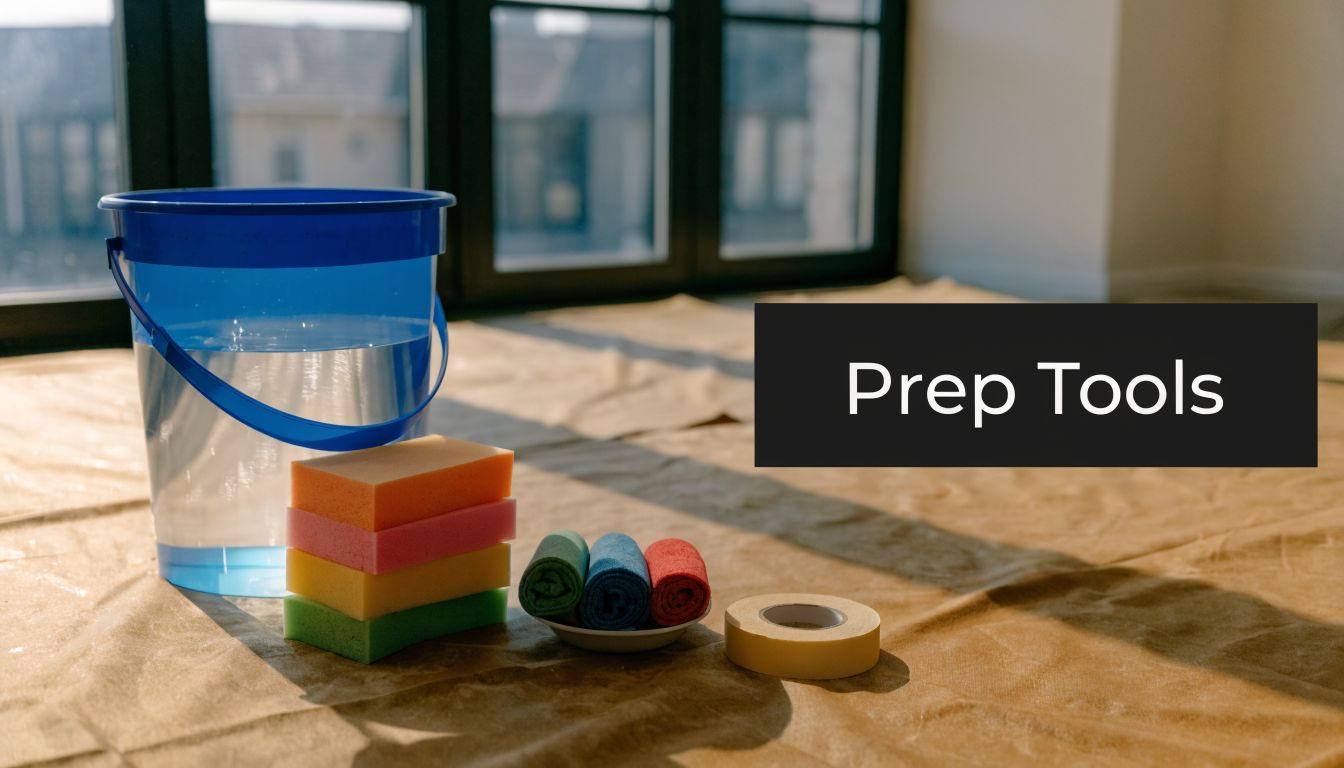
- Two buckets: One for cleaning solution, one for rinse water. Separate water keeps you from putting dirty residue back on the wall.
- Microfiber cloths: Use several. In dusty homes, one cloth loads up fast.
- Non-abrasive sponge: Good for durable satin or semi-gloss paint and isolated scuffs.
- Vacuum with brush attachment or dry microfiber wall mop: Best for high dust, textured walls, and corners.
- Drop cloths and painter's tape: Useful on tile, wood floors, trim, and baseboards.
- Step stool or extension pole: Needed for upper walls, stairwells, and tall entry areas.
Textured walls need extra care. They trap desert dust in the low spots, and if you scrub too hard you can fray the nap of the paint or leave shiny patches on flat finishes. On larger jobs, a powered tool can help if the wall finish is durable and the pad is soft. The Ryobi 18v Cordless Vortex Scrubber can save time on sturdy painted surfaces, but pressure still has to stay light.
What I would not skip
Use more microfiber than you think you need. Cotton rags push dirty water around once they get loaded, while microfiber gives better control and picks up fine dust that is common in desert homes.
Keep extra dry cloths nearby too. In homes with hard water, drying drips quickly matters almost as much as washing carefully.
For high walls, extension tools make the job safer and more consistent. Some of the same gear used for upper interior glass works well here, and these window cleaning tools for high windows are especially useful for reaching stairwells and tall entry walls without overreaching.
Choosing the Right Cleaner for Your Walls
By the time a Phoenix wall looks dirty, it usually has two problems on it, not one. Fine desert dust sits on the surface first. Then cooking residue, fingerprints, or splash marks grab that dust and hold it. The right cleaner has to remove the grime without driving that grit into the paint.
Start with the paint finish. Stain type matters, but finish decides how much moisture and agitation the wall can take. Sherwin-Williams advises the gentlest approach on flat and matte paint because those finishes can burnish or streak if they get too wet or are scrubbed too hard. Their wall-cleaning guidance also recommends spot cleaning carefully instead of soaking the whole wall.
That matches what holds up in desert homes. Flat paint usually gets damaged by water control problems, not by an aggressive chemical. In hot, dry air, the surface can flash dry before you even out the cleaner, especially near sunny windows or west-facing rooms. That is how you end up with rings, drag marks, or dull patches.
For eggshell and satin, a mild soap solution is still the best starting point. Mix a small amount of dish soap into warm water so the solution feels slick, not sudsy. If you can see a lot of bubbles in the bucket, it is stronger than it needs to be. On walls with Scottsdale or Phoenix hard-water conditions, lighter soap mixes leave less residue and are easier to dry cleanly.
Wall Cleaner Compatibility Chart
| Paint Finish | Recommended Cleaner | Pro Tip |
|---|---|---|
| Flat or matte | Dry microfiber first, then a barely damp cloth with mild soap for general soil, or baking soda paste for isolated marks | Keep moisture tight to the spot. Wipe, then dry right away. |
| Eggshell or satin | Mild dish soap solution | Put solution on the cloth, not straight on the wall. |
| Semi-gloss or gloss | Mild soap solution or a diluted vinegar-water mix for mineral film or routine grime | Test first, then rinse and dry before residue sets up. |
| Kitchen grease on durable gloss | Mild soap first, then baking soda paste if needed | Let dwell time do the work. Heavy pressure leaves scuffs. |
Vinegar has a place, but only on the right wall and for the right problem. It can help cut light mineral film or dull residue on more durable finishes. It is less forgiving on delicate paint, and in hard-water homes it still needs a clean rinse and immediate drying or you trade one film for another.
Use baking soda paste sparingly. It helps on isolated scuffs and greasy spots, but it is still mildly abrasive. On flat paint, every extra pass raises the chance of a shiny patch.
On delicate paint, the best cleaner is the weakest one that gets the mark off without changing the finish.
If you want lower-residue options, stick with simple formulas and skip heavy fragrance, oils, and multi-purpose products that leave a soft shine on the wall. A short list of eco-friendly wall-safe cleaning products and ingredients can help you compare gentler choices before you start mixing whatever is under the sink.
Cleaning and disinfecting are separate jobs. If you are deciding between alcohol, peroxide, or other sanitizing products after washing, this guide on choosing disinfectants for household use is a useful companion.
The Professional Technique for Washing Walls
A Phoenix wall can look dry five minutes after you wash it and still dry with streaks. Fine desert dust turns muddy fast, and hard water leaves a film if you let rinse water sit on the paint. Good technique keeps both problems from settling back onto the wall.
How pros move across a wall
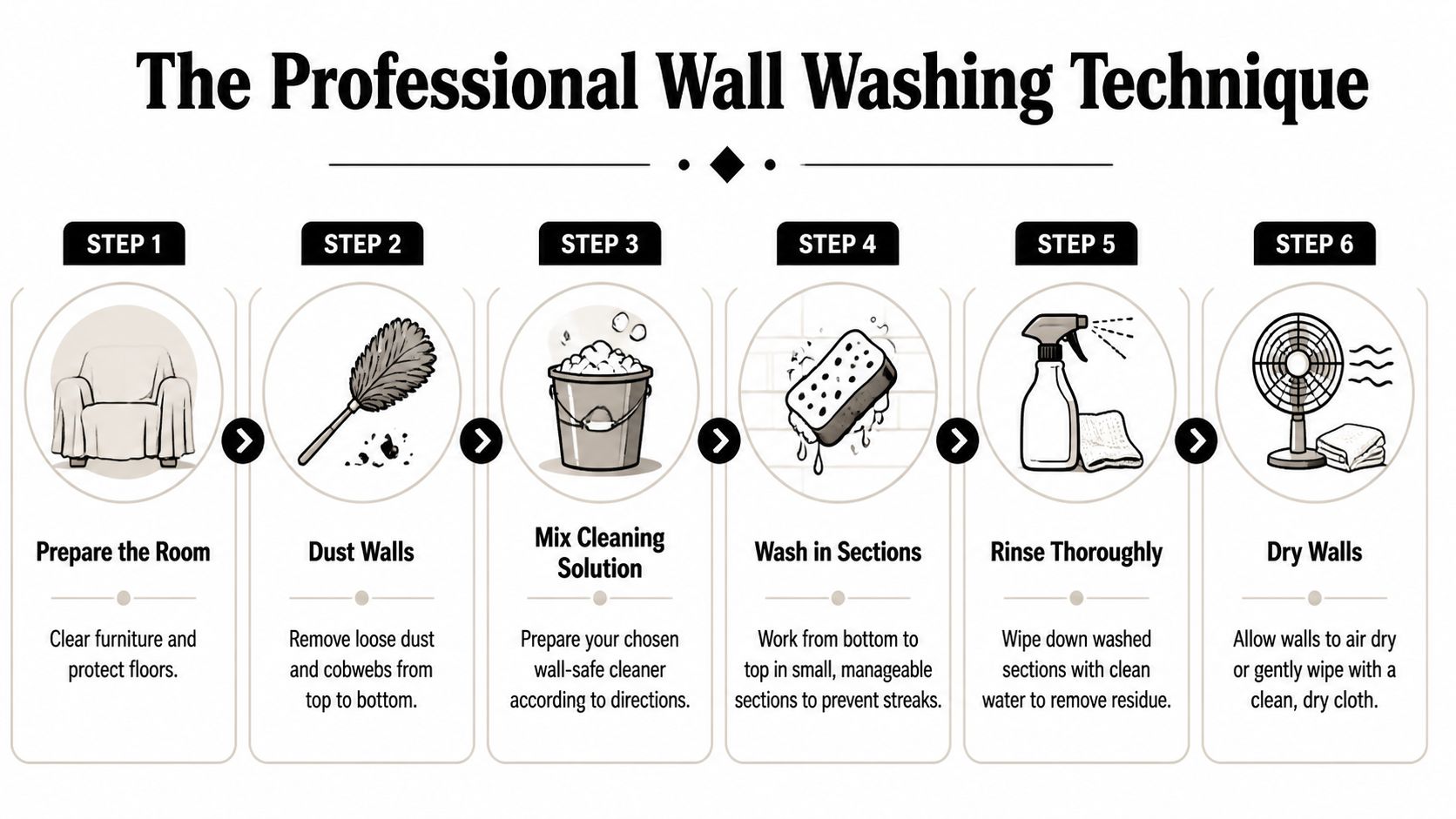
Work in sections you can finish completely before the moisture flashes off. In a hot, dry house, that usually means an area about 3 by 3 feet, sometimes smaller near sunny windows or on walls that already have a dust film.
Use this order:
- Dust first from top to bottom so you are not grinding grit into the paint.
- Wet the cloth and wring it hard until it feels damp, not loaded.
- Wash one small section with light, even passes.
- Rinse with a second clean cloth using clean water.
- Dry the section right away with a dry microfiber towel before minerals can leave marks.
That last step is what many homeowners skip. Air drying is slower than it looks, especially where hard water is involved, and residue has time to show up as streaks or dull patches.
Here's a visual walkthrough of the overall process:
Top down, except on specialty jobs
For regular interior wall washing, start at the top and control drips as you go. It is the safest method for painted walls because you can see runs early and wipe them before they dry.
Some stronger prep products change that rule on durable surfaces. TSP is the usual example, but only on finishes that can handle it and only when label directions support that approach. For standard painted walls in Phoenix homes, top-down cleaning with very controlled moisture is still the safer choice.
If the cloth leaves a run, it is too wet for painted walls.
The two-bucket habit
Professional cleaners separate wash water from rinse water for a reason. One bucket gets cloudy fast in desert homes, especially after monsoon dust or if the wall has that fine tan film you only notice once a damp cloth hits it.
A two-bucket setup does the job better:
- Wash water stays cleaner longer
- Rinse water removes residue instead of spreading it
- Drying goes faster because you are not fighting soap film
This matters even more in bathrooms, where moisture problems can overlap with wall grime. If you are also dealing with spotting, buildup, or mildew around painted surfaces, this guide to bathroom mould removal and prevention covers the moisture-control side of the problem.
How to Remove Common Wall Stains
Desert wall stains rarely come one at a time. In Phoenix kitchens, grease grabs onto that fine tan dust and turns into a sticky film. In bathrooms, hard water and poor airflow can leave marks that look like dirt but do not clean off the same way.
Grease behind the stove
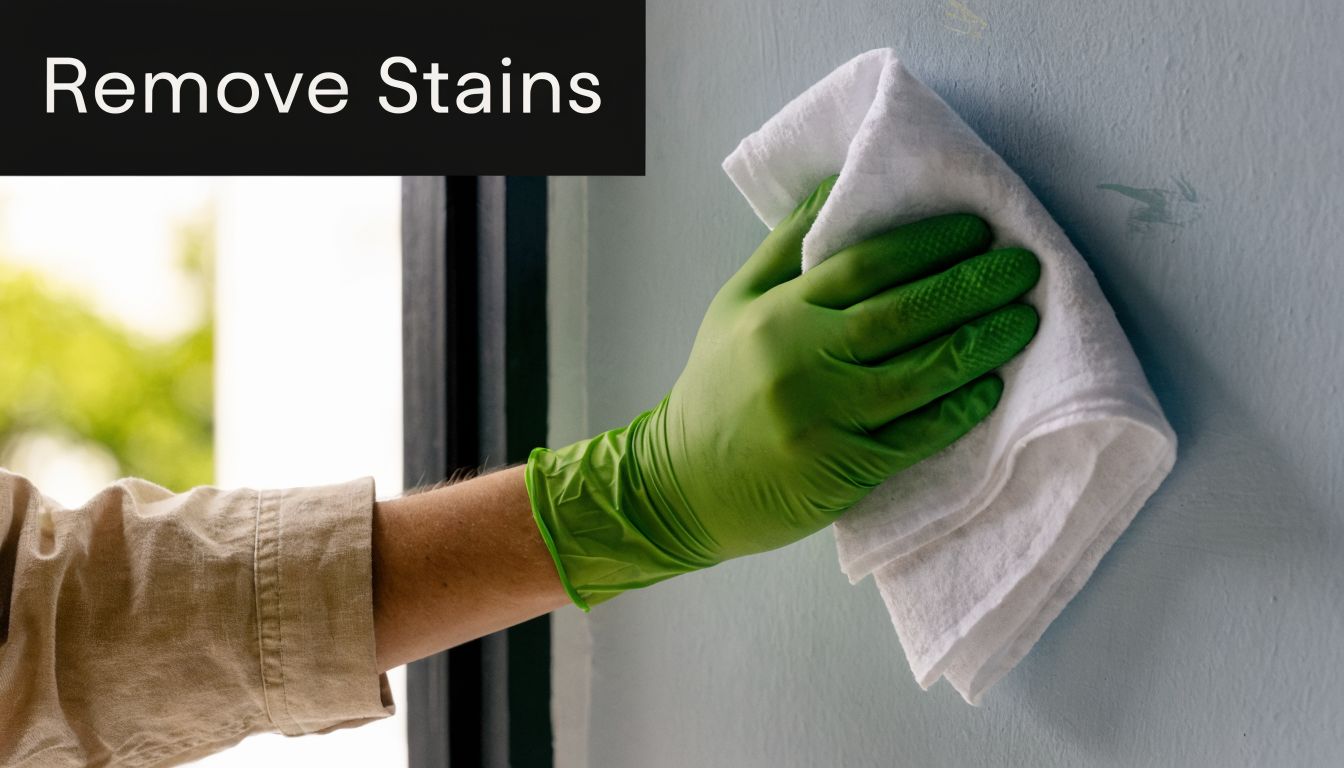
This is one of the few wall stains that usually needs a spot treatment instead of another pass with your regular wash water. On semi-gloss or gloss paint, a simple baking soda paste can help cut greasy buildup. Good Housekeeping recommends a paste of baking soda and water for greasy wall spots, applied gently and wiped away without hard scrubbing.
The trade-off is paint sheen. Baking soda has mild grit. That is useful on durable finishes and a bad idea on flat paint if you bear down. On matte or flat kitchen walls, start with a damp microfiber cloth and a small amount of dish soap. If the stain stays put after a couple of light passes, stop before you burnish the paint.
Scuffs, fingerprints, and mystery marks
These are common around switches, hall corners, and kids' rooms. In dry climates, dust settles into skin oils, so fingerprints often look darker and feel slightly tacky once you start cleaning them.
Use the least aggressive method first:
- Shoe scuffs: Try a barely damp microfiber cloth.
- Fingerprints and hand oils: Use a drop of mild dish soap in warm water, then dry the spot right away.
- Crayon or surface transfer: Test first, especially on darker paint colors.
Magic erasers work, but they remove a tiny bit of the surface along with the mark. I use them sparingly and only on tougher finishes. On flat paint, they can leave a lighter or shinier patch that stands out more than the original stain.
Small mildew spots
Light spotting near a shower or on a cool exterior-facing wall can sometimes be cleaned carefully if the area is small. The bigger issue is repeat growth. In Phoenix-area homes, mildew often shows up where bathroom ventilation is poor, even though the climate is dry overall.
For bathroom-specific prevention habits, this guide on bathroom mould removal and prevention is useful because cleaning the visible patch isn't the same as stopping the cause.
If the same stain comes back in the same spot, the wall usually has a moisture, smoke, or bleed-through problem, not a simple surface-cleaning problem.
Hard water drips and mineral residue
Generic wall-cleaning guides usually miss this one. In Phoenix and Scottsdale, hard water can leave pale drip lines below sinks, around vanities, or on walls near shower splash zones. Soap alone often will not touch it.
Start with a damp cloth to remove loose dust first. Then test a small spot with a mild vinegar-and-water mix only if the paint is washable and in good shape. Wipe it on lightly, wipe it off quickly, and dry the area. If the paint softens, dulls, or changes color, stop. Mineral deposits can come off, but acidic cleaners can also mark sensitive paint.
Smoke, soot, and recurring stains
These stains need more caution than effort. Soot smears fast. Old smoke residue can bleed through fresh cleaning. Brown or yellow marks that keep returning often point to water stains, nicotine, or something under the paint film.
At that point, scrubbing harder usually makes the wall look worse. Surface cleaning may help a little, but a lasting solution may involve stain-blocking primer, odor treatment, or professional restoration.
When to Skip DIY and Call a Professional
Some wall-cleaning jobs are routine maintenance. Some are expensive mistakes waiting to happen. Knowing the difference saves time, protects the paint, and keeps a cosmetic issue from turning into a repair project.
The jobs that deserve professional help
Call a pro if you're dealing with:
- Smoke or soot residue: Dry particles smear fast and can embed deeper when wiped incorrectly.
- Possible lead paint: Older homes need a more cautious approach.
- Large mold areas: That isn't just cleaning. It's a health and moisture issue.
- Very high walls or stairwells: Access risk changes the job.
- Pre-listing cleanup: Appearance matters, and missed spots show.
For home sale prep, professional exterior cleaning has measurable value. According to a 2023 National Association of Realtors survey summarized here, 85% of home sellers reported improved sale prices after professional exterior cleaning, which includes wall washing, and homes with freshly washed exteriors have been shown to sell up to 15 days faster.
That doesn't mean every wall in every room requires a professional crew. It means there are situations where the return is clear, especially when appearance affects a sale, an inspection, or a tenant turnover.
A good DIY line to draw
If the wall is lightly dusty, mildly scuffed, easy to reach, and painted with a finish you understand, DIY is reasonable. If the wall has unknown stains, fragile paint, recurring moisture problems, or a height issue, the risk goes up quickly.
The biggest mistake homeowners make isn't using the wrong brand of cleaner. It's pushing through after the wall starts reacting badly. Once paint begins to burnish, bubble, or streak, more cleaning won't fix it.
A professional isn't just buying labor. You're buying judgment about when to stop, switch methods, or avoid damage.
If your goal is a flawless result before guests arrive, before listing photos, or before turning over a property, outsourcing can be the cheaper option in the long run.
If you'd rather have the job handled properly from the start, Sparkle Tech Window Washing LLC serves Scottsdale, Peoria, and the greater Phoenix area with careful exterior cleaning, window cleaning, screen service, and solar panel cleaning. If your home needs a polished, pre-listing-ready look or you want help with hard-to-reach surfaces, their team offers licensed, insured service with non-toxic cleaning methods and a 10-day service and rain guarantee.