

If you live in Phoenix, Scottsdale, Peoria, or anywhere across the Valley, you already know the pattern. You clean the windows, they look great for a few days, then a mix of dust, sprinkler spots, screen debris, and dry-air film starts showing again. By the next windy afternoon, the glass can look tired all over.
That’s why generic advice usually falls flat here. The desert changes the job. Phoenix-area windows collect grime faster because fine particulate matter in the arid climate accelerates buildup by 15 to 25%, and exterior glass in urban conditions should be cleaned every three months to prevent buildup that can reduce visibility by up to 40% according to window cleaning frequency guidance for urban environments. Hard water makes it worse, especially after rain, irrigation overspray, or a quick rinse done at the wrong time of day.
Keeping windows clean longer in the desert isn’t about one magic spray. It’s about doing the initial cleaning correctly, reducing what hits the glass, and using the right protection where it is effective.
The Foundation of a Lasting Streak-Free Shine
A lot of Phoenix windows look dirty again within days because grime was left behind during the first cleaning. I see it all the time on residential glass across the Valley. Dust stays packed in the frame, track grit gets stirred up onto wet glass, or soap residue dries into a light film that grabs the next round of desert dust.
The first job is to remove dry contamination before any cleaner goes on the pane.
Start dry, not wet
In our climate, loose dust is the problem sitting underneath the visible problem. If you spray first, that fine powder turns into slurry and gets pushed across the glass, corners, and seals.
Use this order:
- Dry-dust the frame first with a microfiber cloth or vacuum brush attachment.
- Clean the sill and track next so debris does not wash back onto the glass.
- Wash the glass last after the surrounding dirt is gone.
That sequence matters more in Phoenix than in wetter climates. Desert dust is finer, and it settles into tracks, insect screens, and frame edges fast.
Practical rule: If your cloth is brown before you touch the glass, the window needed dry prep first.
Use a low-residue solution
Residue is one of the biggest reasons clean windows do not stay clean here. Heavy soap can leave a film that is hard to notice at first. After a few dusty afternoons or one irrigation cycle, that film starts showing as drag marks, hazing, and uneven spotting.
A light, low-residue mix usually performs better than a stronger homemade blend. The goal is to lift dirt and rinse clean, not leave anything behind that the sun can bake onto the glass. If you want a more detailed breakdown of what works on standard soil versus mineral spotting, this guide on the best window cleaning solution covers the differences clearly.
A few mistakes shorten the clean look fast:
- Too much soap: Leaves film that catches dust.
- Paper towels or newspaper: They break down, shed lint, and can leave ink or fibers behind.
- Dirty tools: A loaded microfiber or nicked squeegee rubber puts old grime right back on the pane.
- Using hard tap water for final rinsing: In Phoenix, mineral content can leave spots before the glass is even dry.
We also see homeowners use vinegar on every problem. Vinegar can help with light mineral residue, but it is not the right answer for every pane, and it will not fix established hard water etching.
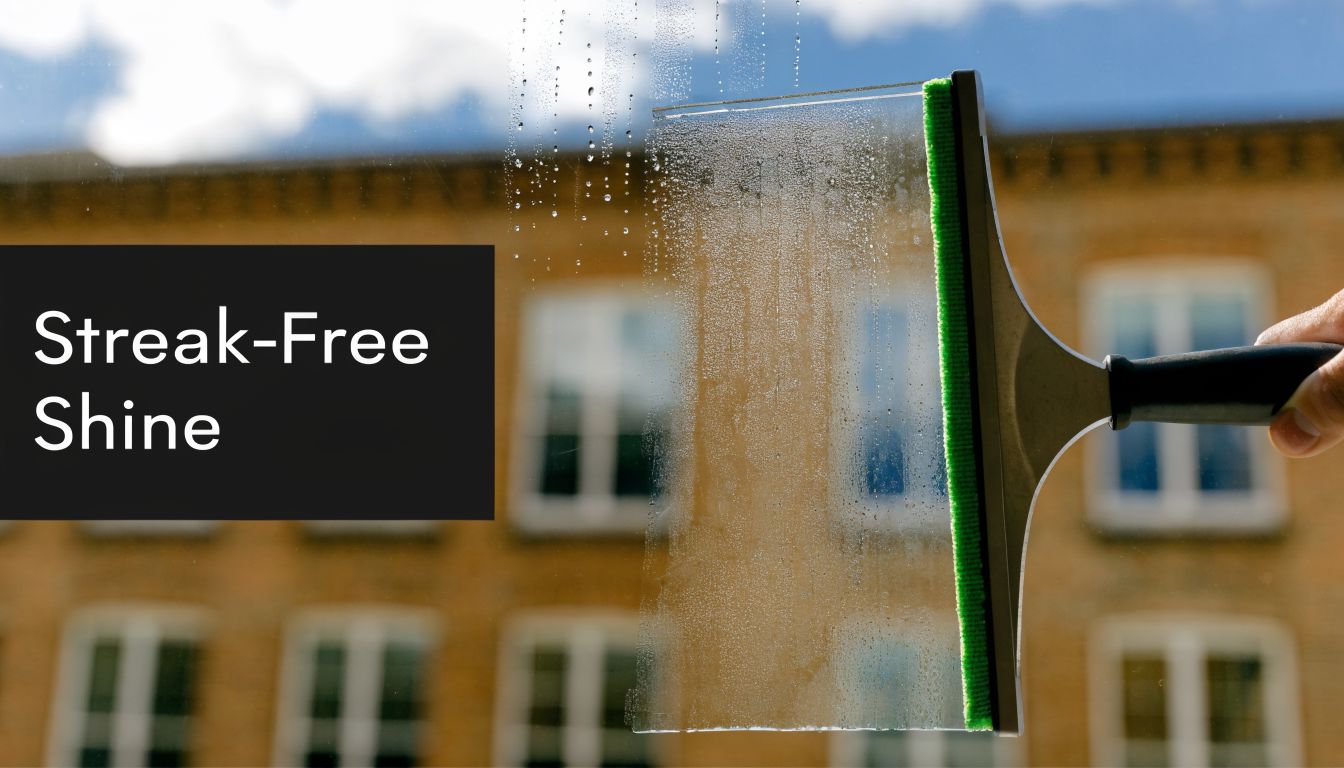
Squeegee technique decides whether the glass stays clear
Good technique removes dirty solution instead of redistributing it. Work in small sections. Keep the blade consistent against the glass. Wipe the rubber edge between passes so grit does not score the pane or leave trails.
A basic professional sequence looks like this:
| Step | What to do | Why it helps |
|---|---|---|
| 1 | Dry microfiber on frame and sill | Removes loose grit before it turns into mud |
| 2 | Light spray on glass | Limits runoff and reduces residue |
| 3 | Scrub edges and corners first | Breaks up the dirt that usually survives a quick pass |
| 4 | Squeegee downward in overlapping strokes | Carries dirty solution off the pane |
| 5 | Detail edges with a dry microfiber | Picks up the moisture line the blade leaves behind |
One more Phoenix-specific point matters here. Avoid cleaning in direct midday sun if you can. On hot glass, solution flashes off too quickly, especially on west-facing windows, and that leaves streaking, soap film, and mineral traces that are harder to correct later.
For homeowners, the trade-off is simple. Fast cleaning feels efficient, but careful prep and a lighter solution usually keep the glass looking better longer. That is the foundation we use before we even get into maintenance schedules, screen care, or protective treatments.
Your Phoenix-Proof Window Maintenance Schedule
A Phoenix window can look fine on Monday and tired by Friday, especially after a dust event, a few sprinkler hits, or a stretch of dry wind. The schedule that works here is not the same one you would use in a milder climate. Desert grime builds in layers, and hard water spots set up fast once the sun bakes them onto the glass.
That is why we recommend maintenance by trigger, not just by calendar. Homeowners who want a more local benchmark can compare their routine with our guide on how often you should clean your windows in Scottsdale, but the short version is simple. Touch the windows lightly each week, reset the trouble areas each month, and clean the full window system each quarter.

Weekly habits that pay off
Weekly care should take a few minutes, not half a day. The goal is to stop fresh debris from turning into bonded residue.
Focus on the windows that get hit hardest first. South and west-facing glass usually shows Phoenix wear sooner because heat dries residue faster.
- Wipe sills and lower frame edges: Loose dust on the sill gets pulled onto the glass the next time wind pushes through.
- Remove fresh bird droppings and bug marks: These come off easily early. Left in place, they bake on.
- Spot-clean patio doors and pet-height glass: Handprints, nose prints, and sunscreen smears attract more dust than clean glass does.
- Check for sprinkler mist: If one pane keeps spotting, the fix is often outside, not in your spray bottle.
Monthly tasks that reset the edges
Monthly maintenance is where homeowners usually get the biggest visual improvement. Many windows look dirty because the perimeter is dirty, not because the center of the pane is terrible.
Give extra attention to these areas:
- Frames, tracks, and corners: Phoenix dust settles where cloths and quick rinses miss.
- Screens: A dusty screen drops grit right back onto clean glass with every breeze.
- Interior film: Cooking residue, candles, and AC airflow can leave a light haze inside even when the exterior still looks decent.
- Recurring hard water zones: If one side of the house gets irrigation overspray, catch it early before mineral spots get stubborn.
If your screens are bent, brittle, or shedding debris, cleaning alone stops helping. Homeowners dealing with that issue should review when to replace your window screens before another season of dust starts pushing through damaged mesh.
Quarterly work for desert conditions
Quarterly service is the practical baseline for most Phoenix homes. In our experience, waiting much longer usually means more mineral spotting, more edge buildup, and more time spent correcting avoidable mess.
This is the point where it pays to clean the whole assembly together:
- exterior glass
- interior glass
- frames and sills
- screens and tracks
Cleaning only the pane gives you a short-lived result. Dust sitting in the frame or screen works its way back onto the glass within days.
A seasonal rhythm helps:
| Season | Priority |
|---|---|
| Early spring | Remove pollen film, winter dust, and screen buildup |
| Pre-monsoon | Clear existing grit before storms drive mud and debris against the glass |
| Post-monsoon | Clean off splash marks, blown dirt, and fresh mineral spotting |
| Late fall | Reset exterior glass and brighten indoor light before cooler months |
What to do after a dust storm or sprinkler spotting
Dust storm residue needs a different response than ordinary soil. Start by loosening the grit with controlled moisture and a clean tool so you do not drag abrasive dust across the pane.
Sprinkler spotting needs even more care. If the mark is mineral-based, aggressive rubbing usually spreads residue and can scratch if sand is mixed in. A light early treatment is manageable. Baked-on hard water is where many homeowners hit a wall and end up needing professional restoration.
For most homes in the Valley, this routine holds up well:
- Every week: dust, inspect, and spot-clean high-touch or freshly marked glass
- Every month: clean frames, screens, and windows with visible film or edge buildup
- Every quarter: full interior and exterior window cleaning
It is a realistic schedule for Phoenix. It accounts for hard water, monsoon dust, and the kind of sun that turns a small spot into a stubborn one fast.
Proactive Defense Through Landscaping and Screens
A Phoenix window usually gets dirty long before the glass itself fails you. Wind lifts dust from bare soil, irrigation throws mineral-heavy mist onto lower panes, and clogged screens keep feeding debris back onto the surface. If you want windows to stay cleaner longer, reduce what reaches the glass in the first place.

Screens are your first line of defense
In the Valley, screens do more than keep bugs out. They intercept a lot of airborne grit before it settles on the pane, especially on homes near open lots, active roads, or dry planting beds. We see the difference all the time. Homes with intact, regularly cleaned screens usually hold a clean exterior look longer than homes with torn, dusty mesh.
Dirty screens create their own problem. Dust packs into the mesh, then a gust or a slammed door sends that material right back onto the glass.
Use a simple routine:
- Vacuum or soft-brush loose dust off first
- Wash screens away from the window when possible
- Let the mesh dry fully before reinstalling
- Replace frames or mesh that sag, tear, or stay brittle
If your mesh is brittle, warped, or constantly dropping debris, this guide on when to replace your window screens gives a useful checklist for deciding whether cleaning is enough or replacement makes more sense. For routine upkeep, this local guide on how to clean window screens covers the basics well.
Yard setup affects how often glass needs attention
The worst setup is usually a lower window facing bare dirt with sprinkler spray nearby. That combination throws dust, mud, and minerals at the same pane over and over. In Phoenix, the sun then bakes the residue on fast.
Plant choice matters too. Shrubs that touch the screen leave pollen, leaf fragments, sap, and moisture pockets. Desert-adapted plants with cleaner growth habits, plus some breathing room around the frame, usually cause fewer problems.
Here is the practical trade-off:
| Choice | Likely result |
|---|---|
| Bare dirt under windows | More blown dust and splashback after irrigation |
| Dense shrubs touching screens | More pollen, debris, and contact grime |
| Gravel or hardscape near glass | Less loose soil kicked up onto lower panes |
| Trimmed plantings with space around frames | Less rubbing, better airflow, easier upkeep |
A spotless pane does not stay spotless for long if the bed underneath it throws dust at the house every afternoon.
Indoor dust can shorten the result too
Exterior grime gets most of the blame, but inside haze often builds from supply vents, foot traffic, pet dander, and a loaded HVAC filter. In many Phoenix homes, that film shows up fastest on glass near sliders, west-facing rooms, and vents that blow straight across the pane.
Check the basics before you assume you need to clean the inside glass again. Replace HVAC filters on schedule, keep vents from pushing directly at nearby windows, and dust sills and tracks before that material spreads upward. The U.S. Environmental Protection Agency's guidance on indoor air quality and air cleaners in the home is a solid reference if indoor dust seems excessive.
This part is preventive work, but it pays off. In Phoenix conditions, reducing dust sources around the window often buys you more clean-looking days than changing glass cleaner brands.
The Power of Protective Coatings and Sealants
In Phoenix, a window can look great right after a wash and start losing that clean look the same week. Sprinkler mist dries into mineral spotting, monsoon dust sticks to any residue left on the glass, and intense sun bakes contamination onto the surface faster than homeowners expect. Protective coatings help because they change what happens after the cleaning is done.

A coating does not make glass maintenance-free. It gives water, dust, and mineral residue less opportunity to stick hard, which usually means easier upkeep and a longer clean-looking interval between full washes.
Why coatings matter more in Phoenix
The biggest local problem is hard water. The City of Phoenix reports treated water hardness in a range that commonly creates spotting on exterior glass, especially where irrigation hits repeatedly or runoff dries in the sun, as shown in the city's water quality and hardness information.
That changes the maintenance strategy. On untreated glass, a light sprinkler hit can dry into visible spotting. On protected glass, those deposits are often easier to remove before they etch or build into a stubborn film.
Dust is the second half of the Phoenix problem. Fine desert particulate settles fast, and any leftover soap or oily residue gives it more to cling to. We see this often on west-facing glass and patio doors that get both heat and traffic.
What a hydrophobic treatment actually does
Hydrophobic treatments form a thin water-repelling layer on the glass. The International Window Cleaning Association explains that glass sealants and water repellents can reduce adhesion from soils and make routine maintenance easier when they are applied to properly cleaned surfaces, which lines up with field results we see on homes dealing with sprinkler overspray and dusty exposure. Their guidance on glass restoration and protection is useful background for homeowners comparing options.
The practical benefit is straightforward. Water beads more readily, dries with less contact area, and leaves fewer deposits behind. Dust and light grime also release faster during maintenance cleaning, so you spend less time scrubbing and less time trying to chase haze in direct sun.
Untreated glass gives minerals a flat surface to dry on. Treated glass gives them less grip.
For homeowners also thinking about heat and glare control, window films can complement clean-glass strategy by reducing how exposed certain rooms feel, especially on harsh sun-facing elevations. They do not replace cleaning or hydrophobic protection, but they can fit into a broader plan for high-sun windows.
DIY spray versus professional-grade treatment
DIY repellents can work well on reachable glass if the prep is right. That is the part many homeowners underestimate. If mineral spotting, oxidation, or soap residue stays on the surface, the coating bonds to contamination instead of clean glass, and the result often turns patchy or short-lived.
Professional-grade sealants usually hold up better on windows that take regular sprinkler mist, heavy western sun, or repeated monsoon grime. The trade-off is cost and prep time. A stronger product applied over poorly prepped glass is still a poor job.
The National Glass Association advises following manufacturer instructions closely for any glass treatment and avoiding products or methods that can damage coated glass surfaces or surrounding materials. Their consumer guidance on caring for architectural glass supports the basic rules professionals already follow on site.
Use these application rules if you plan to do it yourself:
- Clean the glass first: Any residue left behind gets trapped under the treatment.
- Remove mineral deposits before coating: A repellent will not fix existing hard water spotting.
- Apply on cool, dry glass: Phoenix sun can flash-dry the product and leave smears.
- Use a thin, even layer: More product does not mean better protection.
- Allow full cure time: Early moisture contact can weaken the finish.
A simple process looks like this:
- Wash and detail the pane with a low-residue cleaner.
- Correct hard water spotting before any protective product goes on.
- Apply the treatment evenly using the product's directions.
- Buff off excess material so it does not haze.
- Let it cure fully before exposing the glass to water.
Here’s a quick visual on coating technique before you try it yourself:
Where coatings help the most
Some windows get a much better return from protective treatment than others. In Phoenix homes, the best candidates are usually:
- South- and west-facing windows that take the hardest UV exposure
- Glass near sprinklers or misters
- Windows below rooflines or scuppers where runoff can carry minerals onto the pane
- Large fixed panes that are harder to clean often
- Front entry glass and patio doors that homeowners notice every day
Used correctly, coatings buy time. They do not replace regular cleaning, and they will not reverse etched glass. What they do well is reduce how fast Phoenix conditions take a clean window back downhill.
When to Trust a Professional Window Cleaning Service
A Phoenix homeowner can keep up with a lot using basic maintenance. That changes fast when the problem is access, mineral buildup, or glass that keeps looking hazy no matter how often it gets wiped down.
DIY works best on reachable panes with light dust and no stubborn spotting. Professional service makes more sense when you are dealing with second-story windows, baked-on hard water, post-construction residue, or glass that needs to look sharp for listing photos, open houses, or customer-facing storefronts.
Jobs that are better left to pros
Some situations have a poor risk-to-reward ratio for homeowners:
- High or awkward windows: Ladder work around rock beds, uneven ground, pool decking, or dense landscaping creates unnecessary risk.
- Hard water buildup: In Phoenix, mineral deposits can bond tightly to glass. Wrong tools or aggressive scrubbing can scratch the surface or damage nearby finishes.
- Post-monsoon cleanup: Fine dust mixed with light rain can leave a film that spreads instead of lifting if the pane is not cleaned in the right order.
- Large properties and storefronts: Wide runs of glass make inconsistency obvious, especially in strong desert light.
- Pre-sale cleaning: Camera lenses pick up haze, fingerprints, and dirty screen edges that homeowners often miss.
- Solar panels: They need the right process, soft tools, and safe access to avoid damage while keeping light transmission as clear as possible.
Clean glass is one thing. Restoration is another. If a window still looks cloudy after two careful cleanings, the issue is often mineral staining, screen transfer, or residue around the edges, not loose dirt.
What professional work adds
Professional service helps because the process is tighter from start to finish. We look at what is on the glass before choosing tools or chemistry. In Phoenix, that matters. Dust, irrigation minerals, sunscreen residue near patio doors, and oxidation from aging screens do not respond the same way.
A skilled crew brings:
| Need | Why pro service helps |
|---|---|
| Hard-to-reach glass | Safer access and more even results |
| Mineral spotting | Better identification and a lower-risk treatment method |
| Screen-heavy homes | Faster removal, cleaning, and reinstalling without cutting corners |
| Commercial properties | Reliable scheduling and consistent curb appeal |
| Large sun-exposed panes | Better finishing on glass that shows every flaw |
If your windows look dirty only around the edges, the frame and screen are usually the problem.
There is also a time factor. Many homeowners would rather not spend a Saturday chasing streaks in 100-degree heat, then redo the work after spotting missed residue at sunset. For property managers and business owners, consistency matters even more. A set service schedule keeps the glass presentable and prevents Phoenix grime from turning a simple cleaning into a harder restoration job later.
Frequently Asked Questions for Phoenix Residents
How often should exterior windows be cleaned in Phoenix?
For most urban homes, every three months is the right baseline because Phoenix conditions speed up grime accumulation. Homes near busy roads, construction, or open desert exposure may need closer attention between full cleanings.
Why do my windows look dirty right after rain?
Usually because the issue isn’t rain alone. It’s mineral-heavy water, dust already on the glass, or both. In the Valley, hard water and airborne dust make dried rain spots more visible than in milder climates.
Is it okay to clean windows in the middle of the day?
It’s not ideal. Direct sun dries solution too quickly and makes streaking more likely. Early morning or late afternoon gives you more working time and a better finish.
Do screens really make that much difference?
Yes. Clean screens act like a first filter. Dirty screens dump debris back onto the pane and make otherwise clean windows look dull.
What’s the fastest way to make clean windows last longer?
Keep the frames, sills, and screens clean between full washes, and protect problem glass from hard water whenever possible. If sprinkler overspray hits the same windows every week, fixing that pattern helps more than changing cleaners.
If your windows keep looking dusty or spotted no matter how often you wipe them down, Sparkle Tech Window Washing LLC can help with residential and commercial window cleaning, screen cleaning, screen repair, and solar panel cleaning across Scottsdale, Peoria, and the greater Phoenix area. Their team uses non-toxic cleaning agents, brings more than 15 years of experience, and backs service with a 10-day guarantee so your glass stays clear longer in real desert conditions.