


The right window cleaning solution really comes down to the job you're facing. For a few fingerprints on an inside window, a simple homemade vinegar and water mix is often all you need. But when you’re up against tough exterior grime or stubborn hard water stains, something stronger—like a professional pure water system—is what gets you those truly flawless, streak-free results.
Finding Your Perfect Window Cleaning Solution
The quest for the perfect window cleaner isn't about a single magic bullet. It’s more like having the right tool for the right job. You wouldn't use a sledgehammer to hang a picture frame, right? In the same way, the best solution for a quick indoor touch-up is completely different from what you'd need to clean two stories of windows caked in that fine Phoenix dust.
To get that crystal-clear shine, you first need to know your options. The world of window cleaning really boils down to three main approaches, each with its own pros and cons.
Choosing Your Cleaning Path
Let's break down the top three contenders you'll encounter:
- DIY Vinegar Recipes: This is the old-school, go-to choice for a reason. It's cheap, non-toxic, and surprisingly effective for light, everyday grime. A simple mix of distilled water and white vinegar cuts right through smudges and is perfect for routine interior cleaning.
- Commercial Sprays: Nothing beats the convenience of a store-bought cleaner. You just grab it and go. These formulas often contain ingredients like ammonia that give them an extra punch for tackling greasy spots, making them a great option for quick cleanups.
- Professional Pure Water Systems: For a truly impeccable finish, especially on exterior glass, this is the gold standard. These systems filter out all the minerals from tap water, creating "pure" water that acts like a dirt magnet. It rinses away completely clean, leaving zero residue behind—which means no spots or streaks.
This handy decision tree can help you figure out which path is right for you.
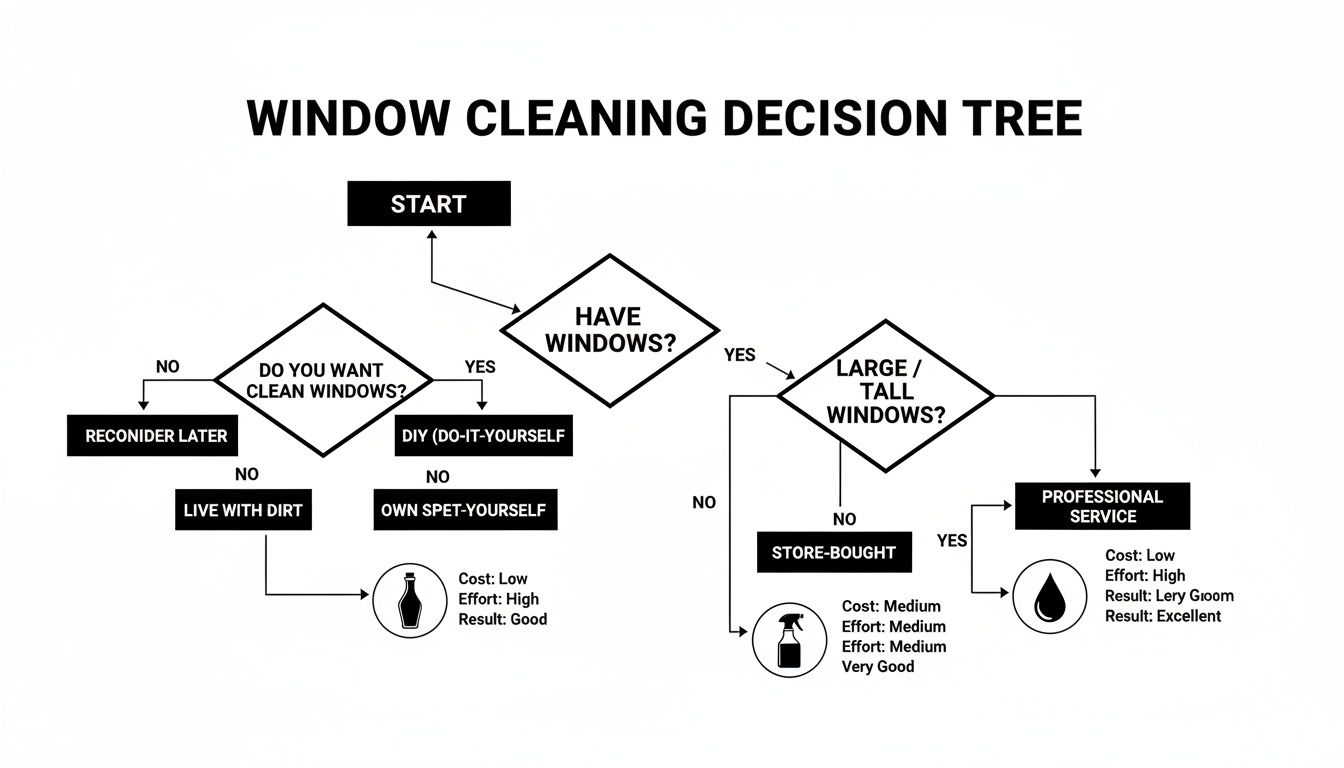
As you can see, the choice often boils down to the size of the job and just how clean you want your windows to be. In the rest of this guide, we'll dive deeper into each of these options, so you can confidently pick the best solution for any window-washing challenge.
The Surprising Power of DIY Window Cleaners
Sometimes the best tool for the job is already in your kitchen pantry. When it comes to quick, reliable, and seriously affordable window cleaning, you can’t beat the classic homemade mix of white vinegar and water. It's a time-tested favorite for a reason—it’s simple, non-toxic, and it really works on everyday smudges and light grime.
This isn't just an old wives' tale; there's some simple science behind it. The magic comes from acetic acid, the active component in vinegar. Think of it as a natural solvent that gently breaks down the film, fingerprints, and light mineral deposits clouding up your glass, making them easy to wipe away without harsh chemicals.
Crafting the Perfect DIY Mix
Making your own effective window cleaner is all about getting the recipe right. The most important rule? Always start with distilled water. Our tap water here in the Phoenix area is loaded with minerals that leave behind those chalky white spots as the water dries. Distilled water is pure, meaning it won't leave any residue behind.
A great starting point is a simple 50/50 mix of distilled white vinegar and distilled water. This blend is usually strong enough to cut through most indoor grime without being overpowering.
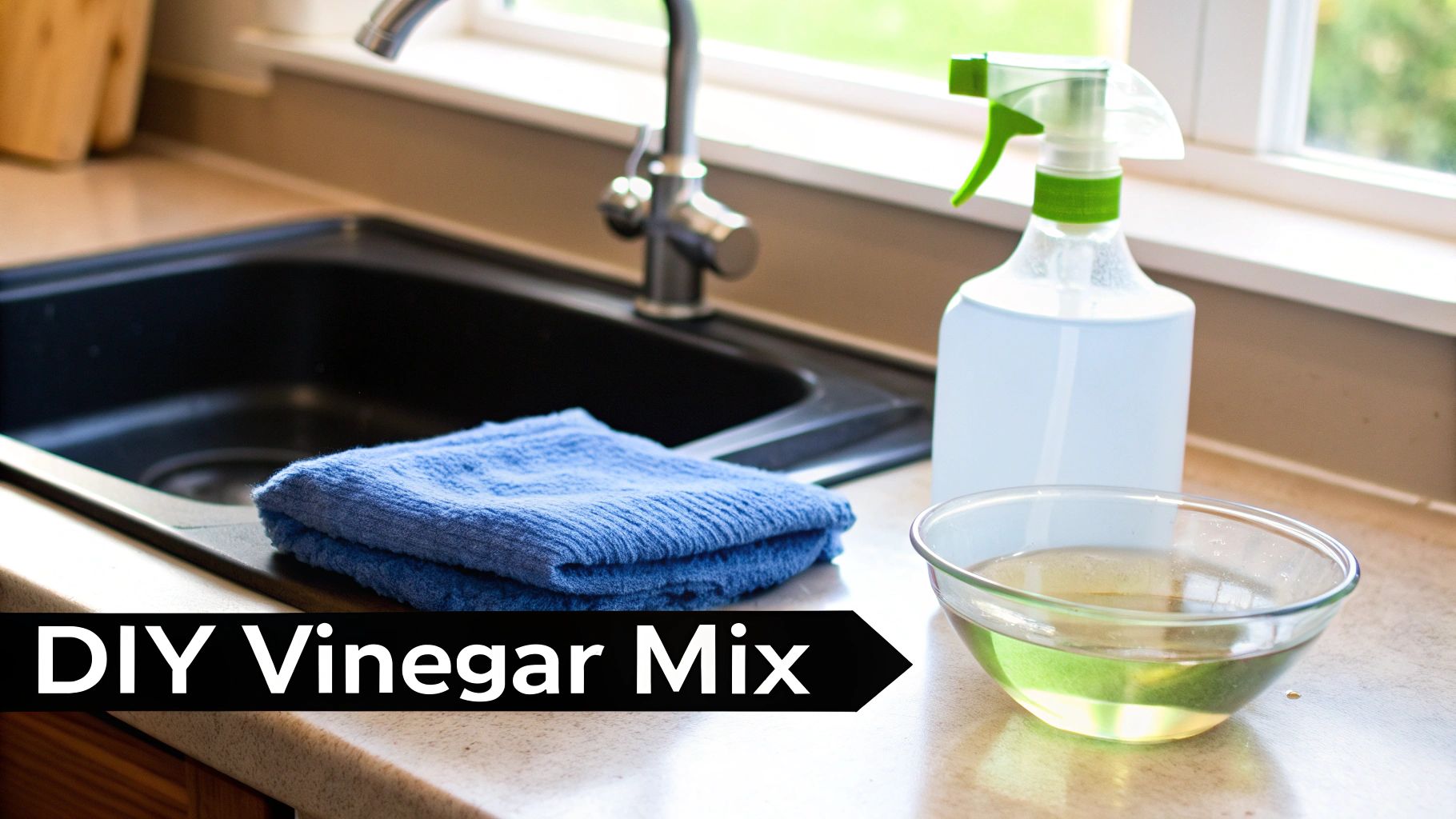
If you're dealing with greasy fingerprints or kitchen window splatter, adding a single drop of mild dish soap to your spray bottle can give it an extra cleaning boost. But be careful here—too much soap will create a sudsy film that’s a nightmare to remove and will guarantee streaks. Finding that perfect balance is key, and our guide on how to get streak-free windows walks you through the whole process.
To help you choose the right recipe for your needs, here's a quick comparison of the most popular homemade window cleaning solutions.
DIY Window Cleaner Recipe Comparison
| Recipe | Ingredients Ratio | Best For | Pros | Cons |
|---|---|---|---|---|
| Classic Vinegar & Water | 1 part white vinegar, 1 part distilled water | General indoor cleaning, fingerprints, light dust. | Simple, non-toxic, effective on most common grime. | The vinegar smell can be strong for some; not powerful enough for heavy dirt. |
| Dish Soap Boost | 1 part white vinegar, 1 part distilled water, 1-2 drops of dish soap | Greasy smudges on kitchen windows or from hands. | Cuts through grease and oil more effectively. | Easy to add too much soap, which causes streaks. |
| Rubbing Alcohol Mix | 1 cup rubbing alcohol, 1 cup water, 1 tablespoon vinegar | Outdoor windows in cooler weather; quick-drying needs. | Evaporates quickly to prevent freezing and reduce streaking. | The alcohol smell can be very strong; requires good ventilation. |
Each recipe has its place, but remember that even the best homemade cleaner has its limitations.
When DIY Is Not Enough
Think of your homemade solution as the "home-cooked meal" of window cleaning—it's fantastic for regular upkeep and everyday messes. But when you’re up against years of baked-on grime, severe hard water stains, or you just want that flawless, professional-grade shine, a simple vinegar mix probably won't cut it. That's where you start to see the real value of calling in the pros.
And many people do. The global window cleaning services market was valued at around $141 billion USD in 2024, with North America accounting for a massive 37.75% market share. It’s a clear sign that for the toughest jobs, homeowners and businesses turn to experts. You can see more details on this growing market on Fortune Business Insights.
Navigating Commercial Window Cleaning Sprays
While a good DIY mix is perfect for routine touch-ups, sometimes you just need the grab-and-go convenience of a commercial spray. Store-bought cleaners are the go-to solution for sudden smudges and grime, packing powerful formulas designed to slice through gunk with almost no prep. Think of them as the express lane for window cleaning—fast, effective, and ready the moment you need them.
These products are specifically engineered to make your life easier. Their formulas usually contain surfactants to lift dirt off the glass and solvents to break down any greasy or oily films. The mission is simple: deliver a quick, streak-free shine straight from the bottle. This makes them a fantastic choice for erasing fingerprints from a patio door or cleaning up splatter on a kitchen window.
Understanding the Ingredients
As you walk down the cleaning aisle, you'll notice that most window sprays fall into two camps, defined by a single, potent ingredient: ammonia. Knowing the difference is key to grabbing the right bottle for the job.
- Ammonia-Based Cleaners: Ammonia is a powerhouse cleaner. It's an alkaline agent that cuts through stubborn grime, greasy fingerprints, and even smoke film with ease. It also evaporates incredibly fast, which is a big reason it helps prevent streaks. The major downside is its pungent odor, so you absolutely need good ventilation when using it.
- Ammonia-Free Cleaners: These formulas swap out the harsh ammonia for other solvents and cleaning agents to get the job done without the fumes. This makes them a much better choice for anyone with kids, pets, or sensitivities to strong smells. They are also the only option for tinted windows, as ammonia can eat away at the film and cause permanent damage.
Here’s something most people don't realize: many commercial sprays can leave behind a very thin, invisible film. This residue is often slightly tacky, which means it actually attracts dust and dirt, causing your windows to look dirty again much faster.
Making the Right Choice and Application
Picking the best commercial cleaner really comes down to reading the label. Look for claims like "streak-free formula" or, if you have sensitive surfaces or people in the house, "ammonia-free." For anyone with tinted or specially coated glass, using an ammonia-free product is non-negotiable if you want to avoid ruining your windows.
How you apply it matters just as much as what you buy. The pro-tip is to spray the cleaner onto your microfiber cloth, not directly onto the glass. This simple trick prevents the solution from running down and pooling on your window sills and frames, where it can damage wood or painted finishes. Start at the top of the glass and wipe your way down in a steady S-pattern for the best, most even coverage.
While they’re undeniably handy, commercial sprays are just one tool in the kit. For a truly deep, long-lasting clean that doesn't rely on chemical films, other methods often deliver far better results.
Ever wonder how professional window cleaners get that perfectly clear, "invisible glass" look? It’s not some magic spray or a top-secret squeegee technique. The real game-changer is the water itself.
Professionals have unlocked the power of pure water, turning basic H₂O into the ultimate cleaning agent, and it's what separates a good result from a flawless one.
The Secret is in the Water
Think of regular tap water as a bus that’s already full of passengers. Those passengers are dissolved minerals like calcium and magnesium, especially in our Phoenix-area water. When the water evaporates on your window, it leaves all those passengers behind as ugly spots and streaks.
Pure water, on the other hand, is like an empty bus. It’s naturally "hungry" and wants to pick up passengers. As it flows over your glass, it actively grabs onto dirt, dust, and pollen, pulling them right off the surface and holding on tight.
How Science Creates a Spotless Shine
This isn't just a clever analogy; it’s simple chemistry. To get water this pure, pros use advanced filtration systems, usually relying on one of two powerful methods:
- Deionization (DI): This system sends water through special resin beads that work like tiny magnets. They snatch the mineral ions out of the water, swapping them for harmless ones that don’t leave spots.
- Reverse Osmosis (RO): Here, water is pushed through an incredibly fine membrane. The membrane is so tight that only pure water molecules can squeeze through, leaving all the minerals and other gunk behind.
The water that comes out the other side is so clean that when it rinses your windows, it dries to a perfect, streak-free finish. Why? Because there is absolutely nothing left behind to create a spot. This is what makes it the best window cleaning solution for a guaranteed flawless result.
Here in Phoenix, where our tap water is notoriously hard, this method is a lifesaver. It completely eliminates the problem of hard water stains right from the start.
Why Pure Water is the Gold Standard
The benefits go way beyond just a pretty shine. Using pure water represents a huge leap forward for the cleaning industry, combining incredible effectiveness with a serious commitment to being responsible.
The professional window cleaning industry is increasingly shifting towards sustainable practices. Eco-conscious systems, particularly those using pure water with water-fed poles, are becoming the standard for companies aiming to deliver superior results while minimizing their environmental impact.
This move isn't just about "going green"—it’s about delivering a better, longer-lasting clean for you.
Here’s why it’s so effective:
- No Chemical Residue: Without soaps or detergents, there’s no sticky film left on the glass to attract new dust and grime. Your windows genuinely stay cleaner for much longer.
- Totally Eco-Friendly: It’s a chemical-free process, making it completely safe for your kids, pets, and the plants around your home.
- Safer and More Efficient: Professionals pair these systems with water-fed poles. This setup lets them clean high, hard-to-reach windows from the safety of the ground—no risky ladders needed.
As technology and environmental awareness grow, they're changing the entire industry. Recent analyses show that innovations like robotic cleaning and eco-friendly methods are transforming how pros work. For companies in markets like Phoenix, making this shift is crucial for meeting customer demands for both quality and sustainability. You can explore more about this trend and how it's shaping modern property care on ntpropertycare.com.
Ultimately, this professional-grade solution provides a scientific answer for getting a perfect clean, every single time.
Solving Arizona's Toughest Window Cleaning Problems
Living in Arizona means we get more than our fair share of sunshine, but that same sun creates some unique headaches when it comes to keeping our windows clean. Around here, our glass gets bombarded by everything from sprinklers leaving behind stubborn mineral deposits to intense heat baking on layers of dust and grime. This is exactly where generic, one-size-fits-all cleaning advice just doesn't cut it.
The best window cleaning solution for our desert climate has to be tough enough to handle these specific challenges. A simple spritz from a bottle won’t make a dent when you're dealing with the gritty aftermath of a haboob or years of built-up, sun-baked gunk.
Tackling Hard Water Spots
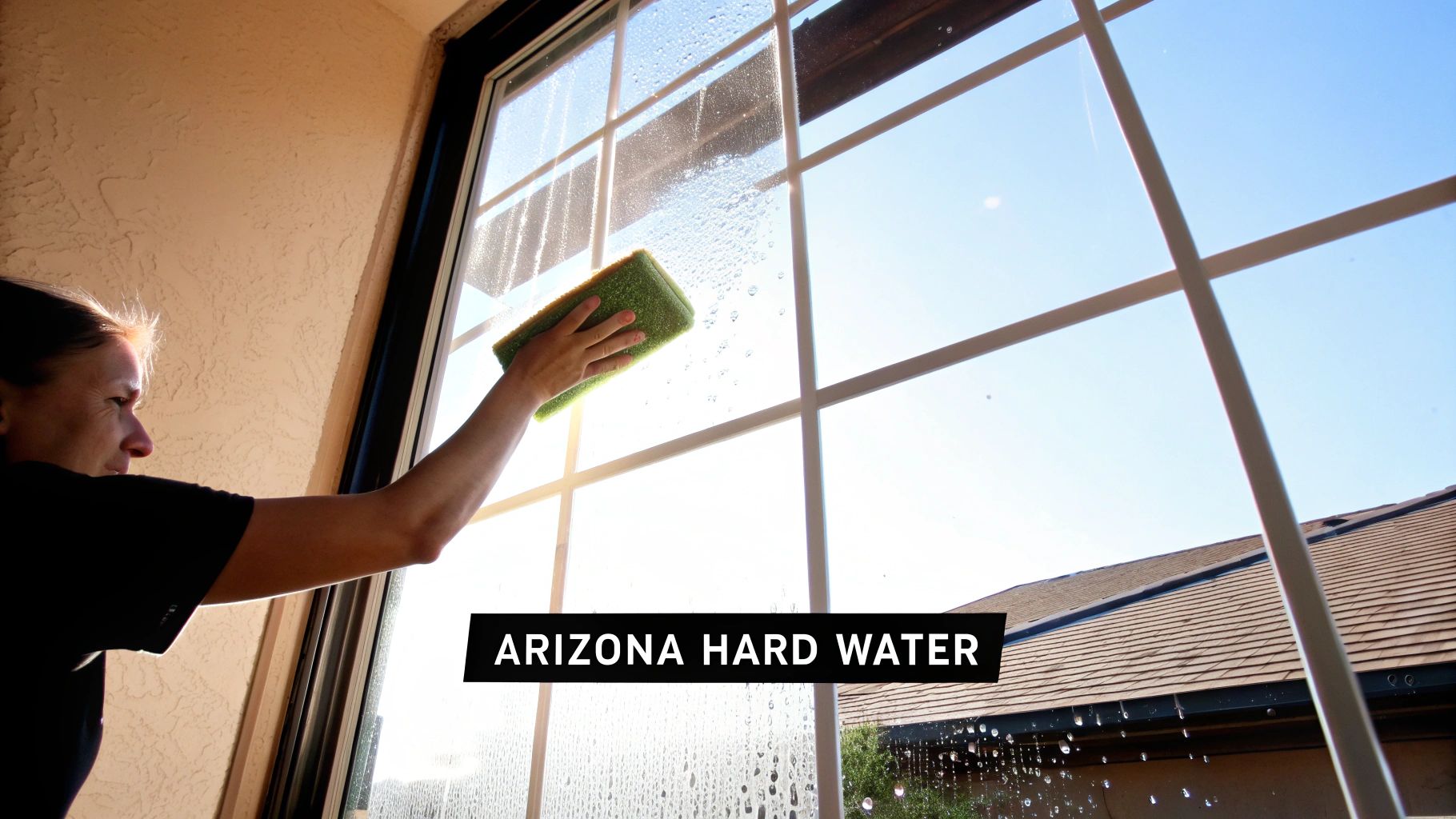
I'd say one of the most common frustrations I hear from Phoenix homeowners is about hard water spots. Those chalky, white blemishes are what’s left behind when water from a sprinkler—which is full of minerals like calcium and magnesium—dries on the glass. Let it sit long enough, and those minerals will actually etch themselves into the surface, becoming a real nightmare to remove.
For some light spotting, you might have some luck with a strong 50/50 mix of distilled white vinegar and distilled water. The acetic acid in the vinegar is great for dissolving some of that mineral buildup. But when the stains are severe and have been sitting for a while, a DIY approach often isn’t enough. If you’re scrubbing away with little to show for it, you can dive deeper into some specialized techniques in our guide on how to remove hard water stains from windows.
Pro Tip: Whatever you do, never use abrasive pads or steel wool on your windows. It might seem like a quick fix for a tough spot, but you'll end up with permanent scratches that are far worse than the original stain.
Conquering Caked-On Dust and Sun-Baked Grime
That intense Arizona sun acts like an oven, baking dust, pollen, and everyday pollution right onto your windows. It forms this tough, crusty layer that’s a real pain to get off. After a dust storm, the problem gets ten times worse. Cleaning this mess requires a solution that can penetrate and lift the grime without just smearing it around.
For this kind of job, a professional-grade soap solution and a high-quality scrubber are your best friends. Here's a little trick: wet the window thoroughly first and let the water sit for a minute or two. This helps soften up all that caked-on debris. Then, you can go in with your scrubber to gently agitate and lift the dirt before you finish the job with a squeegee.
Don't Forget the Screens and Tracks
A truly clean window is more than just sparkling glass. Think about it—your window screens are the first line of defense against dust and bugs, and they get absolutely filthy. Clogged screens don't just look bad; they can obstruct your view and even cut down on the airflow into your home.
Here’s a quick and easy process to get them looking new again:
- Remove the Screens: Start by carefully taking the screens out of the window frames.
- Wash Gently: Use a soft-bristle brush and some mild, soapy water to scrub both sides. You’ll want to avoid using a high-pressure washer, as it can easily damage the delicate mesh.
- Rinse and Dry: Give them a good rinse with clean water and let them air dry completely before popping them back in.
And while the screens are out, take a moment to use a brush or vacuum to clear out all the dirt and dead bugs from the window tracks. It’s a small step that makes a huge difference, ensuring your windows not only look fantastic but open and close smoothly, too.
Knowing When to Call a Professional Window Cleaner
DIY solutions are fantastic for keeping up with regular grime, but let's be honest—there are times when even the best homemade cleaner just won't cut it. Knowing when to throw in the towel and call in a pro is crucial for protecting your windows and, more importantly, yourself.
Think of it this way: you might patch a tiny hole in the drywall, but you'd call a contractor to fix a major structural issue. Window cleaning works on the same principle. Some jobs demand specialized equipment, a trained eye, and safety protocols that only a professional team brings to the table. Deciding to hire out isn't admitting defeat; it’s a smart move to protect your home's value and your own time.
Clear Signs It's Time for an Expert
Sometimes a job is just bigger, tougher, or riskier than it seems. Here are the tell-tale signs that it’s time to pick up the phone and call a professional.
- Hard-to-Reach Windows: Any window on a second story or higher is a serious safety hazard. Professionals have the right gear, like water-fed poles, to tackle these safely from the ground. Don't risk a ladder accident.
- Severe Hard Water Damage: If those stubborn, chalky spots have been baking in the Phoenix sun for years, they’ve likely bonded with the glass. A pro has access to special compounds and polishing techniques that can remove the buildup without scratching the surface.
- Post-Construction Cleanup: After a renovation or new build, windows are often covered in paint overspray, silicone, and other construction gunk. Standard cleaners won't touch this kind of mess.
- You Just Don't Have the Time: Let’s face it, a proper, thorough window cleaning is a serious physical workout that can eat up your entire weekend. Hiring a pro gives you that time back.
The Value of Professional Service
Bringing in a team like Sparkle Tech is about more than just getting a chore done—it's about getting a flawless result, guaranteed. Licensed and insured experts deliver efficiency and the peace of mind that comes from a job done right the first time.
The demand for this level of service is on the rise. Globally, the contract window cleaning industry is a massive $93.16 billion business in 2024. Here in major US markets like Phoenix, residential demand is projected to jump by 15% by 2025, largely thanks to our booming real estate market. You can dig into more of this data over at Grand View Research.
Curious about how this translates to your own home? We break it all down in our guide on why professional window cleaning in Scottsdale makes all the difference.
Common Questions About Window Cleaning Solutions
Even with the best recipes and tools, you're bound to run into a few questions once the squeegee hits the glass. Here are some quick answers to the most common head-scratchers we hear from homeowners.
Can I Use Windex on My Tinted Car Windows?
This is a big one, and the answer is a hard no. You should never use a standard ammonia-based cleaner like Windex on tinted windows. Over time, the ammonia is brutal on the tinting film; it breaks it down, leading to bubbling, peeling, and that ugly purple discoloration you sometimes see.
Your best bet is to grab a dedicated ammonia-free cleaner made specifically for auto glass. In a pinch, a simple mix of distilled water and a single drop of pH-neutral soap will do the job safely.
Why Do I Still Get Streaks With a Vinegar Solution?
You’ve mixed up your vinegar solution, you’re ready to go, but you’re still left with frustrating streaks. What gives? More often than not, it comes down to one of a few simple things. Trying to clean a window that’s hot to the touch or sitting in direct Phoenix sunlight is a classic mistake—the solution evaporates almost instantly, leaving all the dissolved minerals behind.
Another common issue? A dirty cloth. If your towel is already grimy, you're just smearing dirt around, not removing it.
The most overlooked culprit is using too much soap. You only need a tiny drop. Any more than that and you’re fighting against a soapy film that’s almost impossible to wipe away cleanly. Always work on cool glass in the shade and use fresh, lint-free microfiber cloths.
Is Pure Water Cleaning Safe for All Windows?
Absolutely. In fact, pure water cleaning is one of the safest and most effective methods you can use on just about any window, frame, or sill. Because it’s just water with all the minerals removed, there are no harsh chemicals to worry about.
This means it won't damage vinyl, strip paint from wood, or corrode aluminum frames. It’s also the go-to method for specialty coated glass, like Low-E windows, because it cleans without any risk of abrasion or chemical damage.
For a guaranteed streak-free shine without lifting a finger, it’s often best to trust the professionals. Sparkle Tech Window Washing LLC uses industry-leading techniques to deliver flawless results for your home or business. Schedule your service today!