


It’s easy to forget about your window screens, but giving them a good cleaning is one of those simple tasks that makes a huge difference. The basic idea is simple: pop them out, give them a gentle scrub with some soapy water, rinse them clean, and let them air dry before putting them back. Doing this clears out all the trapped dust and allergens, which not only makes your view spectacularly clear but also improves the air you breathe inside.
Why Clean Window Screens Are a Must for Your Home
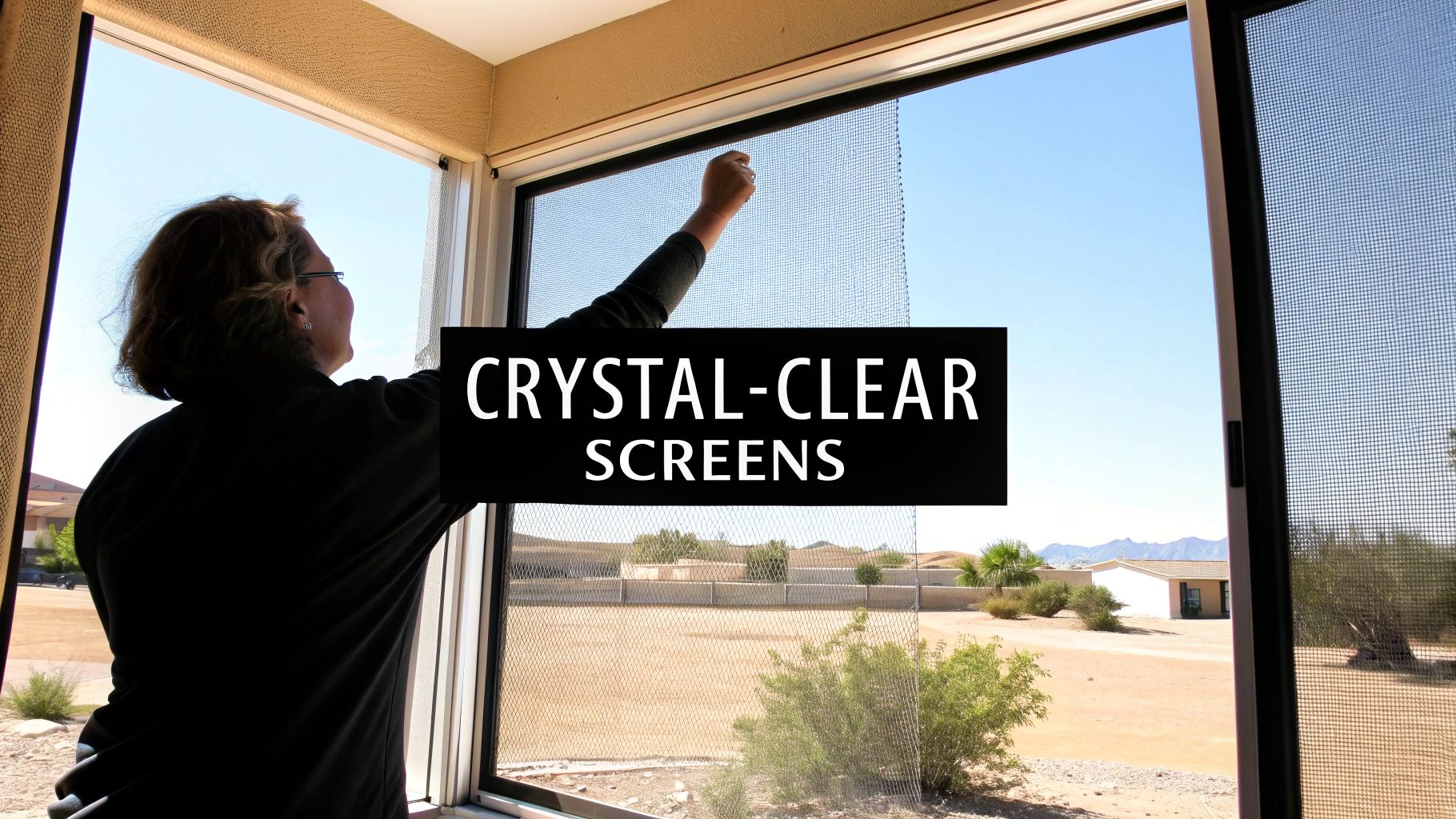
A dirty screen is more than just an eyesore. It’s essentially a filter clogged with everything you don't want inside your house. Over time, that mesh collects layers of dust, pollen, and city grime, turning from a helpful barrier into a reservoir of airborne gunk.
This is a particularly big deal for those of us living in the Phoenix area. Between the dust storms, heavy seasonal pollen, and the aftermath of a good monsoon, our screens get absolutely caked in no time.
That's why this guide skips the generic advice. We’re diving into practical methods that actually work for Arizona homes, from getting rid of that super-fine desert dust to avoiding the hard water spots that drive everyone crazy.
The Real Perks of Keeping Your Screens Clean
Taking care of your screens pays off in more ways than just giving you a better view of the sunset. It brings some real, tangible benefits to your home.
- Breathe Easier: When you open your windows, you want fresh air, not a blast of dust and pollen that's been stuck in your screen for months. Clean screens let the breeze in without the baggage.
- Boost Your Curb Appeal: It's a small detail, but it matters. Sparkling screens make the whole house look sharper and more cared-for from the street.
- Make Them Last Longer: All that accumulated grime, not to mention things like bird droppings, can be corrosive. Regularly washing it away helps prevent the screen mesh and frame from breaking down prematurely.
You're not alone in wanting a spotless home. The professional cleaning services market was valued at a massive $415.93 billion in 2024 and is expected to hit nearly $617 billion by 2030. It just goes to show how much people value a clean living space. For a deeper dive, you can explore more data on the cleaning industry.
Consider this your go-to playbook for getting the job done right. Follow these steps, and you’ll get results that look professional, brightening your home and creating a healthier, more comfortable space for your family.
Assembling Your Screen Cleaning Toolkit
Having the right supplies ready to go makes all the difference. It turns a frustrating chore into a satisfying project. Before you even touch a screen, gathering your tools ensures the whole process is smooth and, more importantly, safe for that delicate mesh.
You don't need a truck full of professional gear, but a few key items are non-negotiable if you want to do the job right. The goal is to gently lift away grime without causing any damage. Using harsh chemicals or a stiff brush is a fast track to torn mesh or a warped frame, creating a much bigger headache than a little dust.
Your Essential DIY Cleaning Supplies
The good news? You probably have most of what you need in your garage or under the sink already. The trick is to always choose the gentle option over the aggressive one.
-
Soft-Bristle Brush: This is your number one tool. Think of a soft car detailing brush or even a new, soft-bristled scrub brush. It’s perfect for dislodging dirt without stretching or ripping the screen material. Whatever you do, avoid those super stiff scrubbers.
-
Bucket: Just a standard five-gallon bucket is perfect for mixing up your cleaning solution.
-
Mild Dish Soap: A simple, pH-neutral dish soap is your safest and most effective bet. It cuts right through grease and dirt without leaving a residue or damaging the screen's finish. You only need a tiny bit—a few drops per gallon of water will do the trick. You can learn more about what is the best window cleaning solution in our detailed guide.
-
Microfiber Cloths: Grab a few of these. You'll need them for wiping down the frames and for drying. Their soft texture is incredibly gentle on surfaces and super absorbent.
-
Garden Hose with a Spray Nozzle: A gentle rinse is all you need. High-pressure settings can easily damage the mesh, so find a nozzle with a "shower" or "mist" setting.
Essential vs. Professional Screen Cleaning Toolkit
While a basic DIY kit gets the job done for most homeowners, it's interesting to see what the pros use. Our specialized equipment is all about getting a deeper clean more efficiently and safely. Understanding the difference can help you decide when a DIY day is perfect and when calling in the experts is the better move.
| Tool/Supply | DIY Homeowner Kit | Sparkle Tech Pro Kit |
|---|---|---|
| Cleaning Agent | Mild dish soap in a bucket | Commercial-grade, eco-friendly screen cleaning concentrate |
| Brush | Handheld soft-bristle brush | Professional screen brushes with ergonomic grips and varied bristle stiffness |
| Rinsing Tool | Garden hose with spray nozzle | Controlled, low-pressure water-fed pole systems or precision rinse wands |
| Drying Method | Air drying or microfiber cloths | High-velocity air movers and ultra-absorbent chamois for a streak-free finish |
| Workspace | Driveway or lawn (maybe a tarp) | Portable screen washing stations and dedicated drying racks |
As you can see, our gear is built for tackling dozens of screens with perfect results every time. It ensures every last bit of that Phoenix dust is gone without risking any damage to your screens.
Pro Tip: Before you start, lay an old tarp or a painter's drop cloth on your lawn or driveway. It’s a simple step, but it gives you a clean workspace and stops your screens from getting dirty all over again while you wash them. Cleanup is a breeze, too.
For most homes, the essential DIY kit is more than enough to get a fantastic clean. The real secret isn't in having expensive tools, but in using the right techniques—and that's exactly what we'll cover next.
The Right Way to Wash Your Window Screens
Alright, you've got your tools ready. Now for the part that makes all the difference. Cleaning window screens isn't just about blasting away dirt; it's a bit of an art. The real goal is to get them sparkling clean without damaging the delicate mesh or bending the frame.
First things first, you have to get the screens off the window. This is where most people mess up, using too much muscle and accidentally warping a frame or snapping a tiny fastener. Take a look at your screens. Most will either have small pull tabs or be held in by tension springs. If you see little tabs, just pull them toward the center of the screen. This releases the tension, and you can then gently push the screen outward. Easy does it.
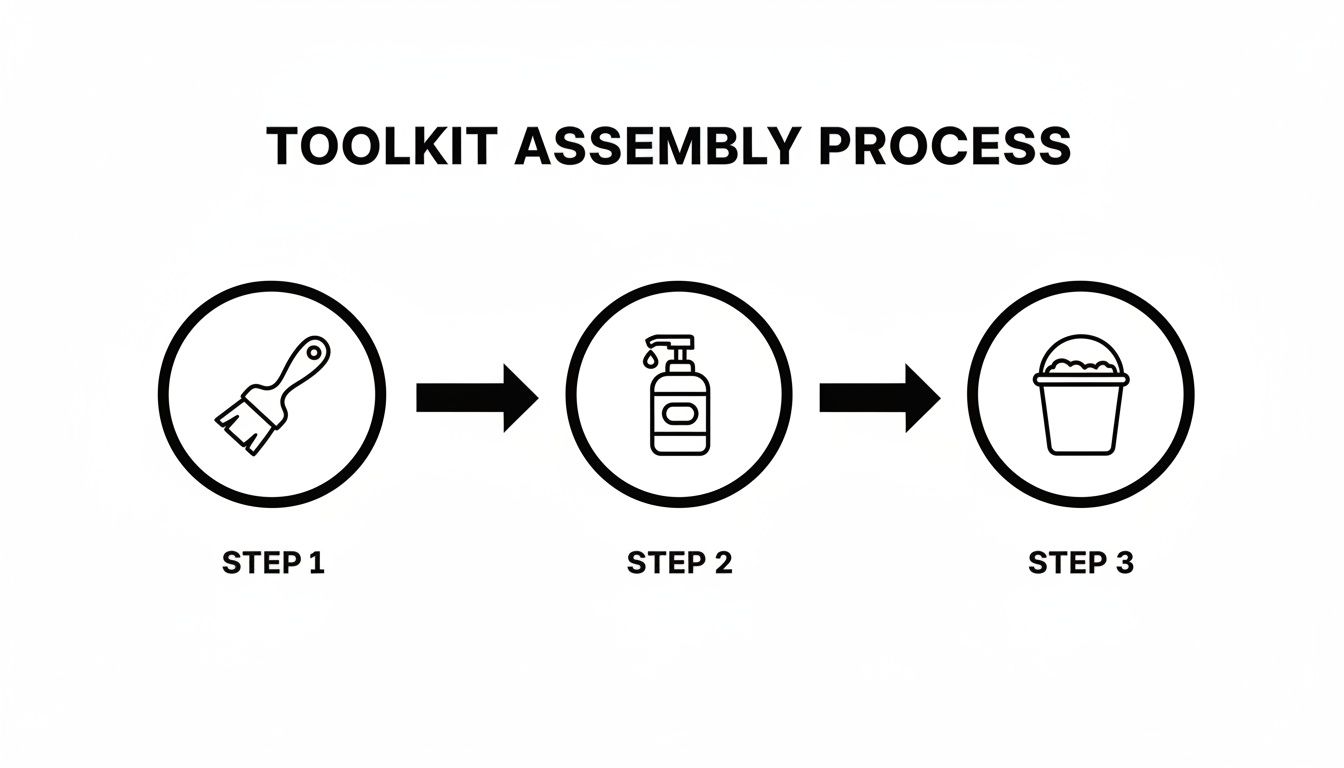
Think of it as a simple, three-part process: a soft brush, a gentle cleaner, and some water. That's really all it takes.
Applying Your Cleaning Solution
With the screens off, find a clean spot like a tarp on the lawn to lay them down. Whatever you do, don't grab a pressure washer or a hose on a jet setting. That’s a surefire way to stretch, tear, or even blast a hole right through the mesh.
Instead, start with a gentle pre-rinse. Use a "shower" setting on your hose nozzle to lightly spray the screen and knock off the loose dust and cobwebs.
Next, mix up a simple cleaning solution—a few drops of mild dish soap in a bucket of warm water is perfect. Dip your soft-bristle brush in the soapy water and get to scrubbing.
Expert Tip: Use gentle, circular motions when you scrub. This lifts the grime out of the mesh without stretching it. Aggressive back-and-forth scrubbing can cause the screen to sag over time, and nobody wants that.
Work your way across the entire screen, giving a little extra attention to the corners where gunk loves to build up. Make sure to scrub the frame, too; it’s often just as dirty as the screen itself. Once you’ve done one side, flip it over and do the other.
Rinsing and Drying for a Perfect Finish
Getting a streak-free result is all in the rinse. Any leftover soap residue will dry hazy and look terrible in the sun. Set your hose nozzle back to that gentle "shower" setting and rinse both sides of the screen completely, working from the top down. Keep rinsing until you don't see a single soap sud. This is especially important if you have hard water, as it helps prevent mineral spots.
For more pro-level tips on avoiding streaks, check out our guide on how to get streak-free windows—many of the same principles apply here.
Once the screen is rinsed clean, give it a few light taps on the ground to shake off the excess water. Now for the final, and most critical, step: let them air dry completely. Don't lay them flat on the grass where they'll just pick up more dirt. Instead, lean them upright against a wall, a fence, or a chair in a sunny spot.
Don't rush this part. Putting a damp screen back in your window frame traps moisture, which can lead to rot or peeling paint. A wet screen is also a magnet for fresh dust and pollen, undoing all your hard work in minutes. In the bright Arizona sun, this can take anywhere from 30 minutes to a couple of hours. A little patience here pays off with a crystal-clear view that lasts.
Tackling Arizona Dust and Grime Effectively

Living in the Phoenix area means your window screens face a unique kind of assault. We're not talking about just a little dirt. It’s a stubborn mix of fine desert dust, the sticky pollen from our beloved Palo Verde trees, and those frustrating mineral deposits our hard water leaves behind.
A quick spray with the hose simply won't cut it here. In fact, that usually just turns the fine dust into a muddy film that's even harder to get off. You need a cleaning strategy that’s smart enough to break down our specific kind of grime without damaging your screens.
Crafting a DIY Solution for Arizona Grime
For most of the seasonal cleaning you'll be doing, you can skip the harsh chemicals. A simple, effective solution can be mixed right in your kitchen with a few ingredients perfectly suited for what Arizona throws at your screens.
This is our go-to DIY recipe for cutting through that notorious buildup of dust and minerals.
- 1 Gallon of Warm Water: Warm water is key, as it helps dissolve everything else much more effectively.
- ¼ Cup of White Vinegar: The mild acetic acid in vinegar is a champ at breaking down the calcium and magnesium deposits common in our local hard water.
- 1 Teaspoon of Mild Dish Soap: This acts as a surfactant, which is just a fancy way of saying it lifts away the oily pollen and fine dust particles from the mesh.
Just mix these in a bucket. The vinegar goes to work on those chalky mineral spots from sprinklers, while the dish soap tackles the layers of dust and pollen. It's a powerful combination that’s still gentle enough for your screens.
The Battle Against Hard Water Spots
Let's be honest, one of the biggest headaches for any Phoenix homeowner is the white, chalky residue left by sprinkler systems. If you don't deal with them, these mineral deposits can actually etch into the screen mesh and frames over time.
If your DIY vinegar solution isn't quite strong enough for some really stubborn spots, you might need to bring in a commercial cleaner. Look for a product specifically labeled as a calcium, lime, and rust remover. A word of caution: always test it on a small, hidden area of the screen frame first to make sure it doesn’t cause any discoloration. Apply it carefully with a cloth or soft brush, not by spraying it directly all over the mesh.
When you're cleaning screens, remember that it's just one part of a bigger picture. The frequency of cleaning is just as important as the method. Learn more about how often you should clean your windows in Scottsdale, AZ to keep your entire home looking its best year-round.
When to Use Commercial Cleaners
While our DIY mix handles most jobs beautifully, there are times when a professionally formulated product is the smarter choice. This is especially true if you're dealing with screens that have years of caked-on grime or are exposed to grease—like the screens on your kitchen windows.
When you’re shopping for a commercial screen cleaner, flip the bottle over and check the label for a few key things:
- pH-Neutral: This is important because it means the formula won't corrode aluminum frames or cause the screen material to degrade.
- Ammonia-Free: Ammonia can be harsh on certain screen finishes and isn't the most eco-friendly option.
- Residue-Free: You want a cleaner that rinses away completely. Anything left behind will just become a sticky magnet for more dust.
Using the right solution—whether you mix it yourself or buy it from a store—is the secret to making this chore faster and much more effective.
Taking Screen Care to the Next Level
Even with a perfect cleaning routine, your screens won't last forever. Here in Arizona, the relentless sun and harsh monsoon winds are tough on them. Eventually, you'll run into problems that a simple wash can't fix. The trick is to catch these issues early before they become a real headache.
After you've cleaned your screens, give each one a quick but thorough inspection. Look for any small rips or holes in the mesh. Remember, even a tiny tear is like rolling out the welcome mat for bugs.
Gently push on the center of the screen. If it feels stiff and brittle instead of flexible, that's the sun damage talking. The material is breaking down and will likely tear soon. You should also check the spline—that's the rubber cord holding the screen material in the frame. If it’s cracked, looks shrunken, or is popping out of its channel, it's failing and needs attention.
DIY Fix or Time to Call for Help?
So you've found a problem. Now what? Deciding whether to tackle it yourself or call a professional is the next step. Minor screen repairs can be a really satisfying and budget-friendly weekend project if you're up for it.
Here are a few common issues you can probably handle on your own:
- Busted Pull Tab: Those little plastic tabs get brittle and snap off all the time. You can grab replacements at any local hardware store, and they usually just pop right in.
- Loose Spline: If a bit of the rubber spline has worked its way out, a cheap spline roller tool will let you press it back into the frame’s channel. Easy fix.
- Tiny Punctures: For a hole smaller than a dime, a screen repair patch kit is a great temporary solution to keep critters out.
On the other hand, some jobs really are better left to the pros. Diving into a complex repair without the right skills or equipment can easily make things worse, ending up costing you more than if you'd just called for help in the first place.
A bent aluminum frame, for example, is almost impossible to get perfectly straight again without professional tools. If you try to bend it back by hand, you'll likely just weaken the metal and end up needing a whole new screen. The same goes for large tears or a screen that's sagging badly—that’s a clear sign it’s time for a full rescreening.
The Real Value of a Professional Service
Calling in an expert for screen repair or a deep cleaning isn't just about saving yourself the hassle. It’s an investment in getting the job done right and making your screens last. There’s a reason the broader window care market is booming. In fact, the global window cleaning system market was valued at $3.2 billion in 2024 and is on track to more than double by 2033. This shows that homeowners are serious about proper home maintenance, and you can explore detailed market trends on window cleaning systems to see how the industry is growing.
Here at Sparkle Tech, we have the specialized equipment to cut and install new screen mesh with precision, giving you that perfect, drum-tight fit every single time. We can also help you choose the right material for your home, whether that's a tough, pet-resistant screen or a solar screen to help slash those punishing Phoenix energy bills.
Got Questions About Cleaning Your Window Screens? We’ve Got Answers.
Tackling any home project for the first time usually brings up a few questions. When it comes to cleaning window screens, we hear the same great questions over and over. Getting the right answers can make all the difference, turning a potential headache into a satisfying, well-done job.
Probably the number one question we get is, "How often do I really need to clean my screens?" There isn't a single, perfect answer for everyone, but for most homes here in the Phoenix area, a good deep clean twice a year is the sweet spot. We recommend one session in the spring to wash away winter dust and another in the fall to get them ready for the cooler months.
That said, life happens. If a big dust storm or monsoon leaves a visible layer of dirt caked on your screens, don't feel like you have to wait. Go ahead and give them a quick wash to get your view back.
Do All Screen Materials Get Cleaned the Same Way?
This is another big one, and the short answer is no. The material your screen is made from really changes the game plan.
- Fiberglass Screens: These are the most common type you'll find. They’re pretty forgiving, but you want to be gentle. Too much pressure can stretch or tear the mesh. Our go-to method of mild soap, water, and a soft brush is ideal for fiberglass.
- Aluminum Screens: Being metal, these screens are more rigid. You can use the same cleaning solution, but be extra careful with your brush. A stiff brush can easily scratch the protective finish or even leave small dents in the mesh itself.
- Solar Screens: These are designed to block heat and UV rays, so they're much thicker and darker. While they can take a bit more of a scrub, the real danger is chemicals. Anything harsh, especially ammonia-based cleaners, will eat away at the screen's protective coating over time. Always, always stick with a gentle, pH-neutral soap.
If you only remember one thing, make it this: know what your screens are made of before you start. Using the wrong method, especially on an older or specialty screen, can cause damage that’s impossible to undo.
Can I Just Clean My Screens While They’re Still in the Window?
We get why people ask this—it seems so much easier! And while you can give them a quick wipe-down in the frame, we really don’t recommend it for a real clean.
Washing screens in place just moves surface dust around. More importantly, it’s almost impossible to rinse them properly. You’re often left with a sticky soap residue that actually attracts more dirt. Plus, all that soapy water will inevitably drip and run down your glass and sills, creating a whole new mess to clean up.
Trust us on this one. Taking a few extra minutes to pop the screens out is well worth the effort. It's the only way to truly clean both sides and let them dry completely for that crystal-clear, long-lasting result.
If you're dealing with stubborn, caked-on grime or have delicate screens that you're nervous about damaging, don't hesitate to call in the pros. The team at Sparkle Tech Window Washing LLC has the right tools and expertise to make your screens and windows look brand new. Schedule your service today!