


You might be in the middle of a relocation, trying to buy your next home before this one closes, or are tired of carrying a property longer than you planned. That pressure is real. In Scottsdale and the greater Phoenix area, sellers often assume the answer is to slash the price or wait for the “right” buyer. In practice, a fast sale usually comes from smarter preparation, sharper positioning, and cleaner execution in the first stretch of the listing.
I’ve seen the same pattern over and over in this market. Homes that sell quickly don’t just look good. They feel easy to buy. Buyers can understand the value immediately, the photos are strong, the home shows clean and bright, and the pricing gives them a reason to act instead of hesitate. In our desert climate, that standard includes details many sellers overlook, especially the condition of windows, screens, and exterior glass.
Adopting the Mindset for a Fast Sale
If you need to know how to sell house faster, stop thinking about speed as a matter of luck. Treat the sale like a short, tightly managed project with one job: attract the best possible offer in the shortest practical time.
Most fast sales start with a mindset shift. Sellers naturally look at their home through the lens of memories, upgrades, and what they’ve invested over the years. Buyers don’t. They judge what they can see, how the home compares to alternatives, and whether it feels move-in ready. That gap matters.
A strong fast-sale plan rests on six pillars:
- Preparation before listing so buyers don’t trip over obvious flaws.
- Clean presentation that makes the house feel bright, cared for, and current.
- Disciplined pricing based on the market, not sentiment.
- Strong digital media because the first showing happens online.
- Heavy first-week exposure so the listing gets momentum early.
- Tight showing and negotiation management so interest turns into a signed contract.
Practical rule: Speed comes from front-loading the work. The market rarely rewards sellers who “list first and fix it later.”
Scottsdale sellers benefit when they think like merchandisers, not just owners. Every choice should answer one question: does this make a buyer more likely to book a showing and write clean terms? If the answer is no, it’s usually noise.
For a broader look at expert strategies for realtors, I like resources that focus on execution rather than fluff. The same principle applies whether you’re working with a luxury listing in North Scottsdale or a family home in central Phoenix.
Before you touch paint, landscaping, or listing copy, it also helps to review practical ideas for increasing home value before selling. Not every improvement helps a fast sale, and some instead delay it.
Prepare Your Property to Wow Buyers
A fast sale starts before the sign goes in the yard. Buyers move quickly when the house looks maintained, easy to understand, and easy to imagine living in. They slow down when they see deferred maintenance, visual clutter, and dirty surfaces.
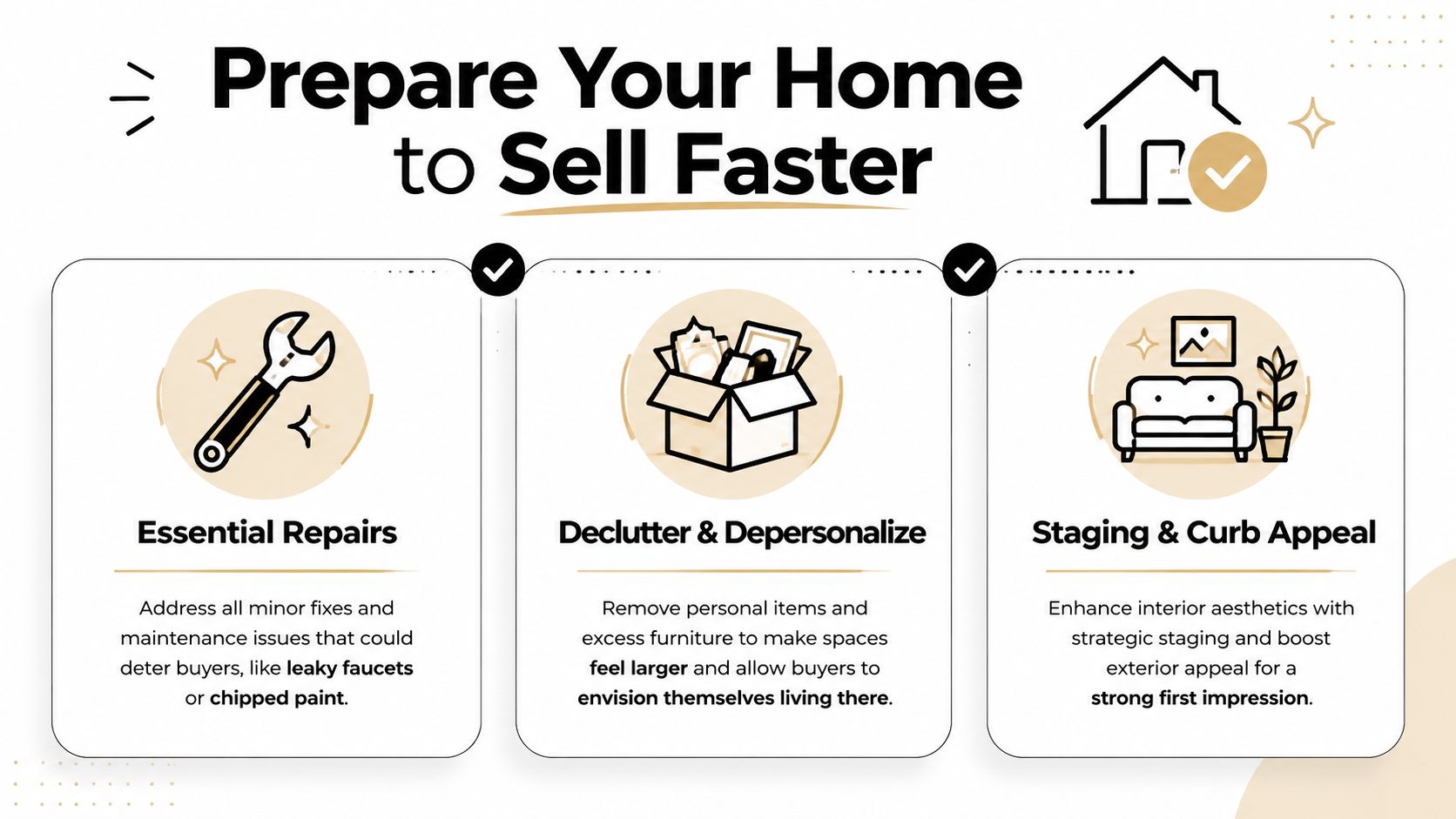
Fix what creates doubt
You do not need a full remodel to sell quickly. You do need to remove the little things that make buyers wonder what else has been neglected.
Focus first on the repairs that create friction during a showing:
- Water-related annoyances like dripping faucets, loose caulk, or stained areas around sinks.
- Paint and patch work where chips, scuffs, or nail holes make rooms look tired.
- Doors, drawers, and hardware that stick, sag, rattle, or feel worn when touched.
- Lighting problems such as dead bulbs, mismatched color temperatures, or dated fixtures in key rooms.
Buyers use tiny defects to form big conclusions. If a house has three or four visible maintenance issues in the first few minutes, many assume there are bigger issues they haven’t seen yet.
Remove distractions, not personality alone
Decluttering is not about making your house sterile. It’s about making the layout readable.
In Scottsdale, open living areas, patios, and light-filled rooms often sell the home. Heavy furniture, overloaded shelves, and crowded countertops work against that. I usually tell sellers to strip each room back until its purpose is obvious in one glance.
A useful test is simple. Stand in the doorway and ask whether the room feels larger, brighter, and calmer than it did a week ago. If not, there’s still too much in it.
Here’s where owners usually get the fastest visual gain:
| Area | What to remove first | What buyers should feel |
|---|---|---|
| Living room | Extra chairs, side tables, stacked decor | Open circulation and scale |
| Kitchen | Small appliances, papers, magnets, decor clutter | Clean workspace and storage |
| Primary bedroom | Bulky furniture, personal photos, excess linens | Restful, spacious retreat |
| Closets | Off-season clothing and overflow storage | More capacity than they expected |
For sellers who want a few extra presentation ideas, these tips for selling your home quickly are useful because they stay focused on changes buyers notice.
Deep cleaning matters more in Phoenix than many sellers realize
In our market, the sun is unforgiving. It shows every streak, every dusty screen, and every hard water mark. A home can be beautifully staged and still photograph flat if the glass is dull.
Generic selling advice often misses a key point. Zillow notes that listings with high-resolution images, 3D tours, and interactive floor plans sell for about 2% more than similar homes in its home selling tips. Better visuals help. What many sellers miss is that clear glass directly supports those visuals.
Clean windows don’t just make a home look cleaner. They change how light moves through the entire listing.
In Scottsdale and Phoenix, I pay close attention to:
- Exterior windows coated with dust or mineral residue
- Screens that mute light and look gray in photos
- Glass doors that sit directly in major sightlines
- Patio glass and pool-view panels because buyers linger there
- Solar panels when the home markets itself on efficiency and upkeep
A streak-free window line does two jobs at once. It boosts curb appeal outside, then makes the interior feel brighter from inside. That combination is powerful during photography and in-person showings. Buyers may not say, “the windows sold me,” but they absolutely react to a house that feels crisp, luminous, and maintained.
That’s why I consider exterior detailing part of sale prep, not an optional add-on. If you want more ideas in that lane, these curb appeal ideas that help homes stand out are worth reviewing before photos are booked.
Price It Right for Immediate Interest
Pricing is where many fast-sale plans fall apart. Sellers spend weeks preparing the home, then sabotage momentum by pricing for negotiation instead of pricing for response.
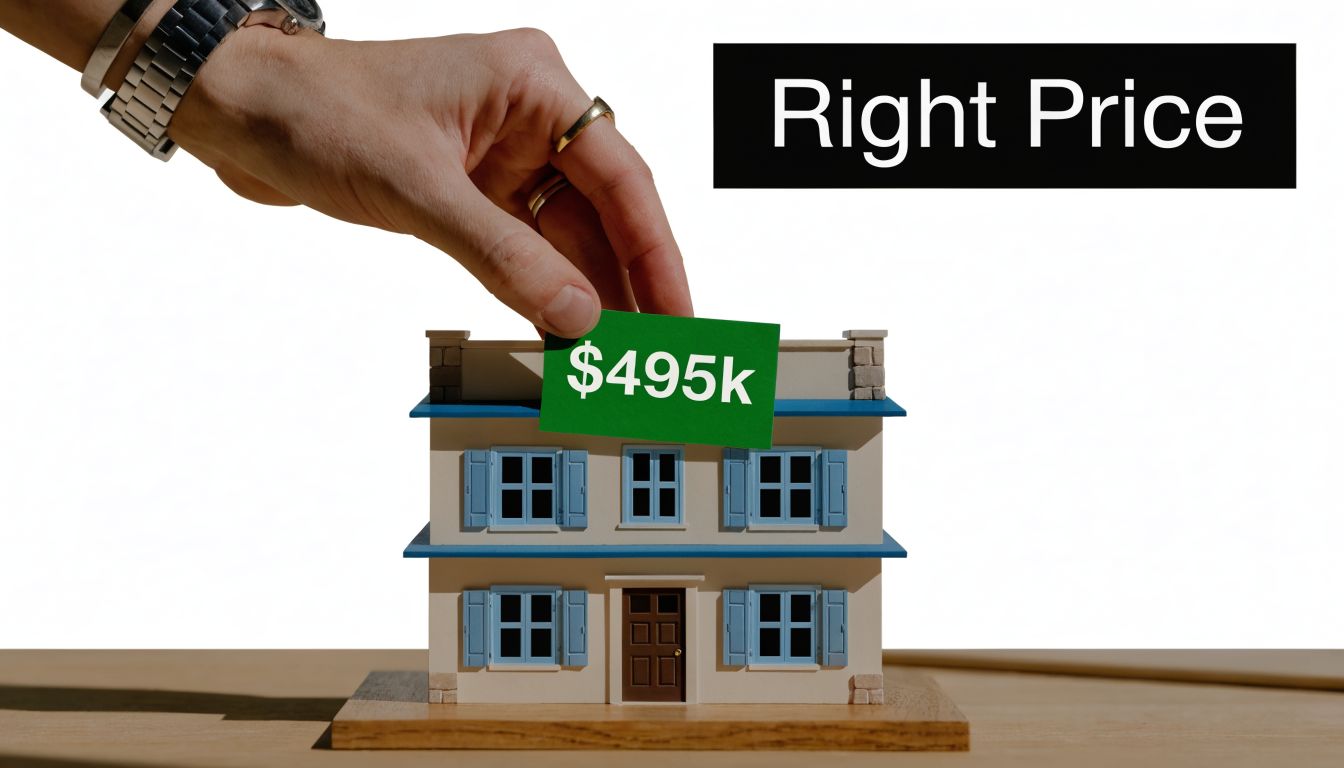
What a serious CMA actually does
A comparative market analysis, or CMA, is not a guess and it isn’t just a list of nearby homes. A good agent studies recent closed sales, pending listings, and active competition, then adjusts for square footage, bed and bath count, age, condition, and upgrades.
That’s why strategic pricing is such a powerful lever. According to the data summarized in this pricing strategy breakdown, homes priced within 5% of true market value sell up to 40–60% faster than overpriced peers.
That figure lines up with what happens on the ground. When a home enters the market at a believable price, buyers engage. When it enters high, many move on and wait to see if the seller gets realistic later.
The first week decides more than sellers think
The listing is freshest the moment it hits the market. That’s when buyer alerts fire, agents scan new inventory, and serious shoppers decide what to see this weekend.
If you overprice at launch, you don’t just lose some showings. You lose your best audience. By the time a reduction happens, the listing often carries a stale feel.
I prefer a simple decision framework:
- If the home is updated and competitive, price where buyers can justify acting quickly.
- If the home has obvious cosmetic weaknesses, reflect that up front rather than hoping buyers ignore them.
- If there are several close substitutes nearby, give your listing the edge instead of matching the highest aspirational number in the neighborhood.
The right price creates urgency. The wrong price creates analysis.
Price for search behavior, not ego
Buyers don’t browse the market randomly. They search in brackets. That means your list price should fit how actual people shop online, not how a seller wants the number to feel emotionally.
In Scottsdale, this matters even more because buyers compare quickly across neighborhoods, school zones, and home styles. If your home lands awkwardly above a common search cutoff, you may shrink your audience before they ever see the photos.
A good pricing conversation should feel analytical, not sentimental. If your agent can’t explain the price with comparable sales, current competition, and likely buyer behavior, the number probably isn’t ready.
Create an Irresistible Digital First Impression
Most buyers meet your home on a screen. They scroll past it, click into it, compare it, and decide in seconds whether it deserves a showing. If the digital presentation is weak, the home starts the race behind.

Make the listing feel bright and intentional
Professional photography is not cosmetic fluff. It is the main sales interface for the property.
In the Scottsdale and Phoenix market, harsh light and desert dust create a strange problem. Homes can look either washed out or dingy if the prep is sloppy. Good photographers help, but they can only shoot what’s in front of them. If the house is dim, cluttered, or hazy through the glass, the media suffers.
The best digital presentation usually includes:
- Clean sightlines so rooms read clearly in still photos
- Balanced lighting that doesn’t make interiors feel cave-like
- Staging or light styling that gives each room purpose
- 3D tours or interactive media when the floor plan benefits from it
- Exterior shots timed when the home looks sharp, not sun-blasted
A good listing should answer buyer questions before they ask them.
Use pricing psychology as part of presentation
Price is not only a valuation decision. It is also part of the digital package buyers see.
Research highlighted by HomeLight shows that homes priced to end in .99 sold up to one week faster, such as $429,900 instead of $430,000, in its summary of Zillow-backed findings on using data to sell your house fast. The reason is simple. Buyers tend to focus on the number before the decimal, so the home feels less expensive at a glance.
That tactic works especially well online, where people compare many listings quickly and often search by price cap. A seller may see that difference as minor. A buyer’s eye often does not.
Here’s a short video that complements the digital presentation side of the process:
What weak digital presentation looks like
You can usually spot a slow-moving listing from the first few images. The blinds are half closed. The windows are dull. One room is beautifully staged, another is crowded, and the exterior photos look like they were taken on a rushed afternoon.
That inconsistency costs showings.
If you want to know how to sell house faster, treat your listing media like a launch asset, not a box to check. Buyers forgive outdated countertops before they forgive a listing that feels sloppy, dark, or untrustworthy.
Launch an Aggressive First-Week Marketing Blitz
A listing doesn’t gain momentum by existing. It gains momentum because the agent creates concentrated exposure right away, while the property is new and buyers are paying attention.
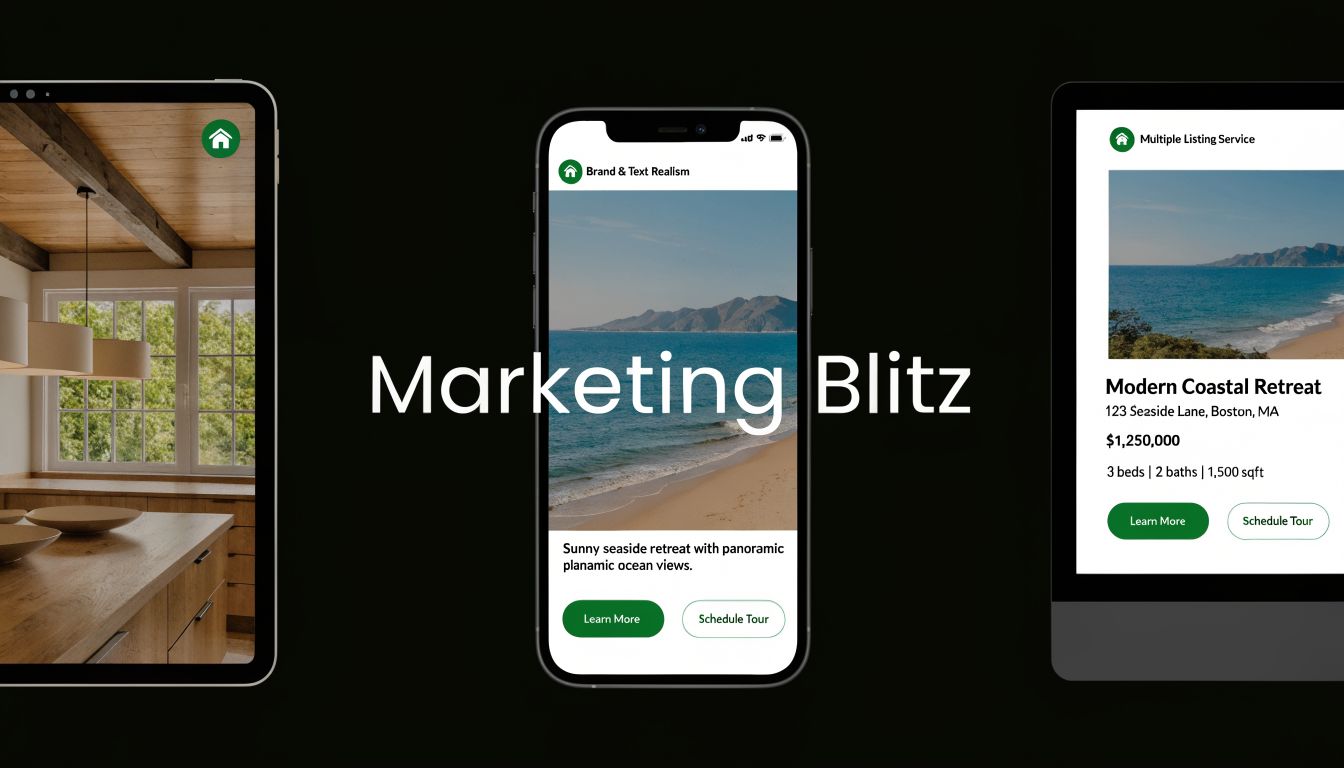
Why MLS exposure still matters most
The MLS is still the backbone of serious residential marketing. It pushes the listing into the places buyers and agents search.
That reach matters. According to Opendoor’s guide on how to sell your house fast, listings placed on the MLS and syndicated to major portals receive roughly 17–20 times more inbound buyer inquiries than pocket listings. The same source states that MLS-listed homes sell for approximately 17.5% more while also selling 20–30% faster.
Private marketing has a place in rare situations. For most Scottsdale and Phoenix sellers who want speed and broad demand, it’s the wrong starting point.
Build a launch sequence, not a single listing date
The first week should feel coordinated. I like to think in sequence rather than in isolated tasks.
A solid rollout often includes:
- Pre-launch prep with photography, final cleaning, and listing copy completed before going live.
- MLS activation with polished media and accurate details from day one.
- Immediate portal visibility so Zillow, Redfin, and Realtor.com pick up a complete presentation.
- Agent-to-agent outreach to local buyer agents with matching clients.
- Open house planning that is scheduled around when the listing is freshest.
- Direct follow-up with every serious inquiry while interest is still hot.
A first week with no urgency usually turns into a second week full of explanations.
Match the marketing to the home and submarket
Not every Phoenix-area home needs the exact same campaign. A lock-and-leave condo in Scottsdale has a different buyer than a family property in Peoria or a patio-heavy home in North Phoenix.
What shouldn’t change is the intensity. “Post and pray” is not a strategy. If your home is live, your agent should be watching response carefully, tightening the message if needed, and pushing traffic through multiple channels. A practical property marketing guide for agents can help sellers understand what a real campaign looks like behind the scenes.
For sellers, the key question is simple: after launch, is there active promotion happening, or is the listing just waiting to be discovered?
Master Showings and Negotiations for a Swift Close
Once the home is live, the job shifts from launch to control. You need strong showing conditions, fast feedback loops, and negotiations that protect momentum instead of draining it.
Keep the home ready without exhausting yourself
The best showing strategy is flexibility with standards. Buyers want to see homes on their schedule, not yours. If the property is difficult to access or never quite ready, opportunities slip away.
That doesn’t mean you should live in a state of chaos. It means creating a maintenance rhythm that keeps the house consistently presentable:
- Reset daily by clearing counters, making beds, and checking bathrooms.
- Leave for showings whenever possible so buyers can speak freely.
- Track comments from agents and buyers for patterns, not isolated opinions.
- Refresh key surfaces before weekends, open houses, and second showings.
In Phoenix, the exterior deserves its own maintenance plan. Dust and hard water marks come back quickly, especially on glass. Many guides miss this, but coordinating service partners can keep the property in sale condition without forcing the homeowner to handle every reset personally.
Continuous show-readiness is a real advantage
Local practicality beats generic advice. If the home photographed beautifully but the patio glass is dusty by the next weekend, the listing and the in-person experience begin to diverge.
A better approach is simple. Schedule a deep pre-listing clean, then line up maintenance around heavy showing periods or important open houses. For sellers who want to stay organized, this open house checklist for sellers is a useful way to think through the timing.
Buyers notice inconsistency fast. If the listing looked polished online, the house needs to deliver the same feeling in person.
Negotiate for certainty, not just the highest headline number
A fast sale is not just about getting an offer. It’s about choosing the offer most likely to close cleanly.
Review more than price:
| Offer factor | Why it matters |
|---|---|
| Financing strength | Stronger financing usually reduces surprises |
| Inspection posture | Heavy repair expectations can slow or derail the deal |
| Closing timeline | The best date is the one that fits your move and can actually be met |
| Concessions and contingencies | Cleaner terms often beat a slightly higher number |
| Buyer responsiveness | Serious buyers and organized agents move faster |
When a weak offer comes in, don’t get emotional. Counter with clarity or ask targeted questions. Sometimes a buyer who starts low will improve quickly if the home is positioned well and the response is professional. Endless back-and-forth, on the other hand, kills urgency and invites second thoughts.
Frequently Asked Questions About Selling Faster
Is there a best time to sell in Phoenix or Scottsdale
There are busier stretches in the local market, but a fast sale is still possible outside the busiest window if the home is prepared well and priced with discipline. In Scottsdale, presentation matters year-round because many buyers compare online before they ever step inside. If you can choose your timing, list when you can fully prepare the property instead of rushing out half-ready.
Is it better to sell vacant or furnished
Neither is automatically better. A vacant home is easier to keep clean and available, but it can feel smaller or colder if it has no visual anchors. A furnished home can feel warmer and help buyers understand the scale of each room, but only if the furniture is clean, proportional, and not overly personal. If the existing furniture is bulky, dated, or crowding the layout, lighter staging usually works better than leaving everything in place.
How should I handle a lowball offer without losing the buyer
Don’t treat it as an insult. Treat it as information. A low opening number may mean the buyer is testing flexibility, reacting to uncertainty, or trying to start a conversation. Respond quickly, counter with a number you can support, and tighten the terms that matter to you. If the buyer is real, a calm counter often keeps the discussion alive. If they disappear, they probably were not your best path to a fast close anyway.
A fast sale in Scottsdale or Phoenix rarely comes from one magic trick. It comes from getting the basics right at a high level. Clean prep, sharp pricing, strong photos, broad exposure, and a house that stays ready from launch through contract.
If you’re preparing a home for photos, showings, or an open house, Sparkle Tech Window Washing LLC helps Phoenix-area sellers present their property at its brightest. Their team handles window cleaning, screen cleaning and repair, and solar panel cleaning across Scottsdale, Peoria, Phoenix, and surrounding communities, making it easier to keep a home photo-ready and buyer-ready without adding more work to your move.