

You're standing in your driveway, looking at dusty second-story windows, tired screens, and solar panels that haven't been cleaned since the last haboob. A contractor says they can handle it all. The quote sounds fine. The website looks polished. Then the job goes sideways. Screens come back loose, hard water spots show again in a week, and someone drags equipment through your landscaping.
That's the risk with any service contractor, especially in Phoenix-area conditions where heat, dust, mineral-heavy water, and sun exposure punish shortcuts fast. Window cleaning, screen repair, and solar panel cleaning aren't casual add-ons. They touch visible surfaces, fragile materials, roof access, and the curb appeal of your home.
Many homeowners ask too few questions before hiring, which often leads to expensive mistakes. Consumer complaints about home improvement contractors rose 25% between 2007 and 2010, and the FTC noted more than 8,000 reports annually by 2012 involving issues like incomplete projects, unlicensed work, and failure to honor warranties. Those trends pushed tighter vetting and made pre-hire screening essential. Asking targeted questions can reduce dispute risks by up to 50%, according to a 2021 Consumer Reports analysis of 5,000 surveyed projects. Start there, and use outside reading like these Shady Deal Tree Service recommendations if you want a broader contractor screening mindset.
Here are the 10 questions to ask a contractor before you let anyone onto your property.
1. Are You Licensed and Insured?
Ask this first. If the answer is vague, move on.
In Arizona, you need to know who's walking onto your property, climbing ladders, working around glass, and handling damage if something goes wrong. This isn't paperwork theater. California's Contractors State License Board reported that unlicensed contractors accounted for 40% of its citations in 2014, which tells you exactly where trouble often starts. For specialty home services, the same principle applies. The contractor should be able to show current licensing status and active insurance without delay.

A reliable company won't just say “we're covered.” They'll send documentation. For a Phoenix homeowner, that matters even more if the crew will be on tile roofs, near solar equipment, or around expensive landscaping and exterior finishes.
What to ask for
- License details: Ask for the exact license number and verify it independently through Arizona records.
- Insurance certificate: Request a current certificate of liability insurance, and if the project is sensitive, ask for it to come directly from the carrier.
- Coverage confirmation: Check dates, named insured, and whether the business name matches the company you hired.
- Subcontractor status: Ask whether anyone else will show up on site, and whether those workers are covered too.
Practical rule: If a contractor hesitates to provide proof, treat that as your answer.
If you want a plain-English explanation of the difference, this breakdown on bonded vs insured contractors is worth reading before you sign anything. For a deeper insurance background, review these insurance needs for self-employed contractors.
A company like Sparkle Tech is a useful benchmark here. Licensed, insured, and comfortable providing proof is the baseline, not a bonus.
2. What is Your Experience Level and Relevant Background?
Experience has to match the work. A contractor who's fine with ground-level storefront glass might still be the wrong choice for mineral-stained residential windows, delicate solar panels, or aging screens on a two-story Scottsdale home.
Stop asking “How long have you been in business?” and start asking “How much of that work looked like my house?” That distinction matters. A 2022 Angi study of 10,000 reviews found that top-rated contractors with 4.8+ stars fielded 80% fewer complaints when clients asked about experience, and those stronger performers averaged 50+ similar completions, reducing defect rates by 40%.
Ask for specifics, not a résumé speech
You want direct answers to questions like these:
- Similar job count: How many homes like mine have you handled recently?
- Local problem-solving: How do you remove hard water staining without damaging glass?
- Solar panel handling: What's your method for cleaning panels without harming coatings or frames?
- Screen knowledge: Do you repair mesh, spline, frame corners, and sun-damaged components?
A seasoned Phoenix contractor should already know the pain points. Hard water spotting in Peoria. Desert dust buildup on tracks and frames. UV damage on brittle screens. Access challenges with stucco exteriors, pavers, pool decks, and second-story setbacks.
Ask for one recent example from Scottsdale, Peoria, or a nearby neighborhood with similar exposure and home style.
Sparkle Tech's local history is the kind of answer you want from any contractor. Longstanding work in the Valley means they've seen heat-baked screens, etched glass, and solar grime before. That local familiarity is more useful than generic “years of experience” language.
3. Can You Provide References and Reviews?
Don't skip references because the company has a nice review profile. Ask for both.
References tell you how the company behaves when things are ordinary. Reviews tell you how the company behaves at scale. Together, they show whether the contractor is consistent. In a 2024 Harvard Joint Center for Housing Studies report, 45% of homeowners affected by delays and budget issues hadn't requested references from similar recent jobs. That's an avoidable mistake.
What a good reference check sounds like
When you call a past client, keep it simple:
- Work quality: Did the windows stay clean, or did spots reappear quickly?
- Crew conduct: Were technicians respectful, careful, and on time?
- Problem handling: If something went wrong, did the company fix it quickly?
- Repeat business: Would you hire them again without shopping around?
For niche services, ask for references that match your job. If you need screen repair and solar cleaning, don't accept a reference that only covers a one-time storefront wash.
There's another reason this matters. Adoption of digital vetting tools has grown sharply. A Joint Center for Housing Studies report says 62% of U.S. homeowners in 2025 used platforms like Angi, HomeAdvisor, and BuildZoom to validate contractor claims, up from 41% in 2022. Projects that used tool-verified data on experience and references had higher satisfaction scores of 4.6 out of 5 versus 3.4 out of 5.
What to verify online
Look across platforms and compare the story:
- Recent reviews: Prioritize recent feedback over old praise.
- Photo evidence: Check before-and-after shots from similar properties.
- Response quality: Read how the company responds to complaints.
- Consistency: Look for repeated mentions of punctuality, communication, and care around property.
For Phoenix homeowners, I'd rather see a contractor with clear, recent, local feedback than a broad pile of generic praise.
4. How Do You Handle Safety and Property Protection?
This answer tells you whether the company works like professionals or like people borrowing a ladder for the weekend.
Window cleaning and solar panel cleaning involve height, roof access, slippery surfaces, fragile materials, and expensive surroundings. In Phoenix, they also involve brittle landscaping irrigation, decorative rock, hot pavers, stucco, and sun-damaged trim that can crack if handled carelessly.
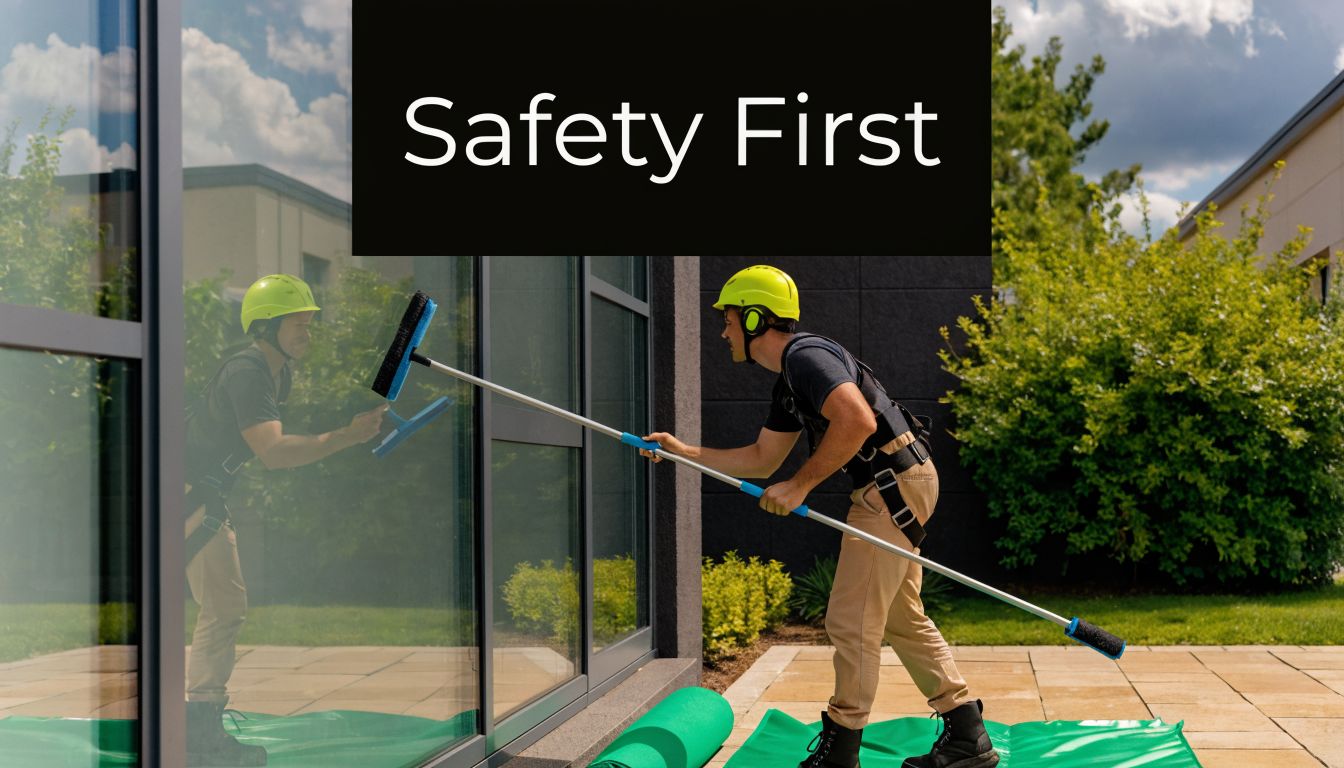
Ask them to walk you through the job from arrival to cleanup. Good contractors can do that clearly. Weak ones default to “Don't worry, we've got it.”
Listen for process
You want to hear details like:
- Access plan: How they reach second-story windows and roof-mounted panels.
- Surface protection: How they protect landscaping, pool decks, patio furniture, and entry areas.
- Equipment handling: Whether they use pads, controlled hose routing, and non-abrasive tools.
- Damage response: What happens if they crack a pane, bend a screen frame, or damage a fixture.
The local angle matters. A 2025 Arizona Home Builders Association analysis of 1,500 local contracts found that 19% of disputes arose from unverified subcontractor quality, and those disputes were resolved 70% faster when clients asked about subs and warranties beforehand. If another crew handles part of the work, ask who they are and what standards they follow.
Here's a useful visual example of the kind of work standards you should expect on site:
A company that protects your property should also be ready to explain weather calls, roof safety, and how they document any pre-existing issues before work starts. That's how you avoid arguments after the fact.
5. What is Your Pricing Structure and Can You Provide a Detailed Estimate?
If the estimate is vague, the final bill will be worse.
A proper quote for window cleaning, screen repair, or solar panel cleaning should break out the scope. Exterior glass isn't the same as interior glass. Tracks, frames, screens, hard water treatment, and panel cleaning should be listed separately so you know what you're paying for.
A 2024 Houzz Pro report analyzing more than 15,000 renovation projects found that contractor vetting through targeted questions correlated with a 28% reduction in project cost overruns. That's one reason pricing questions belong near the top of your checklist, not at the end.
What should appear in writing
- Scope by service: Exterior windows, interior windows, screens, tracks, solar panels, and any specialty treatment.
- Add-ons and exclusions: Know what costs extra and what's included.
- Payment terms: Deposit, final payment timing, and accepted payment methods.
- Validity period: How long the estimate stands before it can change.
Cheap quotes create expensive misunderstandings.
For comparison shopping, insist that every company bids the exact same scope. One contractor may include screen cleaning and track detailing. Another may not. On paper, they look different in price. In reality, they're quoting different jobs.
If you want a good example of what service pricing should look like, review this guide to window cleaning service cost. It helps you compare apples to apples. If you're collecting bids, offers like this Beat Any Estimate option show why you still need line-item detail before making a decision.
For HOAs, property managers, and repeat service schedules, ask how recurring work is priced and whether frequency changes the rate. Transparent contractors answer that immediately.
6. What is Your Availability and Scheduling Reliability?
Availability isn't just about the first appointment. It's about whether the company can keep a calendar once they've booked you.
That matters more than most homeowners realize. A 2025 Angi survey of 5,200 Phoenix-area homeowners found that 67% of dissatisfied clients cited contractor overbooking as the main cause of delays, which led to timeline extensions of 15% to 20%. If you're hiring for pre-listing cleanup, HOA maintenance windows, or routine storefront service, unreliable scheduling creates instant problems.
Ask these scheduling questions directly
- Current lead time: How far out are you booking right now?
- Reschedule policy: What happens if weather, staffing, or equipment issues come up?
- Arrival window: Will I get a specific time or a broad service window?
- Recurring service: Can you lock in repeat dates for quarterly panel cleaning or routine window work?
For Phoenix specialty services, scheduling also affects results. If the contractor keeps stacking jobs, they rush. Rushed crews miss screen damage, skip track cleanup, or leave mineral residue because they don't have time for the extra pass.
A dependable contractor should be able to tell you how they confirm appointments, how they notify you if they're delayed, and whether you need to be home. Sparkle Tech sets a strong benchmark on convenience because clients can schedule service online and arrange access without staying home the whole time.
Watch for overcommitment
A strong answer sounds organized. A weak answer sounds optimistic.
If the company can't explain how they manage routes, weather disruptions, and follow-up visits, they're not managing the schedule. They're reacting to it. That's not who you want on your roof or around your home.
7. What Cleaning Products and Methods Do You Use?
Specialized contractors separate themselves from generic labor in this manner.
In Scottsdale and Peoria, product choice and method matter because hard water, dust, heat, and UV exposure change how surfaces respond. The wrong soap leaves residue. Abrasive pads scratch glass. Poor technique can damage screen mesh, leave streaks, or create runoff problems around stone, metal, and painted surfaces.
A lot of generic articles miss this. Service-specific guarantees and environmental practices are often ignored, even though they matter in high-sun markets like Phoenix. The International Window Cleaning Association reports that 65% of client disputes in residential services stem from rain-related streaking or short-term dirt return. That's why questions about rain guarantees, deionized water, and streak prevention aren't optional.
What a competent answer includes
- Water method: Ask whether they use deionized or purified water for spot-free rinsing.
- Product safety: Request Safety Data Sheets for any chemical used around your home.
- Solar panel method: Ask how they clean panel surfaces without damaging coatings.
- Hard water treatment: Ask whether they can identify removable mineral buildup versus permanent glass etching.
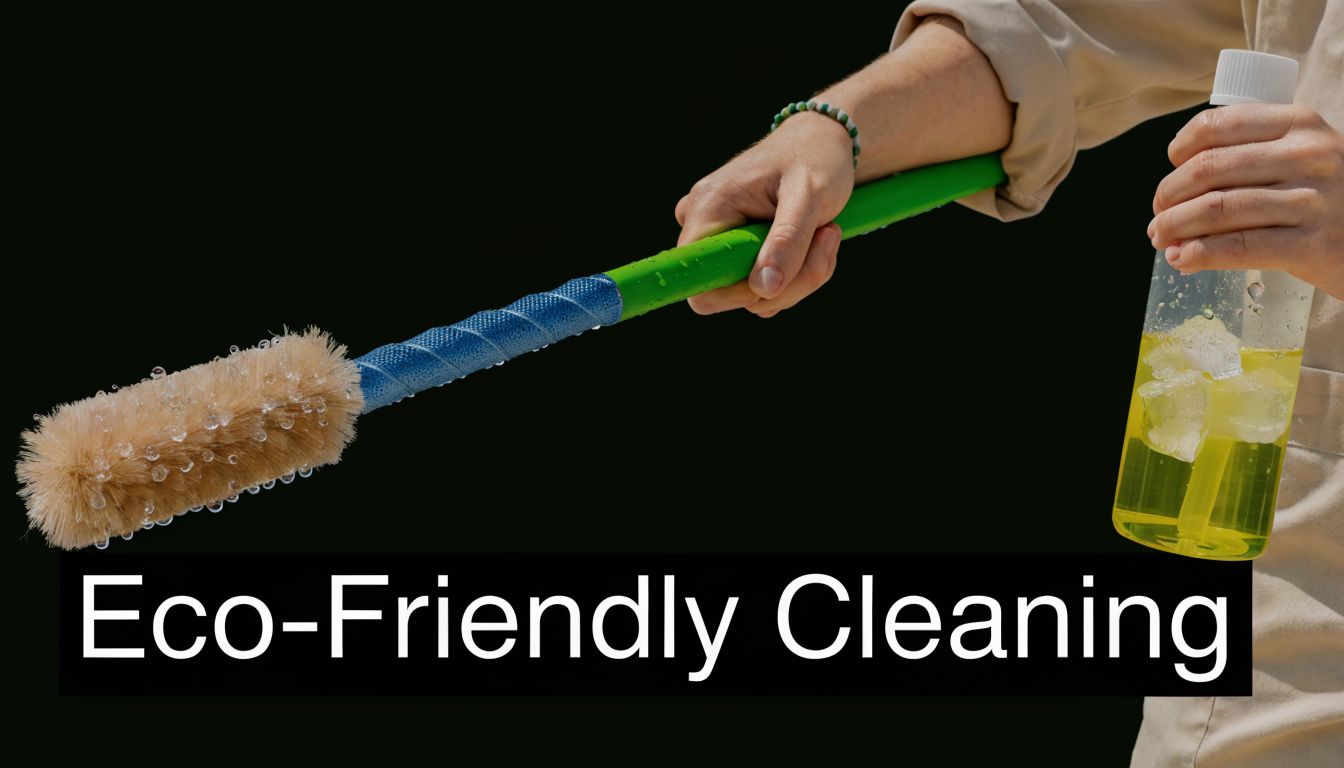
There's also a chemical issue here. EPA-based data in the verified material notes that 70% of window cleaners still use ammonia-based toxins, which can create risks for surfaces and surrounding areas in heat-prone climates. Ask what they use by name. If the company can't explain it clearly, don't let them experiment on your property.
For solar owners, ask for the exact method used on photovoltaic surfaces. Soft-bristle tools, controlled water use, and non-toxic cleaning agents are the standard you want.
8. How Do You Handle Difficult Situations and Customer Concerns?
Every contractor sounds good before the job. A true test is what they do when the result isn't perfect.
Ask this bluntly: “If I'm unhappy with the work, what happens next?” Then stay quiet and listen. A professional company has a defined rework process, a clear satisfaction policy, and a practical way to handle weather-related issues, access problems, or damage claims.
The best answer is short, specific, and written into the agreement.
For niche home services, this matters because many disputes aren't dramatic. They're annoying. A missed pane. A loose screen corner. Water drips left by a patio door. Solar panels cleaned, but not documented. These small issues become big frustrations when the contractor goes silent.
What you want to hear
- A written service guarantee: Not a verbal promise.
- A return policy: If results fall short, how soon will they come back?
- A complaint path: Who do you contact, and how quickly should you expect a response?
- Documentation: Will they note pre-existing damage and post-service issues?
Sparkle Tech is a good local benchmark because it backs visits with a 10-day service and rain guarantee. That's the kind of direct accountability homeowners should ask for. Not “we stand by our work.” Actual terms.
The Better Business Bureau reported that in 2016, contractor-related disputes made up 15% of all home service complaints, and 62% involved payment and performance issues that could often be addressed through better pre-hire questions on references and timelines. Strong companies know this. They make problem resolution easy because they'd rather keep the client than argue over a callback.
9. Do You Carry Appropriate Licensing for Your Specific Services?
General business legitimacy isn't the same thing as being properly set up for the exact work you're hiring out.
That matters in Arizona because specialty services can involve separate compliance questions. Solar panel cleaning raises roof-access and equipment concerns. Work on commercial properties may trigger additional requirements. Some jobs that seem simple become less simple once crews are handling high-access areas, common areas, or HOA properties.
In Phoenix, the Arizona Registrar of Contractors handled 4,200 complaints in 2022, and 35% were linked to unverified credentials. That's exactly why you should ask this question separately from the broader license-and-insurance question. You're checking fit, not just legitimacy.
Go beyond “yes, we're licensed”
Ask:
- What license applies to this service?
- Does that cover work on my property type?
- Are there any HOA, municipal, or commercial requirements for this job?
- Will any subcontractor perform part of the work?
For example, a contractor cleaning solar panels on a steep roof should be able to explain where their scope ends and when another licensed trade would be needed. The same goes for screen repair that turns into frame replacement or hardware work.
If you need a practical homeowner guide before hiring, this article on how to find a window cleaner gives a useful screening framework. It's especially helpful if you're comparing companies that offer overlapping services and you need to separate polished marketing from actual qualifications.
Local fit matters
A contractor can be legitimate and still be wrong for your job. If they don't regularly work in Scottsdale, Peoria, or nearby HOA-heavy communities, they may miss access rules, scheduling restrictions, or property protection expectations that local crews handle every week.
10. What is Your Communication Style and How Will You Keep Me Informed?
Communication sounds soft until a contractor is late, a crew can't access the backyard, or weather changes the service plan. Then it becomes the whole job.
Poor communication is one of the fastest ways a routine project turns into a dispute. A 2023 Deloitte construction survey across major markets found that 31% of clients reported dissatisfaction from communication failures, and contractors without defined communication protocols caused 28% of rework costs, averaging $12,500 per residential project. Even for smaller specialty services, the lesson is the same. Silence costs money.
Ask for the communication system
You need specifics:
- Primary contact: Who do you call or text if there's an issue?
- Response expectations: How quickly do they usually respond?
- Appointment confirmation: Do they confirm the day before or the morning of service?
- Delay updates: How will they notify you if weather or routing changes the schedule?
Digital systems help when they're used well. Verified data shows that Procore's benchmarking module has been adopted by 45% of mid-tier contractors, and weekly digital dashboards reduce miscommunication by 52%. Your window cleaner doesn't need enterprise software to serve you well, but they do need a clear process that keeps you informed.
The standard to expect
A good contractor confirms the appointment, explains access needs, updates you if they're running late, and follows up after the job if needed. Sparkle Tech is a strong benchmark here because it emphasizes responsive communication, punctual technicians, and post-service accountability.
If a company is hard to reach before they earn your money, expect that to get worse after they have it.
10 Essential Contractor Questions Comparison
| Question / Topic | 🔄 Implementation Complexity | ⚡ Resource Requirements | ⭐ Expected Outcomes (Quality) | 📊 Ideal Use Cases (Results/Impact) | 💡 Key Advantages / Tips |
|---|---|---|---|---|---|
| Are You Licensed and Insured? | Low, document checks and verification steps | Low–moderate: access to license/insurance records | High, legal protection and reduced liability ⭐⭐⭐⭐ | High-value properties, HOAs, commercial jobs | Request COI, verify licenses online, require additional insured |
| What is Your Experience Level and Relevant Background? | Moderate, review resumes, portfolios, training | Moderate: time to contact refs and verify certifications | High, fewer mistakes, better problem-solving ⭐⭐⭐⭐ | Complex jobs (solar, multi-story), long-term contracts | Ask for similar project examples and manufacturer training |
| Can You Provide References and Reviews? | Moderate, contact references and audit online reviews | Low–moderate: call time and review platforms | Good, insight into reliability and consistency ⭐⭐⭐ | New hires, first-time vendors, HOA vetting | Contact refs directly, look for patterns across reviews |
| How Do You Handle Safety and Property Protection? | High, requires formal protocols and documentation | High: PPE, harnesses, training, safety plans | Very high, reduced accidents and property damage ⭐⭐⭐⭐ | Work at heights, premium estates, commercial sites | Request SDS, fall-protection proof, damage claim procedures |
| What is Your Pricing Structure and Can You Provide a Detailed Estimate? | Moderate, on-site inspection and itemized quoting | Moderate: estimator time, measurement tools, admin | High, transparent costs, fewer disputes ⭐⭐⭐ | Budget planning, HOAs, recurring service contracts | Always get written itemized estimates; compare identical scopes |
| What is Your Availability and Scheduling Reliability? | Low–moderate, scheduling systems and policies | Low: booking platform, admin coordination | Good, predictable timelines, fewer delays ⭐⭐⭐ | Time-sensitive projects, real estate prep, commercial windows | Ask lead time, emergency options, and weather policies |
| What Cleaning Products and Methods Do You Use? | Moderate, evaluate methods and product certifications | Moderate–high: specialized equipment, deionized water | High, superior streak-free, surface-safe results ⭐⭐⭐⭐ | Eco-conscious homes, solar panels, hard-water areas | Request SDS, confirm deionized water and eco certifications |
| How Do You Handle Difficult Situations and Customer Concerns? | Moderate, defined processes, documentation, escalation | Low–moderate: staff training, warranty handling | Good, faster resolution, higher client retention ⭐⭐⭐ | Long-term contracts, HOAs, sensitive client relationships | Get satisfaction guarantees in writing; confirm rework policy |
| Do You Carry Appropriate Licensing for Your Specific Services? | Moderate, check specialty licenses and permits | Low–moderate: permit/verification effort | High, regulatory compliance and valid insurance coverage ⭐⭐⭐⭐ | Solar/electrical work, commercial projects, municipal jobs | Verify Arizona licensing, request copies of specialty certificates |
| What is Your Communication Style and How Will You Keep Me Informed? | Low, set channels, response-time policies | Low–moderate: CRM/tools and staff time | Good, clearer expectations, fewer misunderstandings ⭐⭐⭐ | Larger projects, recurring services, property managers | Confirm preferred channels, expected response times, emergency contact |
Hire with Confidence Your Next Steps
These questions to ask a contractor do more than help you compare quotes. They protect your home, your time, and your money. They also change the dynamic immediately. Instead of hoping the contractor is good, you're making them prove it.
That's exactly how you should hire in the Phoenix area. Scottsdale and Peoria homes deal with dust, hard water, sun damage, and high-visibility exterior surfaces. Window cleaning, screen repair, and solar panel cleaning all look simple until someone inexperienced leaves scratches, streaks, bent frames, or avoidable roof risk behind. A polished website won't protect you from that. Clear answers will.
Start with the essentials. Verify license status. Confirm insurance. Ask what products they use, how they protect property, and what happens if the result isn't right. Then test reliability. Get references. Read recent reviews. Ask how they schedule, who will be on site, and how they communicate delays or follow-up needs.
Pay close attention to how the contractor answers, not just what they say. Strong companies answer directly. They provide documents fast. They explain methods in plain language. They don't get defensive when you ask about guarantees, callbacks, or credentials. They expect those questions because experienced homeowners ask them.
For local homeowners, Sparkle Tech Window Washing is a useful benchmark for what “good” looks like. The company is established in the greater Phoenix area, licensed and insured, clear about pricing, focused on environmentally friendly methods, and willing to stand behind its work with a 10-day service and rain guarantee. Whether you hire them or another contractor, use that standard.
Keep this checklist open while you make calls. Don't rely on memory. Write down the answers. If one contractor is fuzzy and another is specific, you already have your signal.
The right contractor won't mind being vetted. They'll appreciate that you care enough to ask the right questions. That usually tells you you're talking to a professional.
If you want a contractor that already checks the boxes on licensing, insurance, local experience, clear pricing, responsive communication, and a written service guarantee, take a look at Sparkle Tech Window Washing LLC. They serve Scottsdale, Peoria, and the greater Phoenix area with professional window cleaning, screen repair, and solar panel cleaning designed for desert conditions and high homeowner expectations.