

Screen door repairs usually cost about $7 to $200, with the average national repair invoice around $65 per visit. If your door only needs a minor patch or hinge fix, it may stay under $75, but many professional on-site repairs land in the $65 to $200 range depending on the mesh, frame condition, and hardware involved.
If you're in Phoenix, Scottsdale, or Peoria, that number only tells part of the story. The main issue is usually what the desert has already done to the door. Homeowners often call after the screen starts bowing inward, the corners pull loose, or the patio slider begins dragging through a track packed with grit. By that point, the bugs are getting in, the dust is getting in, and the door no longer does the one job it was supposed to do.
In Arizona, screen doors fail differently than they do in milder climates. The mesh bakes in UV, the spline dries out, and fine dust works into tracks and rollers until the door feels heavier than it should. A quick patch can buy time, but it doesn't always solve the underlying problem. The right fix depends on whether the issue is isolated damage, loss of tension, worn hardware, or a frame that's gone out of square.
That difference matters because a low-cost repair that lasts through another hot season is money well spent. A low-cost repair that sags, tears again, or keeps scraping the track isn't.
Your Guide to Screen Door Repair in the Phoenix Area
A common call starts the same way. The homeowner opened the patio door early in the morning to let cooler air in, then noticed the screen wasn't really doing its job anymore. One corner had popped loose, the mesh had gone wavy, or a tear near the handle had turned into an open invitation for bugs and blowing dust.
In the Phoenix area, those problems build slowly, then show up all at once. The sun dries out materials. Monsoon gusts flex lightweight frames. Everyday use pushes on the same latch side and bottom rail until small weaknesses become visible. A door that looked "mostly fine" in spring can feel rough, loose, and tired by late summer.
I've seen the same pattern in homes across Scottsdale, Peoria, and nearby neighborhoods. The screen itself is only one part of the issue. Often the track needs cleaning, the rollers need adjustment, or the frame needs to be checked for twist before new mesh ever goes in. If that step gets skipped, the repair can look clean for a week and still perform poorly.
What homeowners usually want
Customers aren't looking for a perfect showroom door. They want four practical outcomes:
- Keep bugs out: A tight, intact screen with no gaps at the edges.
- Cut the dust: Especially on patio doors that stay in regular use.
- Restore easy operation: No dragging, skipping, or fighting the slider.
- Avoid premature replacement: Repair the door if the frame and hardware still justify it.
Practical rule: In Arizona, the best repair is the one that fixes the cause of the failure, not just the visible tear.
That means looking at mesh condition, spline grip, frame alignment, track cleanliness, and how the door closes. If you're trying to decide whether your screen door needs a patch, a full rescreen, or hardware work, the signs are usually easier to read than they seem once you know what to look for.
Common Screen Door Problems and When to Call for a Fix
The first step is simple. Figure out whether you're dealing with surface damage, tension failure, or a door movement problem. Those are different repairs, and they don't hold up the same way in desert conditions.
Mesh damage that looks small but isn't
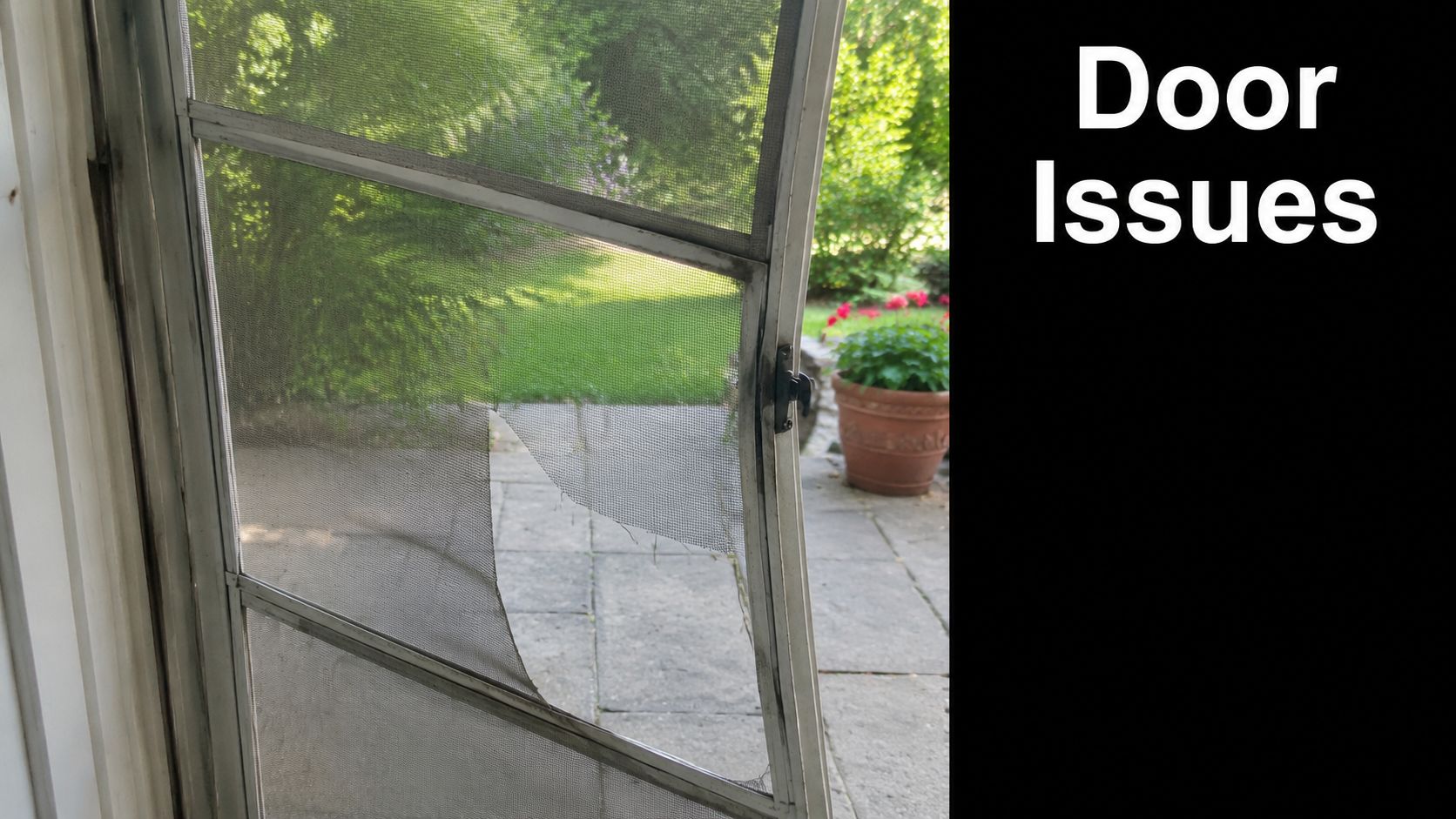
A single puncture from a pet claw or patio furniture bump can often be treated as a temporary repair. Industry guidance says holes smaller than 1.5 inches can be patched, but once damage covers more than 15 to 20% of the screen area, rescreening is recommended because particle-filtration efficiency can drop by 35 to 50% according to Home Depot's screen repair guidance.
That threshold matters more than most homeowners realize. One tear isn't the same as several sun-weakened spots spread across the panel. At that point, patching becomes cosmetic. It doesn't restore consistent airflow or a reliable barrier.
The most common failures in Phoenix homes
Here are the issues that show up most often:
- Sun-brittle mesh: Fiberglass that feels dry, chalky, or easy to crack when pressed.
- Loose spline: The rubber spline shrinks, hardens, or no longer grips the groove well.
- Sagging screen: The mesh ripples or bows because tension has been lost.
- Dirty or damaged track: Dust buildup makes the door drag and wear unevenly.
- Bent frame corners: Monsoon gusts, impacts, or repeated slamming can rack the frame.
A lot of homeowners focus on the visible rip and miss the track. If the slider is hard to move, the problem may be mechanical even when the mesh damage gets all the attention.
When a homeowner fix makes sense
If the door still moves smoothly, the frame is square, and the damage is isolated, a small patch can buy time. That's useful when you're trying to get through a season or stop further tearing before scheduling a proper repair.
But certain signs usually mean it's time to call for a professional screen door repair service:
- The screen won't stay tight: It looks loose again soon after a DIY fix.
- Corners keep pulling out: That usually points to spline or groove issues.
- The door drags or jumps: Mesh replacement alone won't solve that.
- You see multiple weak spots: UV damage tends to spread, not stay isolated.
If the door is letting in dust along with insects, think beyond the hole. The screen plane, frame fit, and track condition are probably all part of the same problem.
That broader diagnosis is what keeps homeowners from paying twice for the same door.
What a Professional Screen Door Repair Service Includes
A professional repair starts with one question. Is this door worth repairing as it sits, or will a quick rescreen hide a deeper problem? The answer comes from inspection, not guesswork.
Assessment comes before new mesh
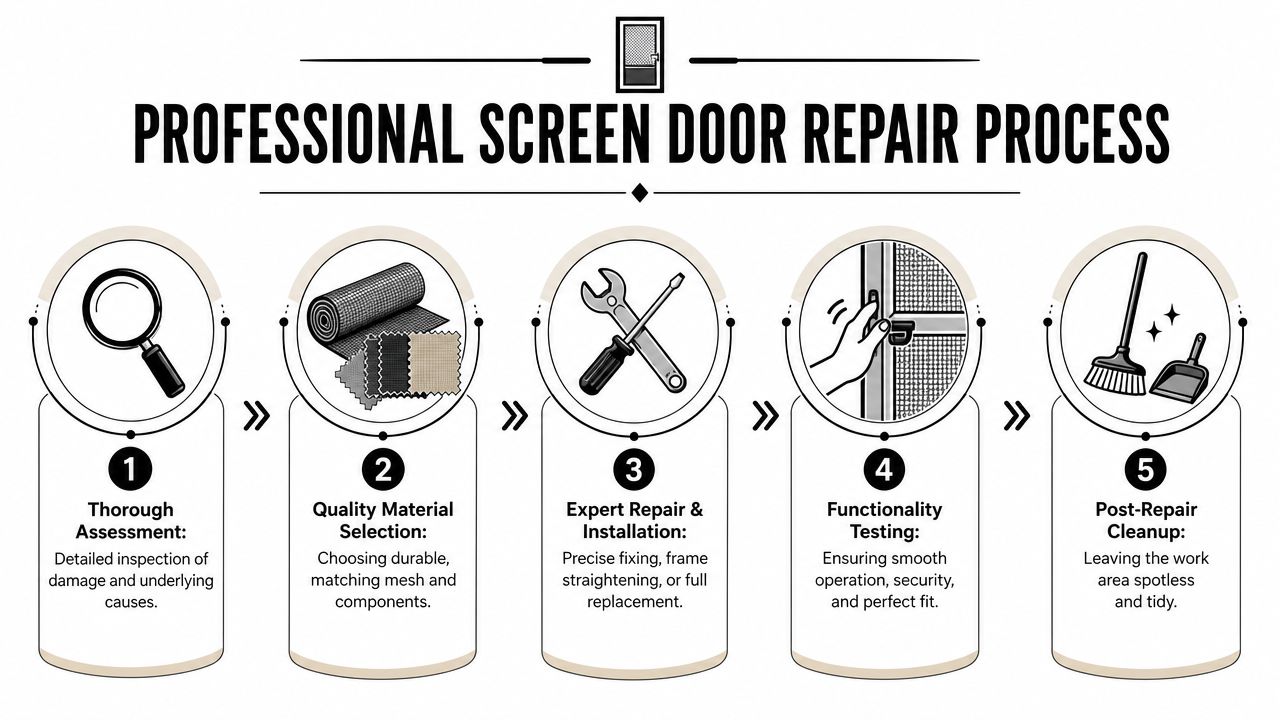
A solid service visit usually checks five things before any material is cut:
Frame condition
The technician looks for twist, bowing, loose corners, and edge wear.Spline channel integrity
If the groove is damaged or packed with old debris, new spline won't seat correctly.Track and roller movement
A screen door that drags will keep stressing the mesh and frame.Mesh type and failure pattern
A puncture repair is different from UV-wide brittleness.Latch and closing pressure
A door that doesn't meet cleanly at the jamb often needs adjustment, not just new screen.
Skipping that process is how homeowners end up with a door that looks better but still feels wrong.
Tension is the real craft
Most DIY repairs fail on tension, not on cutting the mesh. Think of the screen like a guitar string. Too loose and it vibrates, sags, and wears at stress points. Too tight and you can distort the frame or overwork the corners.
Industry best practice is to roll the screen into the top and bottom frame grooves first, then the sides, which helps create a more even pre-stressed screen plane. Guidance tied to common aluminum-channel frames notes that 0.125 to 0.156 inch spline channels are common, and using spline 0.005 to 0.010 inch larger than the channel can improve retention. That same guidance notes that proper sizing and tensioning can extend service life by another 4 to 7 years in arid climates when sag is prevented, as described in this screen tensioning demonstration and guidance.
That number isn't magic. It's the result of fit. When the spline grips properly and the mesh is seated in the right order, the screen resists the daily movement, heat, and airflow that loosen bad installs.
What a good finished repair looks like
A finished door should have these traits:
- Flat, even mesh: No diagonal wrinkles, waves, or corner puckering.
- Clean edge trim: No frayed strands left proud of the frame.
- Consistent closure: The door should meet the latch side without forcing.
- Smooth travel: Rollers should glide without scraping or hopping.
- No soft corners: Pressing near the edges shouldn't make the mesh pull loose.
For homeowners comparing service quotes, those are better quality markers than a generic promise that the door will be "fixed."
A clean-looking rescreen isn't automatically a durable one. The hidden detail is whether the screen was tensioned for Arizona use, not just installed tightly enough to leave the jobsite.
Materials and scope matter
Not every screen door repair service is just a mesh swap. Depending on the condition of the door, the work may include frame straightening, roller adjustment, latch alignment, track cleaning, pet-door insert replacement, or minor hardware correction.
That's why two repairs with similar-looking tears can land at very different levels of labor. The visible damage may match. The actual workload often doesn't.
DIY Screen Repair vs Hiring a Phoenix Professional
DIY screen repair isn't a bad idea in every case. If you have a small tear, a steady hand, and patience, you can handle some jobs yourself. The problem is that many patio screen doors in Phoenix don't fail in a simple way. They fail in layers. The mesh is torn, the spline is tired, and the track is filthy all at once.
Where DIY works well
A homeowner repair makes the most sense when the issue is contained and the door still operates correctly.
- Small punctures: A temporary patch can stop a tear from growing.
- Basic cleaning: Vacuuming the track and wiping the frame helps.
- Simple hardware tightening: Loose pull handles and obvious fasteners are often straightforward.
If you're building a basic kit, this guide to Value Tools Co's essential tools is a practical starting point for the everyday hand tools most homeowners should keep around.
Where DIY usually gets frustrating
The hard part isn't removing old mesh. It's getting the new screen straight, tight, and durable without damaging the frame or overstuffing the corners.
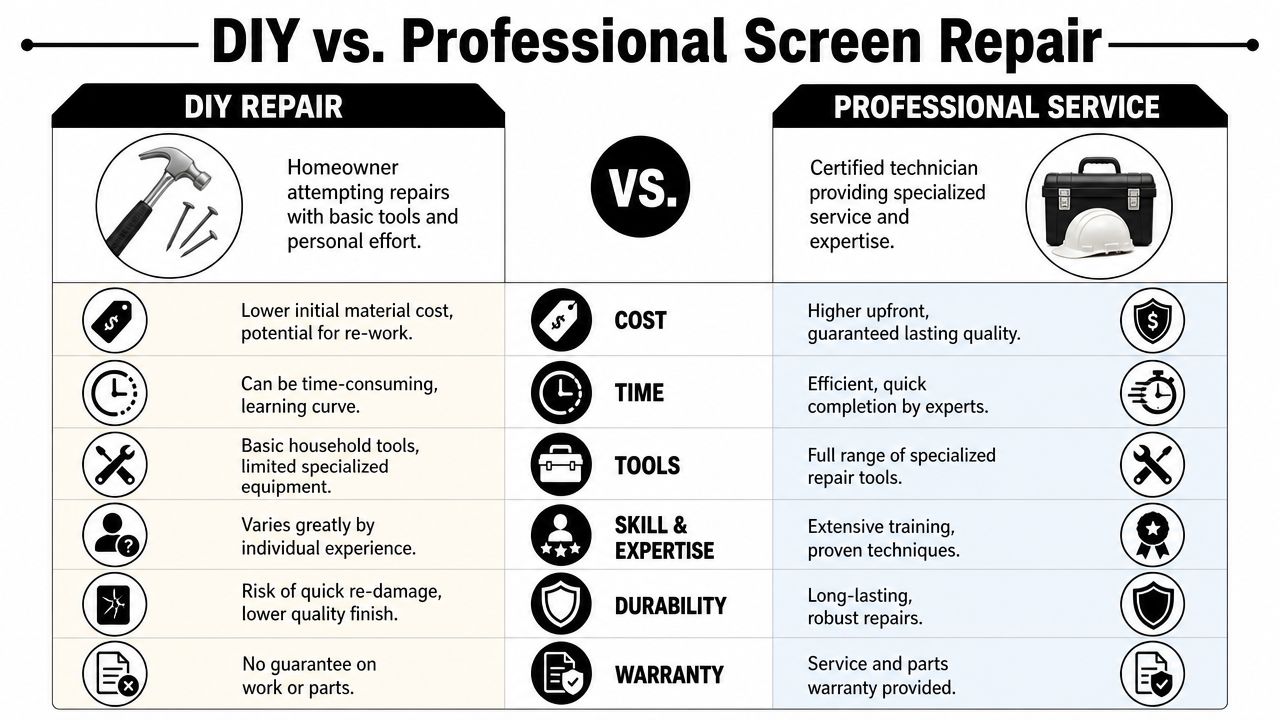
Here is the side-by-side trade-off most homeowners are deciding between:
| Decision point | DIY repair | Professional repair |
|---|---|---|
| Out-of-pocket cost | Lower initial spend on basic materials | Higher upfront service cost |
| Time required | Often longer because of setup and rework | Usually faster on site |
| Tool needs | Limited if patching, more if rescreening | Technician arrives with the right tools |
| Skill sensitivity | High for tensioning and alignment | Lower burden on the homeowner |
| Finish quality | Can vary a lot | More consistent if the door is worth repairing |
A lot of DIY jobs become second attempts. The first version works, but the screen ends up wavy, too loose near the latch, or too tight at one corner. That's especially common on sliding patio screens where movement exposes every flaw.
Why many homeowners choose repair, but not always DIY
A 2026 survey found that roughly 60 to 70% of U.S. homeowners prefer repairing existing windows and doors rather than replacing them, mainly because of cost savings and reduced waste, according to Data Insights Market's screen door repair services analysis. That preference makes sense. Repair often is the smarter choice.
But "repair" doesn't automatically mean "do it yourself." Many homeowners want the cost and waste benefits of repair while still getting a durable result. That's where professional rescreening or door adjustment fits. If you're comparing service options for mesh replacement or screen restoration, Sparkle Tech lists its window screen repair service details as one local reference point for the kind of work that typically falls into this category.
DIY is fine for low-risk damage. Once the door has tension issues, movement problems, or repeated failures, the repair starts acting more like light door work than a craft project.
That distinction saves time, aggravation, and often a second round of spending.
The Sparkle Tech Service Visit A Step-by-Step Guide
Most homeowners want two things from a service visit. They want the problem diagnosed correctly, and they don't want pricing surprises halfway through the job.
That's especially important with screen doors because the visible tear isn't always the full repair. Nationally, the average repair invoice is around $65, while on-site jobs can go up to $200, according to IBISWorld's door installation and repair industry reference. A clear estimate matters because one door may only need a patch or quick hardware adjustment, while another needs rescreening plus track or roller work.

What the visit typically looks like
The process should feel straightforward from the first contact to final walkthrough.
Scheduling and initial details
You describe the issue, the door type, and any access notes for the property.Arrival and inspection
The technician checks the screen, frame, track, rollers, and closure before recommending a fix.Customized pricing before work begins
You get the scope first, so you can approve the repair with a clear understanding of what's being done.Repair and function test
The technician completes the approved work, then checks operation, fit, and finish.Cleanup and final review
The area is left tidy, and the door is tested with the homeowner when possible.
What good service looks like on site
A professional visit should also account for the practical details homeowners notice right away:
- Protection of nearby surfaces: Especially around patios, thresholds, and interior flooring.
- Punctual communication: If arrival timing shifts, you should know.
- Usability after repair: The door should feel easier to operate, not just look better.
- No pressure for unnecessary replacement: Repair should stay on the table when the door justifies it.
That last point matters for families with kids, pet traffic, or older adults using the same patio entry every day. Smooth movement and reliable closure aren't luxury details. They affect day-to-day safety and convenience.
For homeowners also coordinating exterior maintenance, Sparkle Tech's Phoenix window cleaning services give context for how screen work often gets handled alongside broader window care.
Maintenance Tips to Extend Your Screen's Life in Arizona
The cheapest screen door repair service is often the one you delay because the door never gets bad enough to fail early. In Phoenix, that usually comes down to cleaning dust before it acts like grit and catching small problems before heat and use enlarge them.
Hot, dusty climates create a specific maintenance problem. Neglected screens collect debris that reduces airflow and can contribute to higher indoor cooling loads, while routine professional cleaning and micro-repairs can significantly extend screen life, as noted in Screenmobile's guidance on door screen repair.
The habits that actually help
A few maintenance steps make a noticeable difference:
- Vacuum the track first: Dry debris in the lower track grinds against rollers and frame edges.
- Rinse gently, don't blast: High-pressure spray can stress aging mesh or loosen marginal spline.
- Check the corners by hand: If a corner feels soft or starts to lift, address it early.
- Look at the latch side in afternoon light: That's where waves, bowing, and small gaps show up fastest.
What to watch for between service visits
Sun damage doesn't always announce itself with a dramatic rip. Often the first clue is texture. The mesh feels brittle. The surface looks faded. The screen sounds looser when the door closes.
If you're maintaining screens yourself between appointments, this guide on how to clean window screens is a useful reference for safe cleaning methods that don't create new damage.
Clean screens move more air, last longer, and put less strain on the rest of the door. In Arizona, that's not cosmetic maintenance. It's prevention.
A yearly checkup is often enough for lightly used doors. High-traffic patio sliders and homes exposed to blowing dust usually benefit from more frequent attention.
Frequently Asked Questions About Screen Door Repair
Can pet-damaged screen mesh be repaired?
Sometimes. A single puncture or small tear may be patchable if the rest of the mesh is still in good shape. If the screen has several claw points, stretched corners, or widespread brittleness, rescreening is usually the more reliable fix.
Can a screen door repair service fix rollers and track issues too?
Yes, if the problem is adjustment, wear, or debris-related. A lot of sliding screen door complaints come from dirty tracks or worn rollers rather than the mesh itself. If the frame is badly bent or the track condition is severe, replacement may be the better route.
What screen material holds up best in Arizona?
The right choice depends on sun exposure, traffic, and whether pets use the door. In general, desert conditions reward materials that hold tension well and resist UV better than bargain mesh.
How long does a typical repair take?
Simple repairs move quickly. More involved jobs take longer when the technician has to correct movement issues, frame alignment, or hardware along with the screen itself. The main variable isn't the tear. It's the condition of the whole door.
Is repair better than replacement?
If the frame, track, and hardware still justify repair, usually yes. Repair keeps a usable door in service and avoids replacing components that still have life left in them.
If your patio screen is torn, sagging, dragging, or letting Phoenix dust inside, contact Sparkle Tech Window Washing LLC for a customized quote and a straightforward service visit. They handle screen and window care across the greater Phoenix area, and if you're not sure whether your door needs a patch, a rescreen, or a deeper adjustment, that's the best place to start.