
When people ask me what the "best solar panel cleaner" is, they're usually expecting me to name a specific brand or product. But the truth is, the best cleaner isn't something you can buy in a bottle—it’s a strategy. It's about having the right tools, using the correct techniques, and cleaning on a schedule that makes sense for your home, especially here in the dusty Phoenix area.
Think of it this way: you’re not just wiping away dust; you’re protecting a major investment and ensuring it delivers the energy you paid for.
Why a Smart Cleaning Strategy Matters
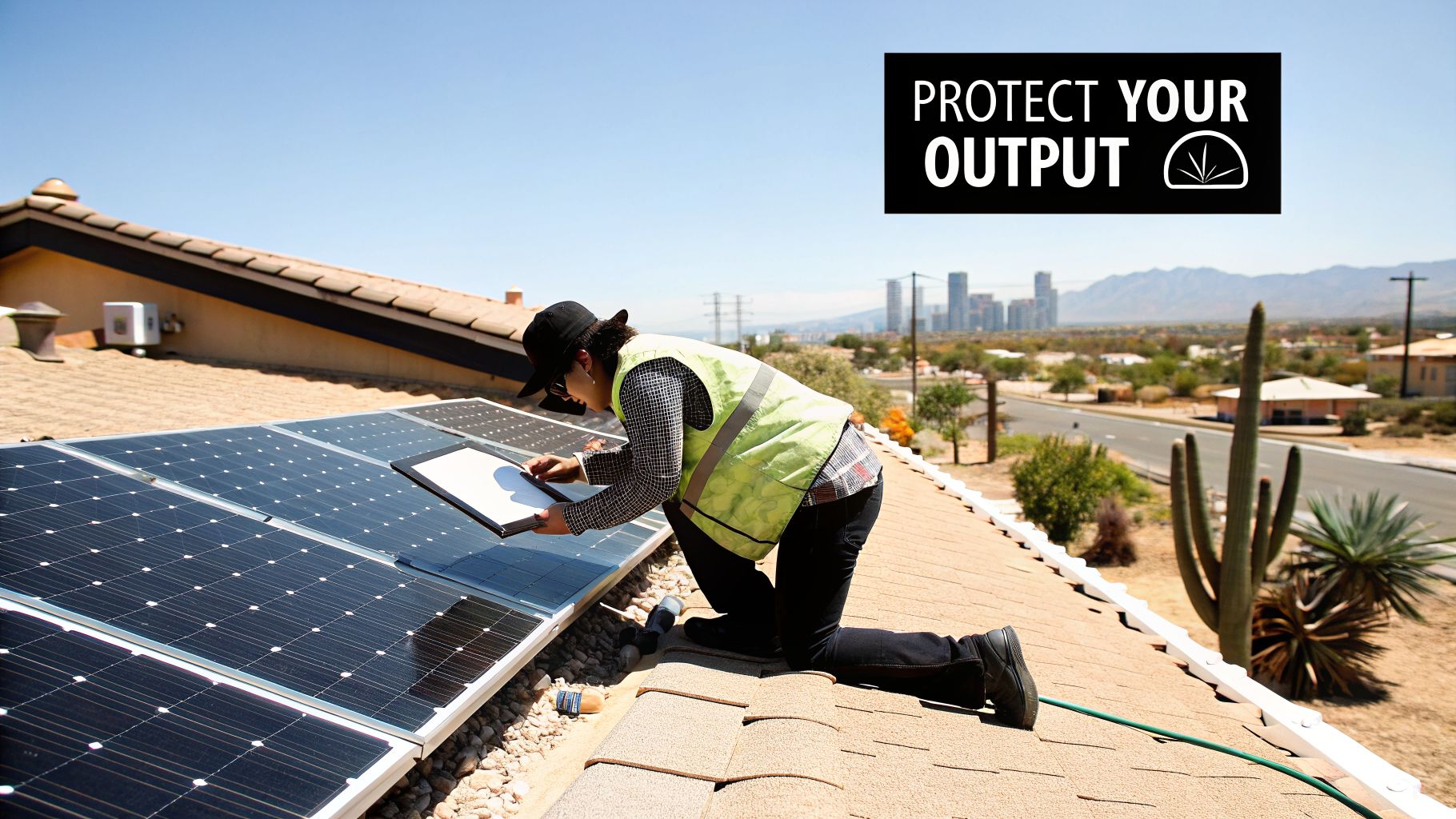
It’s easy to look up at your solar panels and assume they're working at peak performance. But a silent enemy is always at work: a stubborn film of grime that a quick spray with the garden hose simply can’t touch. This isn't just loose dust. It's a baked-on mess of fine desert dirt, hard water minerals, and acidic bird droppings.
The Impact of Buildup
This layer of grime acts like a dirty filter, blocking precious sunlight from reaching the photovoltaic cells underneath. Even a thin, almost invisible layer can have a real impact, forcing you to pull more electricity from the grid and driving up your utility bills. Studies consistently show that soiled panels can suffer energy losses of around 7% or more every year. In a place like Phoenix, that number can climb even higher without regular cleaning.
This is where the idea of the "best cleaner" gets tricky. A simple rinse with tap water might seem like a good idea, but it can actually cause more harm than good. Our water here in the Phoenix area is notoriously hard.
When hard tap water evaporates on a hot solar panel, it leaves behind damaging mineral deposits. We call this problem etching, and it creates permanent spots on the glass that reduce your panel's output for good.
A Professional Approach
A professional cleaning strategy is designed to avoid these pitfalls entirely. It all comes down to three key elements:
- The Right Tools: Using specialized, soft-bristle brushes that are tough on dirt but won't scratch the delicate anti-reflective coating on your panels.
- The Correct Technique: Applying proven methods to clean every inch of the panel safely and thoroughly, avoiding the common mistakes that can lead to costly damage.
- The Proper Solutions: Washing with purified, deionized water is the secret. It contains no minerals, so it dries completely spot-free and allows for maximum sunlight absorption.
Adopting a smart cleaning plan is more than just basic maintenance—it's a critical part of getting the best return on your solar investment. And it's no surprise that the solar panel cleaning market is projected to hit USD 2.57 billion by 2035, a clear sign of its growing importance. You can read more about the growth of the solar cleaning industry and its market drivers at snsinsider.com.
We also have a detailed guide that explains how you can maximize solar efficiency with regular panel cleaning.
When it comes to cleaning your solar panels, you'll hear about two main approaches: the classic wet wash and a more modern dry clean. Deciding which is right for you isn't just a matter of preference—it's about understanding what your panels are up against, especially here in the Phoenix area.
The wet wash is the gold standard for a reason. It's the only way to get a truly deep clean that removes the stubborn, caked-on grime that kills your system’s efficiency. This isn’t just about hosing them down; a proper wet wash is a specific technique that balances effectiveness with protecting your investment.
The Professional Wet Wash Process
A professional job starts with the right tools. We use specialized, soft-bristle brushes, often made from boar's hair, that are designed to scrub away dirt without leaving micro-scratches on your panel's anti-reflective coating.
Then, it's about the cleaning solution. Forget dish soap—it leaves a sticky film that actually attracts more dust. Pros use biodegradable, non-toxic soaps made specifically for solar panels. They cut through the grime without leaving any residue behind.
But the real secret weapon is the water. We use ultra-purified water, either deionized (DI) or from a reverse osmosis (RO) system. This water has all the minerals stripped out, so as it evaporates under the hot Arizona sun, it leaves absolutely nothing behind—no spots, no streaks, and no mineral buildup that can etch the glass over time.
The Rise of Dry Cleaning
On the other hand, you have the dry cleaning method. This is an interesting, water-wise option that's gaining popularity, particularly in dry climates like ours. The idea is to use robotic cleaners or specialized dry brushes to sweep away light, loose layers of dust.
Think of dry cleaning as great preventative maintenance. A little robot running every few days can keep the daily dust from settling, maintaining a decent baseline of efficiency without using a single drop of precious water.
But dry cleaning has its limits. It's simply not effective against the tough stuff—bird droppings baked hard by the sun, sticky pollen, or that nasty film left behind when a light rain mixes with a thick layer of dust. For that kind of buildup, only a wet wash will restore your panels to their full potential.
A comparison of the two methods can help you decide what’s best for your situation.
Wet Cleaning vs Dry Cleaning Methods for Solar Panels
| Feature | Wet Cleaning (Professional Standard) | Dry Cleaning (Water-Wise Option) |
|---|---|---|
| Best For | Deep cleaning, removing caked-on grime, bird droppings, and pollen. Restoring peak efficiency. | Frequent, light maintenance. Removing loose dust and debris in arid climates. |
| Effectiveness | Highly effective for all types of soiling. The only solution for heavy buildup. | Effective only for light, loose dust. Ineffective on stubborn, caked-on materials. |
| Water Usage | Uses purified water, making it a more resource-intensive (but effective) option. | Zero water usage, making it an excellent choice for water conservation. |
| Equipment | Specialized soft brushes, professional-grade soap, and a water purification system (DI/RO). | Often automated with robotic cleaners or manual with long-reach dry brushes. |
| Frequency | Typically done 1-2 times per year, or as needed based on heavy soiling. | Can be done very frequently (daily or weekly) to prevent dust accumulation. |
Ultimately, choosing between wet and dry cleaning isn't always an either-or decision. For many homeowners, a hybrid approach works best.
The market data backs this up. While traditional wet cleaning still dominates the solar panel cleaning market with a 60.5% share because of its superior results, the dry cleaning segment is growing fast at an 11.8% CAGR. You can see more details on these emerging solar cleaning market trends at mordorintelligence.com.
This trend points toward a smart, hybrid strategy: use dry cleaning for routine upkeep between less frequent, professional wet washes. This gives you the best of both worlds—you conserve water while ensuring your panels get the deep clean they need to perform at their best.
A Practical Guide to DIY Solar Panel Cleaning
So, you're thinking about cleaning your own solar panels. It's a job you can definitely tackle yourself, but doing it right means putting safety first and using the proper technique. While many homeowners prefer the peace of mind that comes with hiring a pro, let's walk through the process so you can decide if it's right for you.
Before you even pull out a ladder, there are a couple of crucial things to check. First up: your solar panel warranty. Give it a quick read, because some manufacturers will actually void your coverage if you do your own cleaning. It's always best to know their specific rules before you start.
Next, you absolutely must shut down your entire system. This isn't optional—it's a critical safety step. Your system manual will have the exact shutdown procedure, but it usually involves switching off both the AC and DC disconnects.
Safety Checks and Finding the Right Time
With the system powered down, take a hard look at your roof and your setup. Is the pitch steep? Are there any loose tiles or slick spots from moss or morning dew? If you feel even slightly unsure about your footing or safety, stop right there and call a professional. Seriously, it’s never worth the risk of a fall.
Timing is just as important as technique. The best time to clean your panels is on a cool, overcast day or very early in the morning before the sun gets intense.
Never clean panels in the middle of a hot, sunny day. Hitting a scorching hot panel with cool water can cause thermal shock. This can create tiny, invisible micro-cracks in the glass, which will permanently damage the cells underneath.
The Cleaning Process and What to Avoid
Once you're ready, always work from the top of the panels down. Give them a gentle rinse with a regular garden hose first to knock off any loose dust and debris. This simple step prevents you from grinding abrasive dirt into the glass surface when you start scrubbing.
For the actual cleaning, you'll want a soft-bristle brush, preferably on a long extension pole so you can avoid walking on the panels themselves. Dip your brush into a bucket of water mixed with a small amount of a pH-neutral, biodegradable solar panel cleaner. A big mistake we see is people using abrasive household soaps like dish soap. They leave behind a thin film that actually attracts more dust, undoing all your hard work.
As this infographic shows, there's a clear difference between a simple dry dusting and a proper wet wash.
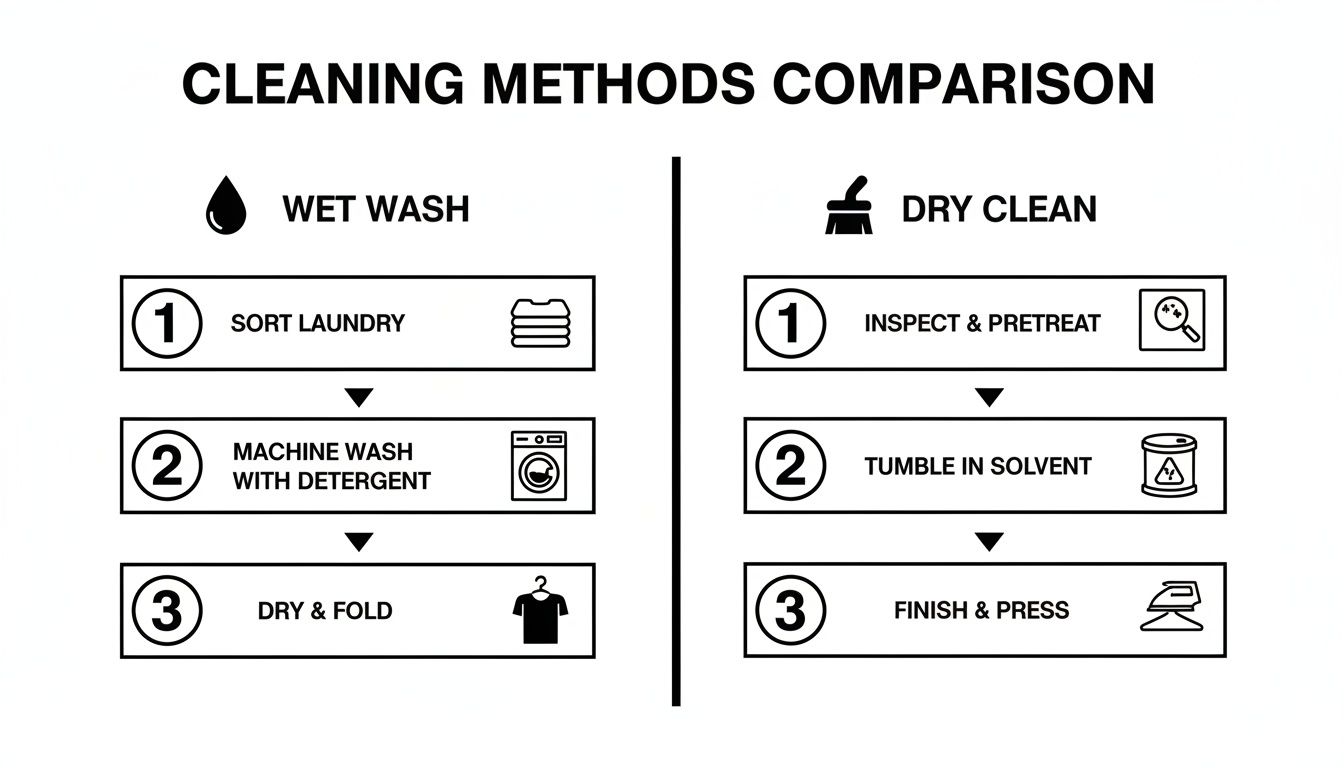
While a dry clean might get rid of surface dust, only a wet wash will truly dissolve and lift away the stubborn, caked-on grime that really hurts your production.
After a gentle scrub, rinse the panels thoroughly to wash away all the soap and loosened dirt. The final step—and don't skip this—is to use a high-quality, soft rubber squeegee to dry the panels completely. This is how you get a streak-free finish that won't block any sunlight. If you want to dive deeper, you can explore our guide on how to maintain your solar panels for long-term performance.
Finally, here are a few things you should never, ever do:
- NEVER use a pressure washer. That high-pressure stream can easily damage the seals around the panel, forcing water inside and leading to electrical failure.
- NEVER use hard tap water for the final rinse. Here in the Phoenix area, our water is loaded with minerals. If you let it air dry, it will leave behind white hard water spots (etching) that reduce your panels' efficiency.
- NEVER walk or kneel on your panels. They look sturdy, but they aren't designed to support a person's weight. You can easily cause invisible micro-cracks that will slowly kill your system's performance over time.
Getting the Right Gear: Tools and Cleaners That Won't Wreck Your Panels
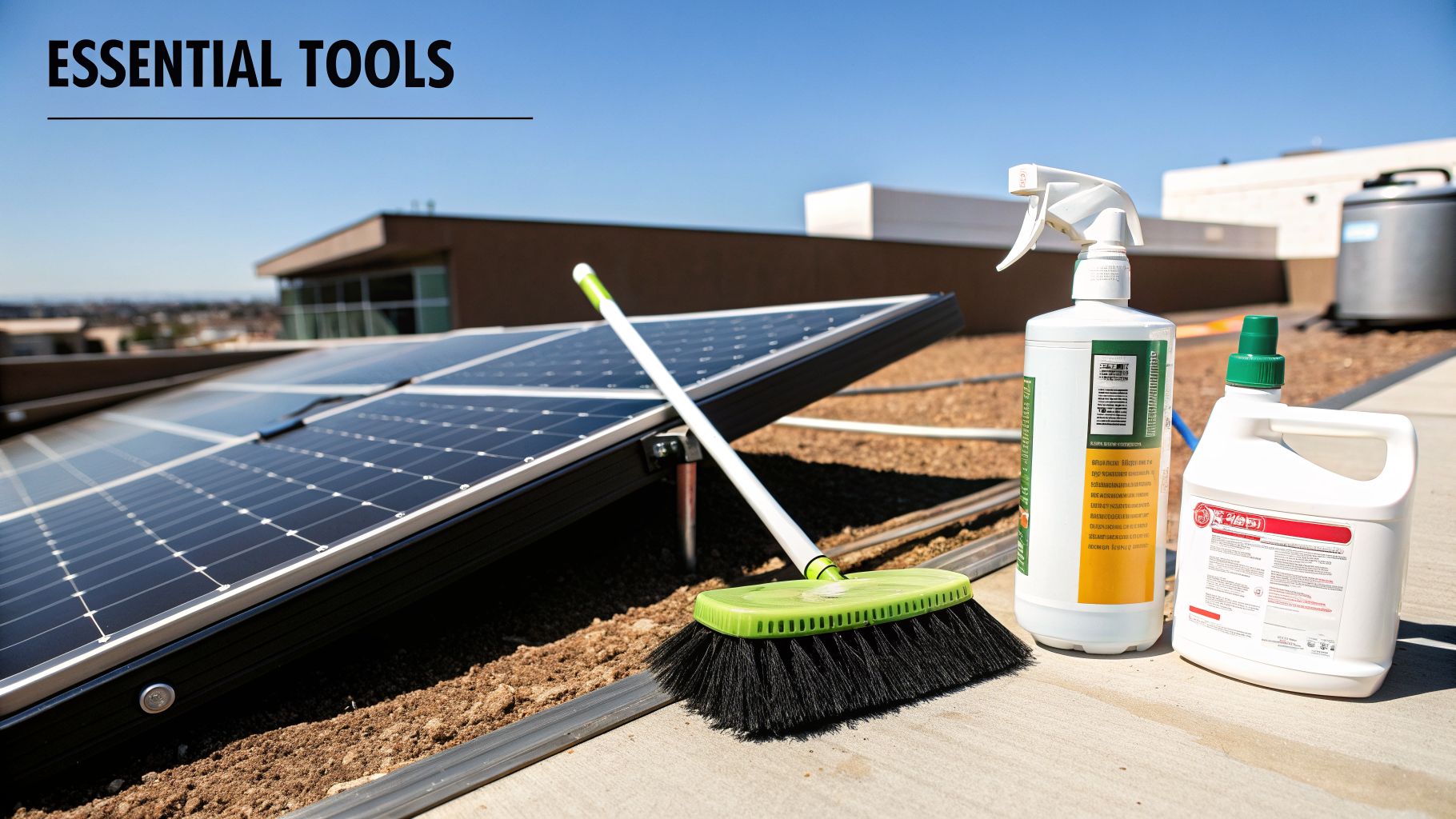
When it comes to cleaning your solar panels, having the right gear is everything. This isn’t just about making the job easier—it's about preventing permanent, costly damage to your investment.
Pros are incredibly picky about their tools, and for good reason. What you scrub the panels with is just as critical as how you do it. Honestly, this is where most well-intentioned DIY cleanings go south.
Your Brush Makes All the Difference
Whatever you do, don't just grab a standard stiff-bristled brush from your garage. Those harsh bristles will create thousands of tiny, invisible micro-scratches on the panel's anti-reflective coating. You won't see them at first, but over time, they accumulate, dulling the surface and cutting down the amount of sunlight that actually reaches the solar cells.
Instead, you need a non-abrasive brush designed specifically for this job. The two best options are:
- Boar's Hair Brushes: These natural fibers are exceptionally soft but still have enough texture to lift away stubborn grime without a hint of scratching.
- Soft Nylon Brushes: These are the synthetic equivalent, engineered for delicate surfaces like car paint and solar panels. They're a durable and effective choice.
These brushes almost always come attached to a water-fed pole. This lets you clean safely from a ladder or even the ground, which is far better than the incredibly dangerous act of walking on the panels themselves.
Why Your Dish Soap Is a Bad Idea
Next up is the cleaning solution. It's tempting to think a few squirts of dish soap will do the trick, but this is a classic mistake that actually makes your panels dirtier in the long run. Soaps like Dawn are designed to leave behind surfactants, which create a sticky, invisible film. This residue is a magnet for dust, pollen, and pollution.
A proper solar panel cleaner is always biodegradable and pH-neutral. These formulas are made to break down grime without leaving any film behind. They rinse away completely, giving you a perfectly clean surface that's ready for maximum sun absorption.
But the single most important element for a perfect, damage-free finish isn't the brush or the soap—it's the water. For anyone living in the Phoenix area, this is where the real risk is.
The Hard Water Problem
Our tap water is notoriously "hard," meaning it's packed with dissolved minerals like calcium and magnesium. When you rinse your panels with this water and let the Arizona sun bake it dry, all those minerals are left behind.
This creates those chalky, white spots you see on cars and windows, but on solar panels, the problem is much worse. It's called hard water etching, and it can permanently damage the glass, locking in a lower efficiency for good.
This is exactly why professionals use multi-stage water purification systems. By running tap water through a deionization (DI) or reverse osmosis (RO) filter, they strip out every last one of those damaging minerals. This ultra-pure water acts like a magnet for dirt and—most importantly—evaporates without leaving a single spot behind. It's the only way to guarantee a flawless clean that actually helps your system produce its best.
Phoenix-Specific Cleaning Tips for Timing and Frequency
If you have solar panels here in the Sonoran Desert, you know the game is a little different. Our relentless sun is exactly why solar is so effective, but it comes with a major catch: our unique brand of dust and the aftermath of a good monsoon storm. A generic cleaning schedule from another part of the country just doesn't work for us.
That fine, light-brown dust that blankets everything isn't just loose dirt. It's often mixed with pollutants, and when the morning dew settles, it can create a hard, almost cemented film on your panels. This is exactly why waiting for rain is such a flawed strategy in the Phoenix area. A light shower usually just turns that caked-on dust into a muddy mess, making your production even worse.
The Ideal Phoenix Cleaning Schedule
For most homes around the Valley, we've found that a schedule of two professional cleanings per year is the sweet spot. This approach is built specifically to counter our local climate and keep your energy production high when you need it most.
Pre-Summer Cleaning (Late Spring): This is, without a doubt, the most important cleaning of the year. You want your panels absolutely spotless right before the summer heat kicks in. This ensures you’re capturing every possible ray of sun during those long, scorching days when your AC is running nonstop.
Post-Monsoon Cleaning (Early Fall): Anyone who’s lived through a haboob knows the sheer amount of dirt and grit our monsoon storms can dump. Once the season wraps up, a deep cleaning is essential to wash away that grimy layer and get your system ready for the strong, clear production months of fall.
Think of it this way: a proactive, twice-yearly schedule prevents your system from ever reaching a point of significant energy loss. It’s a small investment to protect the massive return you get from your solar panels all year long.
When You Might Need to Clean More Often
While twice a year works for many, some properties have it tougher. If your home is near a farm, a busy freeway like the I-10 or Loop 101, or in an area with a lot of new construction, the air is packed with extra dust and debris.
For homes in these high-dust zones, you’ll likely see a benefit from cleaning your panels more often—perhaps every three to four months.
You can get a more personalized recommendation by checking out our guide on how often you should clean your solar panels to see if your situation calls for a more frequent schedule.
How to Spot Panels Crying for Help
Beyond sticking to a schedule, you need to know the signs that your panels are struggling right now. Don't wait for your next planned service if you see these red flags.
The easiest one to spot is a visible layer of dirt. Take a look up at your roof. If your panels have a hazy, brownish tint instead of being a deep, uniform black, your production is already taking a hit. Another obvious sign is bird droppings; they don't just block light, they're also acidic and can damage the anti-reflective coating if left to bake in the sun.
But your best tool is right in your pocket. Open your system's monitoring app. If you see a noticeable drop in your daily or weekly energy output that isn't because of cloudy days, that’s a rock-solid indicator that a layer of grime is to blame. That data is your most accurate way of knowing it’s time for a cleaning to get your performance back on track.
Common Questions About Cleaning Solar Panels
When it comes to keeping your solar panels running at their best, a few questions pop up again and again. As a pro in the Phoenix area, I've heard them all. Let's clear up some of the common confusion so you can get the most out of your solar investment.
How Much More Power Will I Actually Get After a Cleaning?
This is always the first thing people ask, and it's the right question. The answer really depends on how dirty your panels were to begin with, but for us here in the dusty Valley, the results can be dramatic. It's common to see an immediate efficiency jump of 5% to 30% after we wash away months of caked-on dust and grime.
That's not just a number on your monitoring app—it's real money you'll see shaved off your monthly power bill.
Can’t I Just Let the Rain Wash Them?
I wish it were that simple! Relying on a rainstorm to clean your panels is one of the biggest mistakes you can make, especially here in Arizona. Think of rain less as a cleaner and more as a dirt delivery service. Raindrops gather all the dust and pollution from the air on their way down.
Once that rainwater evaporates under our intense sun, all it leaves behind is a splotchy, muddy film and hard water spots. A proper cleaning with purified water is the only way to get a truly clear, residue-free surface that lets the sunlight pour in.
Is It Okay to Use Windex or Dish Soap?
Please don't. Using standard household cleaners like Windex (which has ammonia) or any kind of dish soap on your panels is a recipe for long-term problems.
- Damaged Coatings: The harsh chemicals can slowly strip away the important anti-reflective coating on the glass and even degrade the seals that keep moisture out.
- A Magnet for Dirt: Dish soap is the worst offender. It leaves behind a thin, sticky film you can't even see. This residue acts like flypaper for dust, making your panels get dirty even faster than before.
You should only ever use a pH-neutral, biodegradable soap made specifically for solar panels. Honestly, pure, deionized water is often all that's needed.
What’s the Real Difference Between DIY and Hiring a Pro?
The decision usually comes down to three key things: safety, the right tools, and the final result. Getting up on a sloped roof is dangerous work, and professionals are trained and insured for that risk. It's a risk most homeowners simply shouldn't take.
Beyond safety, we have specialized gear that makes all the difference. We use long, water-fed poles to clean from a safer position and, most importantly, we bring our own multi-stage water purification systems. Using this deionized water is the secret to a spot-free finish that won’t leave mineral etching on the glass, which our incredibly hard tap water absolutely will. A pro cleaning is safer, more effective, and actually protects your panels for the long haul.
Ready for a truly spotless clean that gets your energy production back to 100%? The experts at Sparkle Tech Window Washing LLC use purified water and professional-grade tools to safely restore your panels to peak performance. Schedule your professional solar panel cleaning today!