


You walk outside in the morning, look up at the eave over the patio, and there it is. Twigs jammed into a corner above the window. Maybe it's tucked behind a shutter, wedged into a dryer vent flap, or hidden under the edge of a solar panel where you only noticed it because droppings started showing up on the stucco.
In Phoenix, that problem shows up fast. Warm weather stretches the nesting season, rooflines get brutally hot, and birds still find protected pockets around homes that stay just cool enough to work. A nest can look small from the ground, but the trouble around it usually isn't. Droppings stain glass, screens get bent, vents get blocked, and dried nesting material around hot equipment is never something to ignore.
Most homeowners have the same first reaction. Knock it down and clean it up.
That's where people get into trouble. Bird nest removal isn't just a housekeeping job. It can be a legal issue, a ladder safety issue, and a contamination issue all at once. If the nest is active, disturbing it can be illegal. If it's on a second-story fascia or near a panel array, a quick DIY removal can turn into a fall or damaged property.
The right move is simple. Slow down first. Figure out whether the nest is active, whether the location is safe to access, and whether the area around it needs follow-up cleaning or repair. That approach protects the birds, protects your house, and protects you from making an expensive mistake.
A Bird Nest on Your House Now What
A lot of nest calls start the same way. Someone notices extra chirping by the front door, then sees a messy clump of grass above a light fixture or on top of a patio beam. Other times, the first sign is indirect. A homeowner books window cleaning because the glass keeps getting spotted, and the actual cause turns out to be a nest tucked into the soffit right above the pane.
Phoenix homes give birds plenty of opportunities. Tile roofs create shaded pockets. Decorative ledges catch nesting material. Solar panels create protected space underneath. Screen frames, pop-outs, and vent covers all offer structure and shelter. To a bird, that's prime real estate.
The first decision matters
The mistake is assuming every nest can be removed the minute you see it. It can't. An active nest changes the whole job. If there are eggs, chicks, or ongoing adult activity, removal may be restricted or illegal depending on the species and situation.
That matters more than people think because many common birds around homes don't stay parked on the nest all day. Mourning doves leave to forage. House finches come and go. Hummingbirds can be hard to spot at all unless you watch carefully. An empty-looking nest isn't automatically abandoned.
Practical rule: If you haven't confirmed the nest is inactive, don't touch it.
The second issue is access. A low nest over a porch beam is one thing. A nest above a second-story window, inside a chimney cap, or behind rooftop solar is different. Heat, height, and awkward body position turn simple work into risky work very quickly in the Valley.
What homeowners usually want
Many homeowners aren't trying to harm wildlife. They want to stop the mess and prevent damage. That's reasonable. Bird droppings on glass, debris in tracks, and nesting material around screens or panels can turn into maintenance problems if they sit.
A good response is calm and practical:
- Watch before acting: Confirm whether the nest is active.
- Look at the location: Decide if safe access is realistic.
- Think beyond removal: You may also need cleanup, screen repair, or solar panel maintenance after the nest is gone.
If you handle those three points in order, bird nest removal becomes manageable instead of rushed.
First Assess the Nest Legally and Safely
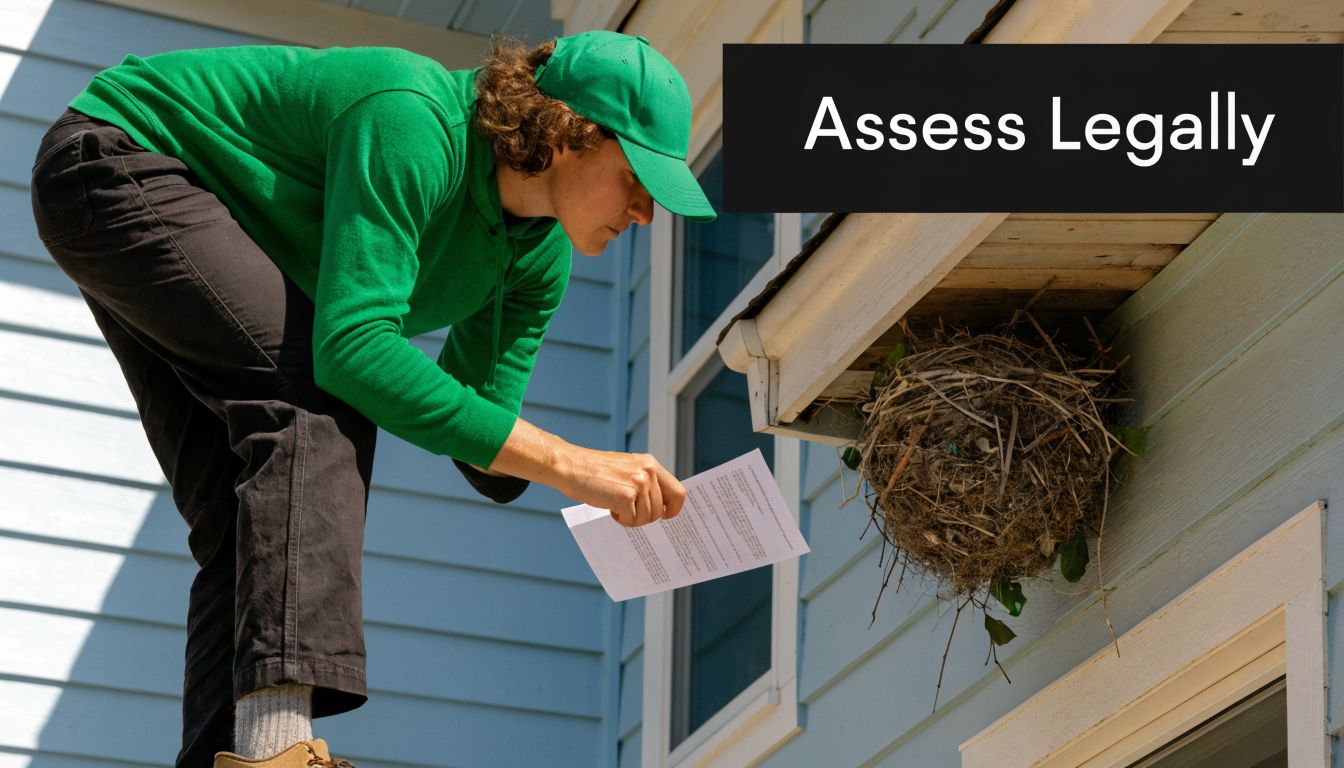
You walk outside for an early Phoenix cleaning job, and there is a nest packed into a patio corner above the window, with droppings already spotting the glass below. The first decision is not how to remove it. The first decision is whether you are allowed to touch it at all.
In the U.S., many native birds are protected under the Migratory Bird Treaty Act. Around Phoenix homes, that can include mourning doves, house finches, and hummingbirds. If the nest is active, removal may be restricted unless the situation has been cleared through the proper authority or permit process.
There is real liability here. In one enforcement case in Canada, a property manager and associated companies faced combined fines of $5,750 for unlawfully destroying protected nests, according to Environment and Climate Change Canada's enforcement notice. Different agencies and laws apply in Arizona, but the takeaway is the same. Protected nests are treated seriously.
How to check whether the nest is active
A fast glance from the driveway is not enough. A practical field standard is to observe the nest over 48 to 72 hours, because adult birds may leave and return on a schedule that makes an occupied nest look empty at the wrong moment, as noted in earlier removal guidance.
Use a patient check instead of a rushed one. Watch from a distance and look for:
Repeated adult traffic
Birds returning with food, perching nearby, or making short in-and-out trips usually mean the nest is active.Eggs or chicks
If you can see either, stop there.Low, still posture in the nest
Doves and small songbirds can sit so tight that from the ground the nest looks unused.Fresh mess around the site
New droppings on stucco, window frames, screens, or under solar edges can support what you are seeing above, but they do not prove the nest is active by themselves. If the area below is already dirty, plan on cleaning the residue correctly after the legal status is clear. Bird waste on glass and frames should be handled with the same care used for cleaning bird droppings from windows and exterior surfaces.
Check at the right times in Phoenix
Phoenix heat changes bird behavior and it changes how people should inspect. Early morning usually gives you the best read on activity. Midday can look quiet because birds reduce movement in the heat. Late afternoon often gives you one more useful window before sunset.
That schedule matters on service calls near windows, screens, and rooftop equipment. I see nests that look abandoned at noon and clearly active by evening. If you only check once, you can make the wrong call.
Do not stand under the nest, tap trim, shake a screen, or poke at the material to force a reaction.
Safety before inspection
Inspection injuries happen before removal starts. A nest over a first-floor patio beam is one level of risk. A nest above a second-story window, tucked behind a solar array, or built into screen framing is another.
| Situation | Better choice |
|---|---|
| Nest over a first-floor patio beam | Observe from the ground first |
| Nest above a second-story window | Skip ladder inspection unless you have stable access and know how to work safely at height |
| Nest near a vent, wiring, or solar equipment | Leave it in place until the area can be assessed without damaging components |
| Bird is swooping or defending the site | Back away and reassess later |
In Phoenix, surfaces heat up fast. Roof tiles, stucco, aluminum screen frames, and panel hardware can be hard to touch by late morning. If the only way to inspect the nest is by stretching over glass, leaning off a ladder, or stepping around solar equipment in the heat, that is already a warning sign. Treat uncertain nests as active, and treat unsafe access as a reason to stop.
The Humane Removal Process for Inactive Nests
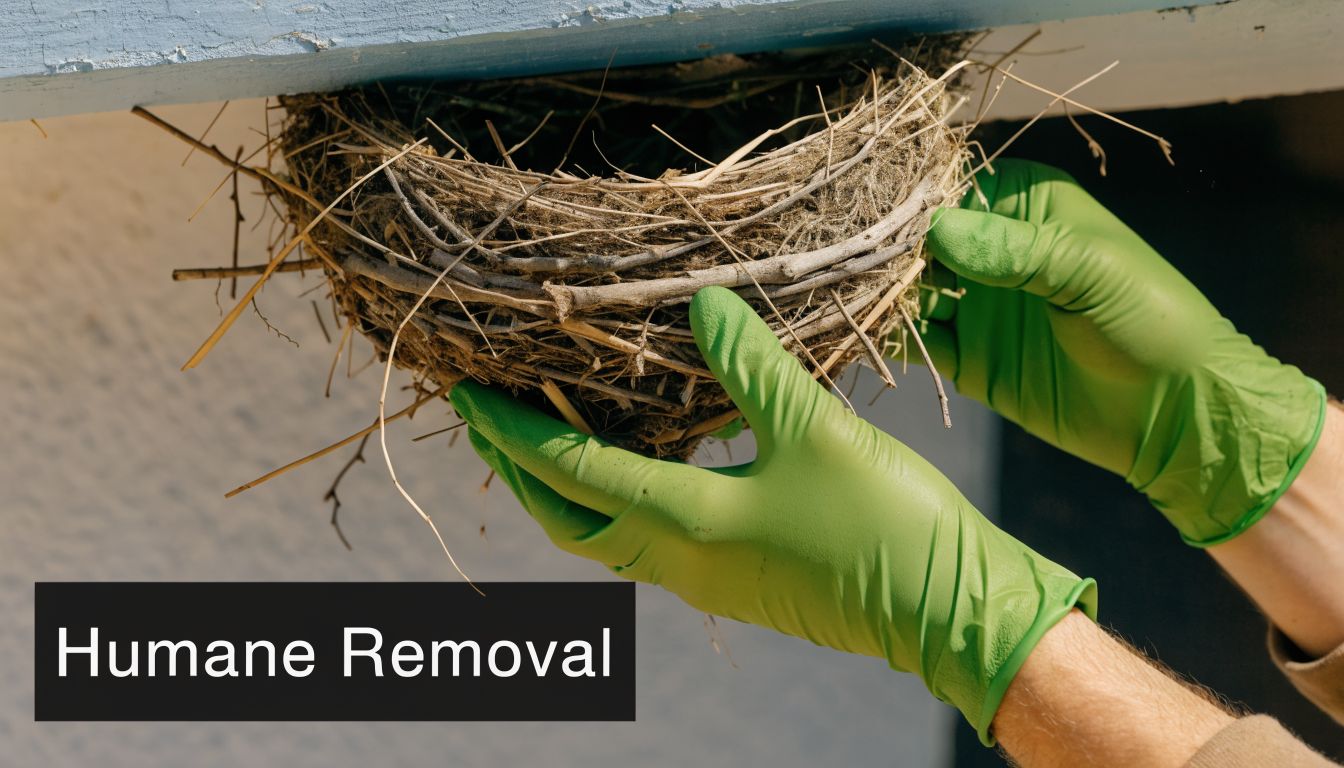
A confirmed inactive nest should be handled like a contaminated maintenance issue, not a quick grab-and-go cleanup. In Phoenix, nests are often baked hard onto stucco, fascia, light fixtures, and screen frames. If you rush the removal, you can pull off paint, crack brittle caulk, or tear mesh that could have been saved.
What to wear and what to use
Keep the setup simple and protective.
Use:
- Gloves: Protect against droppings, mites, and sharp twigs or wire.
- Dust mask: Helps when dry nesting material or droppings can break loose into the air.
- Plastic putty knife: Gives you better control on painted trim, stucco, and screen-adjacent surfaces.
- Heavy plastic bags: Bag the material as it comes down.
- Paper towels or disposable rags: Wipe up fine residue before it spreads to tracks, sills, or glass.
Skip sharp metal scrapers and aggressive pry tools. Those are the tools that scar stucco, gouge fascia, bend screen frames, and turn a simple cleanup into a repair call.
A removal method that protects the surface
Stable access comes first. If the nest is above a window, tucked into a corner over a screen, or set under an eave where you cannot keep both feet planted and both hands free, stop and reset.
Then work in this order:
Loosen the outer edge first
Start at the perimeter so you can see how tightly the nest is attached.Separate small sections
Lift gently with the putty knife instead of pulling the full nest at once.Support the material as it drops
Catch it with the bag or your free hand so dry debris does not scatter onto glass, tracks, or patio surfaces.Check the attachment area carefully
Look for dried mud, droppings, mites, packed debris, and damage hidden behind the nest.
On Phoenix homes, the trade-off is speed versus surface damage. A mud nest on stucco may come off cleanly in pieces. A twig nest woven into a screen corner may leave material behind unless you slow down and pick it apart by hand. Force usually costs more than patience.
Field note: If the nest is bonded to painted fascia or brittle trim, remove what comes free cleanly and clean the residue in stages instead of prying harder.
After the nest is off, inspect the area closely. Check for loose sealant, clogged weep holes, bent screen corners, staining on the glass below, and debris packed into window channels. Those are common follow-up problems on service calls where the nest sat for weeks in direct sun.
A short visual walkthrough helps:
Clean the residue, not just the nest
The job is not done when the nest is in the bag. What stays behind is often what keeps the area dirty and attractive to birds.
Focus on:
- Droppings on glass, frames, and sills
- Dust and nesting debris in window tracks
- Staining on stucco, trim, or painted surfaces
- Material caught in screen mesh or screen corners
If droppings are part of the mess, use a method meant for exterior residue, not standard glass cleaner alone. This guide on cleaning bird droppings from exterior surfaces is a useful follow-up for the sanitation side.
Seal the nest material in a bag right away and dispose of it properly. Then wipe down tools, remove gloves without touching your face, and wash up. On properties with window cleaning, screen repair, or solar panel service scheduled, it also makes sense to clean the affected area fully before the next visit so dried residue does not keep spreading across the work zone.
Handling Nests Near Windows Screens and Solar Panels
A nest over a window isn't just a nest problem. It turns into a maintenance problem fast.
On windows, the biggest issue is usually droppings and runoff. In Phoenix sun, that residue bakes onto glass and frames. The longer it sits, the harder it is to remove cleanly. Homeowners often notice the stain pattern first on the outside pane, then realize the source is directly above it under an eave or ledge.
Why windows and screens suffer first
Screens take abuse from nesting material. Small sticks catch in mesh, heavier nests pull against the frame, and repeated bird traffic around corners can leave screens bowed or frayed. If the nest is anchored near a screen edge, removal gets more delicate because rough handling can tear mesh that was still serviceable.
Window areas also collect the side effects:
- Tracks fill with nesting debris
- Frames hold droppings in corners and weep areas
- Glass gets repeated spotting from overhead activity
A nest above a clean window usually turns into a dirty window again very quickly if the source isn't addressed.
Solar panels need special caution
Solar is where I'd tell most homeowners to slow down even more. Birds like the sheltered gap beneath panels because it gives them shade and protection. That location also creates a maintenance blind spot. You may not see the nest from the yard, but you'll see the mess around the roofline or on the panel edges.
The concern isn't only debris. Nesting under or around solar can block access for cleaning, leave buildup that traps dirt, and create a bad service environment on a hot roof. If you own solar, regular inspection and cleaning help catch those issues before they spread. This practical overview of how solar panel cleaning works on residential systems is useful if you're trying to understand what should be checked during maintenance.
Why this area is not a rush job
Windows, screens, and solar all share one trait. They're easy to damage while trying to fix a nest quickly.
A rushed removal can lead to:
| Area | Common mistake | Result |
|---|---|---|
| Glass | Scraping debris downward across the pane | Smearing and surface marring |
| Screen | Pulling nest material through mesh | Tears or frame distortion |
| Solar panel perimeter | Reaching under panels blindly | Broken clips, wire disturbance, unsafe footing |
That's why bird nest removal around these surfaces should be treated as precision work, not general cleanup.
When to Call a Professional for Removal
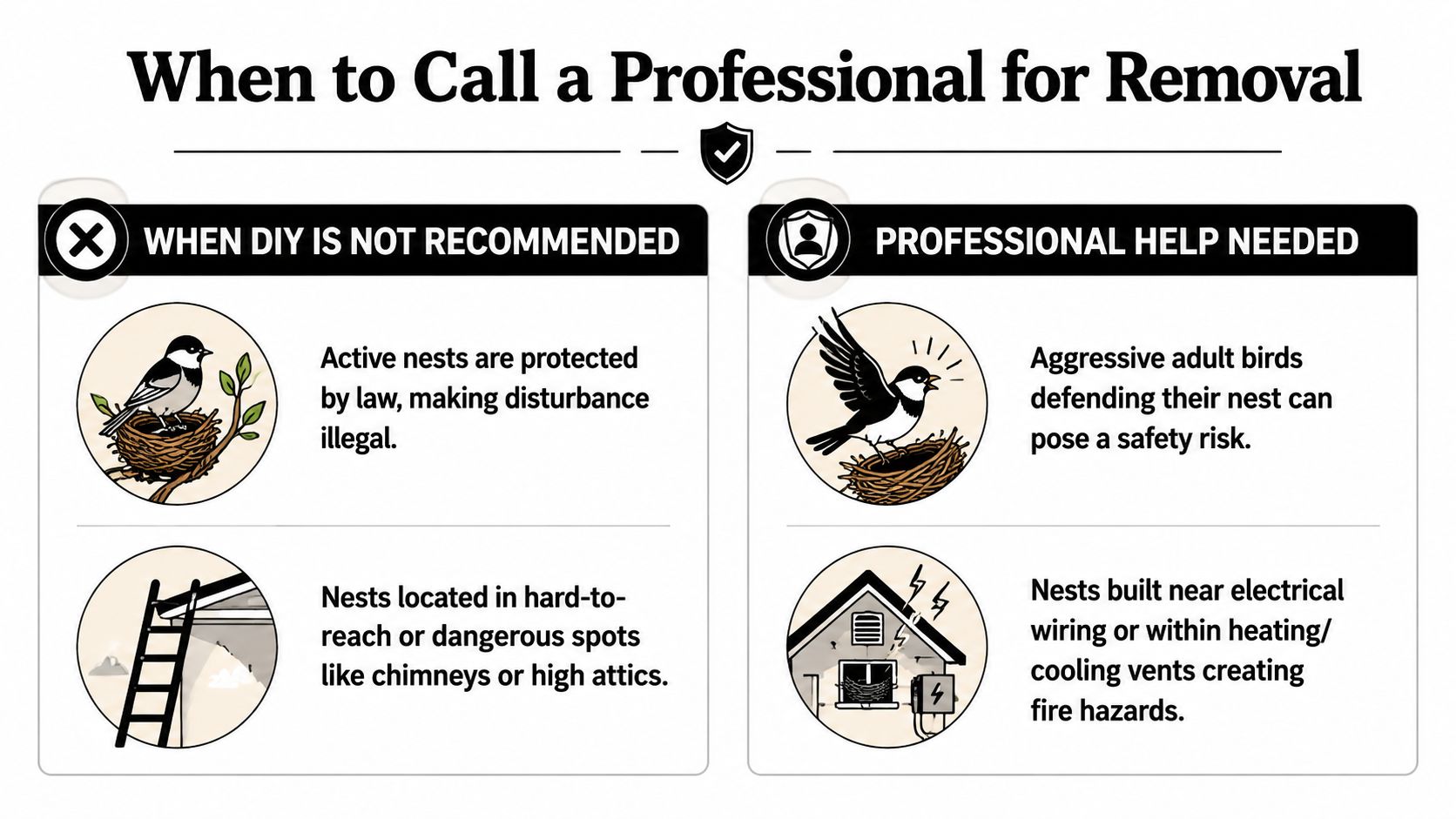
You climb up to check a nest under the eave at 9 a.m. in Phoenix, and the shingles are already hot, the birds are circling, and the nest is closer to a vent line and screen frame than it looked from the ground. That is usually the point where a simple removal stops being simple.
If the nest may still be active, sits on a second-story roofline, is packed into a vent or chimney opening, or is built near wiring, stucco edges, window screens, or solar equipment, bring in a qualified pro. Once ladder work, roof footing, or wildlife-law judgment enters the job, the risk goes up fast.
Cost versus risk
National pricing gives homeowners a rough frame of reference. According to bird nest removal cost guidance from 369 Bugs, professional bird nest removal often ranges from $350 to $650, accessible vent removals from $200 to $500, hard-to-reach roof removals from $300 to $2,000, and chimney-related services from $175 to $800.
Those numbers make more sense when you look at what the crew is handling. You are paying for safe roof access, legal caution around protected birds, controlled cleanup, and careful work around surfaces that are expensive to damage. On Phoenix homes, that often means avoiding broken screen mesh, scratched glass, disturbed vent covers, and problems around panel mounts or wiring.
Situations where professional help makes sense
Call for help in these cases:
- You cannot confirm the nest is inactive. In Phoenix, house finches, sparrows, pigeons, and doves all show up on residential properties, and protected-species questions are not something to guess at from a ladder.
- The nest is high, awkward, or heat-exposed. A steep tile roof or second-story fascia is a poor place for trial and error, especially in summer.
- Adult birds are defending the area. Even a small bird can push a homeowner off balance when they are carrying tools or reaching from a ladder.
- The nest affects a service area. If removal also involves window cleaning, screen repair, vent access, or debris around solar panels, one careful visit is usually better than multiple partial fixes.
For homeowners trying to protect rooftop equipment, Interactive Solar's cleaning advice is a useful reminder that work around panel systems should stay methodical when nesting debris is involved.
Hire for cleanup and prevention, not just removal
A good technician does more than pull down twigs. The job may also include disinfecting droppings, clearing clogged drainage points, checking whether a torn screen invited the nesting, washing residue off nearby glass, and flagging solar-panel edges or roof transitions that need exclusion work before the next nesting cycle.
Before hiring anyone, verify coverage and credentials. Homeowners often assume those terms mean the same thing, but they do not. Review the difference between bonded and insured service providers before anyone gets on your roof or works around your windows, screens, or panels.
Preventing Future Nests on Your Phoenix Property
The best bird nest removal job is the one you don't have to repeat next season. In Phoenix, prevention works best when it starts before birds settle in. Once they've picked a protected corner and started building, your options narrow fast.
Close off the easy nesting spots
Walk the house and look for the spots birds prefer:
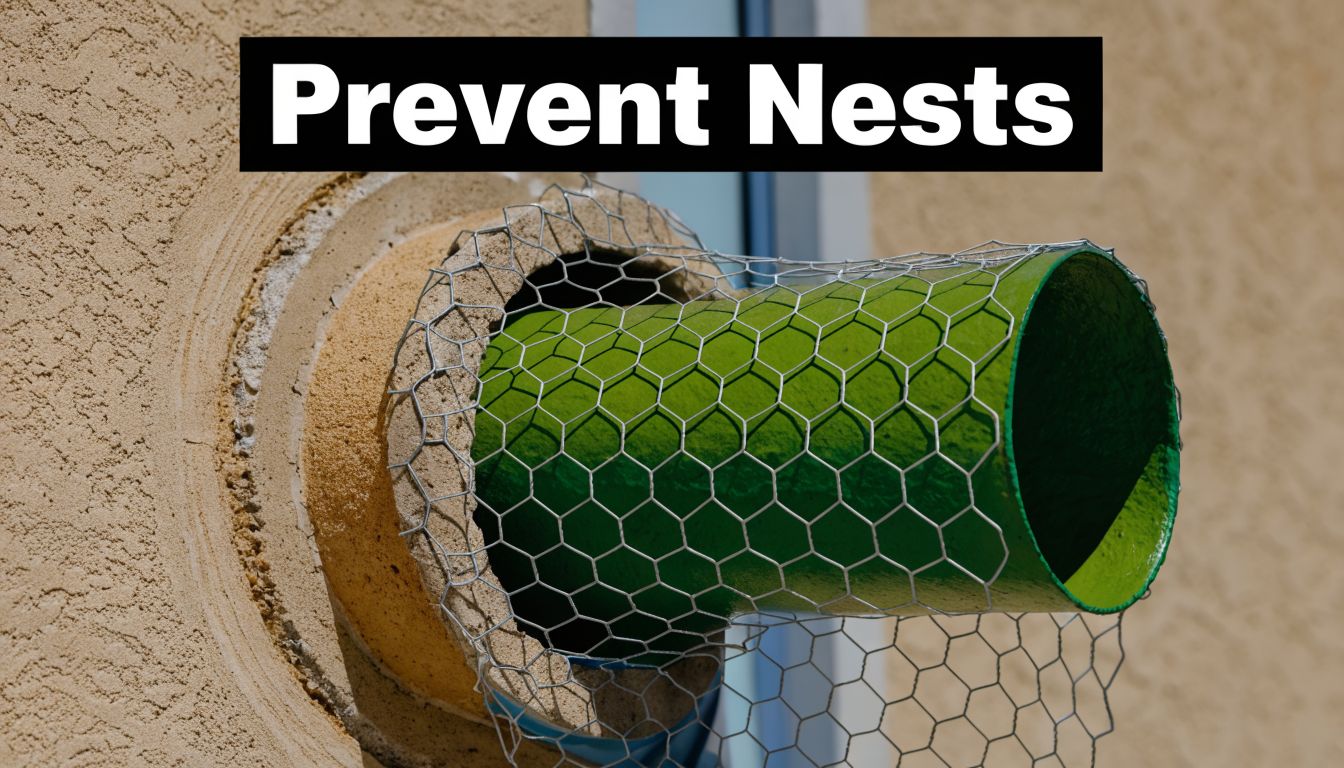
- Open vent entries: Add proper covers or screening where allowed.
- Gaps at eaves and soffits: Seal small openings before nesting activity starts.
- Ledges and light fixture tops: Use exclusion tools that make landing and building harder.
- Panel edges and roof transitions: Keep these areas inspected during routine maintenance.
Phoenix homes also deal with gutter buildup, and debris-filled gutters invite more than water problems. If you're already trying to reduce attractive nesting zones, it helps to stop gutter clogs before they start so birds have fewer sheltered debris pockets to work with.
Use maintenance visits as inspection time
A lot of repeat nesting gets missed because no one looks up closely until there's already a mess. Routine exterior service helps catch early signs. During window cleaning, screen service, or solar panel maintenance, it's easier to spot fresh twigs, droppings, and traffic patterns around common nesting points.
That's one of the practical advantages of regular upkeep. You're not only cleaning the house. You're checking the house.
What actually works
Prevention works when it changes the site, not when it tries to scare birds for a day.
- Physical exclusion: Mesh, covers, and sealed gaps do more than visual deterrents.
- Surface changes: Spikes or other ledge deterrents can help in repeat landing zones.
- Clean residue promptly: Old nesting material and droppings attract return activity.
- Stay consistent: One blocked vent won't solve open eaves on the same wall.
Bottom line: Birds come back to places that feel safe, stable, and undisturbed. Change those conditions and most nesting pressure drops.
If you need help with bird-related mess around your windows, screens, or solar panels, Sparkle Tech Window Washing LLC serves Scottsdale, Peoria, and the greater Phoenix area with professional exterior cleaning, screen care, and solar panel cleaning. If nest activity has left behind droppings, stains, or hard-to-reach buildup, their team can help restore those surfaces safely and keep your home looking maintained.