


You wake up, pull back the blinds, and there it is again. Fog on the glass, a damp sill, maybe even a few drops running down the frame. It's annoying, but more important, it's a clue.
Window condensation is rarely the actual problem. It's a symptom. The underlying issue is usually one of three things: indoor moisture, glass temperature, or a failed window seal. If you diagnose which one you're dealing with first, the fix gets much easier and a lot less expensive.
Most homeowners waste time treating every window the same way. That's why the best approach to how to prevent window condensation starts with identifying where the moisture is forming, then working from the simplest free habits to longer-term upgrades only if you need them.
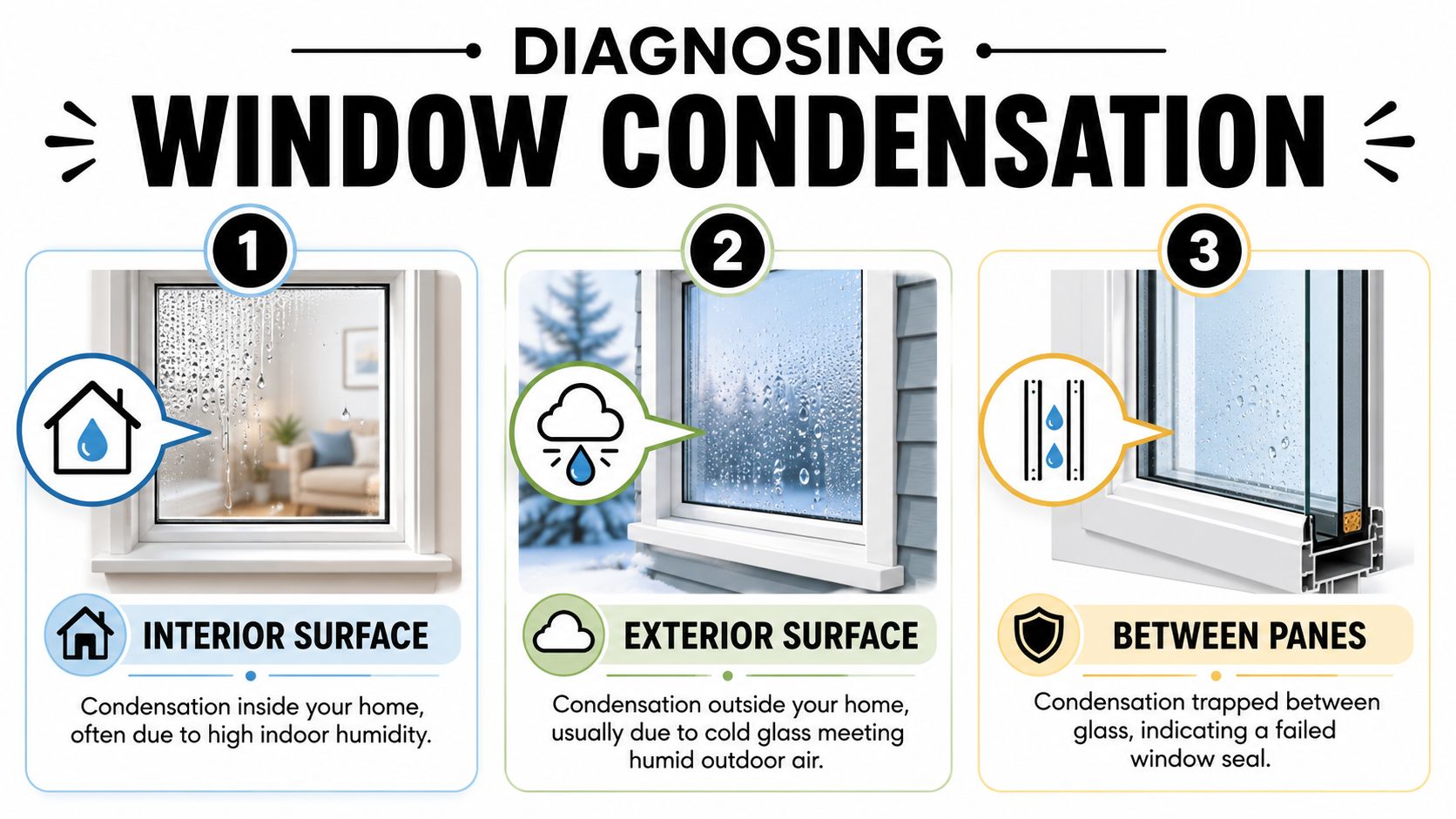
Diagnosing Your Window Condensation Where Is It Forming
If your windows are wet, don't grab a towel first. Check where the moisture sits.
A foggy window can mean three very different things. Moisture on the room side usually points to too much indoor humidity meeting cold glass. Moisture on the outside often means outdoor air hit a cool exterior surface. Moisture trapped between panes points to seal failure.
Use the finger test
Here's the fastest way to tell what you have:
- Touch the room side of the glass. If your finger wipes through the moisture, it's on the interior surface.
- Check the outside of the window from outdoors. If the room side is dry but the exterior is foggy, the moisture is outside.
- Look for haze you can't reach. If both sides feel dry but the glass still looks cloudy, the condensation is likely between the panes.
Practical rule: If you can wipe it from inside, you likely have a humidity and airflow problem. If you can't reach it at all, you likely have a window unit problem.
What each location usually means
A quick comparison helps:
| Condensation location | Most likely cause | Typical response |
|---|---|---|
| Interior surface | Moist indoor air meeting cold glass | Lower indoor humidity and improve airflow |
| Exterior surface | Humid outdoor air meeting cooler exterior glass | Usually no repair needed |
| Between panes | Failed insulated glass seal | Repair or replacement evaluation |
Interior condensation is the one most homeowners need to solve. If left alone, it can dampen the sill, discolor trim, and contribute to mildew. If you're already seeing dark growth along the frame or stool, this guide to black mold on window sills can help you understand the moisture damage that often follows repeated condensation.
Don't guess from one morning
One cold morning doesn't tell the whole story. Check when it happens.
If you notice moisture after showers, cooking, or overnight with the blinds closed, that points toward indoor moisture load and poor air movement. If it appears only on cool mornings outside the home, that's a different situation entirely.
Getting this part right saves a lot of wasted effort. There's no point buying a dehumidifier for a failed seal, and there's no reason to replace a good window just because you saw dew on the outside.
Easy Fixes for Interior Condensation Control Your Humidity
If the moisture is on the inside of the glass, start with humidity. That's the most common source of trouble.
Andersen recommends 30% to 35% humidity in winter, while Marvin cites the Better Business Bureau's guidance of 25% to 30% relative indoor humidity as a practical target when condensation is a problem, as noted in Andersen's condensation guidance. Those ranges matter because condensation forms when moist indoor air reaches a glass surface at or below its dew point. Lower indoor humidity lowers that dew point.
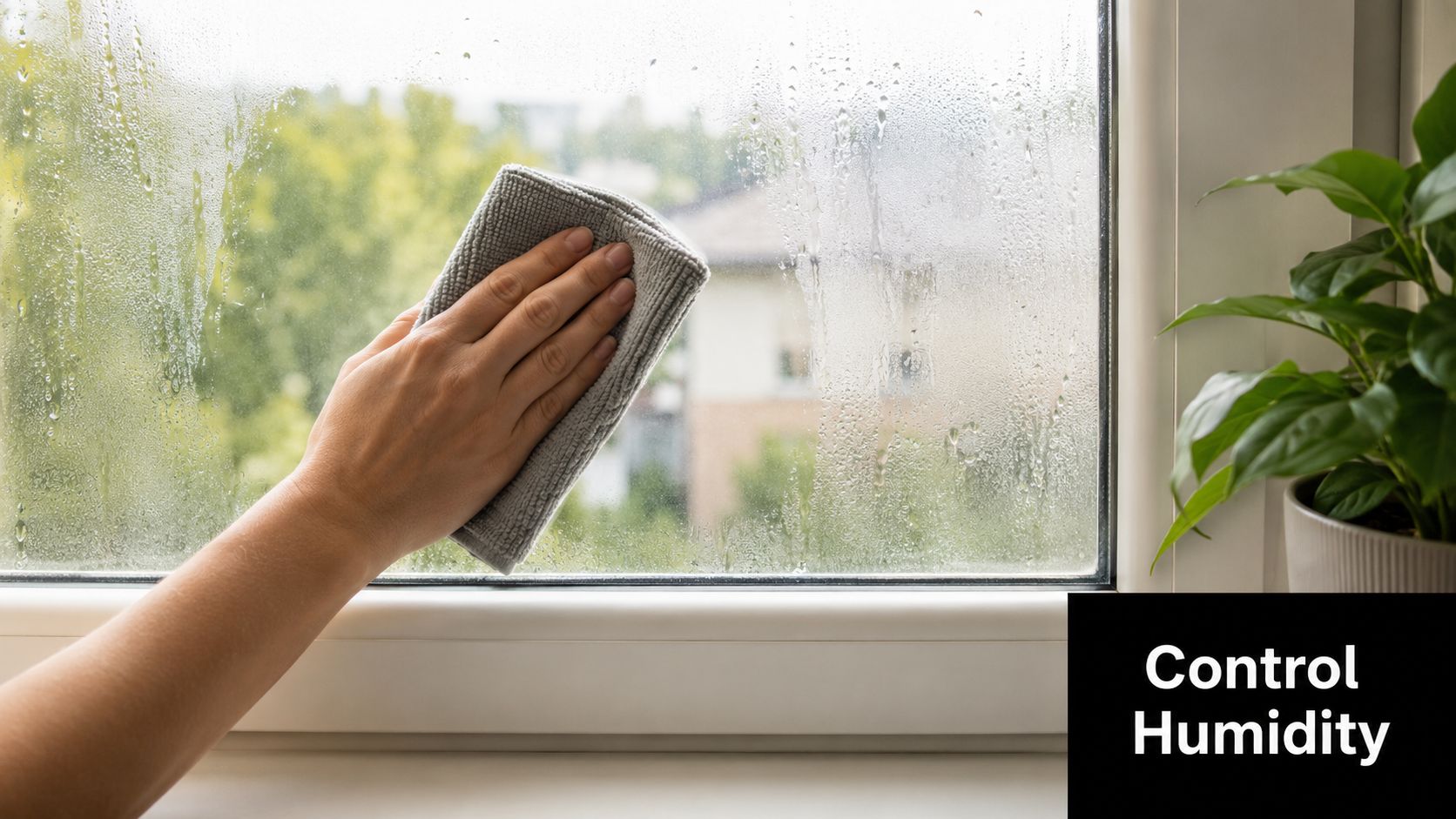
Start with the free fixes
Before you buy anything, change a few habits that add moisture or trap it indoors.
- Run the bathroom fan after showers: Don't stop the fan the second you towel off. Let it keep moving humid air out of the room.
- Use the kitchen exhaust when cooking: Boiling water, simmering sauces, and even dishwashing add moisture fast.
- Open blinds and shades: Closed coverings trap cool air next to the glass and slow warming.
- Keep air paths open: Don't push furniture tightly against windows where it blocks circulation.
These steps work because they reduce how much moist air sits against a cold pane. Small behavior changes often make a visible difference within days.
Moisture problems usually come from ordinary living, not a dramatic leak. Showers, cooking, laundry, and closed-up rooms are enough to fog a window.
Measure instead of guessing
A hygrometer is one of the most useful low-cost tools a homeowner can buy. It tells you whether the air is too damp instead of relying on what the room feels like.
Place one in the room where condensation is worst. Check it in the morning, after cooking, and after showers. If the reading stays above the winter range cited earlier, your windows are giving you an accurate warning.
If the problem keeps returning even after better fan use, look below the living space too. Hidden dampness from crawl space moisture problems can raise indoor moisture levels and make window condensation harder to solve.
Reduce hidden moisture sources
Some homes create more indoor humidity than owners realize. A few examples:
- Indoor drying racks: Wet clothes release moisture for hours.
- Overwatered houseplants: Soil and trays can add steady background humidity.
- Unvented habits: Long hot showers with the door open spread moisture through the house.
- Closed-up bedrooms: Overnight breathing in a sealed room can leave glass wet by morning.
Priorities matter: don't jump straight to replacement windows if your bathroom fan isn't used, your shades stay shut all day, and laundry dries indoors.
A short visual walkthrough can help if you want to spot common causes around the house:
Use dehumidification carefully
A portable dehumidifier can help, especially in rooms that stay damp, but it shouldn't be your first or only answer. If the home is very tight, you may also need better fresh-air exchange rather than drying the same indoor air over and over.
That trade-off matters. Too much dehumidification can make a home feel dry and uncomfortable, while too much casual window opening can work against your heating and cooling. Good condensation control is about balance, not extremes.
Improve Insulation for Long-Term Prevention
If humidity control helps but doesn't fully solve the issue, focus on the glass itself and the space around it. Warmer interior glass is less likely to collect moisture.
Natural Resources Canada notes that energy-efficient windows, doors, and skylights are more resistant to condensation than ordinary models, and it specifically recommends proper air circulation near windows. Better-insulated glazing is a more durable long-term solution because it helps keep the glass surface above the condensation threshold, as summarized in this building-science discussion of window condensation.
Improve the window's immediate environment
A lot of condensation comes down to how the window lives inside the room.
- Open drapes during colder periods: Warm room air has to reach the pane.
- Don't crowd the window: A sofa, dresser, or deep chair placed too close can create a cold pocket.
- Use ceiling fans on a gentle setting: Moving air helps even out temperature near the glass.
- Check for obvious draft paths: Air leaks can cool the frame and the edge of the glass.
These aren't glamorous fixes, but they work because they raise surface temperature where the problem happens.
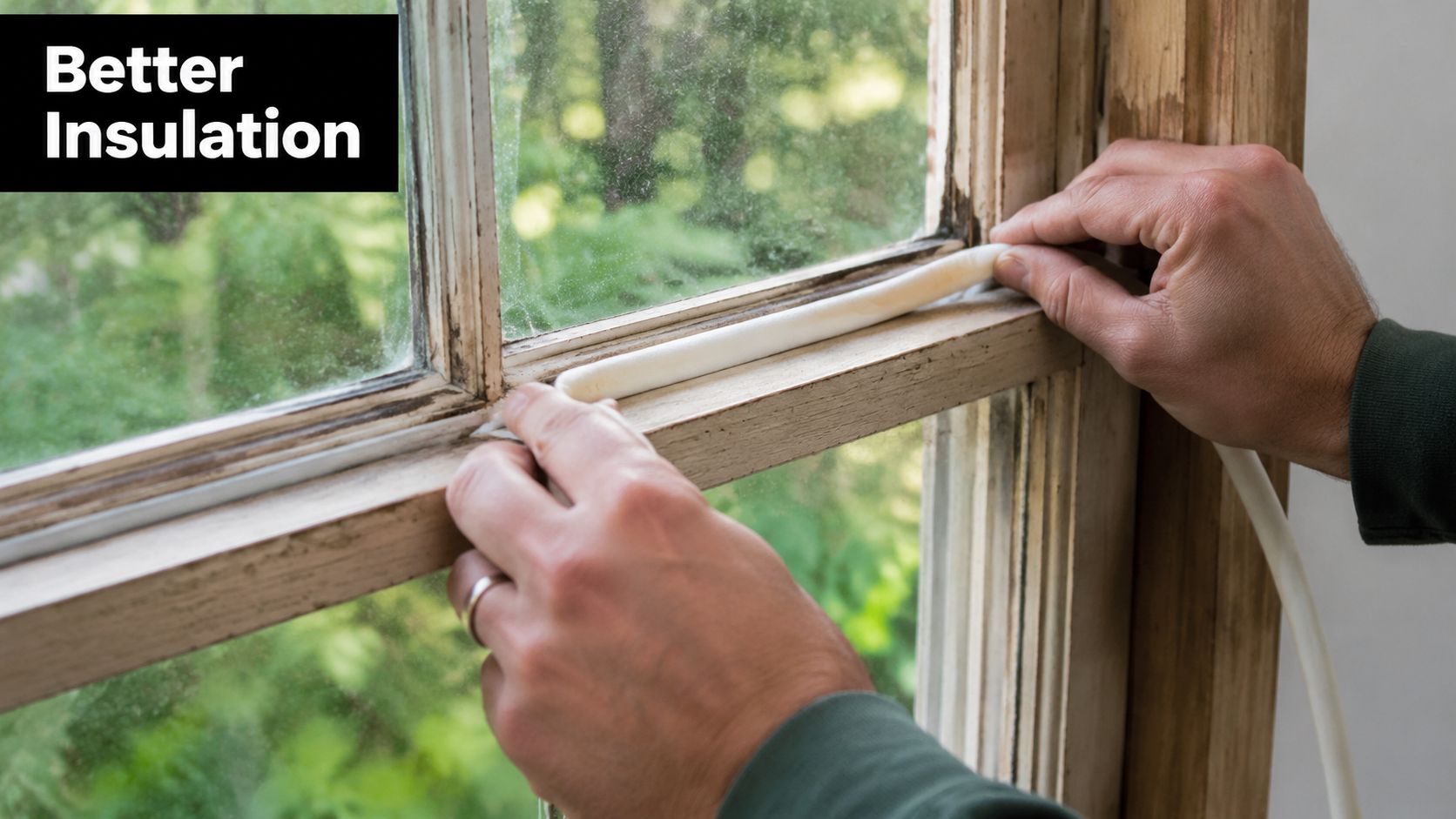
Fix the parts around the glass
The window unit matters, but so do the frame and surrounding details.
Worn weather stripping, loose seals, and small frame gaps can let in drafts that cool the interior side of the assembly. In colder conditions, that local cooling can be enough to push the glass surface into condensation even when the room itself feels comfortable.
Better windows don't just block outdoor temperatures. They hold the inside glass at a friendlier temperature, which is what reduces condensation risk.
If you're thinking more broadly about thermal performance, these sustainable window design insights offer useful context on why window construction affects comfort as much as energy use.
Know when upgrades are worth it
Daily management helps, but some homes need a structural answer. Older single-pane units, aging double-pane windows, or poorly insulated assemblies often stay cold enough that condensation keeps returning no matter how careful you are.
That's when better-insulated glass becomes the smarter long-term move. Double-pane and triple-pane assemblies, low-E coatings, and upgraded frame systems all help keep the interior surface warmer. They also make humidity management less of a constant battle.
If you're evaluating the house as a whole, pair window observations with a broader home energy audit checklist for Phoenix homes. Condensation is often one visible part of a larger insulation and airflow picture.
What Exterior and Between the Panes Condensation Means
Not every foggy window is bad news. Two less common scenarios confuse homeowners all the time.
Exterior condensation usually means the window is insulating well
If you walk outside in the morning and see dew on the outer surface, that often means the glass stayed cool enough overnight for outdoor moisture to condense on it. That can happen with efficient windows because less indoor heat is escaping outward.
Exterior condensation is usually temporary. It tends to clear as outdoor temperature changes and sunlight hits the glass. You don't need to lower indoor humidity for this, and you don't need to replace the window just because the outside gets foggy once in a while.
A simple way to think about it is this: interior condensation means your house moisture is hitting a cold surface. Exterior condensation means outdoor moisture is doing the same thing on the outside.
Between-pane condensation is a different category
If the haze or droplets sit inside the insulated glass unit, the seal has likely failed. Once that perimeter seal breaks down, moisture can enter the space between panes, and you can't fix that with ventilation, wiping, or a room dehumidifier.
That's why DIY cleaning usually doesn't solve the problem. If you've wondered whether the cloudiness can be reached, this article on how to clean between double-pane windows helps clarify what's possible and what usually points to seal failure instead.
A quick decision guide
| What you see | What it usually means | What to do |
|---|---|---|
| Fog outside only | Normal outdoor condensation | Monitor, no major fix needed |
| Cloudiness trapped inside glass unit | Failed seal | Get repair or replacement advice |
| Streaky or persistent internal haze | Possible seal issue or residue confusion | Inspect closely in different light |
Between-pane condensation matters because it reduces visibility and compromises the insulating performance the window was built to provide. At that point, the focus shifts from moisture control habits to evaluating the glass unit itself.
When to Call a Window Professional in the Phoenix Area
Some condensation problems are straightforward. Others keep coming back because the underlying cause isn't easy to see from the living room.
Expert guidance recommends using better-insulated glass and making sure warm room air reaches the pane. It also notes that a professional can assess factors like glass surface temperature and airflow that are difficult for a homeowner to measure, identifying why condensation persists even when room temperature feels comfortable, according to this expert condensation guidance.
Signs the problem is beyond simple DIY fixes
Call for help if you notice any of these:
- Moisture between panes: This is the clearest sign of seal failure.
- Recurring mold or mildew around frames: Repeated wetting can turn a window problem into an indoor air problem.
- Warped frames or damaged sills: Water may already be affecting surrounding materials.
- Condensation that persists after humidity and airflow changes: At that point, the assembly needs a closer look.

Why a close inspection helps
Clean glass makes diagnosis easier. Dirt, hard water spots, residue, and screen grime can hide early seal issues or make normal moisture patterns harder to read.
A professional inspection is useful when you've already handled the obvious steps and still can't tell whether the problem is humidity, airflow, seal failure, or surrounding frame wear. That's especially true on larger homes with mixed window ages, shaded exposures, and rooms that behave differently from one side of the house to another.
If the same window keeps fogging while others nearby stay clear, that's a clue worth investigating.
For homeowners in Scottsdale, Peoria, and the greater Phoenix area, getting an experienced set of eyes on the glass and frames can save money by separating a maintenance issue from a replacement issue.
Clear Windows and a Healthier Home
Clear windows usually come from a balanced house, not constant wiping. When you control moisture, keep air moving, and make sure the glass stays warm enough, condensation becomes much easier to prevent.
The simplest path is also the smartest one. Diagnose the location first. Fix indoor humidity and airflow next. Upgrade insulation and window performance only when the easier changes don't solve it. That approach avoids wasted effort and keeps you focused on the cause instead of the symptom.
If you've been trying to figure out how to prevent window condensation, that sequence works far better than guessing. Dry glass, cleaner sills, and a healthier home are realistic goals.
If your windows still look cloudy, spotty, or hard to diagnose, Sparkle Tech Window Washing LLC can help homeowners and property managers in Scottsdale, Peoria, and the greater Phoenix area get a clearer view of what's really going on. A thorough professional cleaning often makes it easier to spot seal failure, residue buildup, frame issues, and other hidden problems before they turn into bigger repairs.