


Dust settles fast in the Phoenix area. One windy afternoon, a light tan film shows up on the stucco, the driveway darkens where tires track in grit, and the back patio starts looking tired even though nothing is technically broken.
Then the practical questions show up. Is this a small wash job or a bigger one? Does hard water change the price? Is the quote you got for pressure washing services prices fair for Scottsdale, Peoria, or the rest of Phoenix?
Most homeowners do not need more vague advice. They need a local explanation that matches desert conditions, common Arizona surfaces, and the way contractors build quotes. National averages can help, but they miss the details that matter here, especially sun-baked grime, mineral staining, stucco texture, and the difference between blasting concrete and carefully soft washing a painted exterior.
Your Guide to a Cleaner Phoenix Home Exterior
A lot of Phoenix-area cleaning jobs start the same way. A homeowner notices the front walkway has gone from light to patchy gray-brown. The stucco looks dusty even a day after a rinse. Maybe an HOA notice lands in the mailbox, or maybe guests are coming over and the house just feels dull.
That is where pricing gets confusing.
Two homes on the same street can get very different quotes. One has a simple one-story layout, open access, and light buildup. The other has tighter side yards, overspray concerns near windows, heavy mineral deposits around irrigation lines, and years of baked-on grime on the driveway. Both are “pressure washing,” but they are not the same job.
Phoenix also has its own cleaning reality. Dust is constant. Hard water leaves visible deposits. Heat cooks dirt into porous surfaces. A company using a one-size-fits-all national price sheet will usually miss something, and that is how homeowners end up with either an unrealistically low estimate or a high quote they cannot make sense of.
The good news is that pressure washing services prices are not random. They usually come down to a handful of practical variables:
What is being cleaned
Stucco, concrete, pavers, painted block, and wood all respond differently.How dirty it is
Surface dust is one thing. Embedded grime, rust-toned runoff, and mineral staining are another.How easy it is to access
Wide-open driveways are cheaper to work than cramped side paths or multi-story elevations.What method the surface can safely handle
Some areas need pressure. Others need lower pressure, detergents, dwell time, and more care.
If you understand those moving parts, quotes get easier to compare. You can tell when a company has thought through the job and when they are just tossing out a number.
How Pressure Washing Companies Calculate Your Price
Most contractors price exterior cleaning in one of three ways: by square footage, by the hour, or by the job.
On a Phoenix house, the pricing method matters because the work is rarely as simple as the surface name suggests. A "driveway wash" might be light dust and tire marks. It might also mean hard water staining near irrigation overspray, oil spotting that needs treatment, and sun-baked grime that takes extra dwell time to break loose. The company has to decide whether that job is predictable enough for a fixed number or variable enough to leave some room in the quote.
Paying by measurement
Per-square-foot pricing is common on surfaces that are easy to measure and fairly consistent to clean. Driveways, patios, pool decks, block walls, and house exteriors often get quoted this way.
For homeowners, the benefit is simple. You can compare bids on a similar basis if the companies are cleaning the same areas and including the same level of stain treatment. The catch is that square footage alone does not tell the full story. In Scottsdale and Peoria, two 600-square-foot driveways can price differently if one has heavy mineral deposits or if the surface is older, more porous concrete that holds grime.
This model works best when the contractor has already accounted for the condition of the surface, access, and the cleaning method.
Paying for time
Hourly pricing usually shows up when the scope is uncertain. That is common on properties with multiple problem areas, limited access, or staining that cannot be judged well from photos.
From the contractor's side, hourly pricing protects against underbidding work that may take far longer than expected. From the homeowner's side, it can feel less comfortable because the final total depends on crew pace, site conditions, and how much extra treatment the surface needs once cleaning starts.
I usually tell homeowners to be cautious with hourly pricing on a standard residential job. If the project is a routine house wash, driveway, or patio with visible conditions, a seasoned exterior cleaner should usually be able to narrow it down better than "we'll see how long it takes."
Paying a flat rate
Flat-rate pricing is common for residential work because it gives one total for a defined scope. That could be the front elevation and driveway, the full house exterior, or a bundle that includes walkways and a patio.
This is often the easiest quote to work with because the company has to make decisions before arrival. They have to judge how much setup is involved, whether detergents or specialty stain treatment are needed, and how much labor the job should take. If they inspect carefully, flat-rate pricing gives the homeowner the clearest expectation.
A good flat-rate quote should spell out what is included.
If rust treatment, heavy efflorescence removal, or hard water stain reduction costs extra, the estimate should say so. That matters in Phoenix, where mineral staining is one of the biggest reasons a "simple wash" turns into a more labor-heavy job.
A flat-rate quote is usually easiest to compare when the scope is clearly defined and the company has inspected the surfaces.
Why companies choose different models
The pricing model should match the level of uncertainty in the work.
A straightforward one-story home with open access and moderate buildup is often a good fit for square-foot or flat-rate pricing. A property with shade sail posts, fragile plants, narrow side yards, oxidation concerns on painted surfaces, and stubborn deposits around irrigation lines may be harder to lock into a clean fixed number without a site visit.
Here is how the three models usually compare:
| Pricing model | Best use | What homeowners like | What can cause problems |
|---|---|---|---|
| Per square foot | Measurable, repeatable surfaces | Easy to compare similar bids | Can hide extra charges if staining or access was glossed over |
| Per hour | Uncertain or variable scope | Flexible for unusual projects | Final cost is harder to predict |
| Flat rate | Standard residential jobs with a defined scope | Clear total before work starts | Missed details during estimating can lead to change orders |
What a fair pricing method looks like
Fair pricing matches the conditions on site. It does not force every house into the same template.
That is especially true in the Phoenix area. Stucco can need a softer approach than concrete. Pavers may need different treatment than a broom-finished driveway. Sun exposure, hard water, and years of desert dust change how long the work takes and what chemistry is safe to use. When a quote reflects those details, it usually holds up better once the crew starts cleaning.
Phoenix Area Pressure Washing Prices A Local Breakdown
A homeowner in Scottsdale gets one quote that looks surprisingly low. A homeowner in Peoria gets another that is nearly double. Both homes are single story, both have stucco, and both need exterior cleaning. The difference usually is not the zip code alone. It is the kind of buildup on the property, how accessible the work is, and whether the company priced a maintenance wash or actual stain removal.
Phoenix-area pricing often starts lower than what homeowners see in broad national averages. The catch is that national numbers miss the stuff we deal with here every week. Hard water around irrigation lines, sun-baked grime on south-facing walls, dusty textured stucco, and mineral staining on flatwork can turn a basic cleaning into slower, more careful work.
House washing is only one category. A real estimate usually covers several surfaces, and each one has its own labor time, risk, and cleaning method.
2026 average pressure washing costs in Phoenix Scottsdale and Peoria
The ranges below are best used as planning numbers, not promises. Phoenix contractors often price by surface and condition first, then by size.
| Service | Average Cost (Per Sq. Ft.) | Typical Job Range (Total) |
|---|---|---|
| House washing, exterior walls | $0.08 to $0.47 | $120 to $290 for many Phoenix-area house washing jobs |
| Driveway and walkway cleaning | $0.08 to $0.47 | Often priced within small-job ranges rather than full-house pricing |
| Patio and pool deck cleaning | $0.08 to $0.47 | Varies with surface type, staining, and deck layout |
| Fence washing | $0.08 to $0.47 | Usually depends on material, total linear footage, and access |
Those broad ranges make more sense once you look at how Phoenix homes are built and maintained. A smooth driveway in a newer Peoria neighborhood can be a fast surface-cleaning job. An older Scottsdale property with decorative pavers, rust marks, efflorescence, and heavy sprinkler overspray takes more time and usually more chemistry.
Some stains also push the work outside standard pressure washing. Brick and masonry deposits sometimes need specialty treatment, especially when mineral buildup has bonded to the surface. In those cases, methods like acid-based brick cleaning for stubborn masonry staining may be part of the conversation, not a simple rinse-and-go service.
Why Phoenix prices can look lower at first
A lot of Valley homes are easier to service than homes in tighter, older markets. One-story layouts are common. Parking is usually simpler. Crews can move hoses and surface cleaners without fighting stairs, tight lot lines, or dense vegetation.
That helps keep baseline pricing reasonable.
It does not make every property cheap to clean. Phoenix exposes every weak point in an estimate. If the bid ignores calcium buildup on pool decking, oxidation risk on painted surfaces, or baked-on runoff under scuppers, the low number may just mean the scope was undersold.
What homeowners in Scottsdale or Peoria should expect
Most local quotes tend to fall into a few familiar job types:
Light maintenance cleaning
This is the lower end of the range. It usually covers dust, cobwebs, and ordinary surface grime on accessible exterior areas.Concrete and flatwork cleaning
Driveways, sidewalks, and entry pads often price well unless there is oil, rust, tire marking, or heavy sprinkler staining.Patio and pool deck cleaning
These jobs vary more than homeowners expect. Textured coatings, furniture moving, drainage control, and splash-zone residue around pools all add labor.Fence lines, block walls, and side yards
Open access keeps these jobs efficient. Stored materials, tight gates, gravel washout, and landscaping around the wall line slow everything down.
If two quotes are far apart, read the scope before you read the total again. One contractor may be pricing a routine wash. The other may be including hard water treatment, edge work, and extra dwell time on problem areas.
Where square footage helps, and where it falls short
Square footage is useful for budget planning. It gives homeowners a rough way to compare bids and spot pricing that is out of line.
It is less useful on properties with Phoenix-specific problems.
Two patios can be the same size and end up with very different prices. One has open access, sealed concrete, and light dust. The other has textured coating, white mineral crust near planters, sunscreen residue near the pool, and fragile adjacent glass that needs controlled rinsing. Same square footage. Different amount of work.
That is why the better local estimates separate surfaces and explain the treatment. A solid quote might break out house wash, driveway, patio, and stain treatment as separate items. That format makes it easier to judge whether the price fits your property, especially in neighborhoods where desert dust and hard water leave very different cleaning challenges from one house to the next.
The smartest way to read a local quote
Look for clarity, not just the lowest number.
A good Phoenix-area quote tells you what is being cleaned, how it will be cleaned, and whether stain removal is included or billed separately. That matters more here than in cooler, wetter climates because our buildup is often baked in place. A cheap quote that skips that reality can leave you with clean-looking surfaces in the easy areas and obvious staining everywhere that needed attention.
What Factors Change Your Pressure Washing Quote
The final quote usually changes because the surface tells a different story than the address alone.
A contractor may hear “single-story home in Peoria” and imagine a routine maintenance clean. Then they arrive and see oxidized trim, baked-on splash marks under irrigation heads, deep tire staining, or a textured stucco finish that needs a low-pressure approach. Same home type. Different workload.
Surface type changes everything
Concrete is not stucco. Painted block is not natural stone. Wood is in its own category.
Pressure washing services prices change because each material has a different risk profile. Concrete usually tolerates stronger cleaning. Stucco often needs a softer process to avoid damage, streaking, or forcing water where it should not go. Painted surfaces may need detergent, dwell time, and controlled rinsing rather than brute force.
That is one reason broad online price calculators miss the mark. They assume cleaning power is the same thing as cleaning skill.
Phoenix grime is not generic dirt
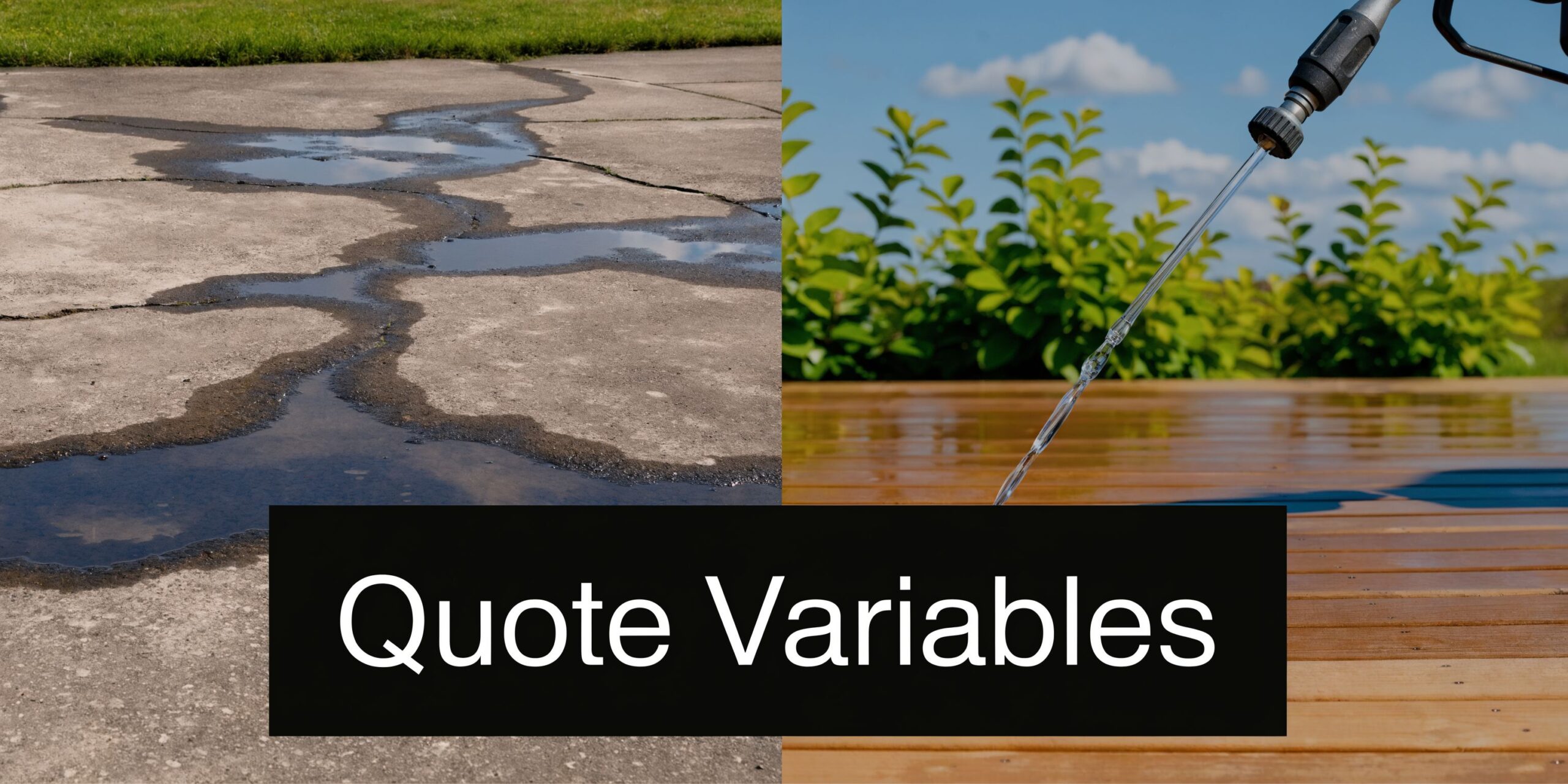
Desert buildup has its own personality. Fine dust settles into pores and texture. Heat bakes residue onto flatwork. Irrigation overspray leaves hard water marks and mineral lines that do not rinse away like loose soil.
A homeowner may describe a wall or driveway as “just dirty,” but the quote often rises when that dirt turns out to be bonded mineral residue, rust-toned runoff, grease, or years of neglected buildup.
Here are common quote changers in the Valley:
Hard water staining
These marks often need targeted treatment rather than a standard wash. Mineral buildup is especially common near hose bibs, irrigation zones, and pool equipment.Sun-baked grime
Surfaces exposed to direct afternoon sun usually take more time because the residue has dried and bonded more firmly.Organic growth in shaded areas
Even in the desert, north-facing walls, planters, and damp corners can hold algae or mildew that need a different cleaning sequence.
A specialty masonry issue can require even more care. If you are dealing with stubborn mineral or mortar-related staining on brick, this overview of brick cleaning and acid treatment considerations helps explain why some surfaces cannot be handled with a generic wash setup.
Access can raise or lower the job cost
Crews price labor based partly on movement.
An open driveway with clear hose routing is efficient. A narrow side yard filled with planters, gates, and stored items is slower. Multi-story sections, delicate light fixtures, rooftop runoff concerns, and limited water access all affect setup and pace.
Three practical access issues show up often in Phoenix neighborhoods:
Tight lot lines
Many homes have side yards that are usable but cramped. That slows hose handling and rinse work.
Furniture and obstacles
Patio furniture, grills, potted plants, and décor do not just “take a minute.” They create prep work and force a cleaner workflow.
Height and overspray control
Second-story entries, courtyard walls, and surfaces near windows require more controlled technique. The job may still be straightforward, but it is not as quick as ground-level concrete.
This short video gives a useful visual sense of how surface condition and technique affect the work:
The quote is really a stack of small decisions
Homeowners sometimes expect a single reason for a price. In practice, the number comes from several layers:
| Quote factor | Usually lowers cost | Usually raises cost |
|---|---|---|
| Soil level | Light dust and recent maintenance | Heavy buildup, stains, mineral deposits |
| Material | Durable flat concrete | Stucco, painted finishes, delicate masonry |
| Access | Open areas, easy hose routing | Tight spaces, second-story sections |
| Scope clarity | Clear photos and defined areas | Unclear add-ons and uncertain conditions |
The cleanest quotes are the ones where the contractor has already noticed the details that cause change orders later.
Getting an Accurate and Fair Estimate for Your Project
Most homeowners use the word estimate and quote like they mean the same thing. In exterior cleaning, they do not.
An estimate is a rough expectation. A quote is a defined price for a defined scope. If you want to compare pressure washing services prices fairly, that distinction matters.
What to have ready before you call
You will get a better number, faster, if you send useful information up front.
Prepare these basics:
The areas you want cleaned
List the house exterior, driveway, walkway, patio, pool deck, wall, or fence separately.A few clear photos
Include wide shots and close-ups of the dirtiest sections. Photos of hard water marks, oil spots, or runoff staining save time.A brief surface description
Mention stucco, painted block, concrete, pavers, wood, or brick. The cleaning method depends on the material.Access notes
Mention gates, tight side yards, furniture, pets, or any areas that are difficult to reach.Your goal
Are you doing basic maintenance, preparing for guests, responding to an HOA concern, or trying to remove specific staining?
That last point helps more than people think. A maintenance clean and a stain-removal-focused project may involve very different expectations.
When hourly pricing makes sense
Hourly pricing is not automatically bad. It is just better for some jobs than others.
According to HomeAdvisor’s exterior power washing cost guide, hourly rates average $50 to $100 per crew member, and fixed-price jobs often finish 25 to 40 percent faster because the pricing structure rewards efficiency. That is useful context when you compare bids.
If your project has a standard residential scope, a fixed price is usually easier to evaluate. If the work includes uncertain staining, mixed surfaces, or commercial complexity, hourly billing may be justified.
What to ask before saying yes
A strong quote should survive a few direct questions.
Ask things like:
- What surfaces are included in this price
- Are spot treatments or hard water issues included, or extra
- Will you use high pressure, soft washing, or a mix
- Does the quote include setup, detergents, and rinse-down
- What could cause the final price to change
- What is excluded
Those questions often expose the difference between a thoughtful bid and a guess.
Watch for vague language
Some quotes sound affordable because they avoid specifics. “House wash” can mean anything from a quick rinse to a full exterior cleaning with chemical treatment and detailed edge work.
If you are comparing companies, ask for line items or at least a written scope. A simple explanation is enough. You do not need a technical report. You just need clarity.
For a broader look at how service pricing gets structured across cleaning work, this page on cleaning service cost considerations helps frame what should be included before you approve a job.
A fair quote usually has three qualities
It matches the surface
The company identifies the material correctly and proposes a safe method.
It matches the soil level
The contractor has acknowledged whether this is maintenance cleaning, stain treatment, or restoration-style work.
It matches the scope
The written price tells you what is included and what is not.
If a contractor cannot explain why their price is what it is, you are not really holding a quote. You are holding a guess.
Your Hiring Checklist Beyond the Price Tag
The cheapest quote can cost more if the contractor damages stucco, stripes concrete, leaves wand marks on painted surfaces, or disappears when you call back.
That matters even more right now because the field is busy. The U.S. pressure washing industry is growing, and home improvement spending is projected to reach $466 billion through mid-2025, according to Jobber’s pressure washing industry statistics overview. More demand brings more providers. Some are excellent. Some bought a machine last month.
What separates a reliable company from a risky one
A professional operator usually sounds different before they ever arrive on site. They ask good questions. They care about the surface type. They explain how they will clean it. They tell you what they cannot promise.
That is a better sign than a low number sent by text with no details.
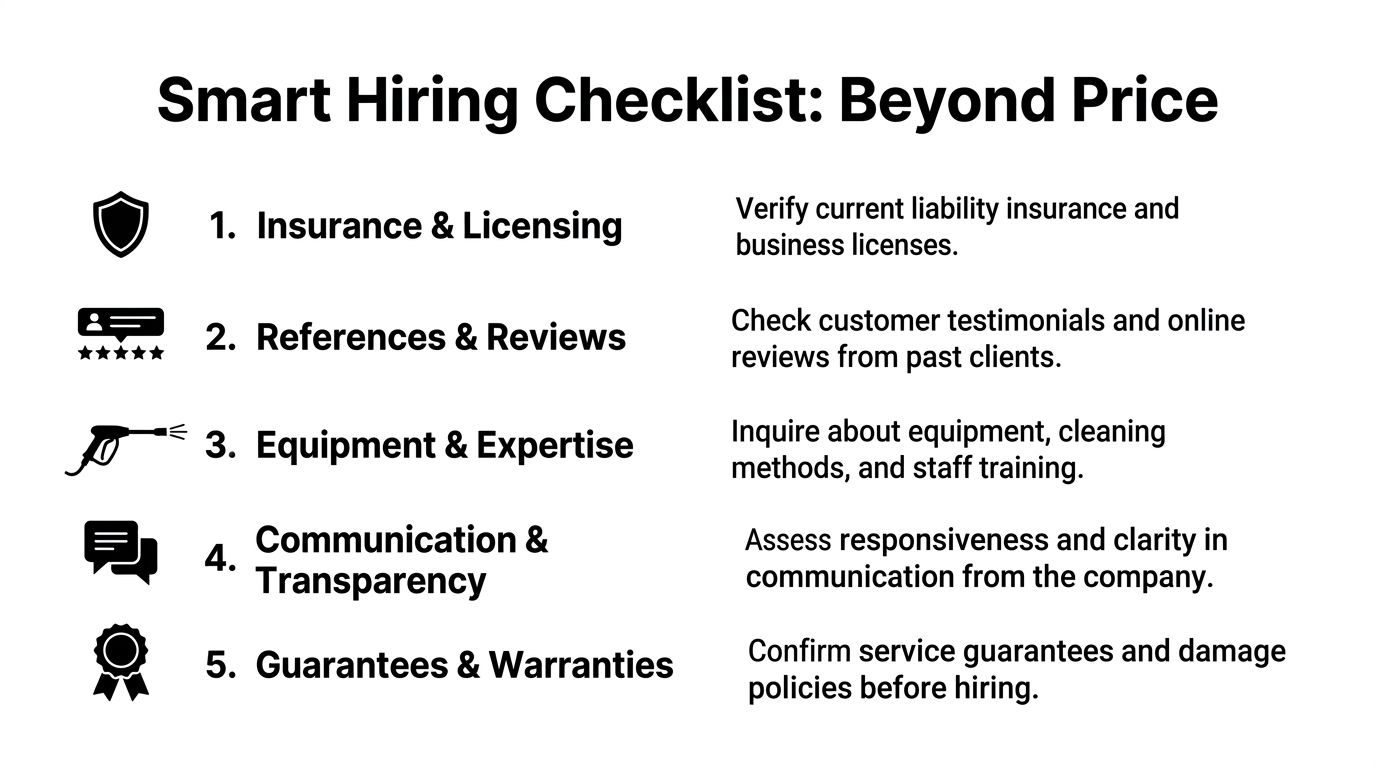
Here is the short hiring checklist that matters:
Insurance and business protection
Ask whether they carry current insurance and what happens if overspray, etching, or surface damage occurs. If you want a plain-English breakdown, this guide on bonded vs insured service providers is worth reviewing before you hire anyone.Recent project photos
Look for work on surfaces like yours. A company that cleans concrete well may still be careless on painted stucco.Method, not just machine size
Big equipment does not equal better results. The important question is whether they know when to reduce pressure, use detergents, pre-treat stains, and protect adjacent surfaces.Clear communication
Slow replies, vague answers, and fuzzy scopes usually do not improve once the job starts.A written guarantee or service policy
Exterior cleaning is not perfect on every pass. Good companies explain what they will come back for and where normal limitations apply.
Red flags homeowners often miss
Some of the most expensive mistakes come from jobs that seemed simple.
A few warning signs:
One price for everything
If a contractor gives the same style of quote for a dusty stucco exterior and an oil-stained driveway, they may not be evaluating the work carefully.
No discussion of soft washing
On Phoenix homes, especially stucco and painted exteriors, a company should at least mention method choice.
No mention of runoff or protection
Crews should think about windows, doors, landscaping, electrical fixtures, and drainage paths.
Why value beats the lowest bid
A strong exterior cleaning company is not just selling spray time. They are selling judgment.
That judgment shows up in small choices. Proper nozzle selection. Controlled distance from the surface. Pre-treatment where needed. Slower rinse work around trim, fixtures, and entryways. Those choices are what protect the finish and produce a cleaner result.
The best value usually comes from a contractor who prices the work fairly, explains the scope clearly, and uses the right method for each surface. That is worth more than a bargain quote that turns your house into a repair project.
Making the Best Choice for Your Property
Smart pricing decisions come down to three things. Know how the company is pricing the job. Know what Phoenix-area conditions do to the surface. Know who you are hiring.
If you understand the difference between hourly, square-foot, and flat-rate pricing, local quotes stop feeling random. If you recognize how stucco, hard water, heat, and access affect labor, you can spot why one property costs more than another. And if you vet the company beyond the number on the page, you reduce the chance of paying twice for the same problem.
Pressure washing services prices make more sense when the quote matches the work. That is the standard to use.
Frequently Asked Questions About Phoenix Pressure Washing
Is pressure washing safe for stucco homes in Phoenix
Yes, when the contractor uses the right method. Many stucco homes should be cleaned with a lower-pressure approach rather than aggressive blasting. The risk is not “washing” itself. The risk is using too much pressure on a textured or painted finish.
How often should a Phoenix home exterior be cleaned
That depends on exposure, dust, irrigation overspray, and how visible the buildup is. Homes near busy roads, open desert edges, or heavy hard water spray usually need attention sooner than protected properties. Most homeowners can judge timing by appearance and problem spots rather than a fixed schedule.
What is soft washing
Soft washing uses lower pressure with cleaning solutions and rinse control to remove dirt, grime, and organic buildup without treating every surface like concrete. It is often the better choice for stucco, painted exteriors, trim, and other materials that can be damaged by excessive force.
Why do hard water stains cost more to remove
Because they usually do not come off with water pressure alone. Mineral deposits often need targeted treatment, extra dwell time, and more detailed rinsing. That adds labor and changes the process.
If you want a clear, no-pressure quote from a local team that serves Scottsdale, Peoria, and the greater Phoenix area, contact Sparkle Tech Window Washing LLC. They provide straightforward pricing, licensed and insured service, and a practical approach to exterior cleaning that fits Arizona conditions.