


If you live near the Loop 101, a busy Scottsdale cut-through, or one of those streets where landscaping crews seem to start at dawn, you know the feeling well. The windows are closed, the AC is running, and you still hear tire noise, barking, pool parties, and that low rumble that never stops.
That moment often prompts people to search for soundproof windows cost. They want a straight answer, but most guides give a national average and stop there. In the Phoenix area, that is only part of the story. Heat, dust, frame material, and installation quality all have a greater impact here than many homeowners expect.
Soundproof windows are not magic. They do not make a home silent. What they can do is reduce outside noise enough that a bedroom feels restful again, a home office becomes usable, and evenings feel like evenings instead of background commotion.
Tired of the Noise? An Introduction to Soundproof Windows
Many Valley homeowners start with the same question. “Do I need new windows, or do I just need to seal up what I have?”
That confusion makes sense. Noise problems do not always look dramatic. Sometimes it is not a shattered pane or a frame that has visibly failed. It is a house that sounds too connected to the street. You hear every passing truck. Voices carry through closed glass. A room on the front side of the house never feels calm.
Soundproof windows are built or upgraded to reduce how much outdoor sound gets indoors. Some do that with thicker glass. Some use multiple panes and an air gap. Some use laminated glass. Others add an interior insert to the window you already own.
The hard part is not knowing that these products exist. The hard part is sorting out what fits your situation.
A Phoenix homeowner near a major road may need something very different from a Scottsdale homeowner who mainly wants to quiet a bedroom facing a neighborhood park. A property manager may care about repeatable, budget-conscious upgrades. A homeowner in an HOA may care just as much about appearance and approvals as raw sound control.
Quiet is not one product. It is a combination of the right glass, the right frame, the right seal, and the right installation.
Cost becomes confusing for the same reason. Two quotes can both be for “soundproof windows” and still be based on quite different products. One may be a moderate upgrade. The other may be a high-performance system.
Once you understand the parts of the quote, the pricing starts to make sense. And in Phoenix, once you factor in heat and dust, your choices also become clearer.
Cost of Quiet: Average Soundproof Window Prices in 2026
A lot of Phoenix homeowners start with the same question at the kitchen table: are we talking about a manageable upgrade, or a full-on premium window project?
A useful starting point is this. The average cost of soundproof windows is about $900 per window, with a typical range of $300 to $1,500, depending on the product and the installation. Broader pricing guidance also puts double-pane options around $300 to $800, triple-pane options around $1,000 to $2,000, laminated glass windows around $800 to $1,500, labor around $100 to $800 per window, a 3×5 foot window around $900 to $1,800, and a five-window project around $4,500 installed, according to Gladiator Window and Doors pricing guidance.
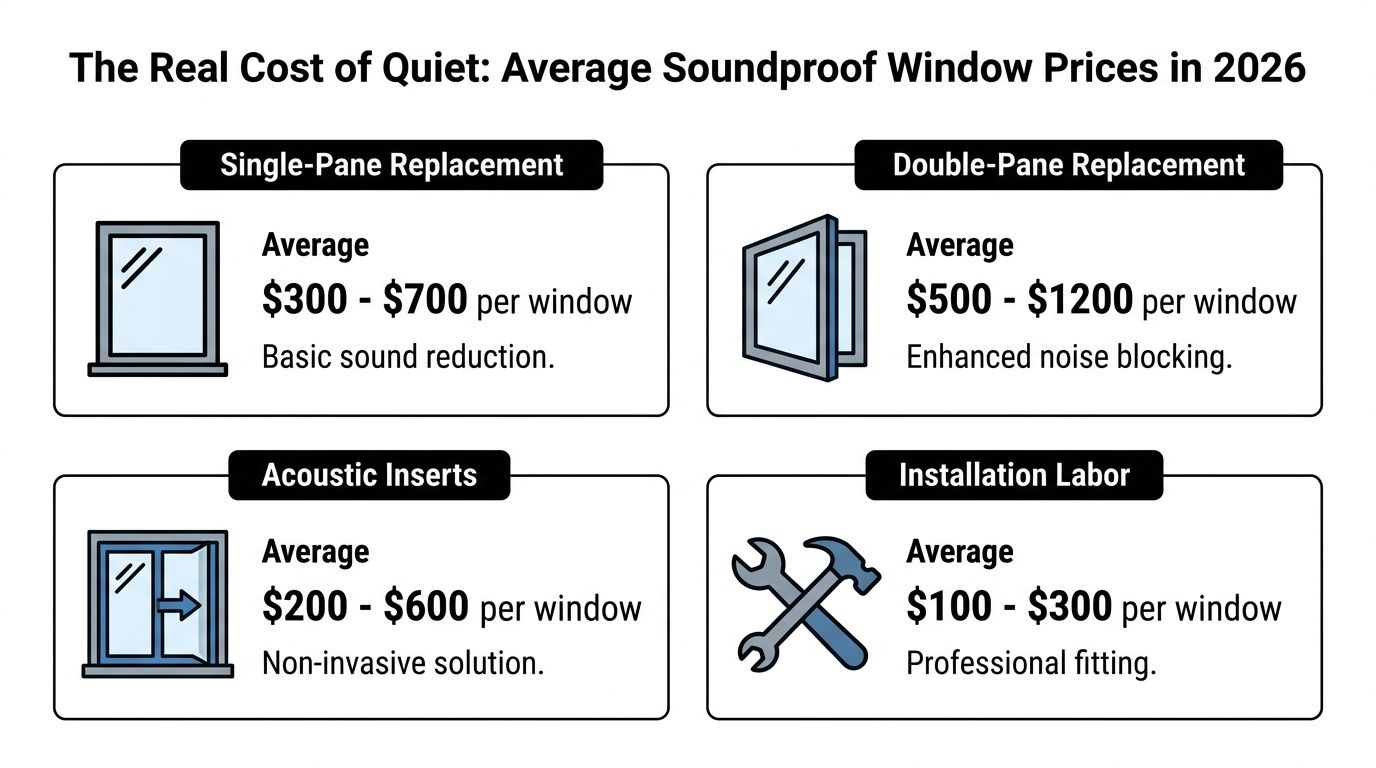
Those numbers are a starting line, not a final answer.
In Phoenix and Scottsdale, cost often shifts for reasons national guides gloss over. Sun exposure, larger glass areas, and the need to balance noise control with heat performance can push a quote higher than a homeowner expects. A window that helps with traffic noise but struggles with desert heat may not be much of a bargain.
Common price ranges
Here is the practical budgeting version:
- Average per window: $900
- Typical range per window: $300 to $1,500
- Double-pane options: $300 to $800
- Triple-pane options: $1,000 to $2,000
- Laminated glass windows: $800 to $1,500
- Labor: $100 to $800 per window
If you are comparing this to other window work, a general window repair cost guide can help show why sound-control upgrades are priced differently from basic repair or glass replacement.
What that means for a typical room
A single 3×5 foot window often falls in the $900 to $1,800 range. For a bedroom with two windows, or a small front room with several street-facing openings, the total can add up fast.
That does not automatically mean you need the highest-priced option.
It means your budget should match the problem. If your issue is light neighborhood noise, a modest upgrade may be enough. If you are close to a busy arterial road in Phoenix, the cheaper quote may be pricing a weaker glass package or a less effective installation approach.
A simple budgeting view
| Project type | Typical cost |
|---|---|
| One soundproof window | $300 to $1,500 |
| Average per window | $900 |
| One 3×5 window | $900 to $1,800 |
| Five-window project | $4,500 installed |
Why your quote may land high or low
Window pricing works a lot like truck pricing. Two pickups can look similar from the curb, but one has a basic package and the other has the towing, cooling, and suspension upgrades that change how it performs. Soundproof windows are similar. Two products may both be described as "soundproof," while one is a standard insulated unit and the other uses laminated glass, tighter seals, and a frame built to reduce vibration.
That difference matters more in the Valley. A Phoenix homeowner is often paying for two goals at once. Less noise and better control of heat gain. Materials that help with both tend to cost more than a basic noise-focused option.
The lower end of the range usually fits smaller windows, moderate noise, and straightforward installation. The higher end is more common with larger openings, upgraded glass packages, specialty shapes, or older frames that need correction before the new unit can seal properly.
One caution here. Price shopping without matching the actual window specs is how homeowners end up comparing apples to gravel. A lower quote only helps if the glass type, air space, frame quality, and installation method are in the same class.
Decoding Your Quote: Key Factors Driving the Cost
Many homeowners look at a window quote and see one large number. Contractors see a stack of choices. Glass package, frame material, size, style, labor, and fit all shape the final cost.
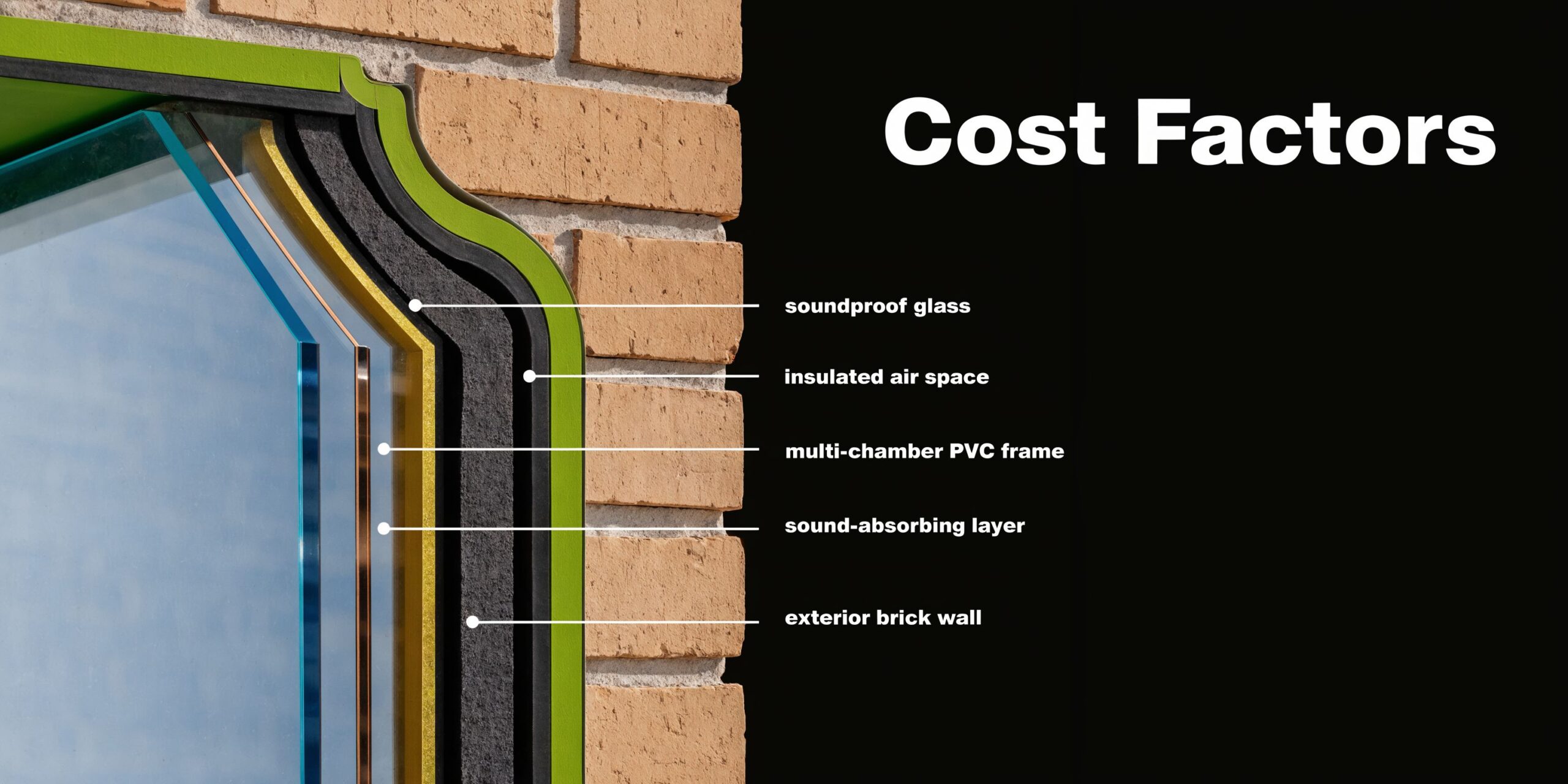
If you can read those pieces, you can tell whether a quote is lean, reasonable, or padded.
Glass package and why it matters
The glass does most of the acoustic work. That may seem obvious, but many people assume all multi-pane windows block sound similarly. They do not.
A standard insulated unit may reduce a fair amount of everyday neighborhood noise. If your issue is stronger and lower in tone, such as roadway rumble, you may need a more specialized setup like laminated glass or a higher-performance multi-pane assembly.
Consider this simple breakdown:
- Basic double-pane glass is frequently the entry point for moderate noise problems.
- Triple-pane assemblies typically push cost higher because you are adding complexity and material.
- Laminated glass is frequently chosen when sound control is a priority, not just insulation.
If a quote says only “dual pane upgrade” and says nothing else, ask what exactly is changing.
STC and OITC in plain English
These two terms confuse a lot of people.
STC stands for Sound Transmission Class. OITC stands for Outdoor-Indoor Transmission Class. You do not need to memorize the acronyms. You just need to know what they help describe.
A useful analogy is sunscreen. SPF numbers are not the whole story, but they help you compare products on the shelf. Sound ratings work the same way. They are comparison tools, not magic guarantees.
- STC is frequently used as a general sound-blocking measure.
- OITC is more focused on sounds common outdoors, such as traffic and aircraft.
If your home is near a major road, ask which rating the contractor is using to make their claims. A salesperson talking only about a general rating may not be addressing the kind of noise you hear.
Ask the contractor, “What kind of sound is this window designed to reduce best?” That question gets better answers than asking for “the quietest window.”
Frame material changes both price and performance
In Phoenix, frame choice is not just an appearance decision.
The frame holds the glass, supports the seals, and helps determine how well the assembly stays tight over time. Heat, sun exposure, and expansion all affect how a frame ages.
Common frame options include:
- Vinyl
- Wood
- Fiberglass
- Aluminum
Each has trade-offs. Some are more stable in heat. Some need more maintenance. Some cost more up front. Some hold up better long term in harsh sun.
If you are already comparing repair versus replacement, a guide to window repair cost can help you decide whether your existing frame is worth saving before you invest in sound-focused upgrades.
Size and style are hidden cost multipliers
A larger opening uses more material and can be harder to handle and install. That part is straightforward.
What surprises people is the effect of window style. A fixed picture window is typically simpler than an operable one. The moment a unit opens and closes, it needs more hardware, more sealing surfaces, and tighter tolerances.
That matters for sound because every moving part creates another place where air and noise can sneak through if the unit is poorly built or poorly installed.
Installation quality decides whether the window performs
A high-end glass package in a sloppy installation can still disappoint.
A proper fit, perimeter sealing, and careful attention to the opening are what turn a good product into a quieter room. If the quote barely mentions installation details, that is a warning sign.
Use this short checklist when reviewing an estimate:
- Product detail: Does the quote specify glass type and window style?
- Frame detail: Does it identify the frame material?
- Installation scope: Does it describe sealing, trim, or opening corrections?
- Performance language: Does it tie the product to the kind of noise you want reduced?
- Warranty detail: Does it separate product warranty from labor warranty?
A clear quote is easier to trust. A vague quote often hides either an underspecified product or a contractor who wants flexibility later.
Full Replacement vs Soundproof Inserts: Which is Right For You?
You live near a busy Phoenix street, the AC is running, and you still hear tire noise in the bedroom at night. At that point, the choice usually comes down to two paths. Replace the whole window, or keep the existing unit and add an interior soundproof insert.
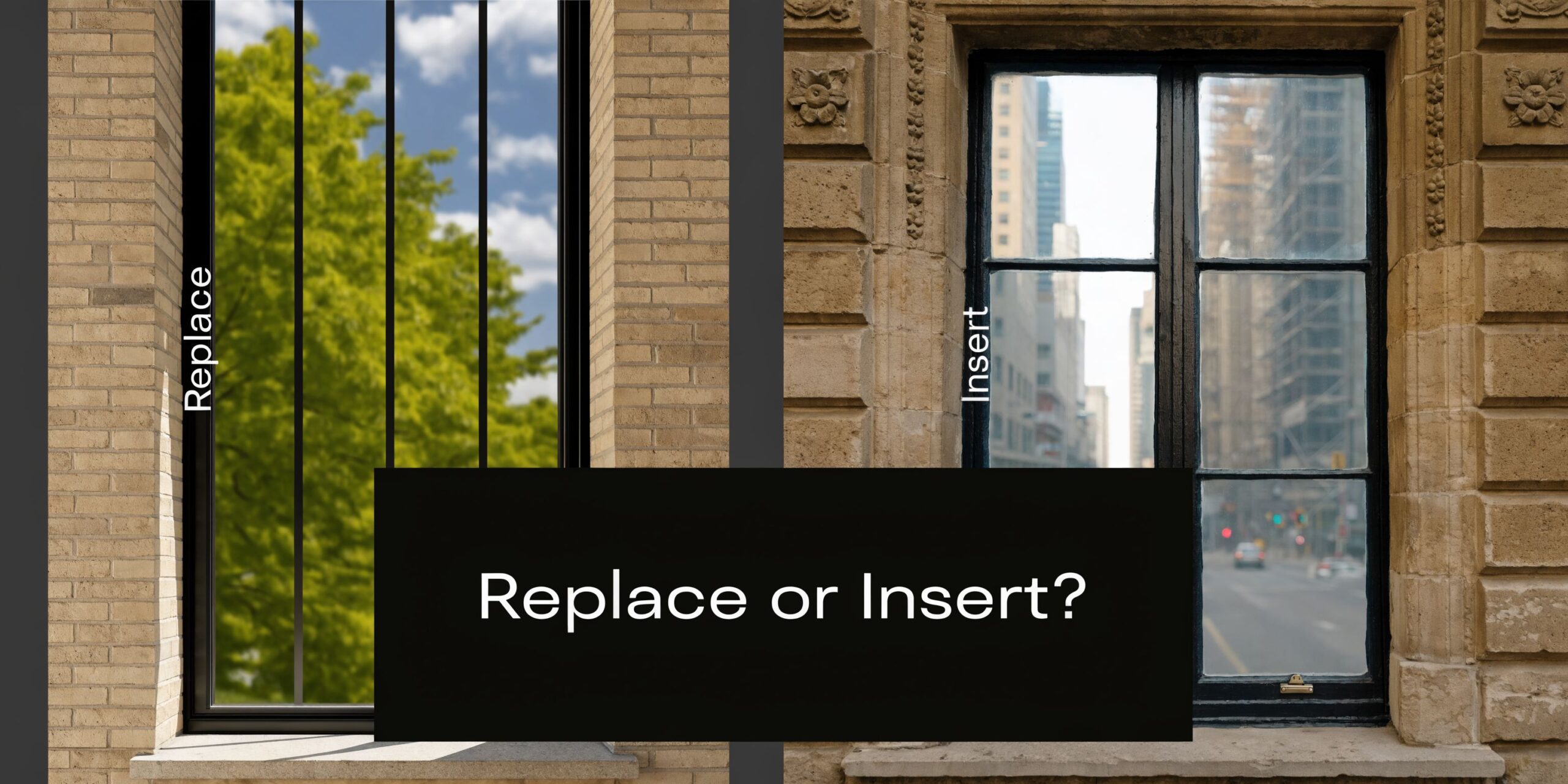
Both approaches can reduce noise. The better fit depends on the condition of your current windows, how long you plan to stay in the home, and how much the Valley climate is already punishing the materials around that opening.
When full replacement makes more sense
Full replacement usually earns its cost when the existing window is already struggling in more than one way.
That often looks like warped frames, failed seals, hard-to-operate sashes, or older units that let in heat almost as easily as noise. In Phoenix and Scottsdale, that matters more than many national guides admit. A window that bakes in direct sun all afternoon can develop seal and frame problems sooner, especially if it was not built for high heat.
Replacement makes sense when you want one project to address several problems at once:
- The frame is deteriorating or out of square.
- The glass unit has failed or shows seal issues.
- The window is a weak point for both heat gain and outdoor noise.
- You want a matched exterior look instead of adding an interior layer.
In that situation, replacing the whole assembly is like replacing both the door and the weatherstripping instead of just hanging a blanket over it. You spend more up front, but you fix the structure of the problem.
Why inserts are often the smarter buy
Soundproof inserts are usually the more practical choice when the existing window frame is still solid and the main complaint is noise.
An insert sits inside the current window and adds a second barrier made from acrylic or glass. You are not tearing out stucco, trim, or the old frame. You are creating more separation between outside noise and the room you use.
That gap is doing real work.
Sound loses energy as it passes through one layer, then an air space, then another layer. If you want the plain-English version, it works a lot like hearing someone through two closed doors instead of one. The extra barrier and the space between them help soften the sound before it reaches you.
This route also has a climate advantage in the Valley. If your existing exterior window is still weather-tight, an interior insert lets you improve noise control without opening up the exterior wall system during extreme heat season. For many Phoenix homeowners, that means less disruption, fewer finish repairs, and less chance of turning a noise project into a larger stucco-and-trim project.
A 2026 guide from Hotian Windows says inserts can cost $400 to $1,200 per window installed and provide up to 70 to 80 percent noise reduction. The same source says inserts can boost STC ratings by 10 to 20 points and may take 30 to 60 minutes per window to install, depending on the system.
A practical way to choose
Start with the frame, not the glass brochure.
If the current window is square, stable, and reasonably airtight, inserts often give you the better value for noise reduction. If the frame is failing, sun-damaged, drafty, or just old enough that you already plan to replace it for energy performance, full replacement is usually the cleaner long-term answer.
The Phoenix climate changes this math a bit. In milder parts of the country, a homeowner may tolerate an older frame for years if it only leaks some sound. Here, heat exposure can make that same frame a bigger liability. Noise may be the reason you started shopping, but solar gain and material wear can push the decision toward replacement.
Inserts are usually a good fit for sound control. Full replacement is usually a better fit for sound control plus heat, draft, and aging-window problems.
A quick visual can help if you want to see the difference in approach:
A side-by-side decision guide
| Option | Best for | Budget | Disruption | Notes |
|---|---|---|---|---|
| Full replacement | Homes with aging or failing windows | Higher | Higher | Best when noise is only one of several window problems |
| Soundproof inserts | Existing windows in decent condition | Lower than replacement in many cases | Lower | Good for preserving the current window while adding an interior sound barrier |
A few real-world examples
A front bedroom facing a collector road in Phoenix is often a strong insert candidate if the existing window still closes tightly and the frame is in good shape. You keep the exterior as-is and target the noise.
A west-facing living room in Scottsdale with older aluminum frames, noticeable heat gain, and traffic noise usually points toward replacement. In that case, the sound issue is tied to a larger comfort problem.
A historic or style-sensitive home may also favor inserts because they preserve the original exterior appearance.
The biggest mistake is choosing based on product type alone. The better question is simpler. Is your current window basically healthy, or is it already failing in the desert heat? That answer usually tells you which path makes more sense.
Budget-Friendly Noise Reduction Alternatives
A lot of Phoenix homeowners reach this point the same way. You fix the obvious problem first. Maybe the AC is working overtime, maybe a west-facing room always runs hot, and the road noise still sneaks in at night. A full soundproof window project may need to wait, but that does not mean you are stuck with the noise in the meantime.
The best lower-cost fixes work like plugging holes in a cooler. If cool air or sound can slip through small openings, the room never performs as well as it should. In the Valley, dust around the sill or frame is often a clue. If dust is getting in, sound usually is too.
Start with the leaks around the window
Air gaps are often the cheapest problem to address, and they are common in older homes around Phoenix and Scottsdale where seals dry out under long summer heat.
A practical first step is sealing the perimeter and improving the contact points where the sash meets the frame. Acoustic caulk, fresh weatherstripping, and small hardware adjustments can tighten up a loose window and take the edge off outside noise. They can also help with comfort if the room feels drafty or dusty. If you want a smart place to start before spending money, this home energy audit checklist for spotting air leaks and efficiency issues can help you identify weak spots around the window area.
Low-cost upgrades that usually give the best return
- Seal small gaps: Helpful for windows that whistle, rattle, or let in dust after windy days.
- Replace worn weatherstripping: Useful when the sash closes, but not tightly enough to make a firm seal.
- Add heavier, lined curtains: These will not block heavy traffic noise, but they can soften harsh sound and help with sun exposure in bright Phoenix rooms.
- Use window plugs or temporary interior panels in problem rooms: Good for home offices, nurseries, or bedrooms where quiet matters most.
- Work room by room: Start with the space that affects sleep, work calls, or daily comfort first.
The room itself can make noise feel worse
Homeowners often focus only on the glass. The room matters too.
A bedroom with tile floors, bare walls, and little furniture tends to sound sharper because noise bounces around inside the space. Add a rug, upholstered furniture, lined curtains, or a bookcase, and the room often feels calmer even if the outside noise level has not changed much. That is not true sound blocking. It is echo control, and it can make a noticeable difference in how the room feels day to day.
Set the right expectation
Budget fixes are best for moderate noise, occasional disturbances, and windows with clear leakage issues. They are less satisfying for homes near constant freeway traffic, flight paths, or ongoing construction, where the sound pressure is stronger and more persistent.
A simple rule helps here. If the noise seems to come around the window, sealing work often gives the fastest improvement. If it feels like the sound comes straight through the glass, soft furnishings and caulk will only do so much.
That is still useful information. These smaller upgrades help you learn whether your real problem is leakage, glass performance, or both, so your next quote is based on what the room needs.
The Phoenix Factor: Soundproofing for the Valley Climate
You get a quote for soundproof windows in July. On paper, two options look close. Then a Phoenix summer starts doing what Phoenix summers do. Frames bake in direct sun, seals collect fine dust, and the window has to help with heat and noise at the same time. That is why generic national advice often misses the mark here.
Phoenix is a hot, arid environment, and that changes what “good value” means. A window that looks cheaper upfront can cost more in comfort and maintenance if the frame, seals, or glass package are a poor fit for long stretches of heat.
Why frame material matters more here
Frame material is not just a durability detail. It affects whether the window keeps a tight fit over time, and that tight fit is part of what helps block sound.
In hot climates, some standard vinyl products can struggle more with expansion and long-term shape changes than better-performing materials. Insight Glass explains that hot-climate buyers should look closely at frame material, long-term durability, and solar heat gain ratings when comparing soundproof window costs. Fiberglass often costs more, but in desert conditions it can make sense if you want better dimensional stability over years of sun exposure.
That does not mean every vinyl window is a bad choice. It means you should ask the installer a practical question: how will this frame hold its seal and alignment after many Phoenix summers?
Noise control and heat control have to work together
A soundproof window in Scottsdale or Phoenix has two jobs. It needs to reduce outside noise, and it needs to help your AC keep up.
That is where homeowners can get tripped up. They focus on the acoustic upgrade and overlook the glass package. In this climate, solar heat gain matters because a room that is quieter but much hotter does not feel like much of an upgrade. If you are looking at comfort room by room, this home energy audit checklist for Phoenix-area homes is a useful way to compare sun exposure, cooling load, and weak spots around the house.
A simple way to think about it is this. Your window is part earplug, part sunscreen. In the Valley, it has to do both jobs well.
Dust affects performance, not just appearance
Desert dust is hard on moving parts and sealing surfaces.
Over time, dust works into tracks, corners, and weatherstripping. If the sash stops closing snugly, the window can lose some real-world sound performance even if the glass itself is still doing its job. Homeowners often notice this as a room getting a little “sharper” or leakier again, especially after windy stretches or monsoon season cleanup delays.
That makes maintenance part of the cost picture in Phoenix. The lower price on day one is not always the lower cost to live with.
HOA rules can shape the best option
In many Scottsdale communities and HOA-managed neighborhoods, appearance rules matter almost as much as performance specs. Exterior color, grille pattern, sightlines, and approval requirements can narrow your choices.
That is one reason soundproof inserts stay popular here. They can improve the indoor experience while keeping the outside appearance closer to what the HOA originally approved.
For Valley homeowners, the strongest option usually balances four things:
- Noise reduction
- Heat control
- Material durability in desert sun
- Simple long-term maintenance
If one of those gets ignored, the window may test well on a quote sheet and disappoint in daily life.
Finding Your Installer and Getting Accurate Quotes
Here is the part many homeowners in Phoenix and Scottsdale do not see coming. Two quotes can list windows that sound almost identical, yet one contractor understands noise control and desert wear, while the other is mostly selling a standard replacement window with a nicer label.
That matters because the category is getting more crowded. The global soundproof windows market is projected to grow from $2,711 million in 2025 to $4,500 million by 2035 at a CAGR of 5.2%, according to Wise Guy Reports market projections. More products on the market can give you better choices. It also means more sales pitches, more package deals, and more installers who may know glass but not the details that make a room quieter.
In the Valley, those details include heat, sun, dust, and frame movement over time. A quote that ignores local conditions can look fine on paper and disappoint after one summer.
What to ask before you book an estimate
Start with the problem, not the price.
If a contractor begins by pushing a package before asking where the noise comes from, that is a warning sign. Good sound control work starts the same way a doctor visit does. First identify the source, then choose the treatment.
Ask questions like these:
- What type of noise are you solving for? Traffic, barking dogs, aircraft, pool noise, and nearby voices travel differently.
- Why are you recommending this product for this room? The answer should connect the window choice to your specific noise problem.
- What installation steps are included? Fit and sealing work matter because even a strong glass package can underperform if small gaps are left around the frame.
- How do your recommended materials hold up in Phoenix sun and dust? That question quickly tells you whether the company works in our climate regularly or is giving a generic national answer.
- Who handles warranty issues, the manufacturer or your crew? You want a clear answer before the job starts.
If you are comparing companies, it also helps to understand the difference between bonded vs. insured contractors and what each protects you from, especially when work is happening inside an occupied home or HOA community.
What a quote should include
A useful quote should let you compare one bid against another without guessing what is missing. If you have to keep calling back to ask what glass, what frame, or what labor is included, the quote is not ready.
Look for these items:
| Quote detail | Why it matters |
|---|---|
| Window type or insert type | Confirms you are comparing the same kind of solution |
| Frame material | Affects price, lifespan, and heat performance in desert conditions |
| Glass package | Strongly affects sound reduction and solar control |
| Installation scope | Shows whether sealing, trim, and opening adjustments are included |
| Room-by-room pricing | Helps you prioritize bedrooms, offices, or street-facing rooms |
| Warranty terms | Clarifies who stands behind the product and the labor |
Room-by-room pricing is especially helpful here. In many Phoenix homes, the front bedroom facing traffic needs a different level of treatment than a back room facing a quiet yard.
Red flags worth noticing
Some red flags are easy to miss because they can sound polished.
A contractor says “acoustic upgrade” but cannot explain the glass makeup. Another gives one recommendation for every room without asking which side of the house gets the worst noise. A third offers a big discount that expires the same day, hoping you will sign before comparing details.
Watch for these patterns:
- Vague language with no product details
- Pressure to sign quickly
- The same recommendation for every room
- No questions about noise source, room use, or sun exposure
- No discussion of seal quality or installation method
A careful installer usually spends more time diagnosing than selling.
Compare quotes by result, not just by total price
The lowest quote can still be the expensive mistake.
A better way to compare bids is to ask, “What exactly am I buying for this room?” One proposal may include better sealing, better glass, and better frame materials for desert exposure. Another may only look cheaper because it leaves out labor steps that affect real-world performance.
It helps to picture your window system like a cooler lid. Thick walls help, but if the lid does not close tightly, the cold escapes. Sound works in a similar way. Good glass matters, but fit, seals, and installation discipline are what keep noise from sneaking around the edges.
If your budget is limited, ask each company to price the rooms in phases. That makes quotes easier to compare and gives you a cleaner test case before you commit to the whole house.
The best installer is not the one with the smoothest pitch. It is the one whose quote clearly explains the product, the labor, and why that combination fits your home in Phoenix.
Your Next Steps Toward a Quieter Home
If you feel overwhelmed, simplify it.
First, identify the rooms where noise bothers you most and the kind of noise you hear. Traffic, voices, and general neighborhood activity do not always call for the same solution.
Second, set a realistic budget. Some homeowners will be best served by full replacement. Others will get what they need from inserts or well-targeted lower-cost fixes.
Third, get several itemized quotes and compare the details, not just the total. The right product in the wrong frame, or the right window with poor installation, can leave you spending a lot and still hearing too much.
For Phoenix and Scottsdale homes, remember the local twist. Heat-resistant materials, low solar heat gain, and clean, intact seals matter just as much as the glass itself.
A quieter home is usually built one smart decision at a time. Start with the room that bothers you most. That first improvement frequently tells you exactly what the rest of the house needs.
If you’ve invested in better windows, protect that investment with professional care. Sparkle Tech Window Washing LLC helps homeowners and property managers across Scottsdale, Peoria, and the greater Phoenix area keep glass, tracks, and screens clean so windows look better and continue performing the way they should.