


Your AC has been running for months, the dust on the furniture is back a day after cleaning, and your utility bill feels heavier than it should. In Phoenix, that combination usually points to one of the most overlooked maintenance jobs in the house.
Changing furnace filters sounds minor because the part is simple. In practice, it affects airflow, indoor dust, how hard your system runs, and how comfortable the house feels in the middle of a long desert summer. Generic advice written for milder climates misses that reality. Phoenix homes deal with fine dust, monsoon debris, and long stretches of nonstop cooling. A filter that might last in another market often won’t last here.
A lot of homeowners wait until the filter looks terrible. That’s late. The better approach is to choose the right filter, check it often, and replace it before your system starts paying the price.
Why This 10-Minute Task Is Critical for Your Phoenix Home
In the Valley, your HVAC system doesn’t get much downtime. That matters because the filter is working whenever air is moving through the system, not just during winter furnace use. In a Phoenix summer, a clogged filter can imperceptibly turn into a money problem, a comfort problem, and an air quality problem all at once.
The strongest reason to stay on top of changing furnace filters is simple. A clean filter helps the system breathe. When airflow gets restricted, the equipment has to work harder to move air through the house. The U.S. Department of Energy estimates that maintaining a clean furnace filter can reduce household energy consumption by 5-15%, which can translate to $7-$20 in savings per month for a typical Phoenix-area home during peak cooling season, according to Walton EMC’s HVAC filter guidance.
That’s why I treat filter changes as one of the fastest low-cost ways to cut waste in a home. You don’t need a remodel. You don’t need new equipment. You need consistent maintenance.
Dust, airflow, and wear all show up fast here
Phoenix homes collect dust differently than homes in wetter climates. Fine particles get in through doors, windows, screens, garages, and normal daily traffic. Then the HVAC system pulls that air through the return side over and over. If the filter is overloaded, some rooms feel stuffy, vents blow weaker, and the system runs longer than it should.
Practical rule: If your home feels dustier than usual and the AC seems to run constantly, check the filter before you assume something major is wrong.
There’s also an equipment side to this. Restricted airflow puts extra strain on the blower and other components. That doesn’t always cause an immediate breakdown, but it does push the system in the wrong direction.
It belongs on the same list as every other efficiency habit
Homeowners often focus on thermostats, insulation, and windows while ignoring the filter. Those bigger items matter, but the filter is one of the few maintenance tasks you can do in minutes and feel the difference quickly. If you’re reviewing ways to reduce waste around the house, a home energy audit checklist for Phoenix-area homes is a smart companion to a regular filter routine.
A clean filter won’t solve every HVAC issue. But in this climate, skipping it is asking your system to do the hardest job in the house with a blocked airway.
Choosing the Right Furnace Filter for Arizona Air
A filter isn’t just a filter. In Phoenix, the wrong choice can mean more dust in the house, more frequent replacements, or airflow problems that make the system work harder than it should.
Most homeowners shop by size first, then price. Size matters, but so does MERV rating, which stands for Minimum Efficiency Reporting Value. In plain English, MERV tells you how fine a particle the filter is designed to capture. Higher ratings generally capture smaller particles, but they also create more resistance. That trade-off matters in desert homes where you want better dust control without choking airflow.
What MERV means in a real house
Low-MERV fiberglass filters are cheap and easy to find. They allow strong airflow, but they don’t do much for fine dust. Pleated filters in the mid-range are the practical middle ground for most Phoenix homes. Higher-efficiency filters can help with allergies and pet dander, but they need to match the system’s design.
If you have pets, allergy concerns, or a home that picks up dust quickly, it usually makes sense to lean toward a better pleated filter rather than the thinnest fiberglass option. Just don’t assume the highest rating is always best. If a filter is too restrictive for your equipment, the cure becomes a new problem.
The replacement schedule on the package is not written for Phoenix
One reason people get in trouble is that they buy a decent filter and then trust the broad timeline on the label. The Zebra reports that 82% of homeowners fail to change their air filter monthly, and notes that while basic 1-inch pleated filters should be changed every 90 days in normal climates, factors like pets or local air quality can shorten that to 60 days or less in dusty areas like Phoenix, as outlined in The Zebra air filter survey.
That lines up with what Phoenix homeowners already know from experience. Dust loads here aren’t normal. Your schedule should reflect your home, your pets, your use, and your neighborhood conditions.
Furnace Filter Comparison for Phoenix Homes
| Filter Type | Typical MERV Rating | Best For | Phoenix Replacement Schedule |
|---|---|---|---|
| Fiberglass panel | MERV 1-4 | Lowest upfront cost, basic equipment protection | Check monthly. Replace often because desert dust loads them quickly |
| Pleated 1-inch | MERV 8-13 | Most households, better dust capture, balanced performance | Start with the normal 90-day rule, but shorten to 60 days or less if you have pets, allergies, or heavy dust conditions |
| Thick media filter | Higher-capacity style | Homes wanting longer service intervals with the right cabinet setup | Check regularly and follow the equipment specs. These can last longer, but Phoenix dust still makes visual checks important |
What tends to work best
For many homes in Scottsdale, Peoria, and the greater Phoenix area, a pleated filter is the practical choice. It usually gives a better balance of filtration and airflow than the cheapest panel filters. For households with shedding pets or people who notice dust and irritation quickly, a stronger pleated option can be worth it if the system can handle it.
Buy the filter your system was designed to use, not the one with the most aggressive marketing on the packaging.
A few selection habits help:
- Match the exact size: Read the old filter frame carefully and buy the same dimensions.
- Think about your household: Pets, allergies, and frequent AC runtime all push you toward more frequent checks.
- Avoid guesswork on very high-efficiency filters: If you want a significant upgrade, confirm that your HVAC system can handle it.
- Keep extras on hand: In Phoenix, waiting until the filter is overdue usually means you’ll keep running the system longer than you should while meaning to get to the store.
Choosing well saves hassle later. The right filter won’t eliminate dust in a desert city, but it will make your HVAC system far more effective at managing it.
Your Step-by-Step Guide to a Safe Filter Change
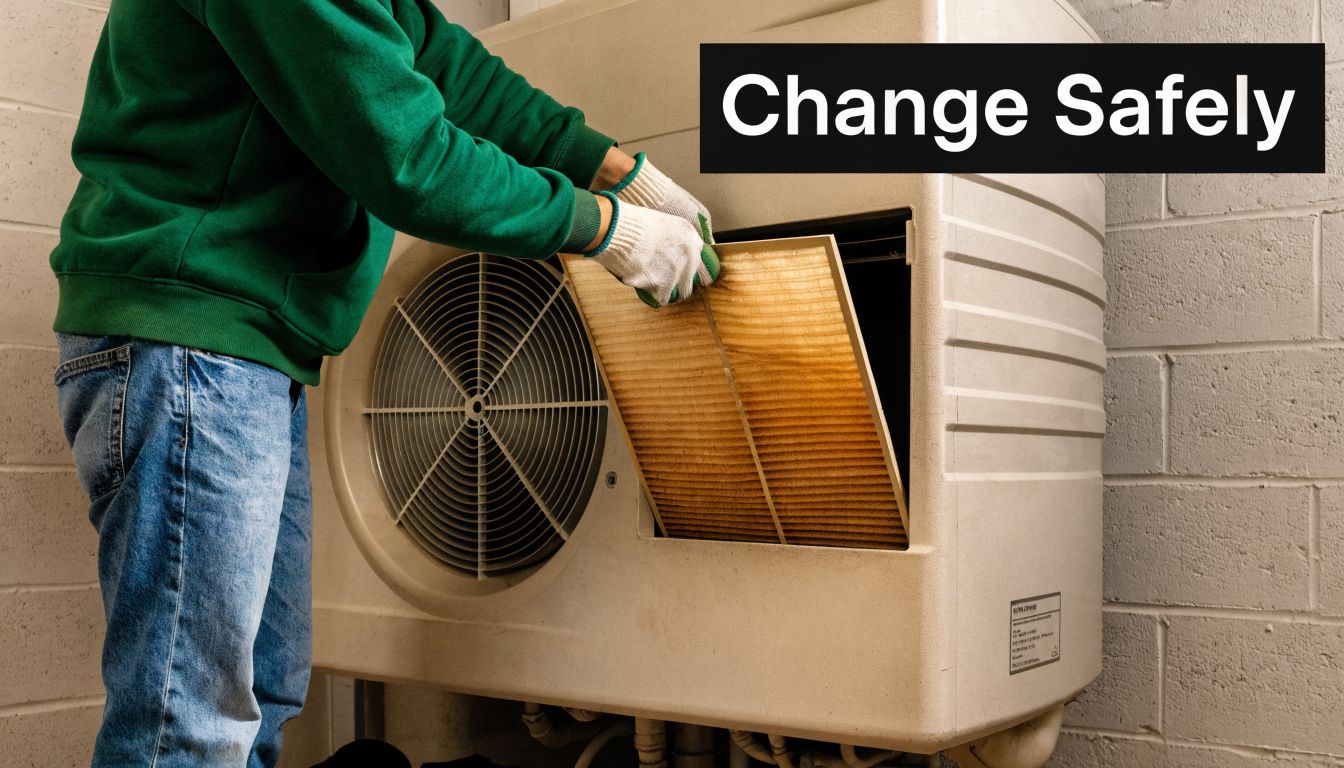
Most homeowners can handle changing furnace filters themselves. The job is straightforward if you slow down, confirm the size, and pay attention to airflow direction.
Power down the system first
Turn the HVAC system off at the thermostat before you touch the filter. If your setup has a nearby power switch and you know which one controls the equipment, shut that off too. The goal is simple. You don’t want the blower pulling dust through the system while the filter is out.
This step also keeps the job cleaner. When the system is off, you’re less likely to stir up debris and spread it through the return.
Find the filter slot and read the old one before removing it
In most homes, the filter sits near the return air duct or the blower compartment. Sometimes it’s behind a return grille. Sometimes it’s in a slot near the indoor unit. If you’re unsure, follow the large return duct toward the air handler.
Before you toss the old filter aside, check three things:
- The size printed on the frame: Take a quick phone photo. That avoids the classic store trip where you forget whether it was one size or another.
- The thickness: Don’t assume a thicker filter will fit just because the length and width match.
- The airflow arrow: Note which direction it points before you remove the filter fully.
Remove the old filter without shaking dust everywhere
Slide the filter out slowly. A dirty filter can dump debris if you yank it out or knock it against the cabinet. If it’s packed with dust, carry it carefully and bag it before walking through the house.
Look at the filter surface once it’s out. If it’s visibly gray, loaded with debris, or matted with pet hair, that’s useful information. It tells you your current schedule may be too relaxed for your house.
If a filter is clogging faster than you expected, don’t keep following the same calendar. The house is telling you to adjust.
Check the airflow arrow and seat the new filter correctly
This is the mistake I see most often with DIY filter changes. The arrow on the filter frame must point toward the blower motor. If the filter is installed backward, filtration performance drops. The guidance from Thomas Galbraith on changing furnace filters notes that incorrect orientation is a common DIY error that can halve filtration efficacy, and that the filter should fit snugly without gaps so unfiltered air can’t bypass it.
That snug fit matters more than people think. If air slips around the filter instead of through it, dust still reaches the system and the living space.
Here’s a quick way to think about orientation:
- If the filter is in a return grille, the arrow points into the duct.
- If the filter is at the air handler or furnace cabinet, the arrow points toward the equipment.
If you’re ever unsure, look for the direction air is traveling on its way back to the blower.
After you install the new filter, make sure it’s fully seated. No bending, no gaps, no forcing.
A short visual walkthrough can help if this is your first time:
Restore power and confirm normal airflow
Once the cover or grille is back in place, turn the system on again. Listen for normal operation. Then check a couple of vents in the house. You’re looking for steady airflow, no odd noises, and no whistling that suggests the filter is poorly seated.
If something sounds wrong right after the change, don’t ignore it. Pull the filter back out and make sure the size, thickness, and arrow direction are correct.
Keep the next change easy
A few small habits make future filter changes much easier:
- Write the install date on the frame: That saves you from guessing later.
- Store spare filters indoors: Keep them clean and dry.
- Set a reminder on your phone: In Phoenix, a forgotten filter can go bad faster than homeowners expect.
- Check after dust events: Even if it’s not replacement day, a quick look after a major storm is worth your time.
Changing furnace filters isn’t complicated. What matters is doing the simple parts correctly every time.
Phoenix Filter Schedules and Telltale Warning Signs
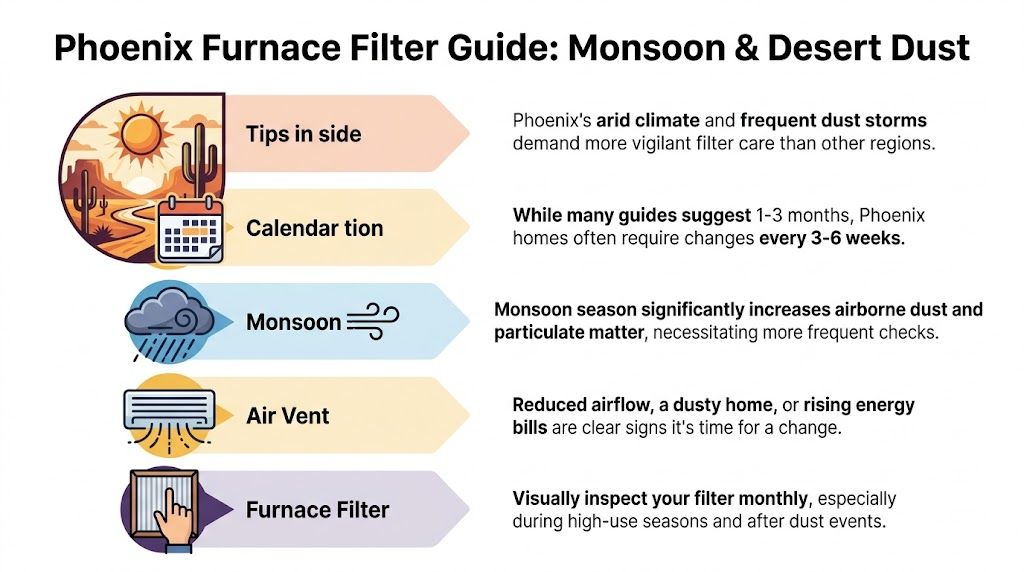
The standard advice to change a filter every few months is too broad for the Sonoran Desert. Phoenix homes deal with dry air, frequent dust, and long cooling seasons. That means filters can load up far sooner than a national rule of thumb suggests.
In arid Southwest climates like Phoenix, filters can get dirty 30-50% faster than in other regions due to high dust loads from dry air and monsoon seasons, making the standard 90-day replacement guideline insufficient, according to Logan Services on changing furnace filters in dusty climates.
That doesn’t mean every home needs the same aggressive schedule. It means you should stop treating the box recommendation like a guarantee.
A practical schedule for local conditions
A better approach is to use a base schedule, then tighten it when the house or weather demands it.
- Typical household: Start with monthly inspections. If the filter still looks serviceable, keep checking on that rhythm and replace based on actual buildup rather than blind confidence.
- Homes with pets or allergy concerns: Expect to shorten the interval. Hair, dander, and daily runtime load the filter faster.
- Monsoon season and dust events: Check the filter after major wind and dust activity, even if you changed it recently.
- Heavy summer AC use: When the system is running all day, the filter is working all day. Visual checks matter more than the calendar.
I’d rather see a Phoenix homeowner check too often than assume the filter is fine because the package suggested a longer interval.
What your house is telling you
You usually get warning signs before a filter becomes a major problem. The trick is noticing them early.
More dust on tables, weaker air at the vents, and longer cooling cycles often show up before people think to inspect the filter.
Watch for these local clues:
- Dust returns quickly after cleaning: If shelves and floors look dusty again almost immediately, the filter may be overloaded.
- Certain rooms feel under-supplied: Weak airflow at supply vents can point to a filter that’s restricting circulation.
- The system seems to run longer: If cooling cycles feel stretched out, airflow is one of the first things to check.
- The filter looks visibly gray or loaded: Trust your eyes. A dirty filter in Phoenix rarely gets better by waiting.
- The house feels stuffier during monsoon season: Fine dust can build up fast after storms.
Your screens and dust load are connected
A clean home envelope helps the HVAC filter do its job. Window screens collect a surprising amount of desert debris, especially during windy months. When screens are loaded with dust, every opening of a window or door can bring more particulate into the home. That’s one reason a broader annual home maintenance checklist for desert homes makes sense alongside your HVAC routine.
The important shift is this. Don’t ask, “How long should this filter last?” Ask, “What is my house doing right now?” In Phoenix, that question leads to better timing and fewer HVAC headaches.
Common Filter Mistakes and How to Avoid Them
Most filter problems aren’t caused by neglect alone. They come from small mistakes that seem harmless at the time. In the field, I see the same pattern over and over. Someone changed the filter, but the wrong size, wrong direction, or wrong type created a different problem.

Buying by guess instead of by exact size
Close enough is not good enough with HVAC filters. If the filter is too small, air can slip around the edges instead of passing through the media. That means dust bypasses the filter and ends up in the equipment and the living space.
Do this instead. Pull the old filter, read the dimensions carefully, and buy that exact size. If the printed numbers are faded, measure the filter slot before purchasing a replacement.
Forcing in a thicker filter
A lot of homeowners assume thicker means better. Sometimes it does, but only if the system was designed for that thickness. If the slot was built for a thinner filter, forcing in a thicker one can create fit problems or airflow issues.
Use the thickness your cabinet or grille is designed to accept. If you want to upgrade to a different filter style, confirm that your system supports it first.
Installing the filter backward
This one is common because the change seems simple and people rush it. The filter frame has an airflow arrow for a reason. Get that direction wrong and the filter won’t perform the way it should.
The arrow should follow the path of air as it moves back toward the blower.
If you can’t remember the direction from the last change, stop and trace the airflow before sliding in the new filter.
Leaving gaps around the frame
A filter can be technically the right size and still not be seated properly. If one edge isn’t fully in the track or the filter is bowed, air will take the path of least resistance around it.
Check the fit with your hand before closing the compartment. The frame should sit straight and snug, without visible openings.
Waiting for the filter to look disastrous
A filter doesn’t need to look completely packed to be overdue. In Phoenix, fine dust buildup can affect performance before the filter looks dramatic. Homeowners who wait for a dark, heavily loaded appearance often push the system longer than necessary.
Set reminders. Then use those reminders to inspect, not just to replace automatically.
Tossing the old filter uncovered
Once the old filter is out, don’t lean it against a wall and forget it. Bag it right away so trapped dust doesn’t end up back in the house. That last step is simple, but it keeps the job clean and keeps debris out of your living area.
Changing furnace filters is easy. Changing them carelessly creates avoidable problems.
When to Call a Pro and Consider Smart Upgrades
DIY filter replacement makes sense for most homeowners. But there’s a line between routine maintenance and a system issue that needs professional diagnosis.
Call a pro if the filter location is hard to reach, the compartment is damaged, the system won’t power back on after a change, or the equipment starts making unusual noises. The same goes for chronic weak airflow that doesn’t improve with a clean filter. At that point, the filter may be only part of the story.
Some homes also run into trouble when owners try to upgrade filtration without checking system compatibility. If you want a more advanced setup, it’s smart to pair that decision with a broader HVAC conversation. Homeowners looking into airflow and efficiency often also benefit from understanding related system improvements such as duct sealing options and what they cost.
Smart monitoring is becoming more useful
One development worth watching is smart filter monitoring. A 2026 trend shows growing integration of smart HVAC filters with IoT sensors that alert homeowners through an app when airflow is restricted, and the same source notes that 67% of homeowners admit to skipping recommended filter changes, according to Paragon Heating’s write-up on furnace filter issues.
That kind of monitoring won’t replace annual HVAC service. It does help solve a very common problem. People forget.
When an upgrade makes sense
Smart monitoring is especially useful for:
- Busy households: If maintenance keeps falling off the list, alerts help.
- Second homes or rental properties: Remote reminders reduce guesswork.
- Homes with dust sensitivity: Knowing when airflow is restricted is more useful than relying on memory.
- Older systems with recurring comfort complaints: Better tracking can help identify patterns worth discussing with a technician.
The best homeowners I know don’t treat filters as an afterthought. They treat them as part of a broader habit of paying attention. That’s what protects comfort, air quality, and equipment life in a Phoenix home.
If you’re maintaining a home in Scottsdale, Peoria, or the greater Phoenix area, Sparkle Tech Window Washing LLC is a helpful local resource for the other side of desert dust control. Their team handles window cleaning, screen cleaning and repair, and solar panel cleaning, which can support a cleaner, brighter, more efficient home overall.