

Combining baking soda and vinegar for cleaning isn't just an old-school trick—it's a powerful, non-toxic method that leverages a simple chemical reaction. When the alkaline baking soda meets acidic vinegar, the fizzing you see is actually what lifts grime and cuts through grease. It’s a surprisingly effective and eco-friendly home remedy that really works.
The Science Behind This Powerful Cleaning Duo
Ever wonder why that fizzy volcano you made in science class is also one of the best tools in your cleaning arsenal? The magic of using baking soda and vinegar for cleaning isn't just a household myth; it's basic chemistry at work. Once you understand it, you can clean even more effectively.
When you mix baking soda, a mild alkali, with vinegar, a mild acid, they react to create carbon dioxide gas. That’s the source of all the satisfying fizzing and bubbling. This agitation acts like a tiny, powerful scrubber, physically breaking down and lifting stubborn grime, food gunk, and mineral deposits right off your surfaces.
From Pantry Staple to Cleaning Powerhouse
This combination is far from a new discovery. People have been cleaning with this duo since the 19th century, not long after baking soda was first commercially produced in 1846. What started as a simple mixture has since exploded in popularity. In fact, the global market for natural cleaning products, which heavily features these two ingredients, grew from $6,347.58 million in 2023 and is projected to hit a massive $15,489.52 million by 2032. You can read more about this impressive market growth on Zion Market Research.
Key Takeaway: The fizzing reaction isn't just for show. It creates carbonic acid, which immediately breaks down into carbon dioxide and water. Those bubbles provide real scrubbing power, while the remaining solution helps dissolve dirt.
This historic pairing's modern comeback is fueled by a collective desire for safer, more sustainable home care. For many homeowners, it signals a welcome shift away from harsh chemicals toward solutions that are pet-safe, family-friendly, and surprisingly potent. If you want to see how this duo stacks up against other green options, check out our guide on the best eco-friendly cleaning products.
How Each Ingredient Works on Its Own
Before they're even mixed, both baking soda and vinegar bring unique cleaning properties to the table. Understanding their individual strengths helps clarify why they’re such a dynamic team.
Here’s a quick summary of the properties and primary uses of each ingredient before they are combined.
Baking Soda vs. Vinegar At a Glance
| Property | Baking Soda (Sodium Bicarbonate) | White Vinegar (Acetic Acid) |
|---|---|---|
| pH Level | Alkaline (around 9) | Acidic (around 2.5) |
| Primary Action | Mild abrasive, deodorizer | Dissolves minerals, cuts grease |
| Best For | Scrubbing surfaces, absorbing odors | Removing limescale, soap scum, hard water stains |
| Texture | Fine powder | Liquid |
As you can see, one is a gentle scrubber and deodorizer, while the other is a liquid powerhouse for dissolving tough buildup. When you combine them, you get the best of both worlds—a solution that deodorizes, scours, and dissolves all at once. This duo transforms two simple pantry items into a formidable team ready to tackle messes all over your home.
My Go-To Cleaning Recipes for Your Home
Alright, let's get our hands dirty. Enough with the science lesson—it's time to see what this powerhouse cleaning duo can actually do around your house. I'm not talking about vague suggestions; these are my tested, go-to recipes that I use for everything from daily wipe-downs to serious grime. They’re fantastic for regular upkeep and for prepping surfaces before a big professional clean.
The whole magic behind these recipes is the simple, fizzing reaction you get when you mix the two.
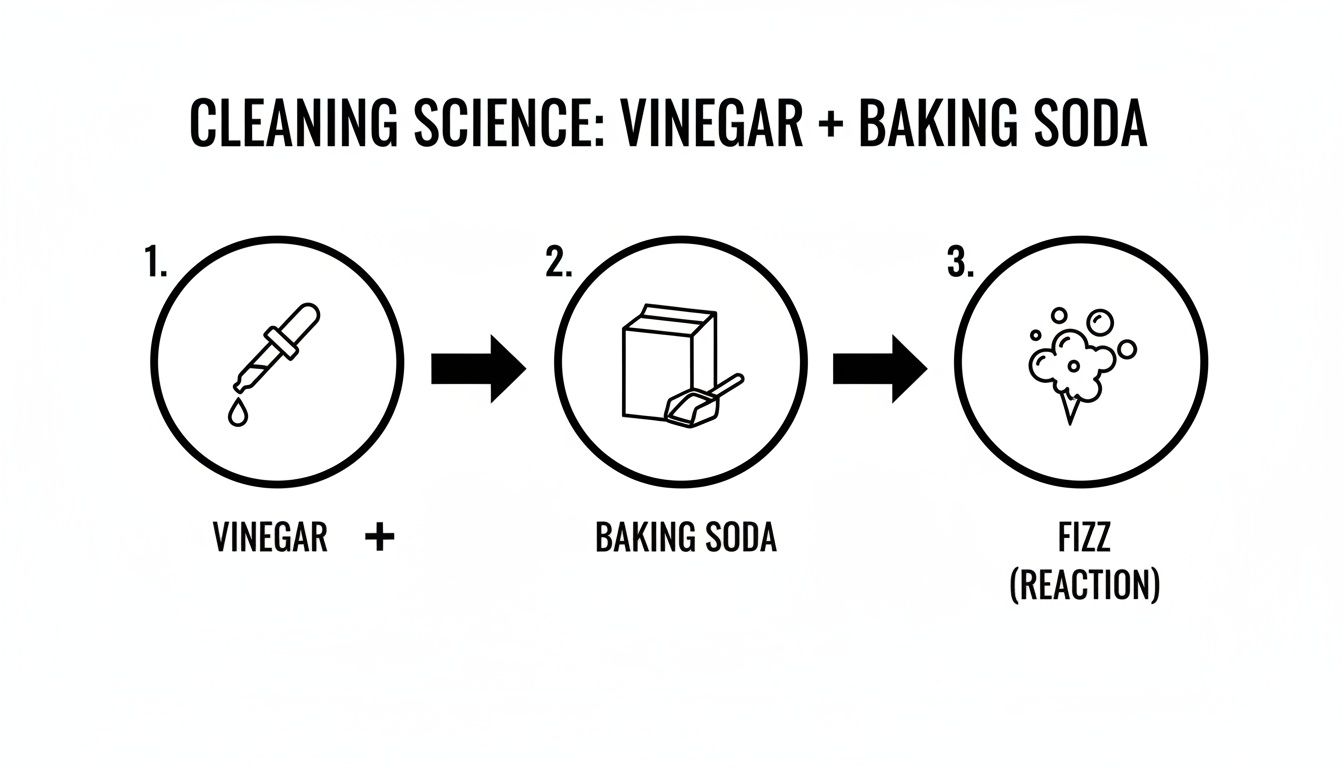
What’s really happening here is that the bubbles (carbon dioxide) do the initial grunt work for you, physically loosening dirt and making your scrubbing job a whole lot easier.
All-Purpose Surface Spray
This is the spray bottle I reach for constantly. It’s perfect for a quick, effective clean on countertops (but not stone!), the outside of your appliances, and general spills. It cuts right through light grease and leaves everything smelling fresh.
- Ingredients: 1 part white vinegar and 1 part water.
- Method: Just combine the vinegar and water in a spray bottle and give it a gentle shake. You'll want to keep a box of baking soda on hand separately.
- How to Use: Give the surface a light mist. If you’ve got sticky rings on the counter or some dried-on food, sprinkle a little baking soda on the mess first, then spray it. That immediate fizz will lift the gunk right up. Wipe it away with a damp cloth.
A Lesson I Learned the Hard Way: Never, ever pre-mix baking soda and vinegar in a sealed bottle. The chemical reaction is instant. If you mix them for storage, you’ll just end up with a bottle of saltwater that has no cleaning power. Even worse, the pressure can build up and cause the bottle to burst.
Potent Scrubbing Paste for Tubs and Tile
When a spray just won't cut it, this thick paste is what you need. It has the grit to power through tough jobs like soap scum build-up in the shower, dingy tile grout, or stubborn stains in the kitchen sink.
The goal is to get a consistency like cake frosting—thick enough that it will cling to the walls of your tub instead of just sliding down.
To make it, start with about 1/2 cup of baking soda in a small bowl. Slowly pour in just enough white vinegar (usually 2-3 tablespoons) to form a thick, satisfying paste. Smear it directly onto the stained area with a sponge or your fingers (I’d recommend gloves for this).
Let it sit and fizz for 15-20 minutes; this gives the reaction time to really break down the grime. Then, give it a good scrub with a non-scratch brush or sponge and rinse it all away. It works wonders on discolored stainless steel sinks, too.
Fizzing Drain Deodorizer
If you've got a slow-moving or smelly drain, this is the first thing you should try before reaching for harsh chemicals. It’s a simple way to break down gunk and get rid of odors.
Just pour about 1/2 cup of baking soda straight down the drain, then chase it with 1 cup of white vinegar. You’ll hear it start fizzing and working deep down in the pipe. Let it do its thing for 10-15 minutes.
After the time is up, flush the drain with very hot water for at least a minute to wash away everything it loosened. I do this about once a month just to keep things flowing smoothly.
Streak-Free Glass and Window Cleaner
For a perfect, professional finish on exterior windows, specialty solutions are hard to beat. But for interior glass, mirrors, and quick touch-ups, this homemade mix is fantastic. If you want a deeper dive on this, we wrote an entire article on finding the best window cleaning solution.
Grab a clean spray bottle and mix 1 part distilled white vinegar with 1 part distilled water. Using distilled water is the secret here—it has no minerals, which are what cause those annoying spots and streaks.
Simply mist the glass and wipe it clean with a fresh microfiber cloth. You’ll be left with a clear, brilliant shine.
Where to Never Use Baking Soda and Vinegar
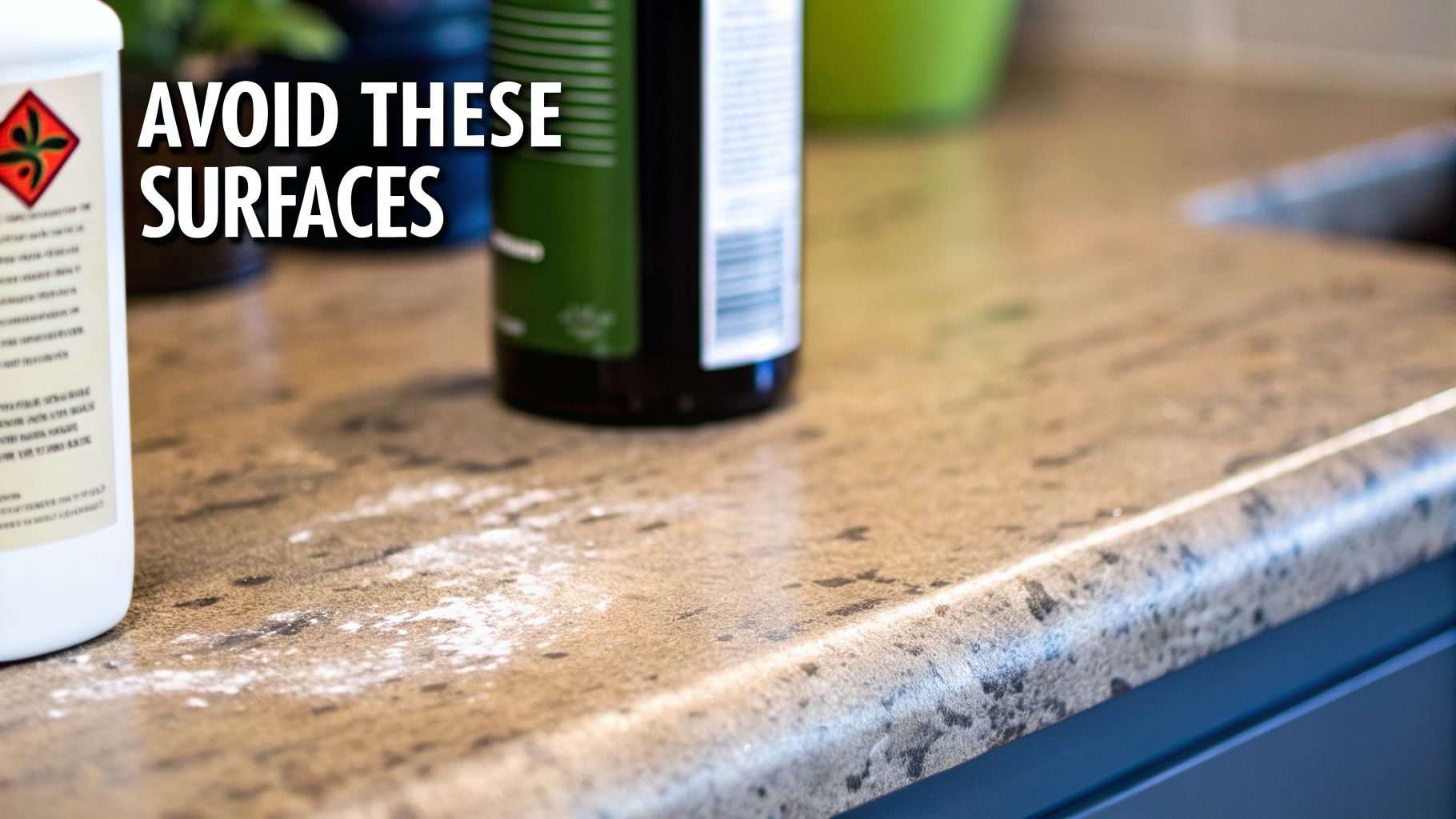
As much as I love this cleaning combo, it’s definitely not a cure-all. In fact, using it in the wrong place can be a disaster. The very things that make it work so well—vinegar’s acidity and baking soda’s mild abrasiveness—are exactly what can cause permanent damage to certain materials.
Knowing where not to use this DIY cleaner is just as critical as knowing how to mix it. A simple mistake can lead to costly repairs, so let’s walk through the surfaces that are strictly off-limits.
Natural Stone Countertops and Tiles
This is the big one. If you have marble, granite, limestone, or travertine, please step away from the vinegar.
Here’s the deal: these beautiful stones are calcium carbonate-based. Vinegar, which is an acid, literally reacts with the stone and eats away at the surface. This creates dull, cloudy spots that look like water stains but are actually permanent damage. It's a process called etching, and it can ruin a polished finish in a single wipe.
For natural stone, your only safe bet is a dedicated, pH-neutral stone cleaner. Anything else is a gamble with a very expensive countertop or floor.
Hardwood Floors
This one is a bit more nuanced, but my advice is to just avoid it. While some people use heavily diluted vinegar on perfectly sealed floors, it's a risky game. Over time, the acid can slowly wear down the polyurethane finish, making your floors look dull and leaving them vulnerable to water damage.
And if you have unfinished, waxed, or oiled hardwood floors? Absolutely not. The vinegar will strip the finish right off, potentially causing the wood to discolor or even swell. The abrasive baking soda isn't any better, as it can easily scratch and dull the surface.
Certain Metals and Cookware
Vinegar’s acidity can be a problem for specific metals, leading to corrosion or other damage. You need to be careful with what you’re scrubbing.
- Aluminum: Keep this mixture away from your aluminum pots, pans, and baking sheets. Vinegar causes aluminum to oxidize, which can result in pitting and dark discoloration.
- Cast Iron: Unless you're intentionally stripping your skillet to re-season it from scratch, vinegar is a bad idea. It will dissolve that hard-earned, non-stick seasoning layer and expose the raw iron to rust.
- Coated Knives: Many good kitchen knives have a specific finish or a finely honed edge. The acid can damage these coatings and can even dull the blade itself.
While the mixture is usually fine for a quick scrub on most stainless steel, it's always smart to test a hidden spot first and rinse it completely when you're done.
A Quick Guide to Other Problem Surfaces
Before you start cleaning, it's always a good idea to know exactly what you're working with. Using the wrong product can cause damage you simply can't undo. This table breaks down a few other common areas where you should think twice before using a baking soda and vinegar solution.
Safe vs Unsafe Surfaces for This Cleaning Combo
| Surface Type | Is It Safe? | Why and Special Instructions |
|---|---|---|
| Grout | Use Sparingly | The acid can slowly eat away at grout over time. It’s okay for a targeted deep clean now and then, but not for regular use. |
| Electronic Screens | Never | Vinegar will strip the delicate anti-glare and oleophobic (anti-fingerprint) coatings right off your TV, laptop, or phone. |
| Rubber Gaskets | Never | The acid in vinegar can degrade and break down the rubber seals in appliances like your dishwasher or washing machine. |
When you get right down to it, the power of baking soda and vinegar for cleaning is undeniable, but it requires a bit of know-how. If you're ever in doubt about a surface, your safest option is to reach for a gentle, pH-neutral cleaner or a product made specifically for that material.
A Guide to Cleaning Windows Screens and Solar Panels
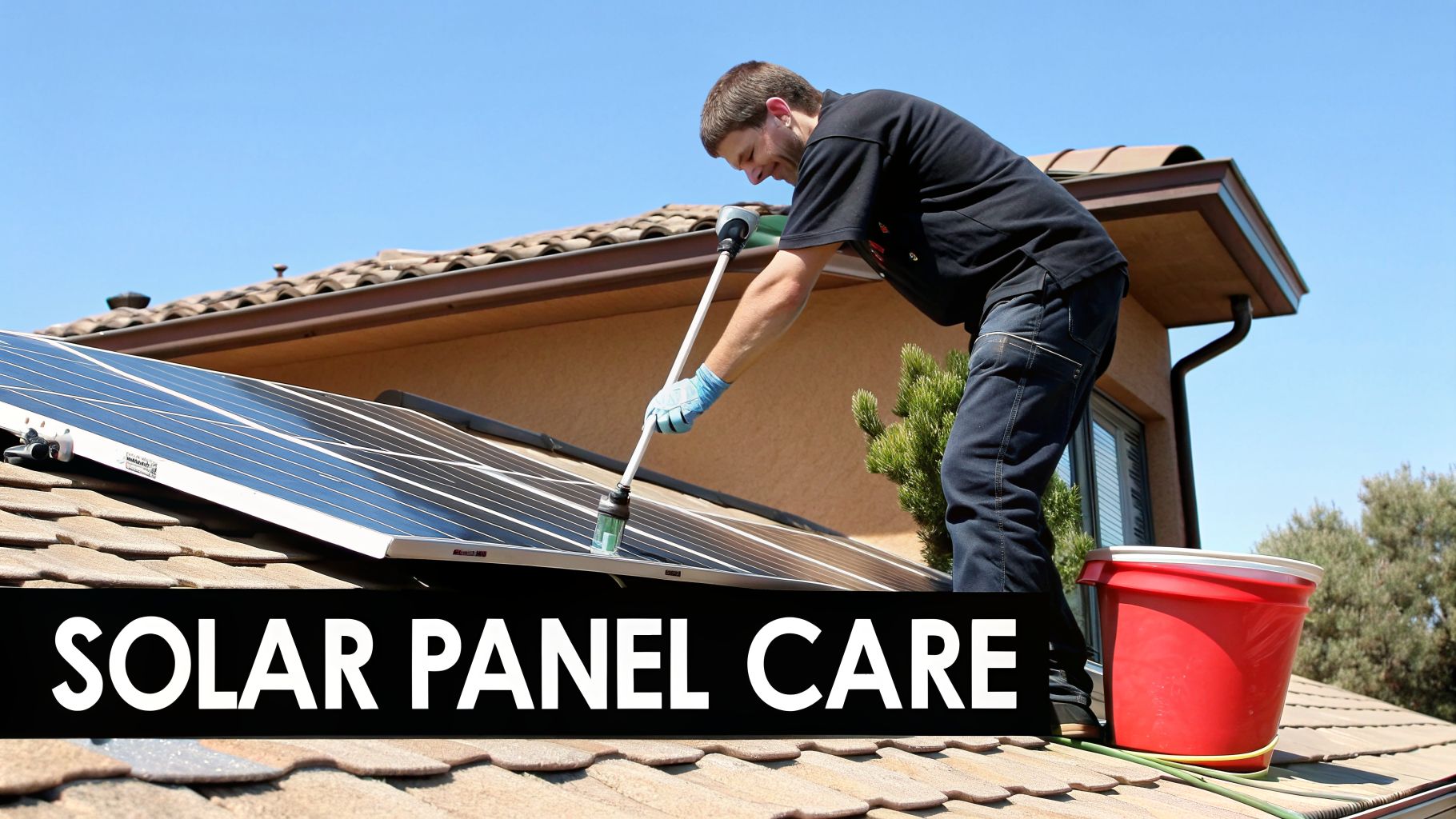
Now, let's talk about two areas where a clean surface is about more than just looks: your windows and solar panels. When a layer of grime, pollen, or dust builds up here, it's actively blocking sunlight and can even degrade the materials over time.
While we always recommend calling in the pros for a perfect finish—especially for second-story windows or tough exterior jobs—a good DIY cleaning is fantastic for regular upkeep. The right baking soda and vinegar for cleaning solution can be adapted to handle these surfaces safely, keeping your home bright and your energy bills in check.
Tackling Interior Windows for a Streak-Free Shine
Interior windows might not get pelted with rain, but they collect their own unique film of dust, smudgy fingerprints, and even a haze from cooking. A simple vinegar solution cuts right through that buildup without the harsh ammonia fumes you get from many commercial cleaners.
Here’s my go-to mix for a simple, effective spray.
- The Recipe: Combine one part distilled white vinegar with one part distilled water in a clean spray bottle. Using distilled water is a non-negotiable for me—it has no minerals, which are the real cause of those frustrating streaks and spots that tap water leaves behind.
- The Technique: Lightly mist the inside of your window. You don't need to drench it; just a light spray will do. Over-saturating just leads to drips on your sills and frames.
- The Finish: Wipe the glass clean with a fresh, dry microfiber cloth. I always start at the top and work down in an "S" motion. This ensures you cover every inch and don't leave any missed spots.
This method is incredibly good at cutting through greasy films, giving you that crystal-clear view you've been missing.
Reviving Your Window Screens Without Damage
Window screens are absolute magnets for dust, pollen, and all sorts of floating debris. The temptation is to just blast them with a hose, but that’s a quick way to stretch or tear the delicate mesh. A much gentler approach is what's needed.
The best way to do this is to remove the screens completely for a proper wash. Just pop them out of the frames and lay them on a clean tarp or a patch of lawn. Then, mix a few drops of dish soap into a bucket of warm water.
Using a soft-bristled brush, gently scrub both sides of the screen with your soapy water. You'll see the grime lift right off. The key is to use gentle pressure; let the soap and brush do the work, not brute force.
After scrubbing, rinse the screens thoroughly with a garden hose on a low-pressure setting. Let them air dry completely before putting them back in to prevent any moisture from getting trapped against your window frames. For a more detailed breakdown, you can check out our guide on how to clean window screens the right way.
Maximizing Solar Panel Efficiency
If you have solar panels, especially in a dusty climate like here in Phoenix, keeping them clean is all about performance. A dirty panel simply can't absorb as much sunlight, which means it's not producing as much energy for your home.
Before you do anything, I strongly recommend checking your manufacturer's specific cleaning guidelines first. Some have coatings that don't react well to certain cleaners. That said, a very diluted, non-abrasive solution can often do the trick. The goal is to remove dust without scratching the panel’s surface.
When you mix baking soda and vinegar, it creates a gentle foam that clings to vertical surfaces like solar panels. This extra contact time gives the solution a chance to break down stubborn dirt, which can improve your energy output by up to 22% in particularly dusty areas.
For a DIY clean, your safest bet is deionized or distilled water mixed with a tiny amount of biodegradable soap. A highly diluted vinegar solution can also work, but only if your panel manufacturer gives it the green light. Apply it with a soft brush attached to a long extension pole, and then rinse everything completely with more deionized water to prevent mineral spotting.
The power of baking soda is no secret. Its production is expected to climb past 1.2 million tons globally by 2026, which just shows how essential it is for everything from baking to heavy-duty cleaning. If you're curious about the business side of these products, you can discover more insights on Global Market Insights.
Knowing When to Call a Professional Cleaning Service
Your baking soda and vinegar solution is fantastic for day-to-day upkeep, and honestly, we pros appreciate when homeowners do it. But even the best DIY methods have their limits. Knowing when to put down the spray bottle and pick up the phone is just as crucial as knowing the right cleaning recipe.
Some jobs simply aren't worth the risk or the headache. When you're dealing with serious heights, stubborn buildup that just won't budge, or delicate surfaces, calling in a licensed and insured professional isn't giving up. It's the smart, strategic choice to protect your home and yourself.
When Safety and Height Are a Concern
The moment a tall ladder enters the picture, the game changes. Cleaning second-story exterior windows is a perfect example. Juggling squeegees, cloths, and spray bottles from the top of a shaky ladder is a recipe for disaster. A single misstep can lead to a serious fall, and no clean window is worth that.
This is where professionals really shine. We use equipment like water-fed pole systems that let us clean windows several stories high with our feet planted firmly on the ground. These systems use highly purified water that dries to a perfect, spot-free finish without any chemicals. It's a level of safety and quality that's nearly impossible to replicate with a bucket and a ladder.
For Stubborn Stains That Defy DIY Efforts
Have you ever spent an afternoon scrubbing a hard water stain, only to step back and see it laughing at you? I’ve seen it countless times. While a vinegar soak is great for light mineral spots, severe hard water deposits—especially those baked on by the intense Arizona sun—can literally fuse with the glass.
At that point, your baking soda paste just doesn't have the muscle. Professionals use specialized, low-acidity compounds and fine-grade polishing equipment to gently buff those stains away without scratching or etching the glass. This restores clarity in a way that sheer elbow grease can't.
The same goes for that fine, gritty dust left over from a home renovation. Trying to wipe it down with a simple vinegar spray often just creates a streaky, muddy mess. Post-construction cleanup requires industrial-grade vacuums and specific techniques to get rid of dust and adhesive residue without harming your brand-new surfaces.
The Value of Professional Expertise and Guarantees
Bringing in an expert service like ours offers more than just a deep clean; it buys you peace of mind. A reputable company brings a few key things to the table that DIY just can't match:
- Specialized Eco-Friendly Agents: We have access to professional-grade, non-toxic cleaners formulated for specific materials, delivering a powerful clean that’s still safe for your family and pets.
- Time and Convenience: A pro team can do in hours what might take you a whole weekend. With our service, you don't even need to be home.
- Service Guarantees: If you aren't happy or a sudden downpour messes up your freshly cleaned windows, a company with a guarantee will come back and fix it.
We're seeing a great partnership trend emerge from this. In Phoenix's competitive market, a 2026 survey showed that 75% of homeowners use these very ingredients to pre-clean their windows before a professional visit. This simple step reduced our service time by an average of 30%, which directly lowered their costs. It works because vinegar can dissolve up to 95% of mineral deposits in under ten minutes, while the fizzing action lifts dirt twice as effectively as plain water. You can find more household cleaner market insights on Grandview Research for a deeper dive.
So, keep using your baking soda and vinegar mix for routine cleaning. It's your best first line of defense for keeping your home looking great. But when the job gets too big, too high, or too stubborn, calling a pro is the safest, most effective move you can make.
Common Questions About Cleaning with Baking Soda and Vinegar
Once you start using baking soda and vinegar, a few questions almost always pop up. That's a good thing—it means you're thinking about how to use these ingredients effectively and safely. Let's clear up a few of the most common things people ask.
Getting these details right is the difference between a great cleaning experience and a frustrating one. We'll go through the top questions I hear all the time so you can clean with complete confidence.
Can I Mix Baking Soda and Vinegar Ahead of Time and Store It?
This is probably the number one question I get, and the answer is a hard no. I can't stress this enough: never pre-mix baking soda and vinegar to store for later.
All the cleaning power you want comes from that immediate, fizzy reaction. Those bubbles are actually carbon dioxide gas, and they do the heavy lifting by actively scrubbing away grime. If you mix the two ahead of time, that reaction happens once inside the bottle and then it's over.
What you're left with is basically just salty, flat water with almost no cleaning ability. Even worse, if you seal that bottle, the gas pressure will build up. I've heard stories of bottles warping, leaking, or even bursting, which is a mess you don't want to clean up.
For maximum cleaning power, always mix the ingredients right before you plan to use them. This ensures you get the full benefit of that fresh, grime-lifting fizz every single time.
Is the Smell of Vinegar Harmful to My Pets?
The strong scent of vinegar is definitely noticeable, but the good news is that it’s generally considered non-toxic and safe for homes with cats and dogs. That sharp smell also fades completely as soon as the surface is dry.
To be on the safe side, a little common sense goes a long way.
- Get some air flowing: I always crack a window or turn on a fan when I'm cleaning with vinegar. It just helps the smell clear out much faster.
- Give them space: It's a good practice to keep your pets out of the room you're cleaning until everything has had a chance to dry.
- An unexpected bonus: Some pets really dislike the smell of vinegar, which can be useful for keeping a curious cat off the kitchen counter or a dog from sniffing around a certain spot.
Once dry, the surfaces are perfectly fine for your furry family members to be around.
What Kind of Vinegar Is Best for Cleaning?
When you walk down the vinegar aisle, the options can seem endless. But for cleaning, the choice is actually very simple.
You want distilled white vinegar with 5% acidity. It’s the undisputed champion for household use. Because it's clear, you never have to worry about it staining fabrics or surfaces. That 5% acidity is the sweet spot for cutting through grease, dissolving hard water spots, and knocking out odors without being overly harsh.
Steer clear of other vinegars like apple cider or red wine for your cleaning projects. Their colors can leave behind subtle stains, and they're usually more expensive, which doesn't make sense for cleaning large areas.
Does This Mixture Actually Disinfect Surfaces?
This is a really important point to understand. While vinegar itself does have some antimicrobial properties and can kill certain germs like E. coli and Salmonella, the combination of baking soda and vinegar is not an EPA-registered disinfectant.
Think of this duo as a top-notch cleaner and a fantastic deodorizer. It's brilliant for scrubbing away built-up gunk, lifting stains, and making things smell fresh. However, if you need to truly sanitize a surface—like your kitchen counter after preparing raw chicken or a toilet bowl—you should reach for a product that is specifically designed and approved to kill germs.
So, for everyday grime, this mixture is your best friend. For serious germ-killing, use a real disinfectant.
Don't let the toughest jobs overwhelm you. For those high-reach windows or stubborn stains that just won't quit, trust the experts at Sparkle Tech Window Washing LLC. We bring the professional tools and expertise to make your home shine. Schedule your service online today