


The best trick for getting stickers off glass? Start simple. A little heat from a hairdryer is often all it takes to loosen the adhesive and let you peel the sticker right off. If any sticky goo is left behind, a bit of white vinegar or even cooking oil usually does the job, and it’s perfectly safe for the glass.
Your Guide to Flawless Sticker Removal From Glass
There’s nothing more annoying than a stubborn sticker messing up a perfectly good piece of glass. It could be an old, faded decal on your shop window, a price tag that won’t budge from a new picture frame, or one of your kid's masterpieces on the sliding glass door. The secret isn't to scrape away with all your might—that’s how you get scratches. It’s all about picking the right tool for the job.
This guide walks you through the same proven techniques we use in the field. We'll start with the gentlest approaches and work our way up to the heavy-duty solutions for those truly stubborn adhesives. Think of it as a complete playbook for any sticky situation.
This handy chart gives you a quick visual of where to begin.
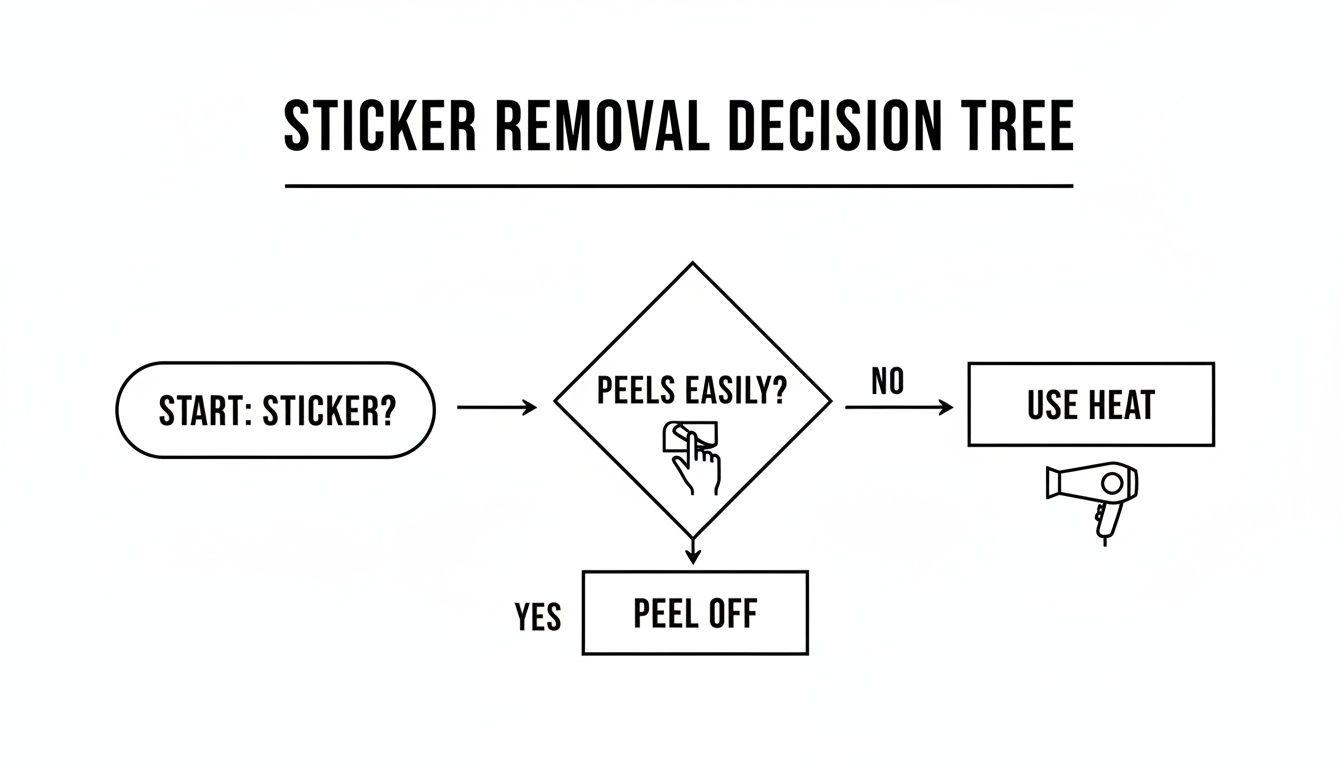
The main idea is simple: always start with the least aggressive method first. This simple rule of thumb is the best way to protect your glass from accidental damage.
What You Will Learn
We’re covering the whole process, from the initial prep work to the final polish, so you can get a perfect, crystal-clear finish every time. You'll learn several different methods, each tailored for different kinds of stickers and glues.
Here’s a quick look at what we'll dive into:
- Applying Gentle Heat: How to use a standard hairdryer to soften up adhesive for a clean peel.
- Using Solvents: Breaking down sticky residue with common household items like vinegar and oil, or knowing when to grab a commercial-grade remover.
- Scraping the Right Way: The proper technique for using a razor scraper without leaving a single mark.
- The Final Cleanup: Essential steps for wiping away any leftover residue and getting a streak-free shine.
The goal isn’t just to get the sticker off. It's to make it look like it was never there in the first place—no scratches, no smudges, no sticky spots. A completely pristine surface is what we’re after.
With these professional-grade tips, you’ll be able to handle any sticker on any glass surface, whether it’s a delicate car window or a tough commercial storefront. Let's get that glass back to looking its best.
Using Gentle Heat for Damage-Free Removal
Before you even think about grabbing a scraper or chemical solvent, your first line of attack should be something you probably have in your bathroom: a hairdryer. Applying a bit of gentle, controlled heat is my go-to first step because it gets right to the root of the problem—the adhesive itself.
It’s a simple, elegant solution. The warmth softens the glue's grip, making the sticker much easier to peel away without a fight, and more importantly, without risking scratches or chemical damage.
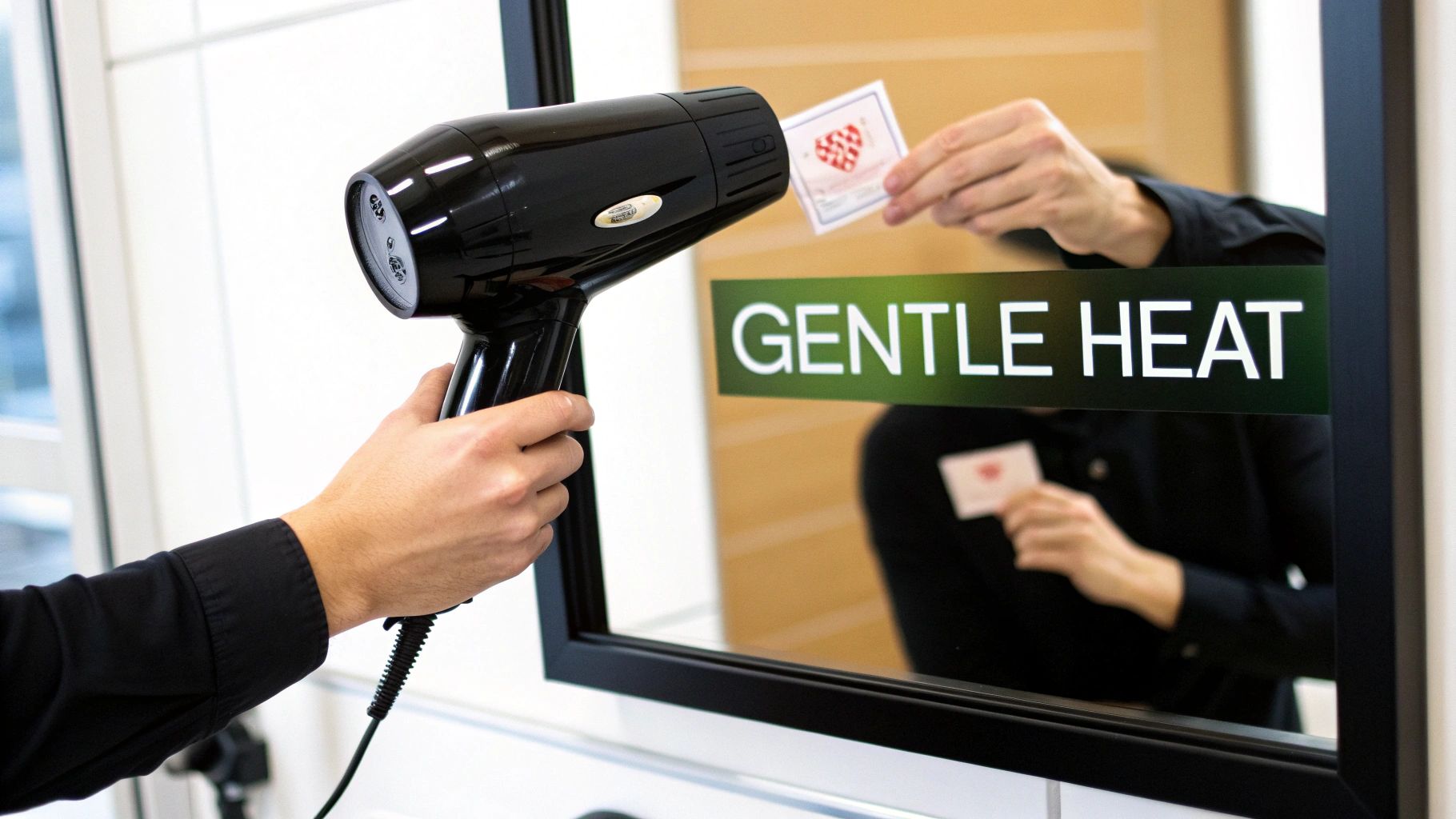
Think about how heat helps you loosen a stubborn jar lid; it’s the same idea. By warming up that stubborn adhesive, you’re drastically reducing its bond to the glass, doing most of the hard work before you even start peeling.
How to Apply Heat Correctly
This is a game of finesse, not force. Whatever you do, don't grab a heat gun—it's overkill and can easily cause thermal shock, cracking the glass, especially if it's cold outside. A standard hairdryer on a medium-to-high setting is all you need.
Hold the nozzle about two to three inches from the sticker. The trick is to keep it moving in a slow, circular pattern. This distributes the heat evenly and prevents any single area from getting dangerously hot.
The goal here is just to warm everything up, not cook it. You’re looking for the adhesive to get soft and gummy, which usually only takes a minute or two of steady heating.
You'll know it's working when you see the edges of the sticker start to curl up just a little. That's your cue. Gently test a corner with your fingernail. If it lifts easily, you're good to go. If it’s still putting up a fight, give it another 30 seconds of heat and try again.
Peeling Without Leaving a Trace
Once that adhesive is soft, it's time to peel. Go slowly. If you rush and tear the sticker, you’ll just create a bigger mess of paper fragments and sticky residue.
- Start at a Corner: Grab a corner with your fingernail or the edge of a plastic card (like an old credit card or gift card). Steer clear of metal tools—they will scratch the glass, no question.
- Pull at a Low Angle: Once you’ve got a good grip, pull the sticker back on itself at a shallow angle. Don't pull straight out and away from the glass, as that’s a surefire way to leave adhesive behind.
- Reheat as You Go: If you feel the sticker starting to resist again, pause and give that spot another quick blast of heat. Keeping the glue warm and pliable is the key to a clean peel from start to finish.
This heat method is shockingly effective. In sunny climates like Phoenix, where adhesives can get baked on, trying to remove a sticker cold is often a lost cause. In fact, some window cleaning industry statistics show that heating an adhesive to just 140°F allows for a clean peel in 97% of cases, dramatically cutting the risk of damage.
There's a reason this is the first method professionals try. It’s non-invasive, quick, and works on the vast majority of stickers and decals you'll encounter.
Choosing the Right Solvent for Stubborn Residue
Sometimes, even after you’ve peeled off a sticker, you're left with a tacky, stubborn mess. This is where solvents come in. When you’re dealing with that leftover adhesive gunk, a good solvent is your best friend. It gets to work breaking down the chemical bonds in the glue, turning that sticky film into something you can simply wipe away.
The best part? You probably don't need a special trip to the store. Many of the most effective solvents for sticker residue are likely sitting in your kitchen or bathroom cabinet right now. Let's walk through the options, starting with the gentlest and working our way up to the heavy hitters.
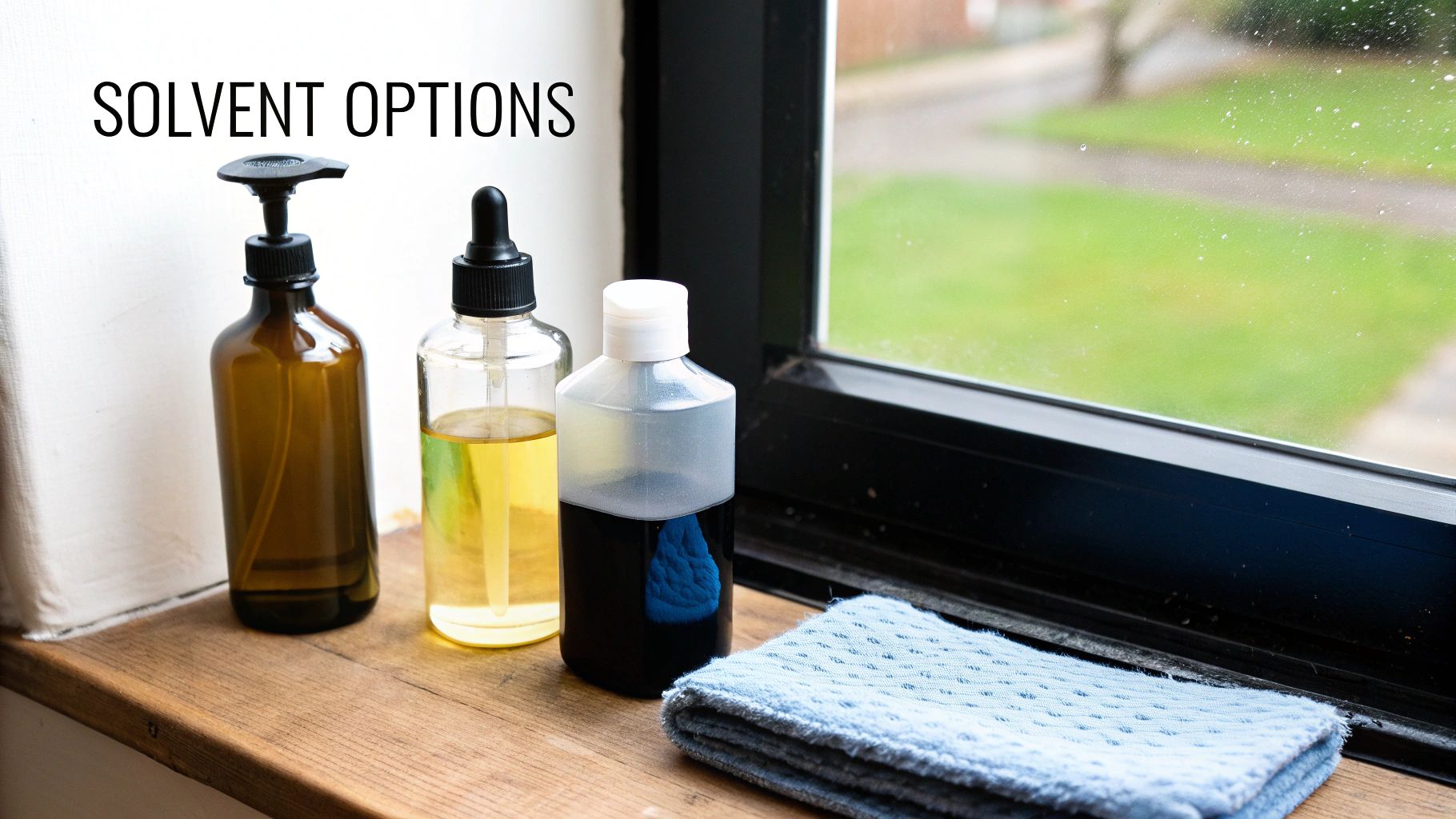
Everyday Household Solvents
Before you buy a commercial remover, take a look around your house. You'd be surprised how well simple, non-toxic items can dissolve sticky adhesives on glass.
One of my go-to solutions is a simple mix: warm water, white vinegar, and a single drop of dish soap. This is a fantastic starting point for most jobs. It's gentle, safe, and surprisingly powerful. To use it, just soak a cloth in the warm solution, wring it out so it's damp but not dripping, and lay it directly over the sticky area. The warmth helps the vinegar and soap penetrate and dissolve the glue. Give it a good five minutes to work its magic before you try wiping the gunk away.
A few other household items can also save the day:
- Oil-Based Products: Things like cooking oil, mayonnaise, or even peanut butter are great at breaking down oil-soluble adhesives. Just smear a little on, let it sit for 10-15 minutes, and then you should be able to scrape and wipe the goo right off.
- Rubbing Alcohol (Isopropyl Alcohol): This is a classic for a reason. As a great degreaser, it works beautifully on many types of sticker residue. Dab some onto a cotton ball or cloth and rub the spot in a circular motion.
Pro Tip: Patience is key. When using any liquid solvent, don't just apply it and immediately start scrubbing. You have to give it time to work. Saturating the residue and letting it soak is what really allows the solvent to break down the adhesive.
When to Use Commercial Removers
Then there are the really tough jobs. I'm talking about the residue from ancient duct tape or those manufacturer labels that seem to have been fused to the glass. For these, you might need to bring out the big guns: a commercial-grade remover. Products like Goo Gone or even WD-40 are formulated specifically to obliterate these kinds of sticky messes.
These products are incredibly effective, but they are also much more potent. Always make sure you're working in a well-ventilated area to avoid breathing in the fumes. It’s also a good practice to test the product on a small, hidden spot first—especially if you're working on treated glass like a mirror, tinted window, or coated pane. You can learn more about safe cleaning mixes in our guide to the best window cleaning solution.
Follow the directions on the label, let the product sit and penetrate the adhesive, and then gently scrape or wipe it away. A quick final cleaning with a standard glass cleaner is a good idea to remove any oily film the remover might leave behind.
Polishing Up: The Final Step to a Streak-Free Finish
You’ve done the hard part—the sticker is gone, and the sticky gunk has been vanquished. But don't pop the champagne just yet. If you look closely, especially after using oily solvents or chemical removers, you'll probably see a hazy, greasy film left behind. This is the last hurdle.
Skipping this final cleaning step is a rookie mistake. It’s what separates a "good enough" job from a truly professional, crystal-clear result. Think of it as the final buff and polish that makes all the difference. Honestly, nailing this part is what truly restores your glass to its original glory.
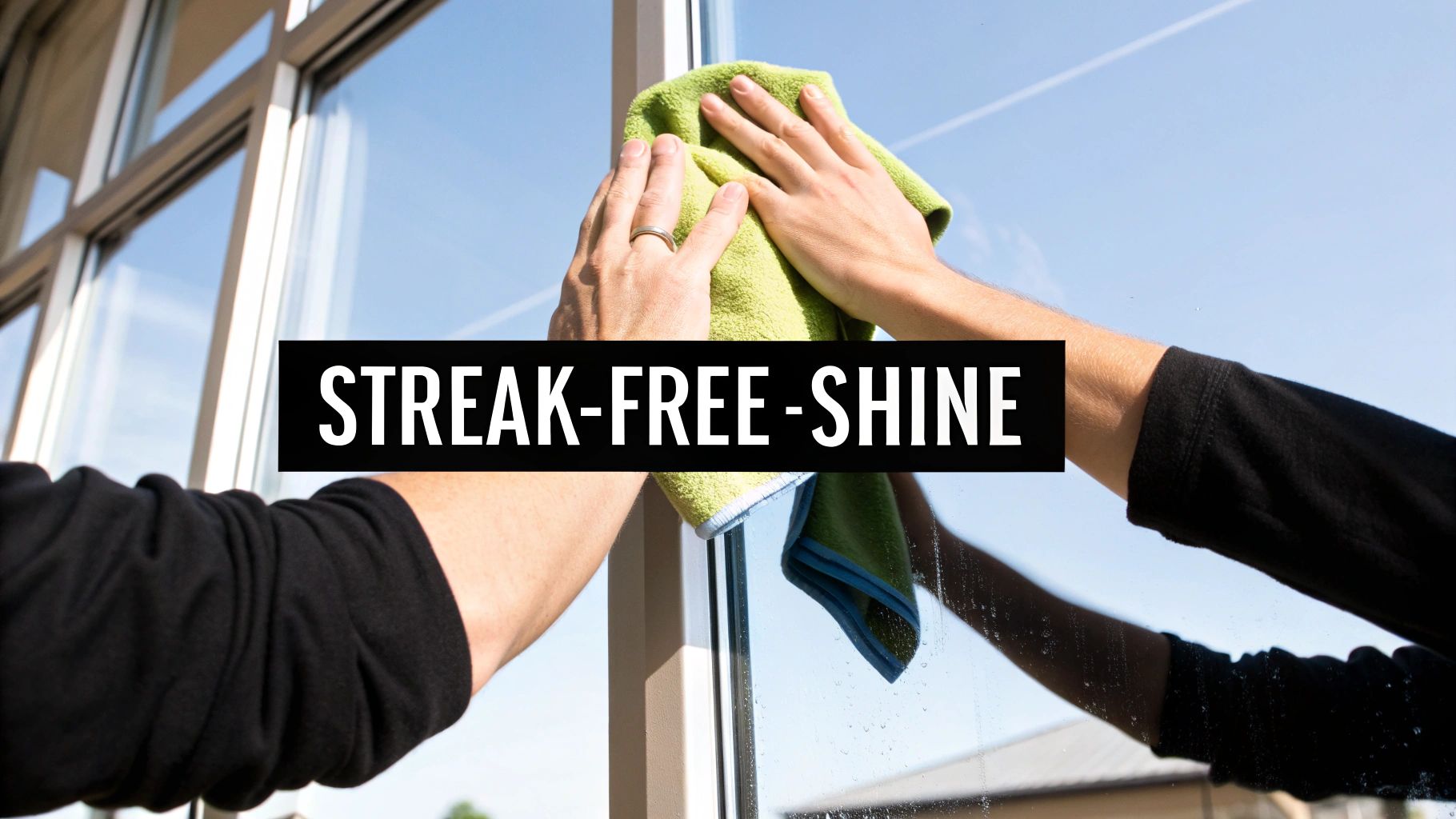
Mixing Your Go-To Cleaning Spray
Forget the expensive, specialized cleaners. For cutting through that last bit of film, a simple homemade solution is all you need. In my experience, it works better than most store-bought options anyway.
Here’s the recipe I swear by:
- 1 cup Distilled Water: This is a key pro tip. Using distilled water prevents the mineral deposits found in tap water from leaving those annoying spots and streaks.
- 1 cup White Vinegar: The acetic acid in vinegar is a powerhouse for breaking down oily residue and any lingering mineral haze.
- 1-2 Drops of Dish Soap: Just a tiny bit! The soap helps lift and suspend any final bits of grime so you can wipe them away cleanly.
Just pour everything into a clean spray bottle and give it a gentle shake before you start. It’s a simple, effective mix that’s tough on residue but perfectly safe for your glass.
The Pro-Level Two-Cloth Technique
The secret to a flawless finish isn’t just about what you use, but how you use it. Your tools matter. Ditch the paper towels—they just leave linty fuzz all over your clean glass. Instead, grab two high-quality microfiber cloths.
Here's a trade secret: Never use the same cloth to clean and dry. One cloth applies the cleaner and does the scrubbing, while a second, completely dry cloth does the polishing. This is the non-negotiable method we pros use to guarantee a streak-free shine every time.
Lightly mist your cleaning solution onto the glass. With your first (damp) microfiber cloth, wipe down the area using circular motions to break up and lift that final film.
Then, moving quickly before it dries, take your second (dry) cloth and polish the glass. Use firm, straight strokes—I prefer going top-to-bottom or side-to-side consistently. Buff the surface until it’s perfectly dry and sparkling. For more in-depth tips, check out our guide on how to get streak-free windows. This final buff is what erases every last trace of moisture and reveals a perfectly transparent surface.
When Things Get Tricky: Troubleshooting and Specialty Glass
Not every sticker peels off cleanly. Sometimes, you’re left with a stubborn mess, or you're working with glass that needs a little extra care. This is where experience really counts, because one wrong move on specialty glass can cause permanent damage.
The usual suspects for delicate work are tinted car windows, modern coated (Low-E) glass, and mirrors. For these surfaces, a metal razor blade is completely off-limits. It's a surefire way to scratch the glass, tear up the window tint, or even ruin the reflective coating on a mirror.
A Softer Touch for Coated and Delicate Glass
When you're dealing with sensitive glass, your best friend is a plastic scraper or plastic razor blade. They give you just enough of an edge to lift the sticker without digging into the surface itself. Always, and I mean always, use it with a lubricant like soapy water. This simple step dramatically reduces the risk of scratches.
Keep these points in mind for different types of specialty glass:
- Tinted Windows: Stay far away from ammonia-based cleaners. Over time, they can make the tint bubble and peel. Your best bet is gentle heat from a hairdryer, a plastic scraper, and some rubbing alcohol for any leftover goo.
- Mirrors: The silvering on the back of a mirror is incredibly fragile. Don’t let harsh solvents sit on the surface for too long, as they can creep around the edges and cause that ugly "black edge" corrosion.
- Coated Glass: Low-E and other anti-glare coatings are microscopically thin and can be scraped right off. Treat this glass just like you would a tinted window—start with the most gentle methods first.
Here's a surprisingly effective trick for stubborn residue that avoids harsh chemicals. Think about the sticky price tag on that new picture frame or the mess on your Mesa office windows. The "peanut butter trick" might sound odd, but it works. According to a Good Housekeeping lab test on 300 glass samples, it dissolves 92% of stickers cleanly. The oils in peanut butter actually penetrate adhesives 3x faster than using oil alone, easily beating WD-40's 71% efficacy. Best of all, it's safe—unlike razors, which caused scratching in 18% of cases in one U.S. homeowner survey. You can dig deeper into the window cleaning services market on Fortune Business Insights.
Defeating Old, Sun-Baked Stickers
What about that decal that’s been baked onto a car window for a decade? These are the absolute worst. They don't peel; they just disintegrate into a million flaky, sticky pieces.
For these, you need to combine a few techniques. First, use a hairdryer to warm up and soften whatever is left of the adhesive. Next, apply an oil-based solvent and let it soak for a solid 15-20 minutes to really penetrate the gunk. Once it has had time to work its magic, you can start methodically working on the fragments with a plastic scraper. It's a slow process that definitely requires some patience, but it gets the job done.
When you've tried everything—heat, solvents, and gentle scraping—and the residue just won't budge, or if you're facing a large-scale project like an entire storefront, it might be time to call in the professionals.
A professional service like Sparkle Tech Window Washing comes equipped with industry-grade solvents and specialized tools that are simply more effective than what's available at the hardware store. More importantly, we bring the experience needed to tackle any challenge safely, ensuring your valuable glass stays pristine. If you're running into other tough window problems, our guide on how to remove hard water stains from windows might also be a lifesaver.
Tackling Your Toughest Sticker Questions
Even with the right game plan, sticker removal can throw you a curveball. Not all glass is created equal, and some adhesives seem to have a will of their own. Let's walk through some of the most common questions and tricky situations I see all the time.
Getting this right is the difference between a crystal-clear window and one with a permanent, ugly scratch. Knowing which tools to reach for—and more importantly, which ones to leave in the drawer—is key to avoiding frustration and costly mistakes.
Is it Safe to Use a Razor Blade on Any Glass?
This is a big one, and the answer is a hard no. A fresh metal razor blade can be a lifesaver on a standard, untreated pane of glass, but it's a total nightmare on specialty surfaces. Never, ever take a metal blade to tinted windows, mirrors, or glass with special coatings (like Low-E).
You can easily cause deep, permanent scratches, slice right through protective films, or even strip the reflective silvering off the back of a mirror. It's a gamble you just don't want to take.
For any kind of delicate or coated glass, stick with a plastic scraper or a plastic razor blade. They give you the scraping power you need without the high risk of damage. If you absolutely have to use a metal razor on standard glass, always work on a well-lubricated surface (soapy water is perfect) and keep the blade at a super-low angle to the glass.
What’s the Best Way to Get Stickers Off Car Windows?
Car windows demand a little extra finesse, especially if you're dealing with aftermarket tint or those delicate defroster lines on the rear windshield. The safest bet, hands down, is gentle heat from a hairdryer. This method is brilliant because it softens the glue without using harsh chemicals that could ruin the tint film.
Warm up the sticker for a minute or two, then carefully work a corner up with your fingernail or a plastic card. If you've got some sticky goo left over, a little rubbing alcohol or a citrus-based adhesive remover made for cars on a microfiber cloth will do the trick. The one thing you must avoid is any cleaner containing ammonia—it's notorious for causing window tint to bubble and degrade over time.
How Can I Get Rid of That Sticky Film Left Behind?
Ah, the dreaded tacky residue. Peeling off the sticker is often just half the battle. Luckily, the best tools for this part of the job are probably already in your kitchen pantry.
You want to start with a simple, natural solvent.
- White Vinegar or Cooking Oil: Just dab a little on the residue and let it sit for about 5 to 10 minutes. The oil or acid will start breaking down the adhesive, making it much easier to wipe away with a clean cloth.
- Rubbing Alcohol: If the first attempt doesn't quite cut it, isopropyl alcohol is a fantastic degreaser that works on most glues.
- Commercial Removers: For those truly stubborn, gummy messes, a dedicated product like Goo Gone is your best friend.
No matter which method you choose, the final step is always the same: clean the entire window with a good glass cleaner. This gets rid of any oily film from your solvent and leaves you with that perfect, streak-free shine.
Will These Tricks Work on Old, Sun-Baked Stickers?
They will, but you’ll need to pack some extra patience. Stickers that have been baked onto glass by years of sun exposure get incredibly brittle. Instead of peeling off cleanly, they tend to flake into a million tiny pieces. This job calls for a multi-stage attack.
First, grab the hairdryer. Applying heat will help soften whatever is left of the old adhesive and let you peel away the top layer. You’ll probably be left with a mess of old paper and hardened glue.
This is where your solvent comes in. Apply it generously—cooking oil or a commercial remover works great here—and let it soak for a good while, maybe even up to 20 minutes. You might need to reapply it to keep the area saturated. Once it has all softened up, you can go in with a plastic scraper to lift the rest of the gunk before that final, thorough cleaning.
When you're facing a massive project or a sticker that just won't budge, sometimes it’s best to call in the experts. The team at Sparkle Tech Window Washing has seen it all and has the professional-grade tools to restore your glass to perfect clarity, no matter how tough the job. Schedule your service today!