


Ever thought about a window that opens outward like a door, welcoming in the breeze and giving you a completely clear view? That's the beauty of a casement style window. They're hinged on one side and swing open with a simple crank handle, offering a sleek, functional alternative to the more common sliding windows.
What Are Casement Style Windows?
The easiest way to picture a casement window is to think of it as a small door for your wall. Instead of sliding up, down, or sideways, it’s attached to the frame with hinges on one side. This design allows the whole window sash to swing outward, opening up the entire space for maximum airflow.
Operating one is incredibly easy. You just turn a small crank handle located at the bottom of the frame. A few twists is all it takes to open the window to whatever angle you like, letting you perfectly direct breezes into your home. When you close it, a multi-point locking system pulls the sash tight against the frame, creating a seal that's both incredibly secure and exceptionally airtight.
Core Benefits at a Glance
This unique crank-and-hinge mechanism is exactly what gives casement windows their most popular features. People tend to choose them for a few big reasons:
- Superior Ventilation: Since the entire window panel opens, casements catch far more air than a double-hung or sliding window of the same size, which are always at least half-obstructed. You can even angle the open sash to "scoop" a passing breeze right into your room.
- Unobstructed Views: There's no rail or meeting stile cutting across the middle of the glass. This gives you a clean, uninterrupted picture-frame view of the outside, making them ideal for any spot where you want to highlight a great view of a backyard, pool, or desert landscape.
- Outstanding Energy Efficiency: The tight seal is probably one of a casement's biggest selling points. When locked, the sash presses firmly against the frame, creating a compression seal that stops air leakage far better than the typical weatherstripping on sliding windows.
For homes here in Phoenix, that exceptional seal is a game-changer. It does a fantastic job of keeping your expensive, air-conditioned air inside during our brutal summers, which can make a real difference on your monthly energy bills.
In the end, casement windows offer a great mix of clean, modern looks and practical performance. They're a smart choice for any home, designed to boost your comfort, lower energy costs, and better connect your living space with the outdoors.
Choosing Your Casement Window Design and Materials
So, you’re sold on the idea of casement windows. Great choice! Now comes the fun part: picking the right design and material to match your home's style and your practical needs. It’s a lot like choosing the perfect frame for a piece of art—the right one highlights the view and adds character, while the material itself dictates how long it’ll last and how well it performs.
What Style Suits Your Home?
You'll generally come across a few main designs, each with its own charm.
- Single Casement: This is the classic. It's a single window pane, called a sash, hinged on one side that swings outward. Simple, clean, and effective.
- Double or "French" Casement: For wider openings, this design is a showstopper. It has two sashes hinged on opposite sides that swing out from the middle, leaving a completely open, unobstructed view. No central post getting in the way.
- Push-Out Casement: This is a more modern, streamlined take. Instead of a hand crank, you simply push it open with a handle. It’s held in place by friction hinges, giving it a minimalist, hardware-free look.
Feeling a bit stuck? This quick visual guide can help you narrow down what's most important to you—whether it's maximum airflow, a crystal-clear view, or top-notch energy savings.
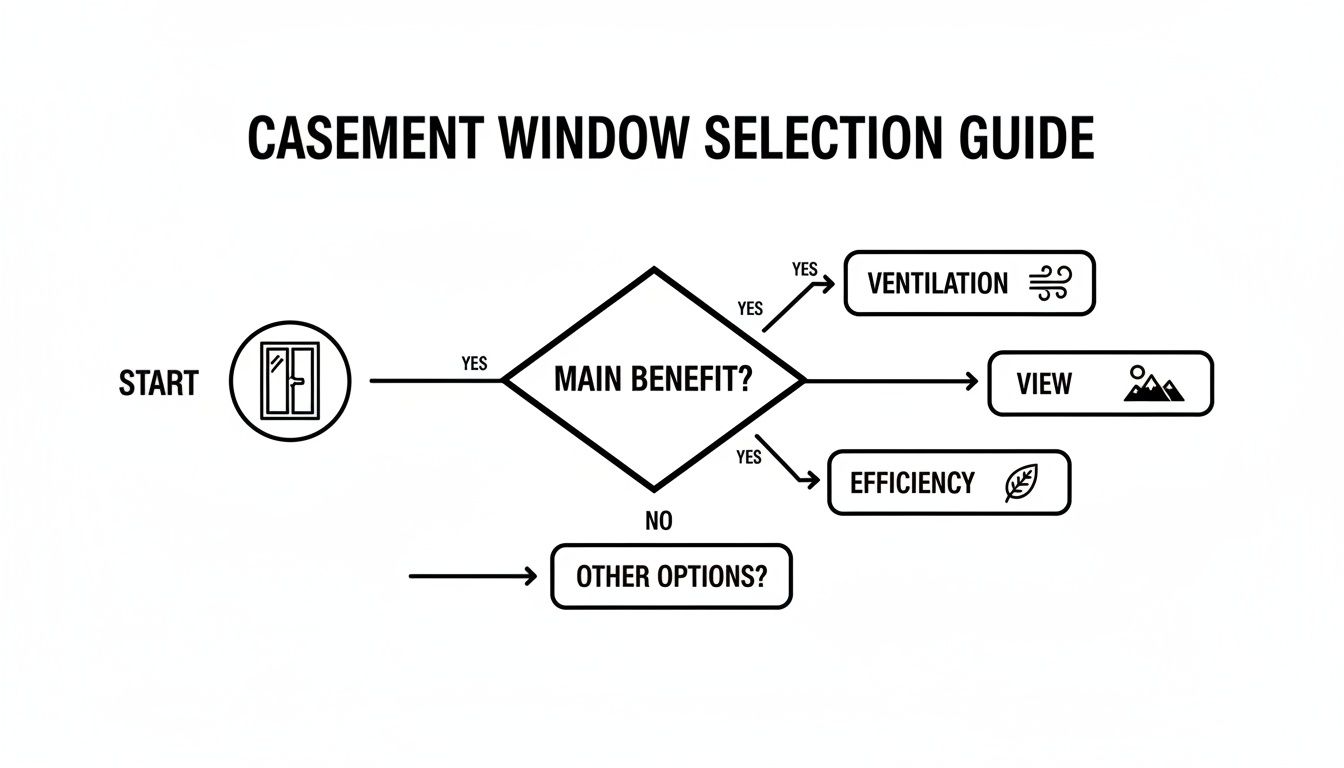
As you can see, letting your main goal guide your decision really simplifies things. If you want to catch every breeze, a French casement is a clear winner. If you're all about that clean, modern aesthetic, a push-out might be perfect.
Finding the Right Frame Material
The material your window frame is made from is just as critical as the design, especially in a climate as demanding as ours here in Phoenix. Each option offers a unique mix of durability, upkeep, and insulation. Let's break down the most common choices.
Here’s a head-to-head look at the most common casement window frame materials. This should help you figure out the best fit for our local climate, your home's style, and your budget.
Casement Window Material Comparison for Your Home
| Material | Pros | Cons | Best For |
|---|---|---|---|
| Vinyl | Low maintenance, excellent insulation, budget-friendly | Limited color options, can expand/contract in extreme heat | Homeowners prioritizing energy efficiency and affordability. |
| Aluminum | Strong, durable, slim frame profile for modern look | Poor insulator without thermal breaks, can corrode near saltwater | Contemporary homes and large window openings. |
| Wood | Classic aesthetic, excellent natural insulator, paintable | Requires regular maintenance, susceptible to rot and insects | Historic homes or homeowners desiring a traditional look. |
| Fiberglass | Extremely durable, energy-efficient, low maintenance, paintable | Higher upfront cost than vinyl or aluminum | Demanding climates and homeowners seeking maximum longevity. |
Ultimately, there's no single "best" material—only what's best for your home. A sleek, modern build might look incredible with thin aluminum frames, while a historic property would feel right at home with traditional wood. For a durable, set-it-and-forget-it solution that can handle the Phoenix sun, fiberglass is a fantastic long-term investment.
The Real Pros and Cons of Casement Windows
Every design choice comes with trade-offs, and casement-style windows are no different. To feel confident in your decision, you have to look beyond the showroom floor and understand what it’s actually like to live with them day in and day out. Let's dig into their biggest strengths and a few practical things to keep in mind.
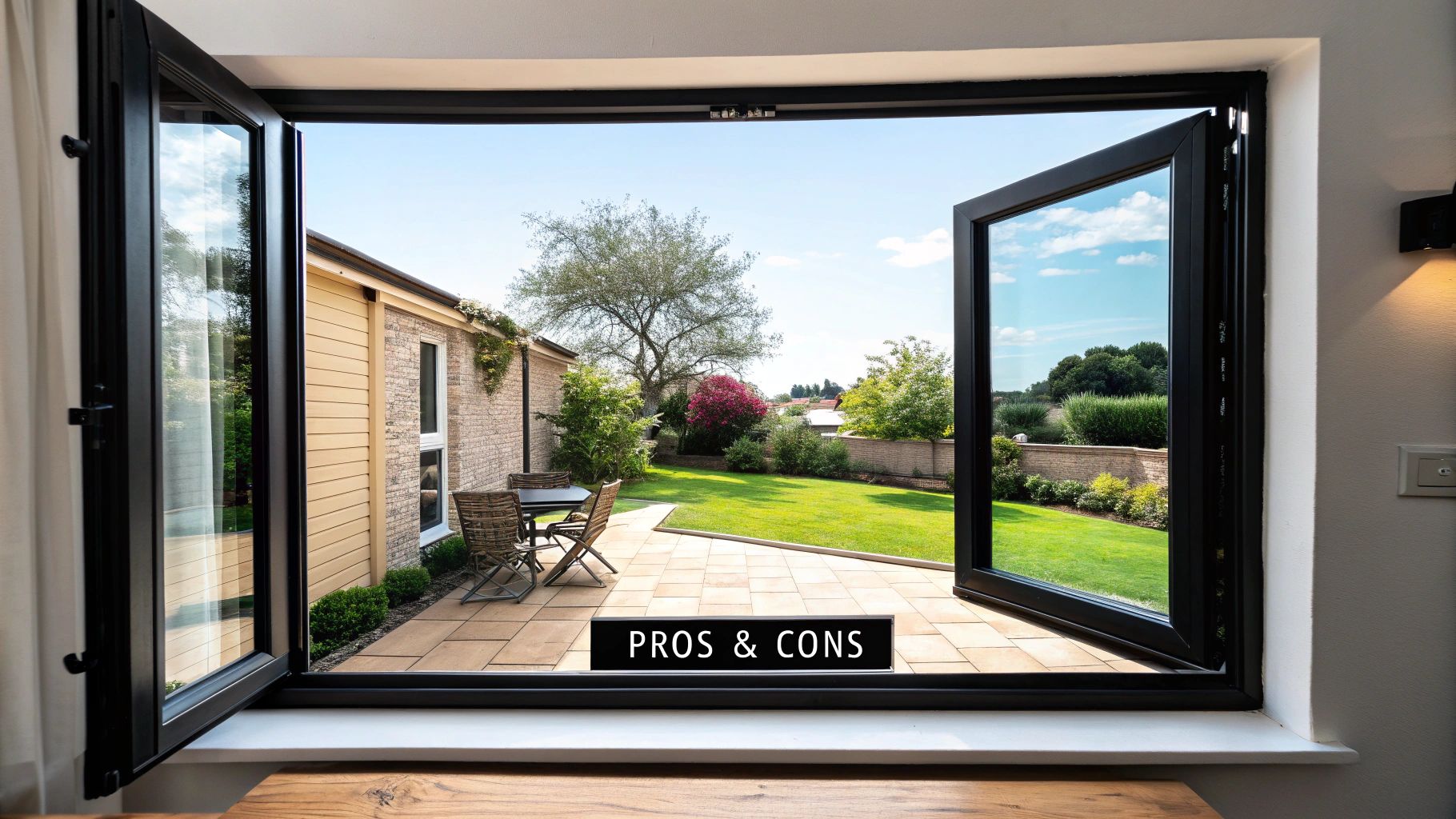
First, let’s talk about the good stuff. For homeowners focused on comfort, lower energy bills, and peace of mind, the advantages are pretty compelling.
The Clear Advantages of Casement Windows
The way casement windows are engineered gives them a few standout benefits that other window types just can't touch.
One of their most celebrated features is unbeatable ventilation. Because the entire window sash swings open, you get a massive opening for air to flow through. Even better, the open sash acts like a sail, catching breezes and funneling them right into your home—something a sliding window that’s always half-closed simply can't do.
Then there's their incredible energy efficiency. When you crank a casement window shut and lock it, the sash presses tight against the frame, creating a super-snug compression seal. It’s a lot like closing a refrigerator door; you get that same airtight feeling.
This airtight seal is a huge deal. Studies show windows can be responsible for 25%–30% of a home's heating and cooling costs. A tight seal fights that energy loss head-on, which can make a real difference on your utility bills.
Finally, you can’t ignore the security. The hook-shaped locks are embedded right into the frame, making them extremely difficult for anyone to pry open from the outside. This multi-point locking system is a significant upgrade over the simple latches you find on many older, more traditional windows.
Practical Considerations and Potential Downsides
As great as they are, there are a few practical realities to consider before you decide to install casement windows everywhere. Most of the potential drawbacks have to do with space and mechanics.
The biggest thing to think about is the outward swing. The window opens out into the space beyond your wall, which can be a problem if you don’t plan for it. You need to make sure there's enough clearance so the window doesn't get in the way of:
- Patios, decks, or high-traffic walkways
- Driveways where cars park close to the house
- Areas where you plan to put patio furniture or a barbecue grill
Another point is the mechanical hardware. That crank mechanism is a moving part, and like any moving part, it can wear down over time, especially if it sees a lot of use or isn't maintained. A little bit of cleaning and occasional lubrication will keep it working smoothly for years. It's a reliable system, but it is more complex than a simple sash you just slide up and down.
Also, that same fantastic seal that makes them so efficient can sometimes trap moisture. Because of that, it’s smart to know the signs of black mold on window sills and deal with any condensation issues right away.
Lastly, the screens are on the inside. Since the glass pushes outward, the screens have to be mounted on the interior of your home. This actually does a great job of protecting them from the sun and dust, but it’s a different look that some people need a little time to get used to.
How Casement Windows Compare to Other Styles
Choosing the right window often comes down to a head-to-head comparison. When you put casement windows next to other popular options, their unique strengths and weaknesses really come into focus. Let's see how they stack up against two of the most common styles you'll find in any neighborhood: double-hung and sliding windows.
Ventilation and Airflow
Right away, the biggest difference you'll notice is airflow. A casement window is designed to swing completely open, pushing the entire glass panel outward. This creates a massive, unobstructed opening that can actually catch side breezes and funnel them into your home for maximum ventilation.
On the other hand, double-hung and sliding windows can only ever be half open at most. With these designs, one sash slides over the other, which means 50% of the window area is always covered by glass. This simple mechanical reality gives casements a huge advantage in rooms where you really want to let the fresh air in, like a stuffy kitchen or a bedroom on a cool night.
Ease of Use and Energy Performance
Another key difference is how they operate. Casement windows open and close with a simple crank handle. It’s a low-effort motion, making them a fantastic choice for tricky spots, like over a kitchen sink or behind a couch where you'd have to struggle to push a heavy sash up. Double-hung windows, by contrast, require you to lift and lower the sashes, which can be heavy or get stuck over time.
Energy efficiency is where casements truly pull ahead. When you close and lock a casement window, the sash presses tightly against the frame, creating a powerful compression seal.
Think of it like a refrigerator door—the design naturally creates an airtight barrier that stops air from getting through. Sliding and double-hung windows rely more on weatherstripping, which can wear out and leave gaps for air to leak in and out.
That superior seal makes casements one of the most energy-efficient window styles you can actually open, a massive plus for keeping your cool air inside during a Phoenix summer.
Finally, think about the view. A casement window is just a single, uninterrupted pane of glass, almost like a picture frame for the outdoors. Double-hung windows always have a horizontal rail right in the middle, breaking up your line of sight. If you have a great view you want to preserve, the clean, expansive look of a casement is tough to beat.
Keeping Your Casement Windows in Peak Condition
You’ve made a smart investment in your home with high-quality casement windows. Now, the key is protecting that investment so they keep working beautifully for years. A little regular maintenance goes a surprisingly long way.
Think of it like a quick tune-up for your car. A few simple checks and cleanings can stop small annoyances from turning into major headaches, keeping everything opening and closing just like new.
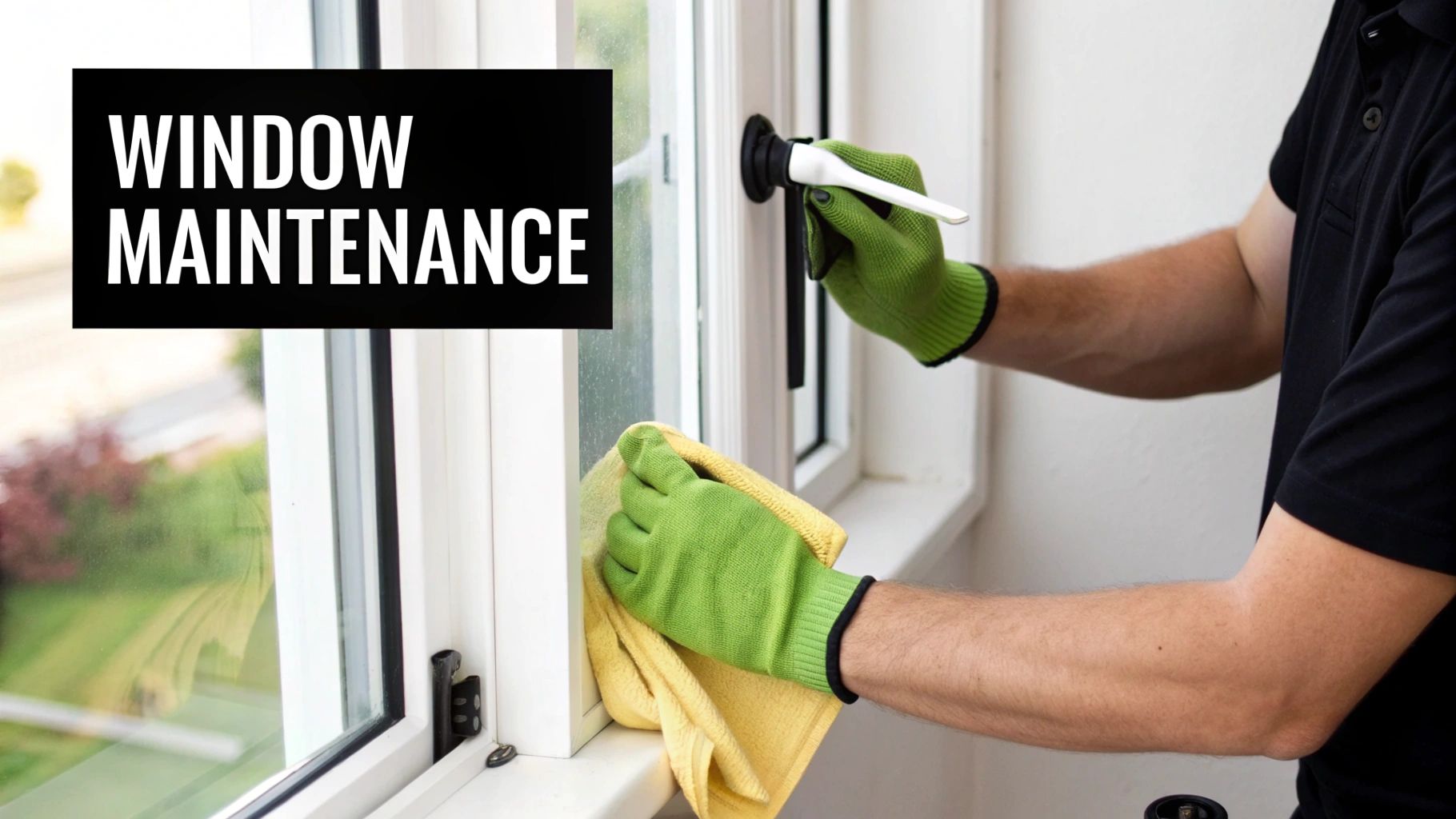
Your Simple DIY Maintenance Checklist
Keeping your casements in top shape doesn't have to be complicated. Just a few minutes of your time, twice a year, can make all the difference. I recommend tackling this list once in the spring and again in the fall before the weather gets too extreme.
- Clear the Tracks and Weep Holes: Swing the window wide open. Use a vacuum with a brush attachment or even an old toothbrush to get all the gunk—dirt, leaves, cobwebs—out of the frame and tracks. This stuff can jam up the mechanism and ruin the seal. Don't forget to check the little weep holes at the bottom of the frame; if they're clogged, water can't drain out properly.
- Inspect the Weatherstripping: That rubber or foam seal around the frame is your window’s first line of defense against drafts. Gently run your hand along it. If you feel any spots that are cracked, brittle, or flattened, it's time to replace it. A bad seal is just like leaving a window cracked open, letting your heating and cooling dollars fly right out.
- Clean and Lubricate the Hardware: The crank is the engine of your casement window, so give it some love. Wipe down the operator arms and gears with a dry cloth to get the dust off. Then, hit all the moving parts with a quick spray of silicone-based lubricant. This one step will keep the crank turning smoothly and prevent it from getting stiff or breaking.
Running through these simple tasks will seriously extend the life of your windows and keep them performing at their best.
When to Call in the Professionals
As great as DIY care is, some jobs really do need a pro's touch. This is especially true here in the Phoenix area, where our relentless sun and hard water create some unique problems for windows.
A professional window cleaning isn't just about making the glass sparkle—it's about preservation. The pros have the right solutions to safely dissolve those stubborn hard water spots without etching or scratching your glass.
Here are a few signs it’s time to make the call:
- Stubborn Hard-Water Stains: See those cloudy, white spots that just won't budge with Windex? Those are mineral deposits left by our water. A professional service can get them off and restore your view.
- A Truly Streak-Free Shine: For that perfect, invisible-glass look, especially on second-story or awkward-to-reach casement windows, nothing beats a professional squeegee job.
- Screen Deep-Cleaning and Repair: Because casement screens are on the inside, they're magnets for dust and allergens. While there are great guides on how to clean window screens yourself, a pro can handle deep cleaning or repairs quickly and get them looking brand new.
By pairing your own regular upkeep with an occasional professional service, you’ll ensure your casement windows remain a stunning and functional feature of your home for a long, long time.
Your Casement Window Questions, Answered
You've seen the designs and weighed the pros and cons, but you probably still have a few practical questions. That's completely normal. Let's walk through some of the most common things homeowners ask us before deciding if casement style windows are right for them.
Think of this as the final details checklist—the nuts and bolts that will help you know for sure if these windows fit your home and your life.
Are Casement Windows Energy Efficient for a Hot Climate Like Phoenix?
Yes, absolutely. In fact, casement windows are one of the most energy-efficient window styles you can actually open. It all comes down to their design.
When you crank a casement window shut, the sash (the part of the window that moves) presses tightly against the frame on all four sides. This creates an incredibly effective compression seal. Think of it like closing a high-end refrigerator door—you get that solid, airtight closure. For anyone living through a Phoenix summer, this is a huge deal.
That airtight seal is your best defense against energy loss. It locks your cool, air-conditioned air inside while blocking the scorching outdoor heat from getting in. Over time, that translates into real savings on your cooling bills.
How Do You Clean the Outside of a Second-Story Casement Window?
This is where casement windows really shine. It’s one of their cleverest features. Most modern casements are built with special "egress" or "wash" hinges that allow the window to open in such a way that you can easily reach the outside of the glass from the inside of your house.
You simply stand safely inside and reach through the gap between the sash and the frame to clean the exterior pane. No more wobbly ladders or risky maneuvers, which makes cleaning upper-story windows so much safer and less of a hassle.
Of course, for a truly professional, streak-free shine, especially with the hard water spots we get here in Arizona, an expert touch makes all the difference. We break down the best methods in our guide on what is the best window cleaning solution.
Do Casement Windows Come with Screens?
They sure do, but with one key difference from other window types. Since the window pane swings outward, the screen is always installed on the inside of your home.
This might seem like a small detail, but it has some big advantages for the screen's longevity:
- Protection from Sun: The screen is shielded from the relentless UV rays that can make mesh brittle and faded.
- Shelter from the Elements: It’s kept safe from dust storms, rain, and wind, which means it stays cleaner for longer.
- Simple to Clean: Interior screens are usually a breeze to pop out when they need a quick wipe-down.
Is the Crank Hardware on Casement Windows Reliable?
The hardware on any good-quality casement window today is built to last. Manufacturers have spent decades perfecting the crank operators, hinges, and locking systems, using durable metals and smart engineering to handle thousands of open-and-close cycles.
Like any moving part, a little TLC goes a long way. Wiping the mechanism clean of dust and grit and applying a bit of silicone spray once a year is all it takes to keep it turning smoothly. And if something does wear out after years of heavy use, the hardware is almost always modular, meaning you can replace just the crank or lock without having to replace the entire window.
Ready to give your windows that professionally cleaned, crystal-clear look they deserve? The experienced team at Sparkle Tech Window Washing LLC delivers flawless, streak-free results for homeowners across the Phoenix area. Get your free estimate today and see the difference!