


By late June, a lot of Phoenix homeowners are dealing with the same thing. The west side of the house feels hotter than the rest, the living room TV catches a hard afternoon glare, and the windows that looked fine in spring now show every bit of dust from the last windy stretch. Then a monsoon wall of dust rolls through, and suddenly the screens are dirty, the glass is filthy, and you're wondering whether solar screens are worth it.
In the Valley, they usually are. But only if you choose the right fabric, put them on the right windows, and keep them maintained. Solar screens aren't a cure-all, and they aren't the same as standard bug screens. They solve a specific Arizona problem, which is intense sun hitting glass for hours at a time.
If you're researching solar screens windows for a home in Scottsdale, Peoria, Phoenix, or the surrounding areas, here's the practical version of what matters.
What Exactly Are Solar Screens for Windows
Solar screens are exterior mesh screens designed to reduce heat, glare, and UV exposure before sunlight reaches the glass. The easiest way to think about them is sunglasses for your house. They don't just soften the light inside. They intercept solar radiation outside, where it does the most good.
That last part matters. Exterior solar screens are effective because they stop sunlight before it heats the glass itself. Once the glass heats up, some of that heat transfers inward. A standard insect screen doesn't do much to control that. It's there to keep bugs out, not to manage solar gain.
How they differ from regular window screens
A regular bug screen is usually chosen for airflow and insect control. A solar screen is chosen for shade performance, visibility, and durability in outdoor exposure.
The difference shows up in daily use:
- Bug screens let in plenty of light and airflow, but they don't meaningfully cut glare or heat.
- Solar screens darken the opening more, improve daytime privacy, and reduce the amount of sun pounding the window.
- Interior window film or shades can help with glare, but they work after sunlight has already reached the glazing.
Practical rule: If your main complaint is that a room gets cooked in the afternoon, an exterior solution makes more sense than an interior one.
Where they make the most sense in Phoenix homes
In this market, solar screens are most useful on windows that take the hardest sun. West-facing glass is usually the first place I look because afternoon sun in Phoenix is brutal. South-facing windows can also benefit, especially on homes with large panes or limited overhangs.
They're also useful when a homeowner wants one upgrade to do several jobs at once:
- cut glare in family rooms and offices
- reduce daytime visibility from outside
- help protect flooring and furniture
- make rooms near large windows feel more usable
If you're still comparing basic screen styles for different parts of the house, it's worth looking at Premier Screens custom window solutions to see how purpose-built window screens differ by use case. That helps homeowners avoid treating all mesh products like they're interchangeable, because they aren't.
Key Benefits for Beating the Arizona Heat
The biggest reason Phoenix homeowners install solar screens is simple. They make sun-exposed rooms easier to live in. You feel it most where glass gets hammered for hours, especially after lunch and into early evening.
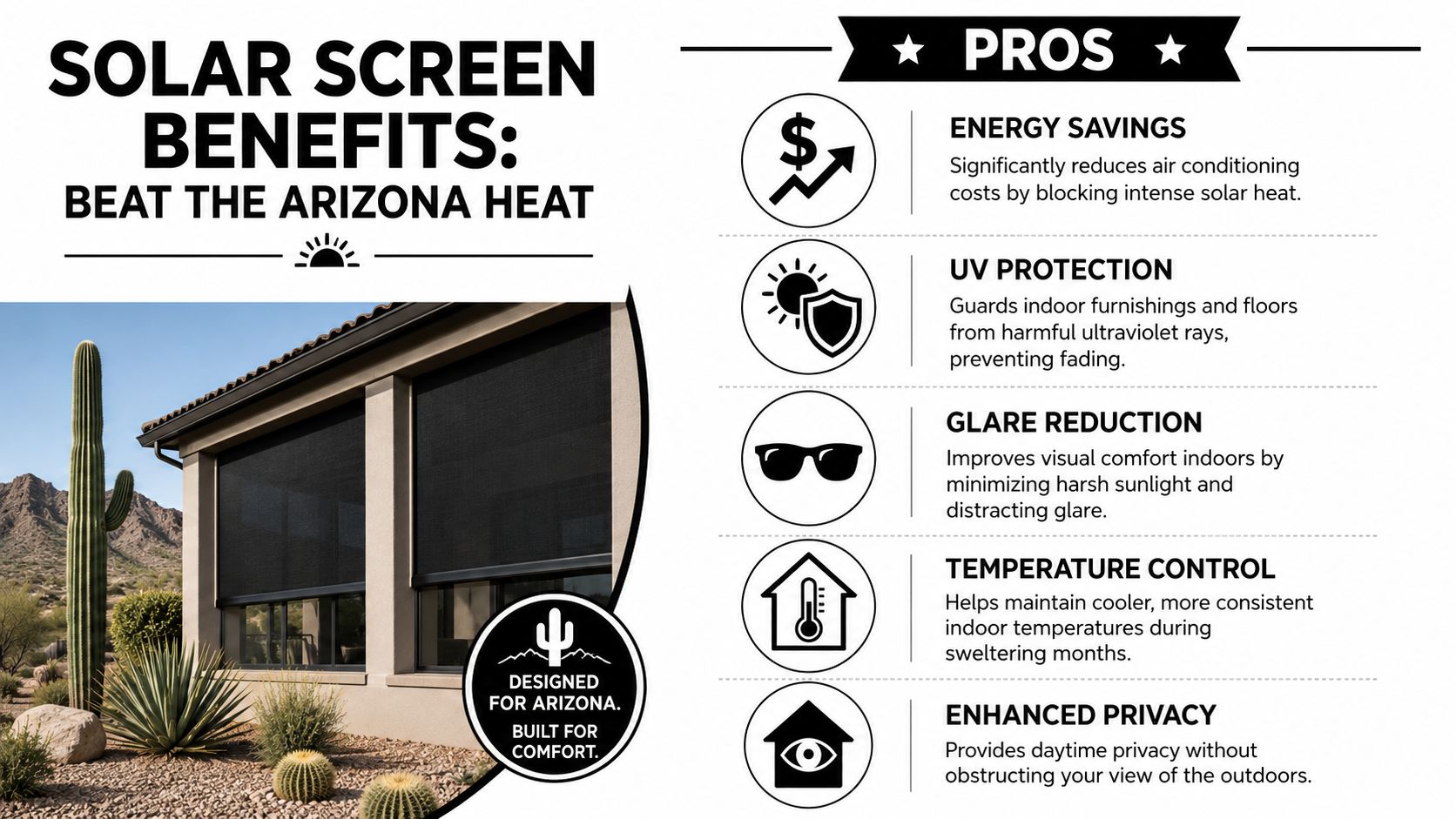
A peer-reviewed study on double solar screens found that a single screen reduced indoor illuminance by 90% and heat flow through the window by 27.1% according to this peer-reviewed solar screen study. That lines up with what homeowners notice first indoors. Less harsh light. Less radiant heat near the glass. Less pressure on rooms that always seem warmer than the rest of the house.
Comfort is the first win
A common reason to start shopping is that the house feels uneven. One bedroom is fine. Another turns bright and hot by midafternoon. Solar screens help because they cut the load at the window instead of forcing your AC and interior blinds to do all the work.
That translates into a few practical improvements:
- Less glare on screens: TVs, laptops, and phone screens are easier to see during the day.
- More usable space near windows: Chairs, desks, and breakfast nooks feel less exposed.
- Better daytime privacy: You can usually see out better than people can see in during daylight.
Protection for interiors
Arizona sun is hard on materials. Homeowners often focus on cooling, but there is also the slow wear on floors, furniture, artwork, and fabrics. Solar screens reduce the intensity of direct light entering the room, which helps limit the punishment that constant sun dishes out over time.
The homes that benefit most are often the ones with large clear openings and no meaningful exterior shade from trees, deep patios, or architectural overhangs.
A better fit for daily Valley living
Solar screens also help with the ordinary frustrations that don't always show up in sales brochures. They can make a bright breakfast area less squinty in the morning. They can tone down that harsh late-day beam across the living room floor. They can keep a home office from feeling like it has a spotlight aimed at the monitor.
For Phoenix homes, that's not a small thing. Comfort problems around windows tend to repeat every single day during the long hot season. A product that takes the edge off those hot spots can change how a room functions, not just how it photographs.
How to Choose the Right Solar Screen Fabric and Type
Often, most homeowners get stuck. They hear terms like openness, shade factor, fiberglass, and color options, and it all starts to sound the same. It isn't the same. The right solar screen depends on what you want the window to do.
Exterior mounting matters most
If cooling control is the priority, exterior mounting is the strongest option because the screen stops heat before it reaches the glass. Published shading-coefficient ranges are about 0.14 to 0.33 for exterior installations versus 0.50 to 0.70 for interior installations, as explained in this overview of exterior solar screen performance. That same source notes that materials such as vinyl-coated polyester and PVC-coated fiberglass are commonly used for durability outdoors.
That tells you two things right away. First, exterior products are doing the heavy lifting. Second, material quality matters because Phoenix heat, UV, and dust are rough on weak mesh and cheap corners.
Openness is really a comfort tradeoff
When homeowners ask, "Will I still be able to see out?" they're asking about openness. More open fabric usually preserves more daylight and view. Tighter fabric usually provides stronger shading and privacy.
There isn't one right answer for the whole house.
| Characteristic | 80% Openness | 90% Openness | 95%+ Openness |
|---|---|---|---|
| Heat control | Stronger shading | Balanced | Lighter shading |
| Daytime view out | More filtered | Good balance | Best visibility |
| Glare reduction | Strong | Moderate to strong | Moderate |
| Daytime privacy | Better | Moderate | Less privacy |
| Best fit | Harsh sun exposures | Mixed-use rooms | View-first locations |
A west-facing bedroom, media room, or office usually benefits from denser fabric than a shaded front window where preserving the view matters more.
Color changes both appearance and performance
Color is where a lot of people make a quick choice based on curb appeal alone. That's understandable, but it's incomplete.
An industry technical overview notes that fabrics blocking 94% to 96% of visible light provide strong glare control, and that lighter colors usually improve reflection, although some high-performance fabrics can block heat effectively regardless of color, according to this guide on how solar screen shades work.
In practical terms:
- Darker colors often give a clearer outward view.
- Lighter colors often reflect more heat.
- Fabric construction can matter as much as color, so don't pick by color chip alone.
What works on real houses
For most Phoenix homes, the smart approach is not one fabric on every window. It's a mix based on exposure and use.
A simple way to decide:
- Start with the worst windows first. Usually west-facing, then south-facing.
- Match the room function. Offices and TV rooms need stronger glare control than a guest bath.
- Check the view value. If the window overlooks a yard or mountain view, you may accept a more open weave.
- Think about maintenance. Dust, pollen, and monsoon grime show more on some finishes than others.
If you want a clearer picture of how mesh options differ beyond just solar products, Sparkle Tech has a useful breakdown of window screen mesh types that helps homeowners compare common materials and intended uses.
A good screen package usually looks uneven on paper. That's normal. The house has different sun exposures, so the screens shouldn't all be identical.
The Real Cost and Return on Investment
The cost question trips people up because they want a simple house-wide number. Real bids don't work that way. The total depends on window size, frame condition, whether the screens are custom built or rescreened into existing frames, and how selective you are about fabric choices.
It also depends on whether you're screening every opening or targeting the windows that cause the most trouble. In Phoenix, the second approach often makes more sense.
What actually drives value
You don't get the same return from every window. A lightly shaded north-facing window doesn't usually deserve the same budget as a large west-facing slider or front room window that takes hard afternoon sun.
One practical source on common buying questions notes that west-facing windows often benefit from denser, higher-shade fabrics because of low-angle afternoon sun, even if that means slightly reduced visibility. That's often where the best return shows up in real use, as discussed in these common solar screen questions.
That means ROI usually comes from prioritizing, not blanketing the whole house.
Where homeowners overspend
The biggest mistakes I see are pretty consistent:
- Installing the same fabric everywhere: That can waste money on low-priority windows.
- Buying only on price: Cheap mesh can look tired fast in Arizona conditions.
- Ignoring frame condition: A new screen fabric in a bent or brittle frame still gives you a weak result.
- Skipping fit and finish: Poorly fitted screens look obvious from the street and don't hold up as well.
How to think about the return
A solar screen purchase pays back in a few different ways. Some homeowners care most about cooling load. Others care about glare control, preserving interiors, or making a hot room useful again. If you're preparing a house for market, cleaner windows, intact screens, and better curb appeal also matter. For broader prep ideas, this guide on how to increase home value for selling gives a useful outside perspective on which exterior improvements buyers notice.
If you want a more detailed local pricing breakdown, Sparkle Tech also publishes information on the cost of solar screens so homeowners can compare repair, rescreening, and replacement decisions before they book anything.
Special Considerations for Phoenix Valley Homeowners
Phoenix isn't just hot. It's dusty, bright, windy, and full of neighborhood rules that can turn a simple upgrade into a small project if you don't plan ahead. Solar screens that work well in the Valley have to survive real desert conditions, not just look good in a sample book.
Haboobs change the maintenance equation
Monsoon dust storms are hard on screens. Fine dust packs into the mesh, especially on homes near open lots, active construction, or roads with steady traffic. After a haboob, a solar screen can still be structurally fine but perform and look worse because the mesh is loaded with grime.
That buildup does two things. It dulls the appearance from the curb, and it can make the house look darker from inside than the fabric choice alone would suggest. Homeowners sometimes think they chose too dense a screen when the actual issue is that the mesh is dirty.
HOA rules can shape the final choice
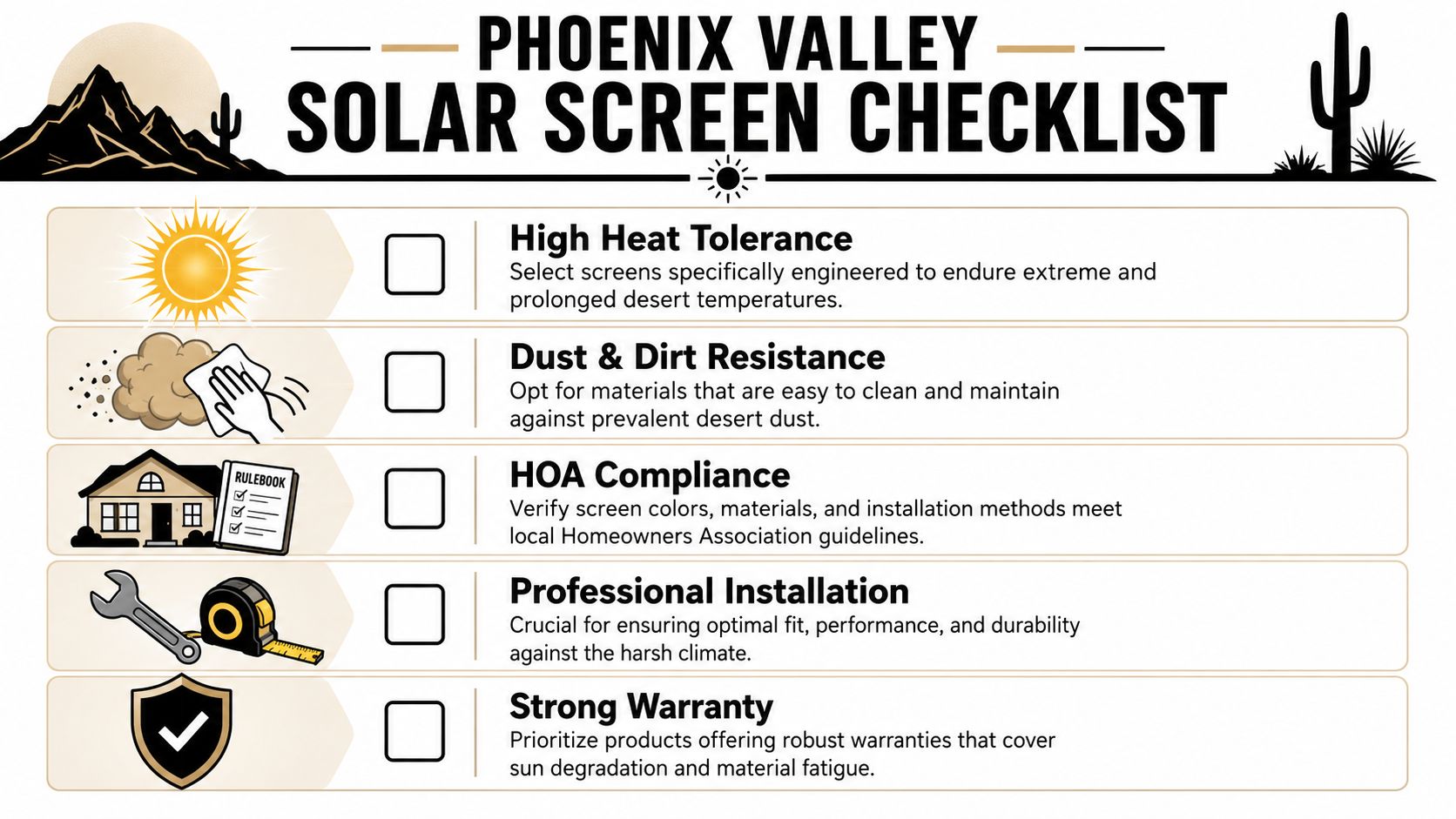
Many Valley communities care about uniform street appearance. That can affect color, frame style, and whether exterior-mounted products need prior approval. Some HOAs are relaxed. Others are very specific about what can be seen from the street.
Before ordering anything, check:
- Approved colors: Bronze, black, or desert-toned fabrics may be treated differently.
- Exterior visibility rules: Some communities care about frame profile and appearance from common areas.
- Application requirements: You may need a sample, spec sheet, or photo mockup.
- Replacement standards: Repairing an existing style may be easier to approve than changing it.
Winter comfort is part of the story too
While summer heat is a common reason to consider solar screens, winter sun can be a nuisance in Arizona too. Exterior solar screens can reduce solar heat gain, UV damage, and glare, and independent guidance also notes they may improve the air tightness of older leaky windows in winter. That same guidance points out winter glare as a real issue, especially in strong low-angle sun, as described by Efficient Window Coverings on exterior solar screens.
That matters in the Valley because bright winter days can still produce uncomfortable glare in living rooms, kitchens, and home offices.
On some Phoenix homes, the best setup isn't year-round coverage on every opening. It's a selective install based on orientation, room use, and what your HOA allows.
Orientation still decides most of the outcome
If you want the shortest version of Phoenix advice, it's this:
- West-facing windows usually deserve the most attention.
- South-facing windows are often next in line.
- East-facing windows can matter for morning comfort.
- North-facing windows are often lower priority unless glare or privacy is the main issue.
That's why blanket recommendations don't work well here. The same fabric that feels perfect on one elevation can feel too dark or unnecessary on another.
Solar Screen Cleaning Repair and Replacement
Once solar screens are installed, maintenance decides how long they stay effective and how good they continue to look. In Phoenix, the screens don't just battle sunlight. They collect dust, pollen, irrigation spotting, and fine grit from wind events that can cling to the mesh and frame.
How to clean them without causing damage
Homeowners can do basic cleaning themselves if the screens are reachable and in decent shape. The goal is to remove dirt without stretching the mesh, loosening the spline, or damaging corners.
A safe routine looks like this:
- Remove loose dust first. A soft brush or gentle rinse helps lift surface grime before scrubbing.
- Use mild soap and water. Skip harsh chemicals that can leave residue or affect the material.
- Clean with a soft brush or sponge. Work gently across the mesh rather than pushing hard into it.
- Rinse thoroughly. Any soap film left behind attracts more dirt.
- Let the screens dry fully before reinstalling. Trapped moisture isn't helpful, especially in older frames.
For homeowners who want a more detailed walkthrough, Sparkle Tech has a practical guide on how to clean window screens.
When cleaning isn't enough
Sometimes the issue isn't dirt. It's wear.
Signs that point to repair or replacement include:
- Tears or punctures: Even small damage tends to spread.
- Loose mesh: If the fabric sags, the screen won't look right or perform as intended.
- Brittle material: Desert sun can dry out older components.
- Bent frames: A warped frame can cause rattling, poor fit, and visible gaps.
- Faded appearance: Severe fading can signal long-term material breakdown, not just cosmetic age.
If the frame is still square and sound, rescreening can make sense. If the corners are failing, the frame is bent, or the entire unit has gotten fragile, full replacement is usually the cleaner solution.
High windows and stubborn buildup are different jobs
Second-story screens, oversized openings, and screens packed with storm residue are where DIY often stops making sense. This is also where screen service overlaps with glass cleaning. When both the screen and the window are dirty, cleaning only one of them leaves the job half done.
Some homeowners use a local service for that reason. Sparkle Tech Window Washing LLC handles window cleaning along with screen cleaning and repair work in the Phoenix area, which is useful when the issue isn't just one torn panel but a group of dusty screens, dirty exterior glass, and a few units that need new mesh or frame attention.
Here's a quick visual on the kind of screen cleaning process homeowners often want to avoid doing on ladders themselves:
Repair first or replace first
A simple rule helps here.
If the screen still fits well and the frame is healthy, repair is often worth it. If you're dealing with multiple failures at once, old brittle mesh, corner separation, and obvious frame wear, replacement usually saves frustration.
A dirty screen can look worn out. A worn-out screen can also look dirty. The difference becomes obvious after a proper wash and inspection.
The homeowners who stay happiest with solar screens are usually the ones who treat them like any other exterior component. They clean them, inspect them after dust storms, and don't wait until the mesh is torn up and the frames are rattling.
If your solar screens need cleaning, rescreening, or a second opinion on whether they should be repaired or replaced, Sparkle Tech Window Washing LLC is one local option for Phoenix-area homeowners who want help with screens and windows at the same time.